High Voltage and Bad Insulation Sank the First Transatlantic Cable in 1858
How the 1858 transatlantic cable, hailed as a marvel, failed within weeks—tracing the blame to the very man tasked with its upkeep.
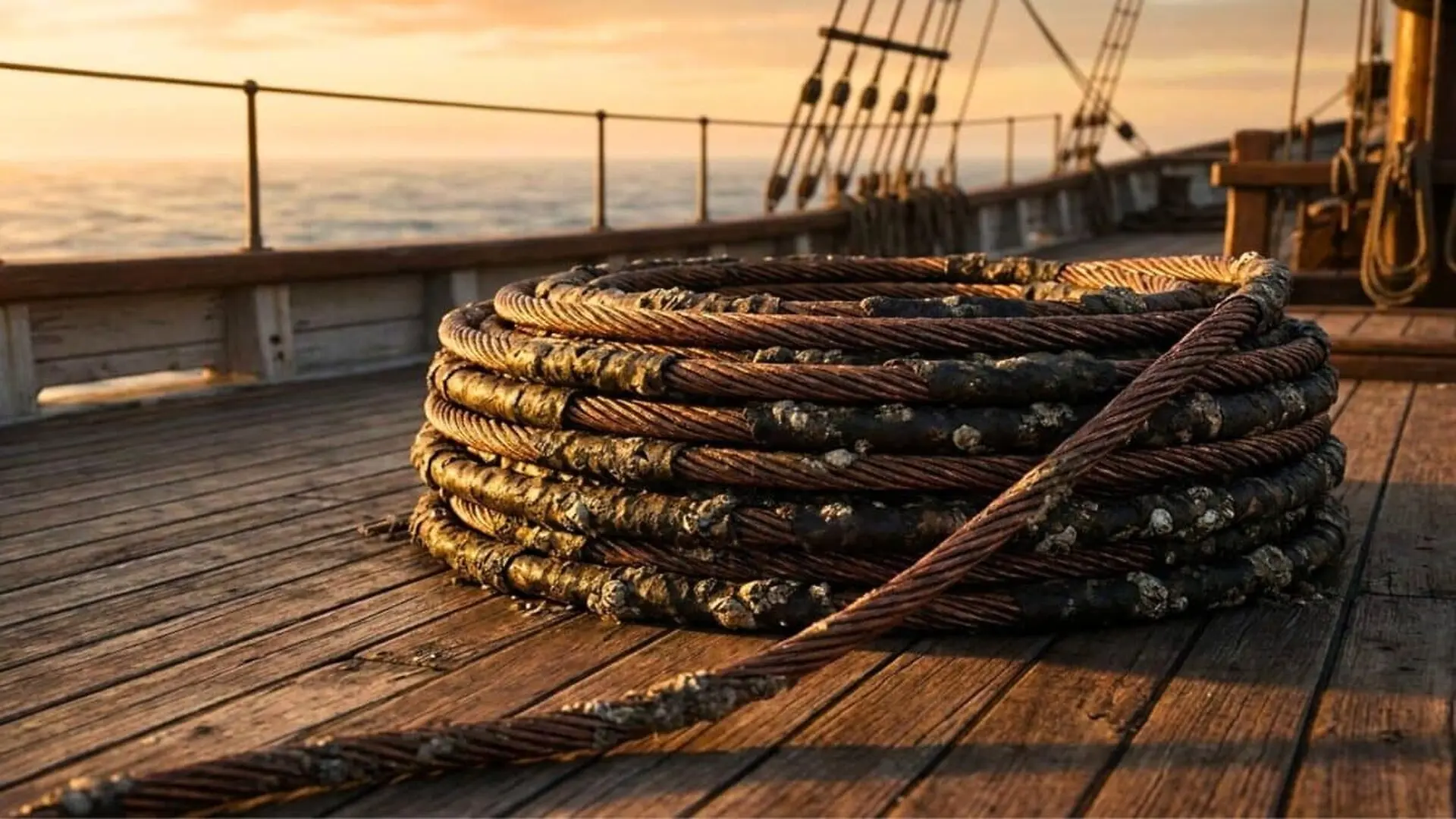
In August 1858 a pioneering undersea line linked Ireland with Newfoundland, establishing the inaugural electrical bridge across the Atlantic. The marvel lasted only a few weeks before collapsing.
Visionary Backers and Early Setbacks
New York printer Cyrus West Field spearheaded the venture, forming the Atlantic Telegraph Company in 1856 with capital from private financiers and support from both British and American authorities. The project also attracted the expertise of British physicist William Thomson, later known as Lord Kelvin.
Although telegraph stations already existed on each shore of the Atlantic and shorter submarine cables were in service, laying a conduit across the ocean presented unprecedented engineering hurdles, especially regarding durability and signal strength over such a distance.
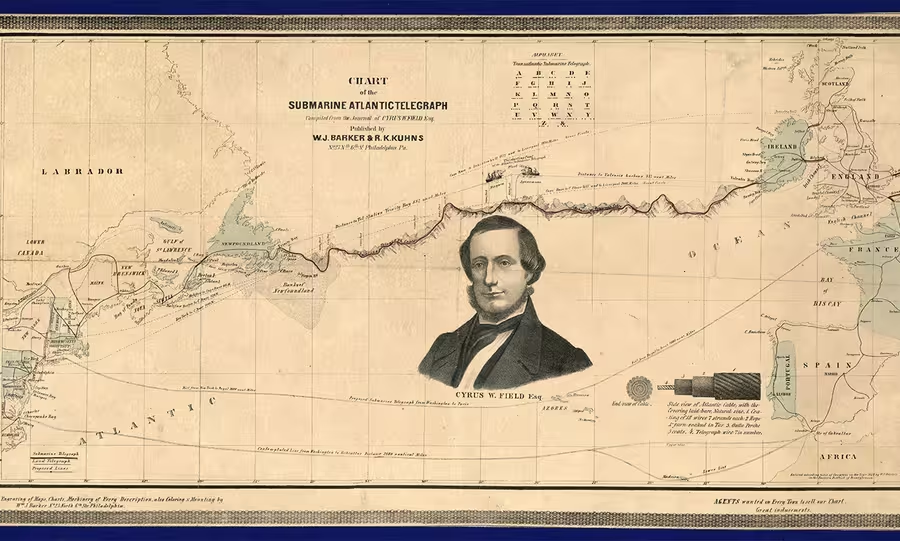
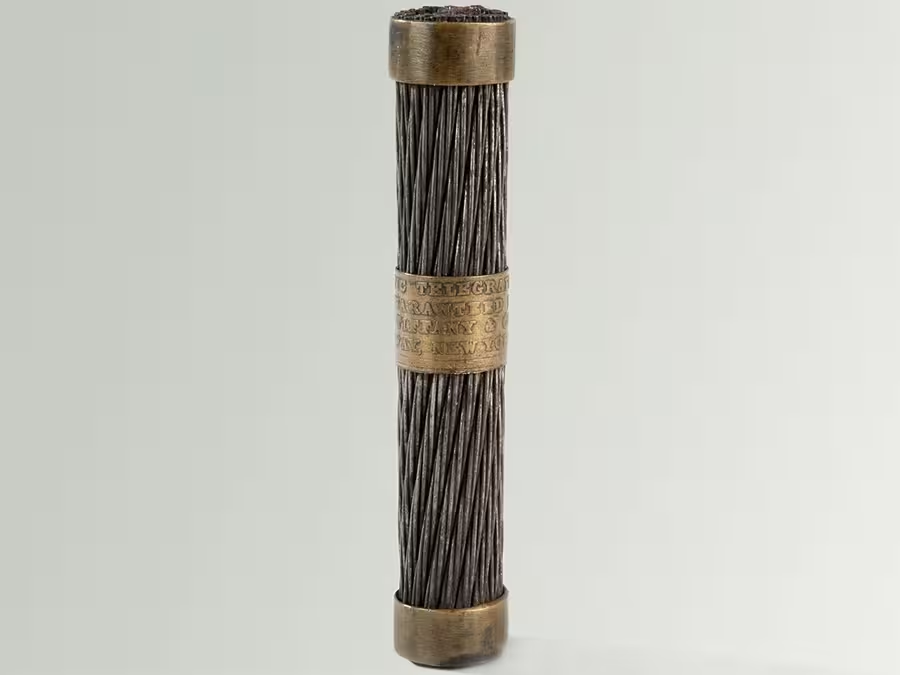
A key dispute concerned the copper core. Chief electrician Wildman Whitehouse favored a slim conductor, while Thomson argued for a thicker, high‑purity copper strand to minimise resistance. The company ultimately adopted Whitehouse’s lighter design, consisting of seven copper wires wrapped in three layers of gutta‑percha, tarred hemp and iron wire.
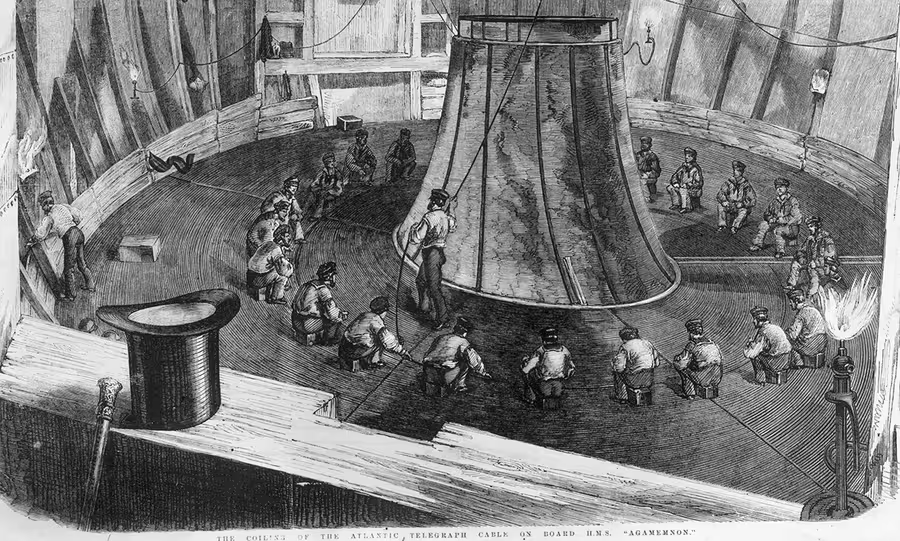
Because no single vessel could transport the entire length, the cable was split between HMS Agamemnon and USS Niagara. An 1857 attempt ended prematurely when the line snapped during deployment, and a subsequent 1858 effort suffered another break in June.
Final Lay‑Down and First Transatlantic Exchange
Undeterred, Field convinced the board to launch a final push in the summer of 1858. On 29 July 1858 the two ships met mid‑ocean, each taking a half of the cable toward its destination. IEEE Spectrum records the Agamemnon’s arrival in Ireland on 5 August, while the Niagara reached Newfoundland on 4 August (the Science Museum cites both dates as 5 August).
By 10 August the line was carrying test traffic, and on 16 August 1858 Queen Victoria exchanged formal greetings with U.S. President James Buchanan via the new link. Despite the dramatic reduction in delivery time, the transmission was still sluggish; Victoria’s 98‑word message required nearly 16 hours to complete. The faint signals were detected thanks to Thomson’s mirror galvanometer.
In total, 732 messages traversed the line before it failed, including a British directive that halted two Canadian regiments from proceeding to India after news of the Indian Rebellion’s suppression. IEEE Spectrum estimates that this decision saved roughly £50 000–£60 000.
Voltage Missteps and Hidden Flaws
From the outset the cable’s signals were weak. Whitehouse, convinced that higher voltage would strengthen transmission, occasionally raised the current to as much as 2 000 volts. Thomson, by contrast, relied on his sensitive galvanometer to amplify the faint arrivals.
When Whitehouse pushed the voltage beyond safe limits, the gutta‑percha insulation broke down, halting communication. A contemporaneous commission blamed the excessive voltage, but later forensic work painted a more complex picture.
A 1985 study by historian‑engineer Donard de Cogan, cited by IEEE Spectrum, examined recovered sections of the original cable and uncovered manufacturing defects: mis‑aligned copper cores that brushed the surrounding metal armor and degraded gutta‑percha insulation. De Cogan suggested that impurities and improper storage during the winter of 1857–58 left the cable vulnerable well before it entered service.
A Durable Atlantic Link Achieved in 1866
Undaunted, Field pursued a more robust solution. The later attempts employed the Great Eastern, the era’s largest vessel, capable of carrying the entire cable in a single load. An 1865 launch failed after the line snapped midway across the ocean.
A renewed effort on 13 July 1866 succeeded, with the Great Eastern arriving at Heart’s Content, Newfoundland, on 27 July. This time the insulation held, establishing a permanent transatlantic telegraph connection that endured beyond the brief 1858 experiment.
The crew subsequently retrieved the broken 1865 cable and restored that segment, cementing a reliable network that would shape global communications for decades to come.
This article has been fact checked for accuracy, with information verified against reputable sources. Learn more about us and our editorial process.
Last reviewed on .
Article history
- Latest version
Cite this page:
- Posted by Zara Tariq