Deep-Sea Mussels Reveal Secret 24-Hour Biological Clocks Hiding in the Abyss
Cell cultures from hydrothermal vent mussels maintain autonomous circadian rhythms and shed light on extreme biological timing.
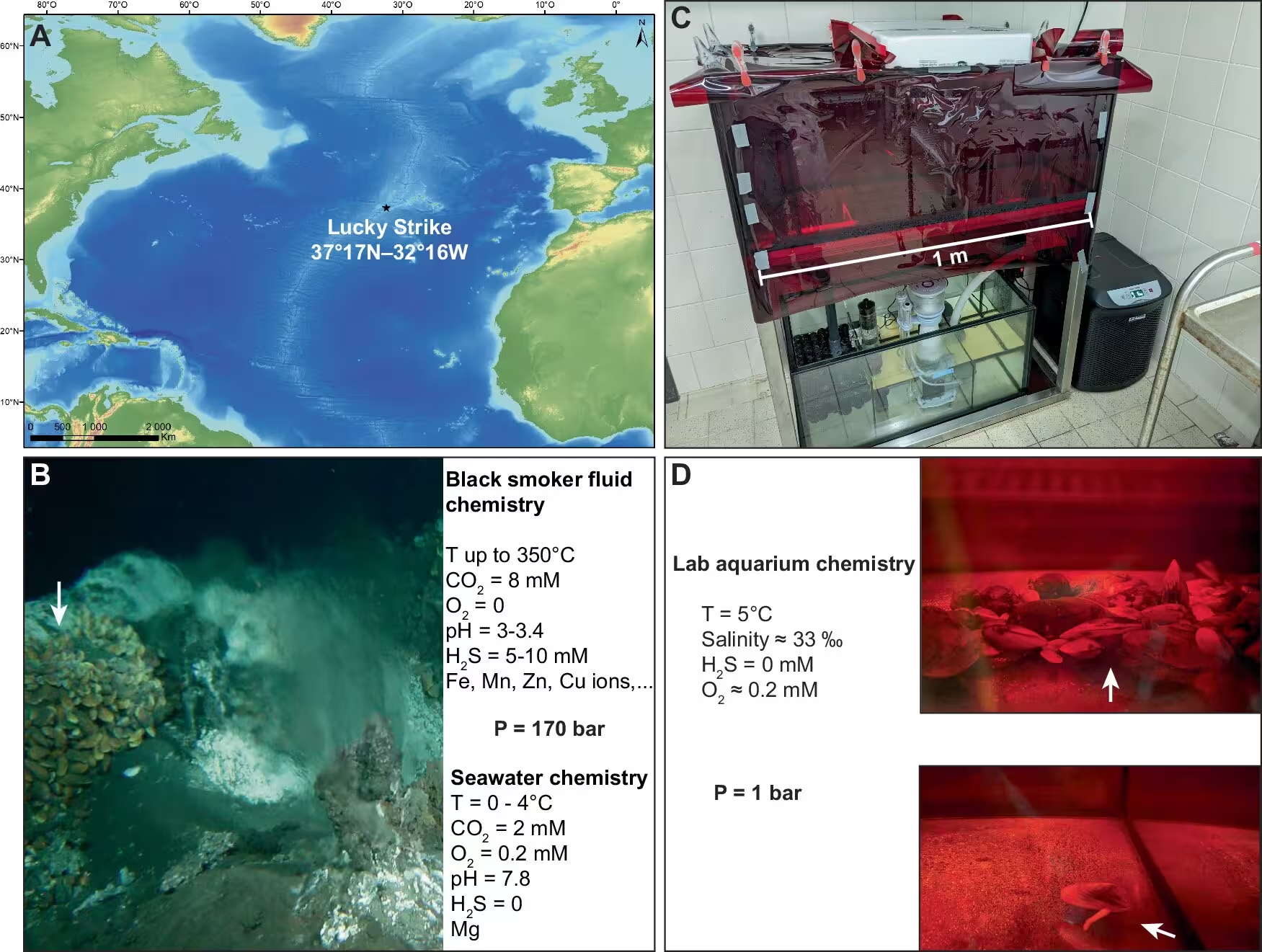
Deep-sea mussels inhabiting the Lucky Strike vent field along the Mid-Atlantic Ridge at a depth of 1,700 meters experience a harsh environment where immense hydrostatic pressures reach 170 bars and temperatures swing wildly from 4 degrees Celsius in ambient seawater to 350 degrees Celsius in hydrothermal fluids. Despite living in perpetual darkness far beyond the reach of sunlight, these iconic mollusks maintain biological rhythms that dictate their behavior and physiology. Researchers investigating how these creatures track time in the deep ocean have discovered that primary cell cultures derived from the foot tissue of the deep-sea mussel Bathymodiolus azoricus exhibit robust circadian oscillations in gene transcription.
The new work, published in EMBO Reports, provides a rare window into the molecular timekeeping mechanisms of deep-sea fauna. While field observations show that B. azoricus populations on the seafloor predominantly display tidal rhythms governed by the cyclical pressure changes of underwater tides, the isolated cells functioning in constant laboratory conditions instead default to a 24-hour circadian rhythm. This surprising dichotomy offers fresh clues about how biological clocks operate independently of the central nervous system in animals lacking a true brain.
Surviving Surface Pressure for Over a Year
Working with organisms retrieved from extreme depths presents formidable technical hurdles because depressurization during recovery is typically lethal. To overcome this obstacle, the research team successfully maintained wild-caught deep-sea mussels in laboratory aquariums at atmospheric pressure for more than a year, establishing an unprecedented benchmark for the species. Although initial mortality reached about 40 percent during the first two weeks due to acute transport and pressure stress, the surviving animals stabilized and exhibited normal behaviors such as active movement and regular valve opening.
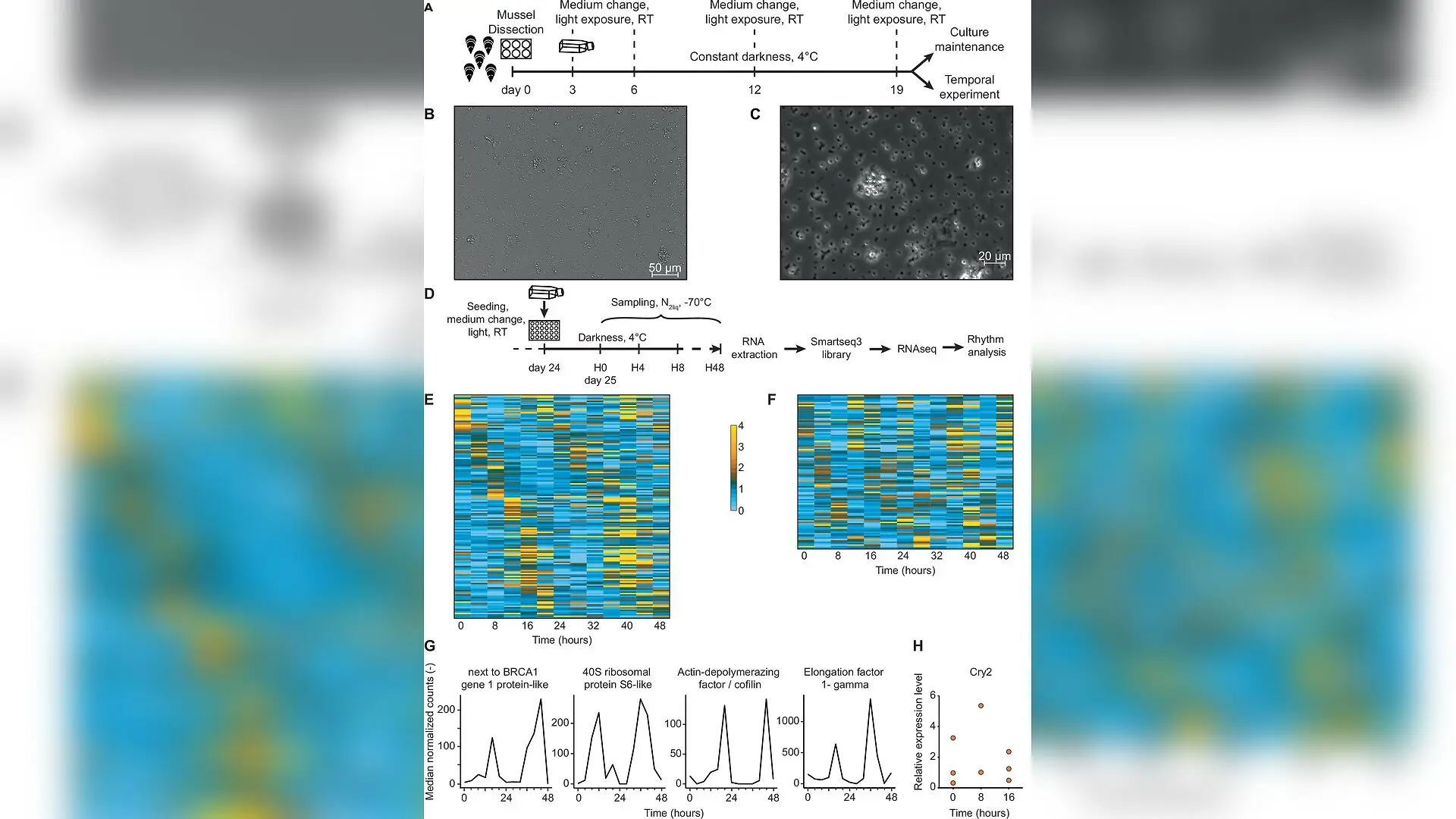
Building on this husbandry milestone, the investigators established primary cell cultures from various tissues, with foot cells proving the most resilient and viable over extended periods. By maintaining these cell cultures in constant darkness at 4 degrees Celsius and analyzing RNA sequencing data across 48-hour temporal experiments, the team identified 157 transcripts exhibiting significant circadian periodicity. This cell-autonomous rhythmicity demonstrates that individual peripheral cells possess intrinsic molecular oscillators capable of ticking independently of environmental cues.
Unraveling the Molecular Cogs of the Deep-Sea Clock
To determine whether these cellular oscillators operate through the canonical transcription-translation feedback loops found in surface animals, the researchers cloned core clock genes from B. azoricus and tested their interactions using luciferase reporter assays in Drosophila S2 cells. By scanning genomic data from related deep-sea mussels, the team identified conserved regulatory enhancer blocks upstream of the period gene, including a vital E-box-like motif that is essential for transcriptional activation.
Functional assays revealed that the clock proteins BazCLOCK and BazBMAL strongly activate transcription through this deep-sea mussel enhancer. Conversely, cryptochrome 2, designated as BazCRY2, acts as the primary dose-dependent transcriptional repressor within the system. Furthermore, the experiments showed that the period protein BazPER does not act as a direct repressor on its own, but instead acts as a powerful modulator that stabilizes BazCRY2 and promotes its nuclear localization, enhancing overall transcriptional repression.
Balancing Tidal and Daily Environmental Rhythms
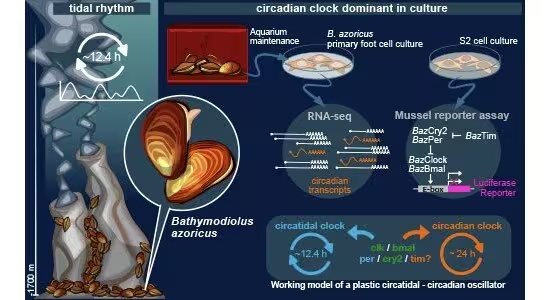
The discovery that cellular clocks can tick on a 24-hour cycle in an environment dominated by tidal forces deepens the mystery of how marine organisms synchronize their behavior. The authors suggest that variable intracellular ratios of BazCRY2 and BazPer could allow the same molecular machinery to flexibly switch between circadian and circatidal oscillations, or alternatively, that different cells within the same tissue specialize in different rhythms.
Understanding these timing mechanisms helps biologists grasp how deep-sea species cope with severe environmental fluctuations where precise physiological coordination is critical for survival. While questions remain regarding how these cellular clocks synchronize to natural tidal cycles in the deep ocean, the ability to study live deep-sea cell cultures opens new avenues for exploring the limits of life in extreme marine habitats.
The research was published in EMBO Reports on November 2, 2026.
This article has been fact checked for accuracy, with information verified against reputable sources. Learn more about us and our editorial process.
Last reviewed on .
Article history
- Latest version
Reference(s)
- Mat, Audrey M., et al. “Endogenous rhythms in deep-sea mussel cell culture and molecular clock characterization.” EMBO Reports, November 2, 2026 Springer Science and Business Media LLC, doi: 10.1038/s44319-026-00970-7. <https://doi.org/10.1038/s44319-026-00970-7>.
Cite this page:
- Posted by Kamran Akhtar