Tiny Arctic Shells Reveal How Warming Waters Alter Ocean Food Webs
Sampling across the Greenland Sea Gyre shows how microzooplankton communities and carbon transfer are constrained by shifting water masses.
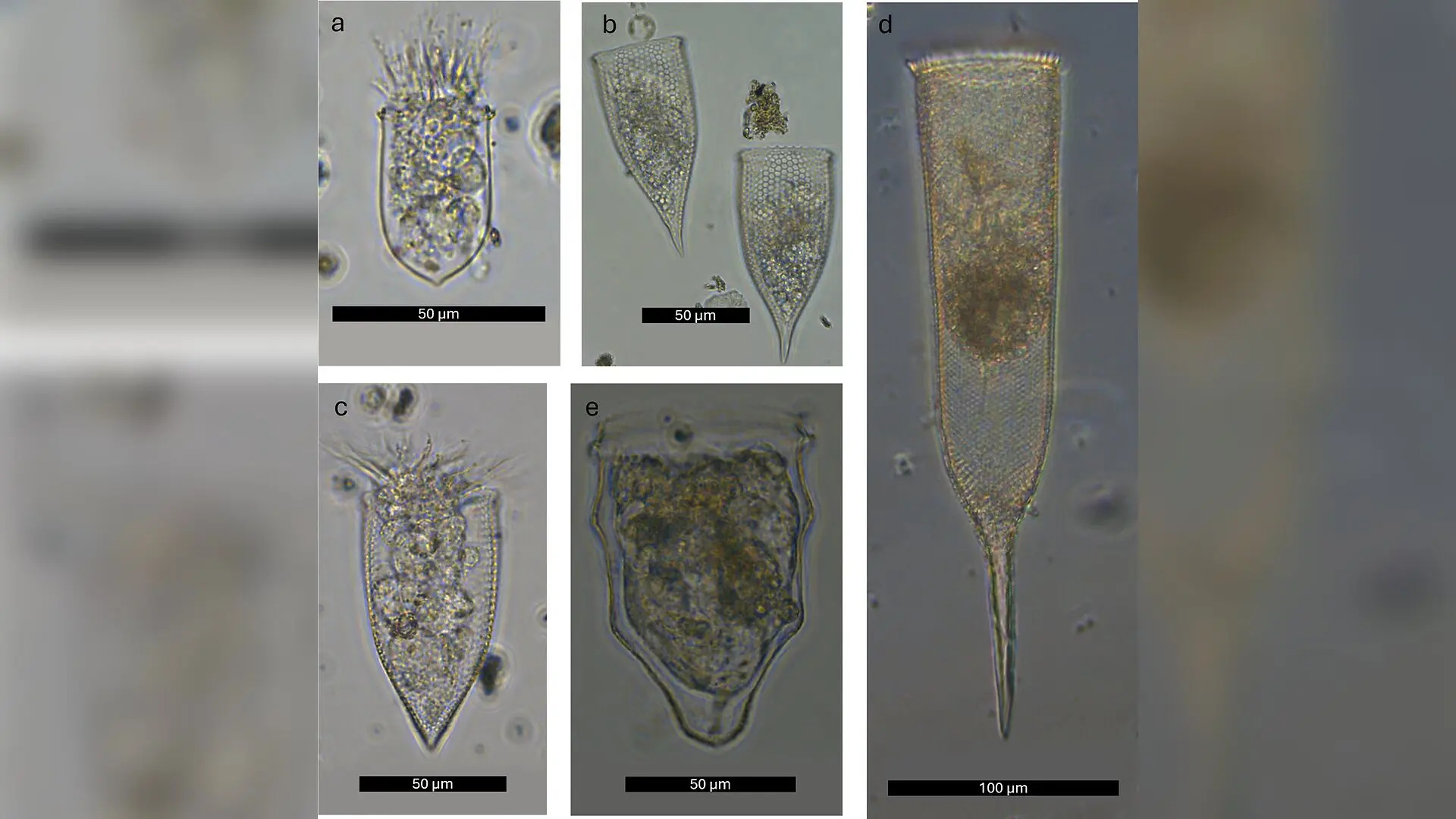
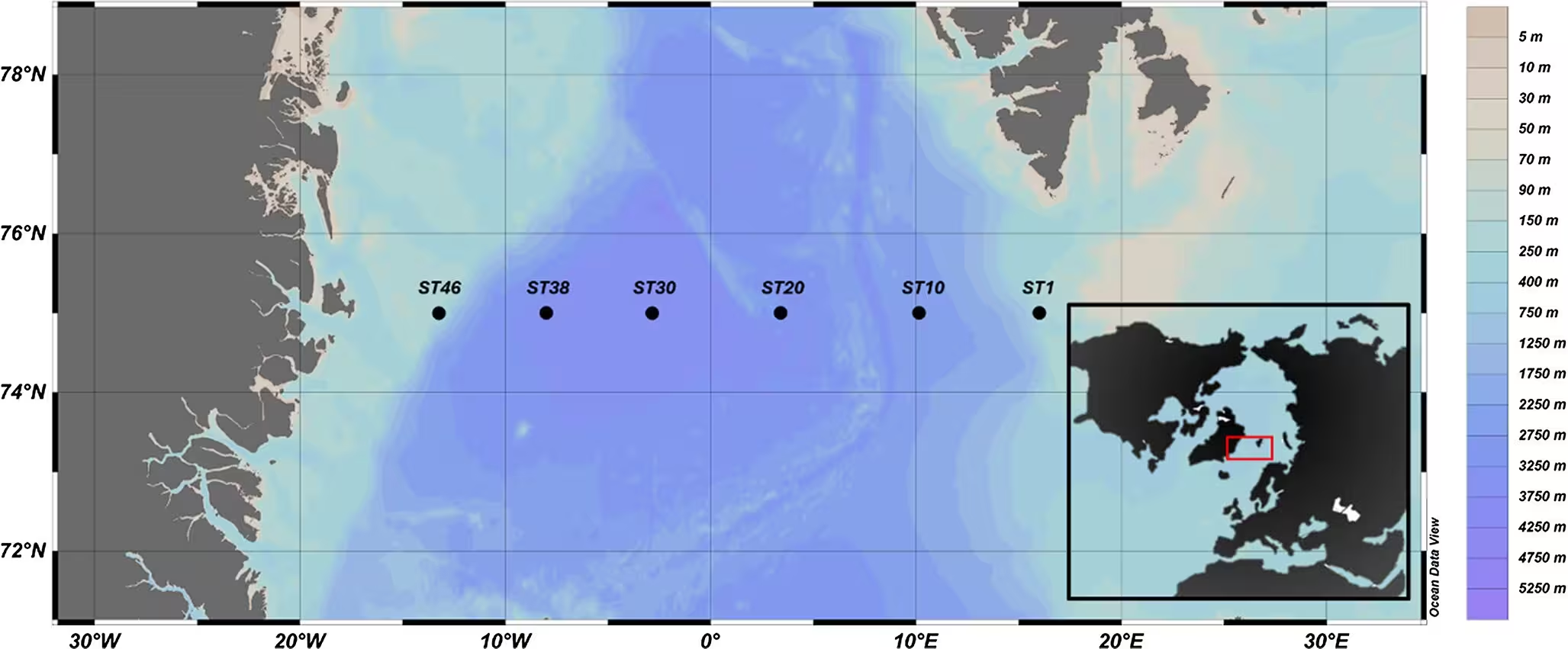
Deep within the Greenland Sea Gyre at 75 degrees north latitude, microzooplankton communities measuring a fraction of a millimeter are revealing how warming waters ripple through Arctic marine food webs. Researchers sampling down to depths of 3,500 meters during a September 2021 expedition aboard the research vessel R/V Laura Bassi discovered that these tiny single-celled predators and microscopic animals are heavily shaped by distinct water masses colliding in the high north. Total organism abundance swung wildly from just 6.25 individuals per liter in the crushing depths to 721.5 individuals per liter at the sunlit surface.
The detailed findings, published in Polar Biology, provide a fresh baseline for understanding how Atlantic water intrusion and rapid regional warming alter the microscopic foundation of polar oceans. Marina Monti-Birkenmeier and Tommaso Diociaiuti analyzed water samples collected across six stations spanning from the continental slope of Norway to the coast of Greenland, tracking organism sizes, carbon biomass, and taxonomic diversity.
Tiny Tintinnid Shells Dominate the Upper Water Column
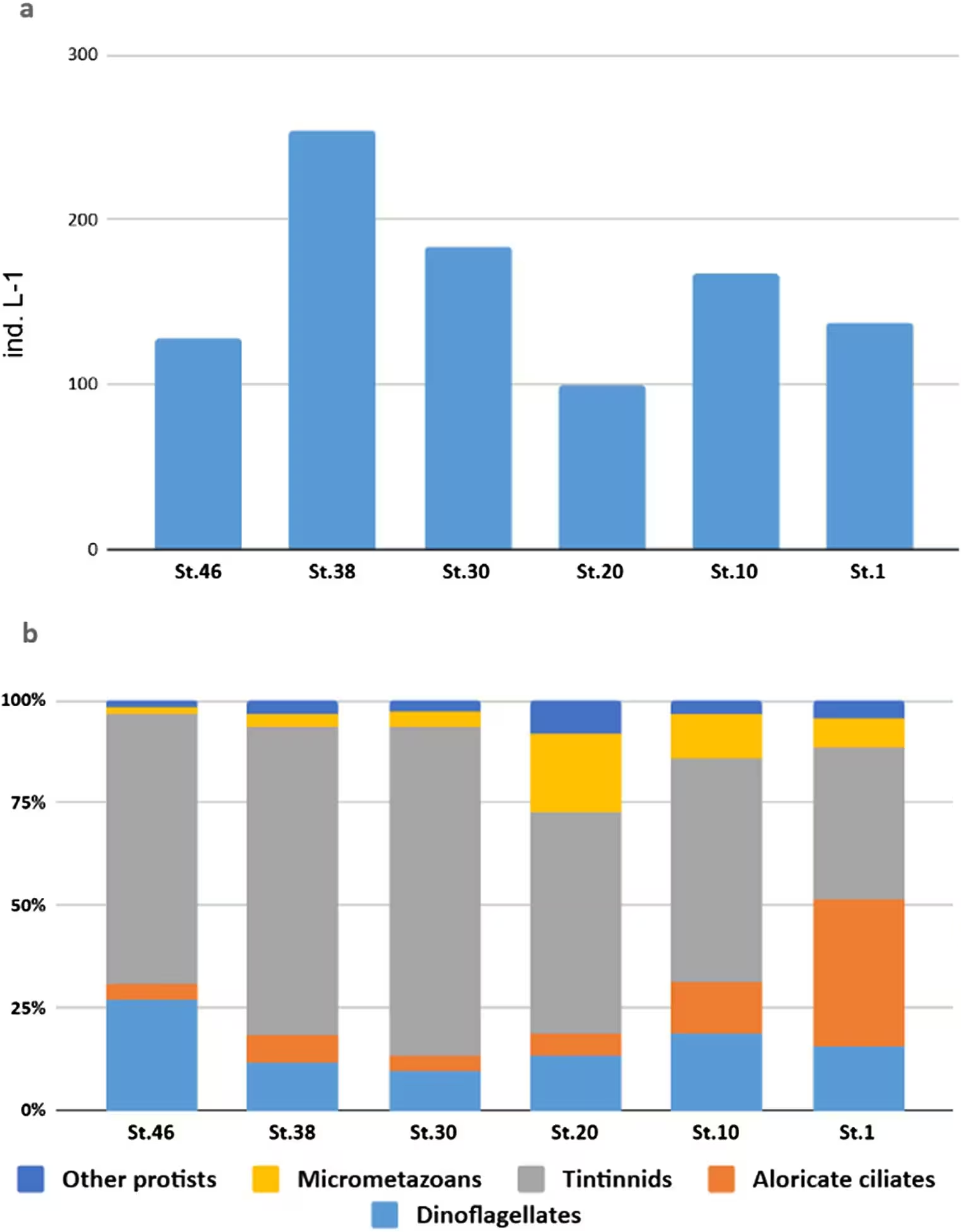
Microzooplankton are heterotrophic and mixotrophic protists and small metazoans ranging from 20 to 200 micrometers in size. Across the entire transect, total organism abundance was significantly higher in the photic zone above 100 meters, averaging 160 individuals per liter, compared to just 40 individuals per liter in the dark aphotic zone below. Tintinnids, which are ciliates encased in protective mineral or organic shells known as loricae, formed the vast majority of the community by making up 68 percent of all organisms in the upper water layer.
Among the tintinnid assemblage, a single cosmopolitan species called Acanthostomella norvegica reigned supreme, peaking at an astonishing 613 individuals per liter at station 38. The authors also documented several warm-water species appearing further north than historically recorded, including Amphorellopsis tetragona, Codonellopsis pusilla, Parundella caudata, and an organism belonging to the genus Ormosella. This geographic expansion points directly to the ongoing process of Atlantification, where warm currents from the North Atlantic push deeper into the Arctic domain.
Why Small Cell Sizes Constrain Arctic Carbon Export
Size structure analysis revealed that 84 percent of the microzooplankton community possessed total body lengths between 20 and 60 micrometers. Furthermore, 84 percent of the tintinnids featured a lorica oral diameter between 15 and 35 micrometers, which restricts their preferred prey to nano- and microphytoplankton ranging from 4.5 to 16 micrometers across.
Total carbon biomass mirrored the abundance gradients, ranging from a meager 0.01 micrograms of carbon per liter at depth to a high of 1.7 micrograms of carbon per liter at the surface of station 38. Because the majority of these grazers and their primary prey were exceptionally small, the researchers suggest that the transfer of carbon upward to higher trophic levels, such as large copepods, was severely constrained during the late-summer sampling period. In regions dominated by cold polar water along the Greenland slope, both microzooplankton abundance and biomass dropped off drastically.
Methodological Caveats and the Search for Top-Down Control
The authors acknowledge important technical limitations in their sampling protocol. Reverse filtration through a 10-micrometer mesh and subsequent formaldehyde fixation are known to preserve loricate ciliates and thecate dinoflagellates effectively, but they often damage or destroy delicate aloricate ciliates and athecate dinoflagellates. Consequently, the low numbers recorded for those soft-bodied groups reflect methodological underestimation alongside seasonal factors, as sampling took place in early September at the end of the active production season.
The data also highlighted striking interactions between different rungs of the marine food web. At station 20, a massive peak in larger mesozooplankton abundance coincided directly with the lowest microzooplankton numbers, pointing to heavy top-down grazing pressure by copepods. Conversely, in mixed water zones where Atlantic and polar waters met, high numbers of small tintinnids exerted strong grazing pressure on microscopic flagellates. Establishing these baseline dynamics is vital for tracking how climate change will reshape polar marine ecosystems in the decades ahead.
The research was published in Polar Biology on November 2, 2026.
This article has been fact checked for accuracy, with information verified against reputable sources. Learn more about us and our editorial process.
Last reviewed on .
Article history
- Latest version
Reference(s)
- Monti-Birkenmeier, Marina., et al. “Tintinnids and other microzooplankton along a transect through the Greenland Sea Gyre.” Polar Biology, vol. 49, no. 4, November 2, 2026 Springer Science and Business Media LLC, doi: 10.1007/s00300-026-03563-1. <https://doi.org/10.1007/s00300-026-03563-1>.
Cite this page:
- Posted by Divya Iyer