Russian Cargo Ship Successfully Launches With 3 Tons Of Supplies For The Space Station
Russia’s Progress 96 cargo spacecraft has successfully launched, carrying three tons of essential supplies to the crew aboard the International Space Station.
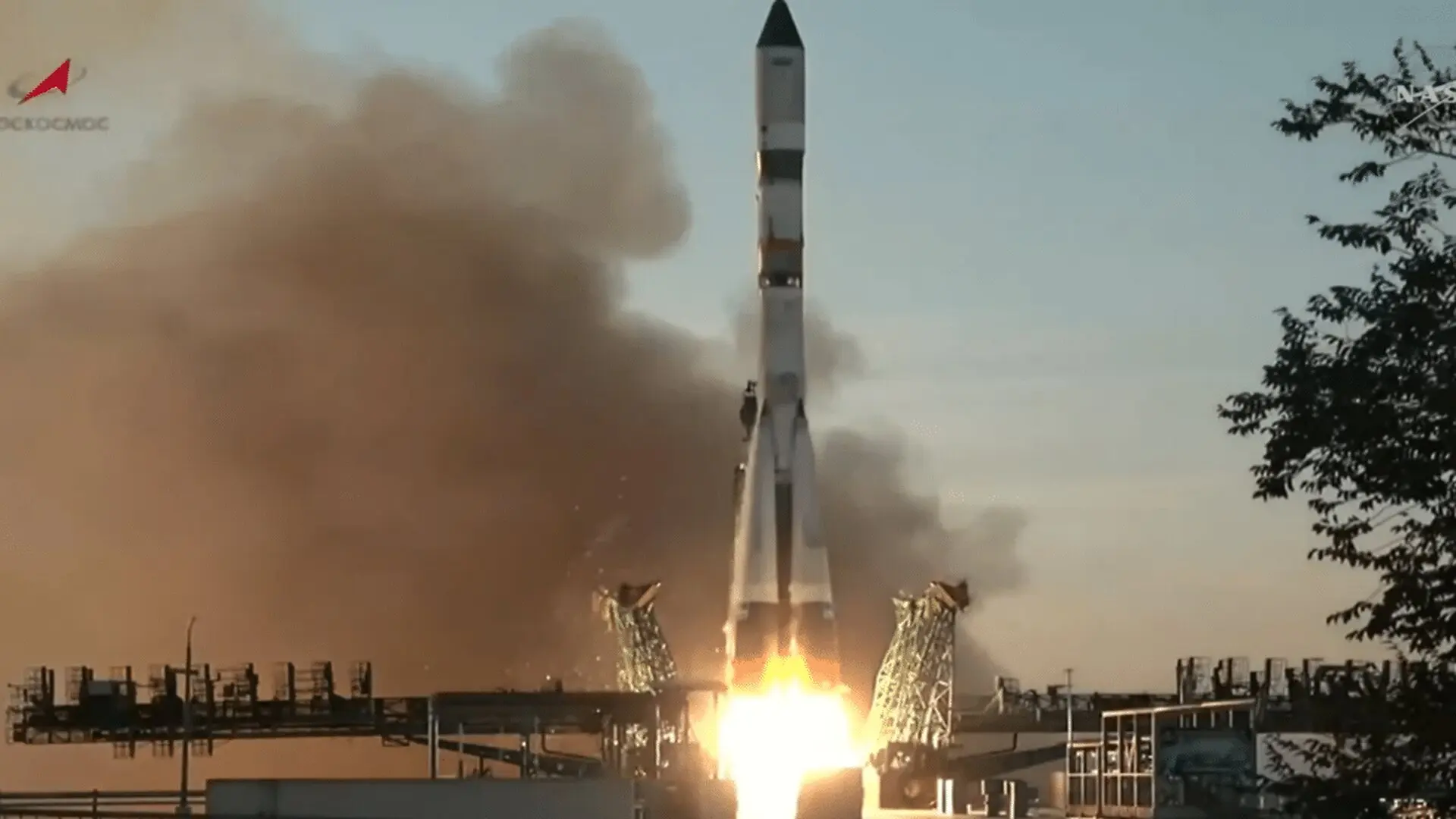
New Cargo Mission Launches to Replenish International Space Station Supplies
A fresh resupply mission is currently underway for the International Space Station (ISS) following the successful liftoff of Russia’s Progress 96 spacecraft. Propelled by a Soyuz rocket, the uncrewed freighter ascended from the Baikonur Cosmodrome in Kazakhstan on September 16, 2026, at 9:33 a.m. EDT (1333 GMT), beginning a three-day transit to the orbital laboratory.
The mission, confirmed by NASA, involves the delivery of approximately three tons of essential provisions, including fuel, food, and various maintenance equipment. The launch sequence proceeded without incident, with officials reporting a flawless ascent, successful separation, and the effective deployment of the spacecraft’s solar arrays.
NASA commentator Rob Navias noted the precision of the operation, describing the performance of the Soyuz booster as an excellent climb to orbit. This routine, yet complex, logistics mission serves to maintain the steady flow of resources required by the seven astronauts and cosmonauts currently residing on the station, who represent a collaborative effort between NASA, the European Space Agency (ESA), and Roscosmos.
A Progress 96 cargo spacecraft packed with about three tons of food, fuel and supplies lifted off from Kazakhstan at 9:33 a.m. EDT today. It will dock to the station at 9:46 a.m. on Saturday, Sept. 19. More… https://t.co/sJygyqBlrQpic.twitter.com/vMSY96bBCW
— International Space Station (@Space_Station) September 16, 2026
Orbital Logistics and the Life Cycle of the Progress Freighter
Progress 96 is scheduled to dock with the ISS on September 19. Once secured to the station, it will remain in place for approximately five months, serving as both a storage unit and a platform for station operations. The arrival of this vehicle follows the recent departure of its predecessor, Progress 94, which vacated its docking port on September 7 to facilitate the ongoing cycle of supply arrivals.
Once its mission concludes, the spacecraft will be loaded with refuse and discarded materials from the station. It is then slated for a controlled, destructive reentry into Earth’s atmosphere, where it will burn up over the Pacific Ocean. This disposal method is standard practice for the Progress fleet, keeping the station clear for future arrivals.
Sustaining Human Presence in Low-Earth Orbit
The Progress program remains a cornerstone of the global logistics network that keeps the International Space Station functional. Alongside the Russian Progress vehicles, the station relies on a diverse array of spacecraft, including SpaceX’s Dragon, Northrop Grumman’s Cygnus, and Japan’s HTV-X.
While most of these vessels are engineered for single-use missions ending in atmospheric incineration, the SpaceX Dragon is a notable exception due to its reusable capsule architecture, which allows for the return of hardware and research samples to the surface. The integration of these various international and commercial platforms ensures that the station remains fully stocked, allowing the resident crew to focus on high-level scientific research and complex technical maintenance.
Ultimately, the steady stream of cargo flights reflects the intricate coordination required to sustain humanity’s longest-running presence in space. Each mission, though routine, underscores the reliance of orbital exploration on precise engineering and the enduring partnership between international space agencies.
This article has been fact checked for accuracy, with information verified against reputable sources. Learn more about us and our editorial process.
Last reviewed on .
Article history
- Latest version
Reference(s)
- “https://go.nasa.gov/46rv9US.” <https://t.co/sJygyqBlrQ>.
- “https://twitter.com/Space_Station/status/2100221292532138275/video/1.” <https://t.co/vMSY96bBCW>.
Cite this page:
- Posted by Divya Iyer