ISS Medical Evacuation Marks a Quiet Turning Point in Human Spaceflight
Four astronauts returned to Earth weeks early after a health issue aboard the International Space Station, triggering the first medical evacuation in the outpost’s 25-year history.
Human spaceflight is built on schedules measured years in advance. Launch windows are calculated to the second, spacecraft are booked far ahead of time, and missions follow timelines refined through decades of experience. Yet despite that precision, space remains an unpredictable environment, especially for the people living there.
That reality came sharply into focus when four astronauts from the International Space Station returned to Earth earlier than planned due to a medical issue affecting one crewmember. The landing itself was smooth and routine, but the reason behind it was anything but. For the first time in the station’s long operational history, a mission was shortened specifically to address astronaut health.
The decision did not involve alarms, emergency descents, or dramatic last minute rescues. Instead, it reflected a deliberate choice by mission managers who concluded that proper diagnosis and treatment could not be delivered in orbit. The astronauts were stable, their spacecraft was ready, and the safest course was simply to come home.
That understated moment represents a milestone in human spaceflight, not because something went wrong, but because the system worked exactly as it was designed to.
A Mission That Was Supposed to Last Longer
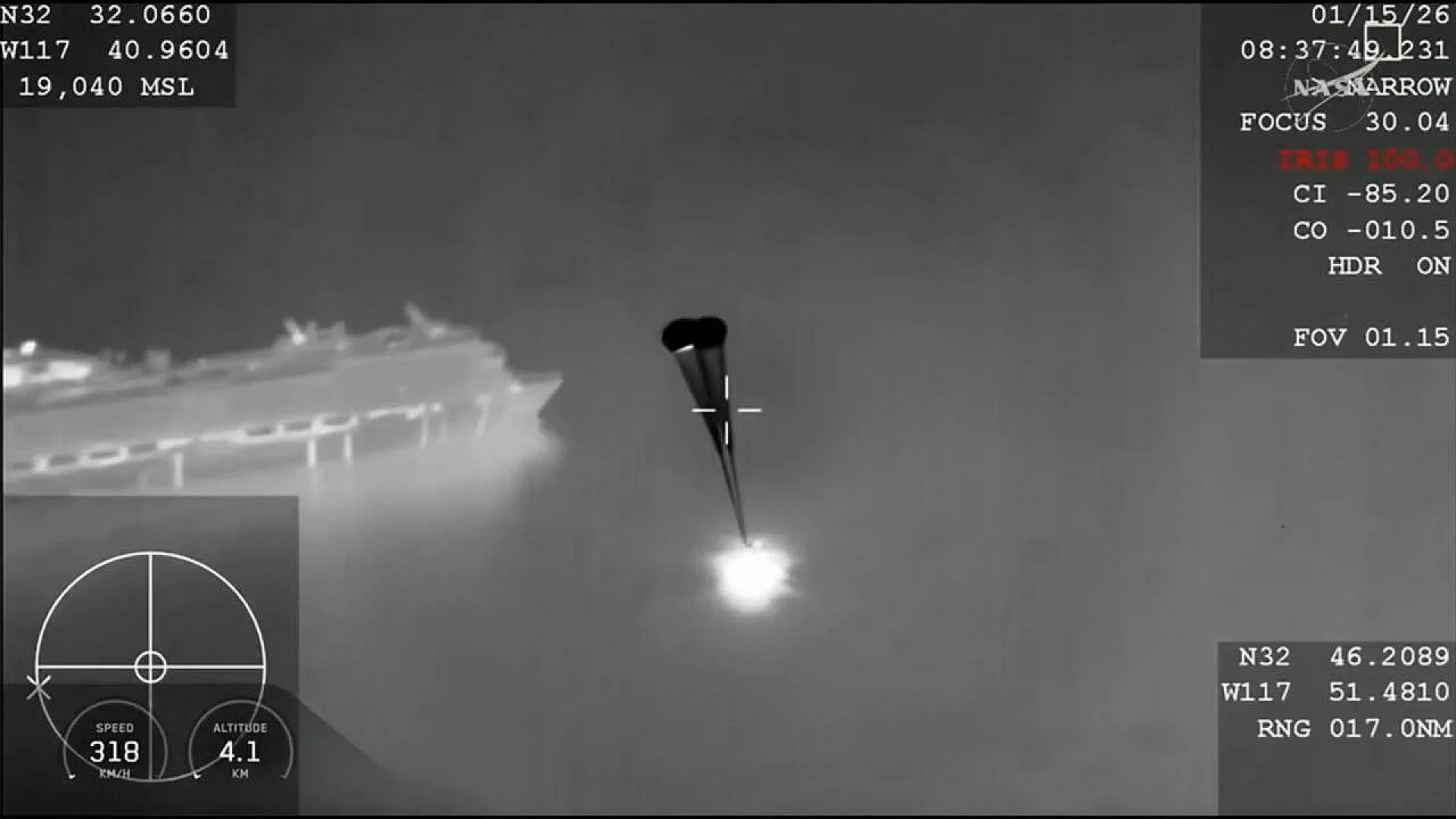
The SpaceX Crew Dragon capsule carrying NASA astronauts Mike Fincke and Zena Cardman, Japan Aerospace Exploration Agency astronaut Kimiya Yui, and Russian cosmonaut Oleg Platonov splashed down in the Pacific Ocean off the coast of California in the early hours of January 15. The return came roughly a month earlier than originally planned.
Crew-11 launched to the International Space Station on August 1, 2025, as part of NASA’s routine crew rotation program. These missions typically last about six months and overlap with incoming crews to ensure a smooth handover of responsibilities. For most of its duration, Crew-11 followed that familiar rhythm of scientific research, station maintenance, and daily life in microgravity.
The change came during the mission’s final stretch. In early January, NASA announced the cancellation of a scheduled spacewalk, citing a medical concern involving one of the station’s crewmembers. Within a day, the agency confirmed that Crew-11 would return to Earth early.
NASA did not identify the affected astronaut or describe the nature of the condition, emphasizing medical privacy. Officials stressed that the situation was stable and not an emergency. Still, the conclusion was clear. The International Space Station does not have the full diagnostic and treatment capabilities available on Earth, and waiting several more weeks carried unnecessary risk.
Why the ISS Is Not a Hospital
The International Space Station is often described as a floating laboratory, but it is not a hospital. While astronauts receive extensive medical training and the station carries medical equipment, its capabilities are necessarily limited by mass, power, and space constraints.
Routine medical care in orbit includes monitoring vital signs, managing minor injuries, and addressing common spaceflight issues such as fluid shifts, muscle loss, and bone density changes. For more complex conditions, ground based flight surgeons guide astronauts through procedures using real time communications and onboard diagnostics.
However, some medical evaluations require imaging, laboratory testing, or specialist interventions that simply cannot be replicated in microgravity. In such cases, mission planners must weigh the risks of continuing the mission against the benefits of early return.
NASA Administrator Jared Isaacman summarized that calculation during a press briefing, noting that while emergency deorbit capability always exists, this situation did not rise to that level. Instead, the decision reflected the reality that optimal care was only available on Earth.
A Historic First, Despite Decades of Preparation
The absence of prior medical evacuations from the ISS might seem surprising, especially given that astronauts have lived continuously aboard the station since November 2000. Over that period, hundreds of individuals have spent months in orbit, collectively accumulating decades of exposure to microgravity.
Statistical analyses conducted by NASA’s medical leadership have long suggested that a medical evacuation would eventually occur. According to NASA Chief Health and Medical Officer James Polk, such an event might be expected roughly once every three years when considering population size and mission duration.
Yet until now, careful crew selection, rigorous medical screening, and a measure of good fortune had prevented it. That streak ended not with a dramatic crisis, but with a calm operational decision that reflected how spaceflight risk is managed today.
Life Aboard a Suddenly Quieter Station
Crew-11’s departure left just three people aboard the International Space Station: NASA astronaut Christopher Williams and Russian cosmonauts Sergey Kud-Sverchkov and Sergei Mikayev. They arrived in late November aboard a Soyuz spacecraft and will likely remain alone for about a month until the next SpaceX crew launches.
A three person crew is well below the station’s current standard of seven, but NASA officials expressed little concern. Williams is fully trained to operate the station’s American segment independently, and most station operations are supported by ground teams across the world.
The situation also echoes the station’s earlier years. For nearly a decade after its first crew arrived, the ISS typically hosted just three astronauts at a time. Only in 2009 was the baseline expanded to six, and later to seven, reflecting increased capacity and scientific ambition.
In other words, while the staffing reduction is unusual by modern standards, it is far from unprecedented.
The Human Cost of Long Duration Spaceflight
Spaceflight places unique stresses on the human body. Microgravity alters how fluids move, affects vision, weakens bones and muscles, and changes cardiovascular function. Radiation exposure increases outside Earth’s protective atmosphere, and isolation can challenge mental health.
Astronauts undergo years of medical screening and training to ensure they are fit to withstand these conditions. Even so, space is an environment where small issues can evolve differently than they would on Earth.
Importantly, not all medical concerns in space are caused by space itself. Astronauts are human beings who can develop infections, inflammatory conditions, or other health problems that have little to do with microgravity. When those occur, mission planners must decide how best to respond.
Crew-11’s early return underscores that astronaut health is not an abstract consideration but a practical constraint that shapes mission outcomes.
Experience Across the Crew
The Crew-11 astronauts represented a wide range of spaceflight experience. For Zena Cardman and Oleg Platonov, the mission marked their first journey into orbit. For Kimiya Yui, it was his second, bringing his total time in space to more than 300 days. Mike Fincke, a veteran of multiple missions, added to a career total exceeding 500 days off Earth.
That mix of experience is typical of modern crews and reflects NASA’s approach to balancing seasoned astronauts with newcomers. It also means that health events can occur at any stage of an astronaut’s career, regardless of prior flight history.
Shortly after landing, Cardman, the mission commander, expressed gratitude to the teams that supported the crew’s safe journey home. Her words captured the tone of the mission’s conclusion: relief, professionalism, and a sense of trust in the system.
Not the First Early Return in Space History
Although this was the ISS’s first medical evacuation, it was not the first time a space mission ended early due to health concerns. A notable precedent occurred in November 1985, when the Soviet Union brought three cosmonauts home from the Salyut-7 space station ahead of schedule.
One of the crew, commander Vladimir Vasyutin, fell ill during the mission and required hospitalization after returning to Earth. Later accounts suggested he may have concealed a preexisting condition before launch, highlighting the importance of thorough medical screening.
That episode, while distant in time and context, illustrates that health has always been a limiting factor in human spaceflight. What has changed is how transparently and systematically agencies now manage such risks.
Why This Moment Matters
The first medical evacuation from the ISS is not a sign of failure. It is evidence that human spaceflight has matured to the point where astronaut health takes priority over rigid adherence to schedules.
As space agencies plan longer missions, including future stays on the Moon and eventual journeys to Mars, medical autonomy will become even more critical. Crews traveling millions of kilometers from Earth will not have the option of an early return. Understanding when and why evacuation is necessary today informs how future missions are designed.
Crew-11’s return also reinforces public trust. Decisions were communicated clearly, risks were managed conservatively, and the outcome was safe. In an era of increasing commercial and international involvement in space, that example carries weight.
Looking Ahead to the Next Crew
SpaceX’s next crewed mission to the station, Crew-12, is scheduled to launch in mid February. NASA has indicated it may attempt to move that date slightly earlier, though any change would be modest.
When the new astronauts arrive, the station will return to its normal staffing level, and scientific operations will ramp back up. Crew-11’s shortened mission will become part of the ISS’s long operational record, a footnote that nonetheless marks a meaningful shift.
Human spaceflight has always involved balancing ambition with caution. This quiet, carefully managed medical return shows how that balance is maintained in practice.
This article has been fact checked for accuracy, with information verified against reputable sources. Learn more about us and our editorial process.
Last reviewed on .
Article history
- Latest version
- Last updated by Dayyal Dungrela, MLT, BSc, BS
- Peer reviewed by Dr. Arjun Patel, PhD
Reference(s)
- Garcia, Mark A.. “NASA, SpaceX Set Target Date for Crew-11’s Return to Earth.”, 09 January 2026 National Aeronautics and Space Administration <https://www.nasa.gov/blogs/spacestation/2026/01/09/nasa-spacex-set-target-date-for-crew-11s-return-to-earth>.
Cite this page:
- Posted by Aisha Ahmed