NASA’s Mars Sample Return Dream Hits a Wall as Funding Cuts End the Mission
NASA’s long-planned effort to return pristine samples from Mars has been effectively canceled after steep budget cuts, leaving decades of scientific ambition and cached Martian rocks in an uncertain limbo.
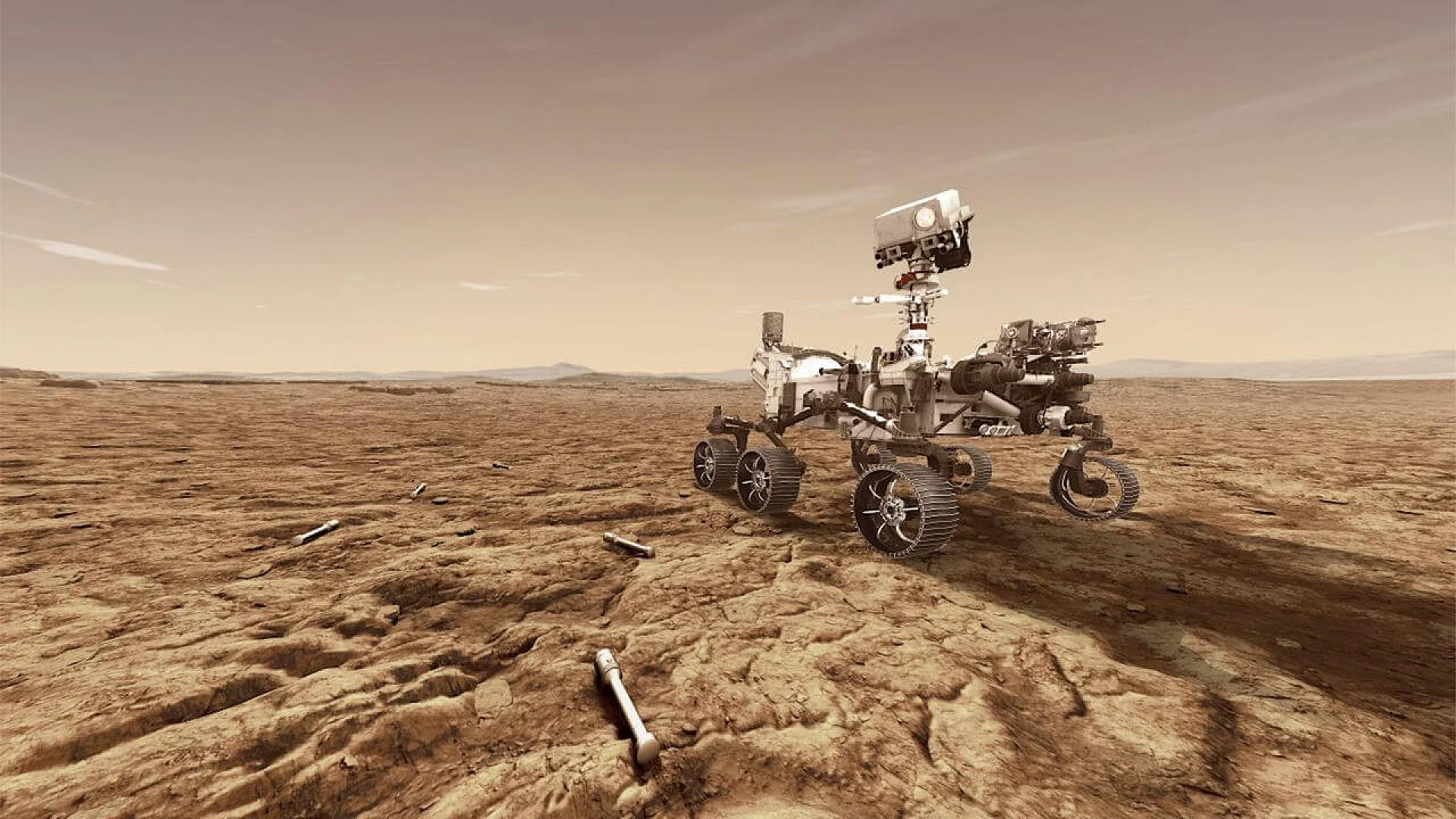
For planetary scientists, the promise was almost mythic in scale. Tiny tubes of Martian rock and dust, drilled from an ancient landscape that may once have supported life, would finally arrive on Earth. Inside the world’s most advanced laboratories, those samples would be scrutinized with instruments far beyond anything that could ever be sent to Mars. Answers to long-standing questions about the planet’s past, and possibly about life beyond Earth, seemed within reach.
That vision has now abruptly dimmed.
NASA’s Mars Sample Return mission, once described as the crown jewel of Mars exploration, has been effectively canceled after the US Congress imposed deep funding cuts. While the agency has not formally declared the program dead, the practical outcome is the same. The mission, as it was conceived, can no longer proceed.
For the scientific community, this moment marks a profound turning point. Mars Sample Return was not just another robotic mission. It was meant to close a chapter that began decades ago, when Mars first emerged as a prime candidate for ancient habitability.
Why Mars Samples Matter So Much
Mars has been studied intensively for more than half a century, yet its most fundamental mysteries remain unresolved. Orbiters have mapped its surface in exquisite detail. Landers and rovers have analyzed soil chemistry, atmospheric composition, and mineralogy. Together, these missions have revealed compelling evidence that Mars was once warmer and wetter than it is today.
Ancient river channels, lake beds, and sedimentary rocks suggest that liquid water flowed across the Martian surface for extended periods. These environments are precisely the kinds of places where microbial life might have emerged or persisted.
However, there is a limit to what robotic instruments can do on another planet. Even the most advanced rover is constrained by power, size, and durability. By contrast, Earth-based laboratories offer an unmatched combination of precision, flexibility, and continual technological advancement.
Returning samples to Earth has therefore long been regarded as essential. It would allow scientists to search for subtle chemical signatures, isotopic patterns, and mineral structures that could never be conclusively identified on Mars itself.
A Goal Decades in the Making
The idea of returning samples from Mars is not new. As far back as 2011, Mars Sample Return was identified as one of the highest priorities in NASA’s planetary science strategy. It was envisioned as a collaborative effort with the European Space Agency, combining expertise, technology, and shared ambition.
Even today, NASA’s own description of the mission emphasizes its transformative potential. The agency has stated that returning Martian samples would revolutionize understanding of Mars, deepen insight into the Solar System’s history, and prepare for eventual human exploration of the Red Planet.
The Perseverance rover, which landed in Jezero Crater in 2021, was designed as the first step in this grand plan. Its mission was not merely to analyze Mars, but to collect and cache samples specifically chosen for their scientific value.
By all accounts, Perseverance has exceeded expectations.
Perseverance’s Unfinished Task
Since arriving on Mars, Perseverance has carefully drilled, sealed, and stored 33 sample tubes containing rocks, regolith, and atmospheric material. These samples were selected to represent a wide range of geological environments, including ancient lake sediments and volcanic formations.
Each tube was designed to preserve its contents for years, even decades, in the harsh Martian environment. Together, they form one of the most scientifically valuable collections of extraterrestrial material ever assembled.
But Perseverance was never meant to bring those samples home itself.
The next phases of Mars Sample Return were supposed to retrieve the cached tubes, launch them into Martian orbit, and ferry them safely back to Earth. It was here that the mission’s ambition collided with financial reality.
An Engineering Challenge Like No Other
Mars Sample Return was always going to be extraordinarily complex. The proposed architecture involved multiple spacecraft, each performing unprecedented tasks millions of kilometers from Earth.
A dedicated lander would touch down near Perseverance’s location. The rover would deliver its sample tubes to the lander, or if terrain or timing prevented that, a pair of small helicopters would collect them instead.
From there, a rocket mounted on the lander would launch the samples into Martian orbit. An orbiting spacecraft would then rendezvous with the container, capture it, and begin the long journey back to Earth.
Every step carried risk. No rocket has ever launched from another planet and successfully delivered a payload for return to Earth. Each component had to work flawlessly, with little opportunity for real-time intervention.
This technical audacity was part of what made Mars Sample Return so compelling. It was also what made it expensive.
When Costs Outpace Confidence
Early cost estimates for Mars Sample Return gradually gave way to sobering revisions. At one point, projections suggested the mission could cost as much as 11 billion dollars. Through redesigns and alternative architectures, NASA managed to reduce the estimate to around 7 billion dollars.
Even that figure raised concerns.
Because no mission of this kind has ever been attempted, there was significant uncertainty surrounding the final cost. Delays, technical setbacks, and unforeseen complications could easily push expenses higher.
At the same time, NASA has faced increasing pressure to constrain its overall budget. With competing priorities across planetary science, Earth observation, astrophysics, and human spaceflight, Mars Sample Return became an obvious target.
In an environment where hard choices had to be made, a mission that was both expensive and technically uncertain proved difficult to defend.
The Budget Axe Falls
The latest US budget decisions dramatically reduced funding for Mars Sample Return, effectively halting progress on the mission as originally planned. While some funding remains allocated to Mars-related technology development, it is only a fraction of what would be needed to carry out the full sample return campaign.
The official language surrounding the decision has been cautious, emphasizing reevaluation and future possibilities rather than outright cancellation. Yet the practical reality is stark. Without sustained funding, the mission cannot proceed.
For scientists and engineers who have devoted years, and in some cases entire careers, to Mars Sample Return, the impact is deeply personal.
What Happens to the Samples Now
One of the most unsettling questions is also one of the simplest. What happens to the samples already collected?
For now, the answer is largely reassuring. Mars is cold and dry, conditions that help preserve geological material over long periods. The sealed tubes are designed to withstand radiation, temperature swings, and mechanical stress.
In all likelihood, they will remain intact for many years.
Yet their scientific value is intrinsically tied to the ability to study them on Earth. Leaving them on Mars indefinitely turns a triumph of exploration into a suspended promise.
Can Mars Do the Science Instead
Some have suggested that advances in on-site analysis could eventually make sample return unnecessary. If instruments capable of performing Earth-level analysis could be deployed on Mars, perhaps the samples would not need to travel at all.
This idea has appeal, but it faces a fundamental challenge. Laboratory technology on Earth continues to advance rapidly. Even as instruments become smaller and more capable, they are unlikely to match the breadth and adaptability of Earth-based facilities.
Moreover, scientific inquiry often depends on reanalysis. Samples are revisited years later with new techniques, new questions, and new theoretical frameworks. That kind of iterative study is difficult to replicate remotely.
For many researchers, returning samples to Earth remains irreplaceable.
International Implications and Rising Competition
The cancellation of Mars Sample Return also reshapes the international landscape of planetary exploration.
The mission was originally conceived as a joint effort between NASA and the European Space Agency. With NASA stepping back, questions arise about whether ESA could pursue some version of the mission independently.
Meanwhile, China has announced plans for its own Mars sample return mission. If successful, it could become the first nation to bring Martian material back to Earth.
However, the scope of China’s mission differs significantly. While Perseverance’s samples were selected with extraordinary care to maximize scientific return, China’s approach has been described as more limited, focusing on rapid collection rather than detailed geological context.
Still, the symbolic and scientific implications of being first are substantial.
Why This Matters Beyond Mars
The consequences of Mars Sample Return’s cancellation extend far beyond a single mission.
At stake is the broader philosophy of planetary exploration. Sample return missions represent a bridge between robotic exploration and deep scientific analysis. They allow discoveries made on other worlds to be fully integrated into Earth-based science.
They also help prepare for human exploration. Understanding the composition, toxicity, and mechanical properties of Martian materials is essential for future astronauts.
Finally, there is the question of habitability itself. Mars remains one of the most promising places to search for evidence of past life beyond Earth. Delaying or abandoning sample return delays progress on one of humanity’s most profound scientific questions.
Uncertainty, Not Closure
Despite the grim outlook, the story of Mars Sample Return may not be finished.
Technological breakthroughs could lower costs. Political priorities could shift. International partnerships could evolve. It is possible that a revised, more affordable mission will emerge in the future.
Until then, the sample tubes sit quietly on the Martian surface, holding secrets that humanity is not yet able, or willing, to retrieve.
For now, the mission stands as a reminder of both the ambition and the fragility of big science. Even the most carefully planned explorations remain subject to budgets, politics, and hard choices.
Why This Matters
Mars Sample Return was not just about Mars. It was about how far scientific curiosity could reach when paired with sustained commitment. Its cancellation underscores the tension between aspiration and limitation, and leaves a critical chapter of planetary science unwritten.
This article has been fact checked for accuracy, with information verified against reputable sources. Learn more about us and our editorial process.
Last reviewed on .
Article history
- Latest version
- Last updated by Dayyal Dungrela, MLT, BSc, BS
Reference(s)
- Gough, Evan. “NASA’s Mars Sample Return Is Dead, Paving The Way For China.”, 08 January 2026 Universe Today <https://www.universetoday.com/articles/nasas-mars-sample-return-is-dead-paving-the-way-for-china>.
Cite this page:
- Posted by Aisha Ahmed
- Astronomy
- Greigite in Martian Rocks
- Mars Exploration Budget Cuts
- Mars Habitability
- Mars Sample Return Mission
- Mars Samples Return
- Martian Rock Samples
- NASA
- NASA Mars Mission Canceled
- NASA Mars Program
- Perseverance Rover
- Perseverance Rover Mineral Findings
- Perseverance Rover Samples
- Planetary Science Funding
- Space Exploration
- Space Science