NASA’s Roman Telescope Could Uncover Dark Energy and Reveal New Worlds
NASA’s Nancy Grace Roman Space Telescope is built to tackle two huge mysteries at once, dark energy’s cosmic push and the hidden diversity of exoplanets, using a sky sweeping camera and a planet imaging tech demo.
Most us have had the same moment at least once, looking up on a clear night and realizing the sky is not just beautiful, it is baffling. Where did everything come from? How does the universe work on its largest scales? And are there other worlds like ours, maybe even life?
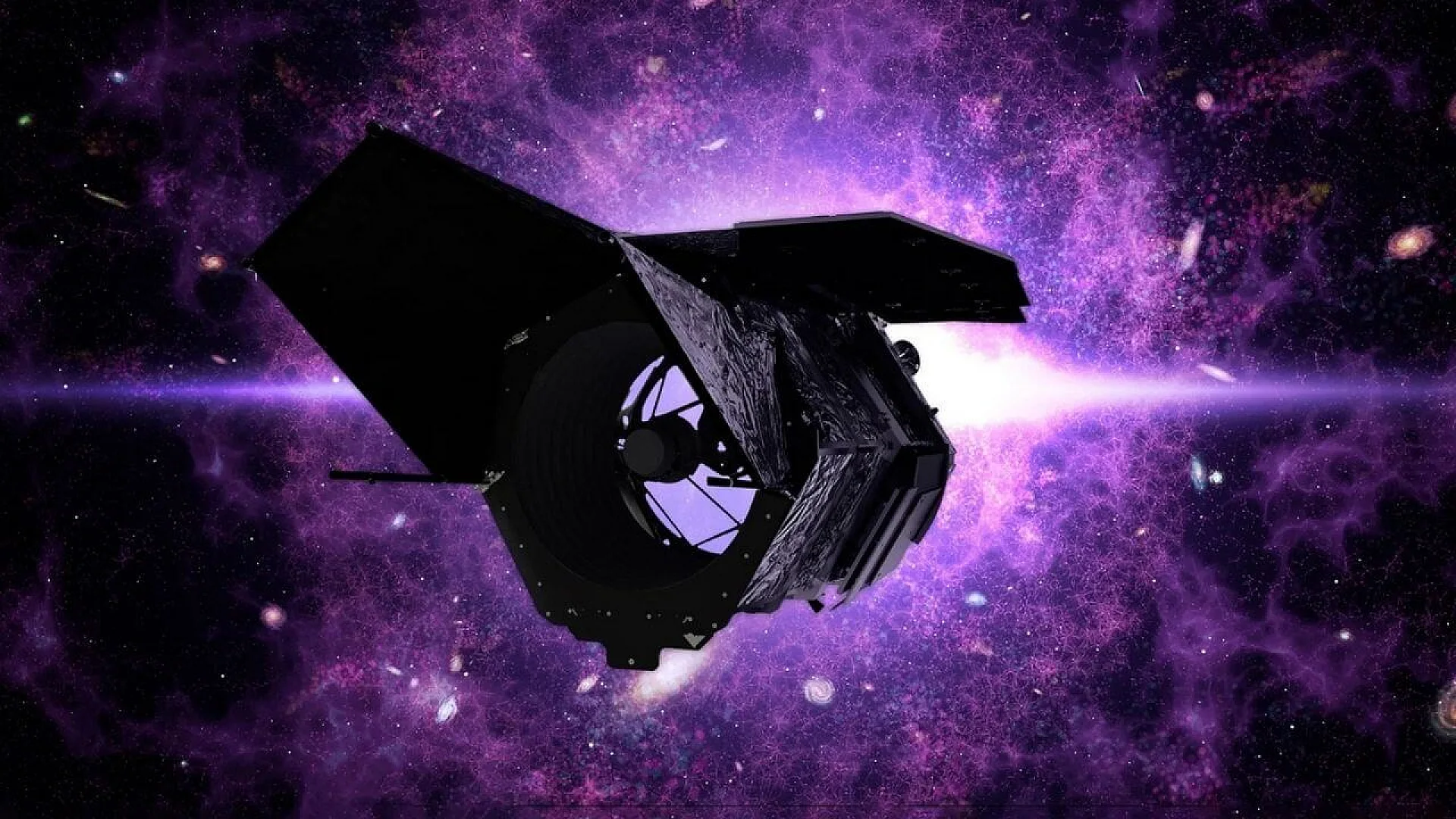
For decades, NASA’s great space telescopes have chipped at those questions by zooming in on distant galaxies, newborn stars, and the faint atmospheres of faraway planets. The Nancy Grace Roman Space Telescope, commonly called the Roman Space Telescope, is designed to do something a little different. It will not just zoom in, it will survey. It will take in huge swaths of sky at once and do it repeatedly, building massive data sets that let astronomers study the universe statistically, the way you would study a city by mapping every neighborhood rather than photographing a few famous streets.
Roman’s core promise is simple to describe and hard to overstate: it aims to transform our understanding of dark energy, the still mysterious ingredient linked to the accelerating expansion of the universe, while also delivering one of the largest and most informative exet surveys ever attempted. If everything goes as planned, Roman will be a telescope that answers today’s questions and creates tomorrow’s, which is exactly what great observatories do.
Two Mysteries That Keep Scientists Up at Night
Mystery 1: Why is the universe expanding faster over time?
For much of the twentieth century, the big debate was whether the universe would expand forever or eventually slow down and collapse. Then came a surprise: observations showed that the expansion is speeding up.
That acceleration is commonly attributed to “dark energy a placeholder name for whatever is causing that cosmic push. The trouble is that scientists still do not know what dark energy actually is. Is a property of space itself? Is it something that changes over time? Is it a sign that our understanding of gravity is incomplete?
To make progress, astronomers need extremely precise maps of how matter, galaxies and cosmic structure have evolved over billions of years. Small biases can lead to big misinterpretations, so the measurements have to be both large scale and carefully controlled.
Mystery 2: How common are planets, really, and what kinds of planetary systems are out there?
Exoplanet science has moved fast. Thousands of worlds have been confirmed, and we now know planets are common. But “common” is not the same as “well measured.” Many methods find certain kinds of planets more easily than others, which can skew our understanding of what the typical planetary system looks like.
One of the biggest gaps is the population of planets farther from their stars, including planets that orbit at distances more like Earth, Mars, or Jupiter do, and planets that might be cold, dim, or even free floating. Another gap is the need for large, uniform surveys that let scientists compare planetary populations across different regions of the galaxy.
Roman is built to attack both problems at once: the cosmic scale mystery of dark energy and the planetary scale mystery of how worlds form and distribute.
A Telescope Designed to Survey, Not Just Stare
Roman’s strategy is to combine two powerful ideas:
- Cover a very large field of view so it can map wide regions of the sky quickly.
- Repeat observations and measure subtle effects that reveal invisible physics, like gravity’s gentle distortion of galaxy shapes or a planet’s fleeting signature in a star’s light.
The Wide Field Instrument: like upgrading from a snapshot to a panorama
A useful way to picture Roman is to imagine two cameras. One is like a telephoto lens that takes exquisitely detailed images of a small area. The other is like a high panorama camera that captures a huge landscape with fine detail across the whole frame.
Roman’s Wide Field Instrument is built for that second style. It will take broad “panorama” views of the universe at high resolution, enabling massive surveys of galaxies, supernovae, and the subtle patterns in cosmic structure that dark energy influences.
This matters because dark energy is not something you can point at directly. It reveals itself through its long term influence on how the universe expands and how structure grows. Measuring that influence requires both depth and scale, which is exactly what wide field surveys excel at.
The Coronagraph Instrument: a technology pathfinder for imaging exoplanets
Roman also includes a coronagraph technology demonstration. A coronagraph is a set of optics that blocks a star’s overwhelming glare so a telescope can try to see the faint light of objects near it, such as planets or dust belts.
If you have ever tried to spot a firefly next to a stadium floodlight, you already understand the challenge. The coronagraph’s job is to suppress starlight enough that the far dimmer signal from a nearby planet can stand out.
Even when the goal is primarily technological, the implications are scientific. Improving high contrast imaging techniques is a key step toward future missions that might search for Earth sized planets and analyze their atmospheres for signs of habitability.
The Breakthrough: What Roman Is Expected to Do That We Couldn’t Do Before
Roman is not just “another telescope.” Its breakthroughs are about scale, speed, and statistics.
A dark energy survey built on sheer cosmic coverage
To study dark energy, scientists need to measure how the universe’s large scale structure changes over time. Roman’s wide surveys will support several complementary approaches, mapping vast numbers of galaxies and using gravitational lensing, the tiny warping of galaxy images by matter along the line of sight, to infer how matter is distributed.
Think of it this: if you want to know whether a loaf of bread rose evenly, you do not measure one bubble. You slice the loaf and look at the whole pattern. Roman’s maps aim to provide that kind of “whole pattern” view for the universe, across a significant fraction of cosmic history.
A massive census of exoplanets, including worlds we rarely see
Roman’s exoplanet survey is expected to detect huge numbers of planets using microlensing, a method that watches for brief brightenings when a foreground star, and possibly its planets, pass in front of a background star and act like a magnifying lens.
Microlensing is powerful because it can reveal planets that are hard to find by other methods, including planets that orbit far from their stars and even planets that may not be tightly bound to any star at all.
Instead of learning about planets one by one, Roman’s microlensing survey is designed to deliver population level insight, the kind you need to answer questions like:
- How common are Earth mass to Neptune mass planets beyond the “hot” close in region?
- How do planetary systems vary across the galaxy?
- How often do planets form in environments different from our own neighborhood?
A data torrent that becomes a community resource
Roman is also expected to generate an enormous volume of observations. That is more than a fun fact. It changes how astronomy gets done.
Large, public surveys tend to produce “second wave” discoveries that the original teams did not even plan for, because once the data exist, scientists with new ideas ask new questions. Roman’s legacy will likely include dark energy breakthroughs, yes, but also unexpected finds, rare transient events, unusual galaxies, and strange gravitational lensing systems that no one has predicted yet.
Why It Matters: What This Could Change for Science and for the Rest of Us
It could reshape fundamental physics
Dark energy is not a small detail. It affects the ultimate fate of the universe and may point to physics beyond what we currently understand.
If Roman helps narrow down whether dark energy behaves like a constant property of space or varies over time, that result will ripple into theoretical physics. It could constrain models of the universe, rule out popular ideas, and force new ones. Historically, better measurements have often triggered the biggest revolutions. Roman is designed to be a measurement machine.
It could rewrite the story of how planetary systems form
Exoplanet science is often driven by exciting individual worlds, a scorching hot Jupiter, a mini Neptune with unusual chemistry, a rocky planet in a temperate orbit. Roman’s contribution is different. It is expected to provide the statistics that tell us how typical or weird our solar system might be.
That matters for a deeper reason: habitability is not just about one planet. It is about the architecture of a whole system, how planets migrate, how water is delivered, and how stable long term climates can be. By building a broader planetary census, Roman can help set the stage for future missions that look for life by identifying where Earth like conditions are most likely.
It trains the tools we will need to see pale blue dots
Directly imaging exoplanets is a stepping stone toward analyzing atmospheres, searching for water vapor, oxygen related chemistry, or other hints of life friendly. Roman’s coronagraph is a technology demonstration, but technology demonstrations are how future breakthroughs become possible.
In practical terms, Roman helps move the field from “we think we can do this someday” to “we have tested methods in space.”
The Caveats and What Comes Next
Roman’s promise is huge, and so are the practical challenges.
Big surveys need careful calibration and interpretation
When you measure subtle signals across millions of galaxies, tiny systematic errors can masquerade as cosmic truths. That is why survey design, calibration, and data analysis pipelines matter as much as the telescope hardware. Roman’s success will depend not only on what it sees, but on how reliably scientists can turn those observations into precise cosmological conclusions.
Exoplanet discoveries still require follow up
Microlensing events are often one time alignments. That makes them incredible for discovery, but trickier for repeated characterization. Roman’s exoplanet survey is expected to be strongest at telling us “how many” and “what types,” not necessarily delivering detailed atmospheric profiles of each planet. Many of the most interesting targets will still require follow up by other observatories, present and future.
The most exciting outcome may be the one nobody predicted
Every major space telescope has produced surprises. Roman’s combination of huge area imaging and repeated surveys makes it especially good at finding the unexpected, but that also means some of its greatest impacts may not fit neatly into pre launch headlines.
Conclusion: A Telescope Built to Make the Universe Feel New Again
The Nancy Grace Roman Space Telescope is designed for a kind of discovery that is both sweeping and intimate. Sweeping because it will map the structure of the universe across enormous volumes of space and time, helping scientists pin down nature of dark energy. Intimate because it will reveal planetary systems across the Milky Way, giving us a clearer sense of how common, or rare, worlds like ours might be.
If Roman delivers on its goals, it will not just add pages to astronomy textbooks. It will change the questions we ask when we look up at night. And it will remind us that the universe is not only bigger than we imagine, it is still full of fundamental mysteries we are finally learning how to measure.
This article has been fact checked for accuracy, with information verified against reputable sources. Learn more about us and our editorial process.
Last reviewed on .
Article history
- Latest version
- Last updated by Dayyal Dungrela, MLT, BSc, BS
- Peer reviewed by Dr. Arjun Patel, PhD
Reference(s)
- NASA. “Nancy Grace Roman Space Telescope.” National Aeronautics and Space Administration <https://science.nasa.gov/mission/roman-space-telescope>.
Cite this page:
- Posted by Aisha Ahmed