7,000-Pound Dinosaur Mummy Unearthed in North Dakota Could Reveal Preserved Skin
A 7,000‑lb fossil dubbed “Medusa” may hold intact skin and soft tissue beneath its sandstone shell, offering rare insight into ancient life.
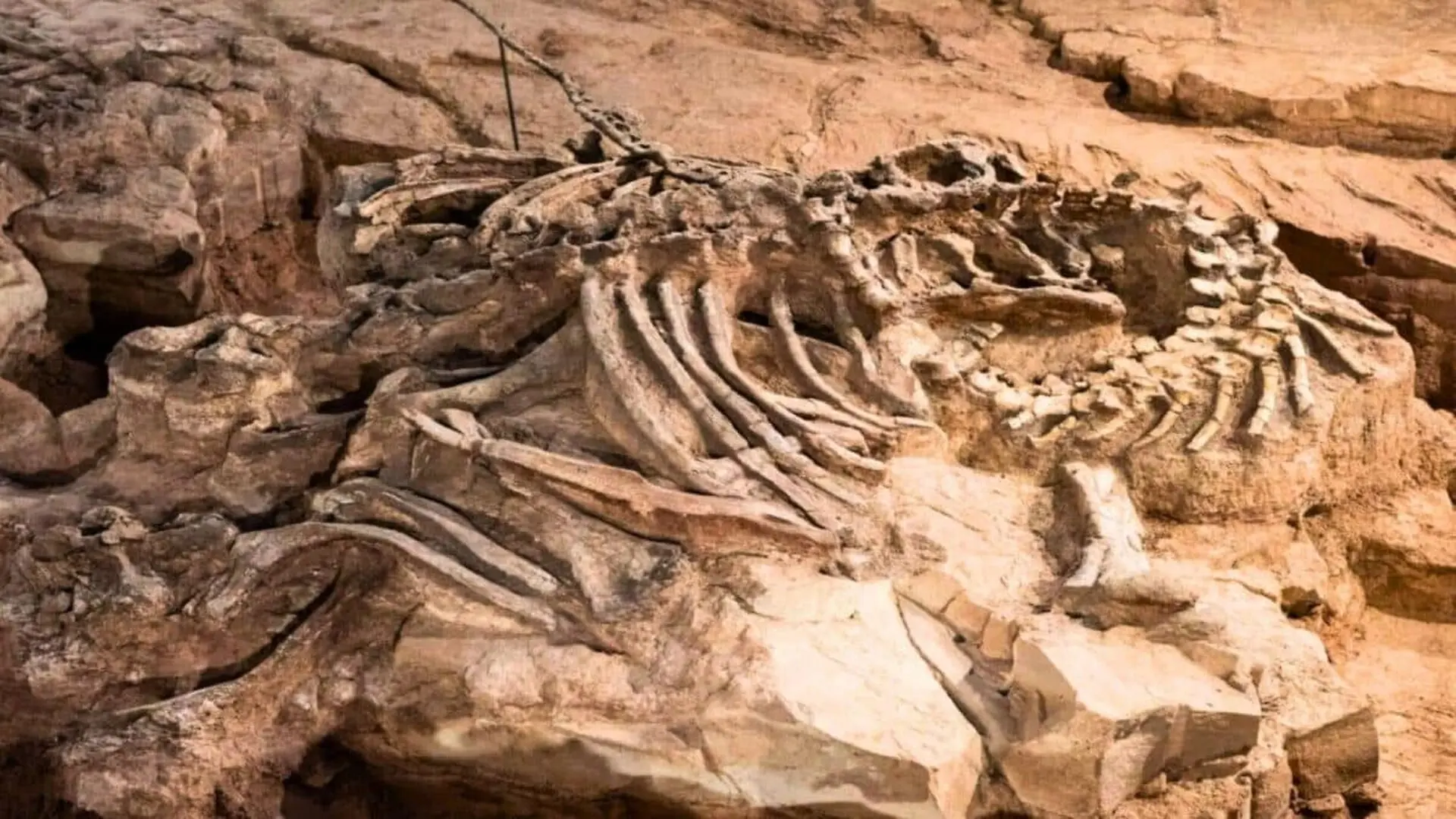
A coalition of geoscientists and Winona State University alumni unearthed a 66‑million‑year‑old Edmontosaurus on a secluded butte in southwestern North Dakota this July, delivering a specimen that may rank among the rarest of its type ever recovered.
The dinosaur, dubbed “Medusa,” arrived at the university’s Science Laboratory Center wrapped in a plaster encasement roughly 12 feet long and 7 feet wide. If subsequent analysis confirms the preservation of skin or other soft tissues, the fossil could be classified as a “dinosaur mummy,” a designation held by fewer than a dozen specimens worldwide.
Edmontosaurus, a duck‑billed herbivore that roamed the planet at the close of the Cretaceous, shared its ecosystems with contemporaries such as Triceratops and Tyrannosaurus rex. Confirmation of soft‑tissue retention would unlock biological insights unattainable from bone alone, shedding light on the animal’s outer appearance and bodily architecture.
The blend of size, articulation, and potential soft‑tissue preservation makes “Medusa” an exceptionally comprehensive record of a species that vanished 66 million years ago.
Discovery on Private Property and Manual Retrieval
The fossil was spotted by Adam Schroeder, a 2013 Winona State geoscience graduate and proprietor of Hell Creek Fossils, while surveying private land near Marmarth, North Dakota. The find perched on a remote butte, requiring the team to transport all equipment on foot for roughly a mile because the terrain precluded heavy machinery and budget constraints limited mechanized options.
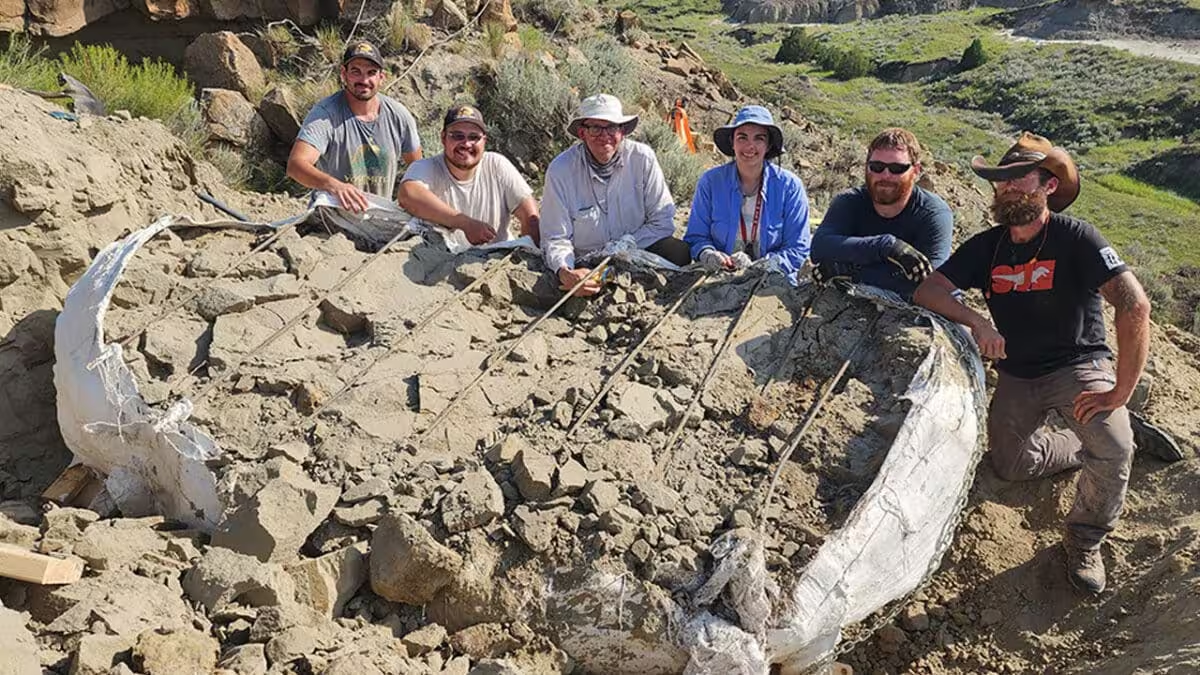
Embedded within a sandstone concretion about 85 feet up a cliff face, the specimen was encased in a protective plaster jacket by a team that included Schroeder, Dr. Lee Beatty (Professor and Chair of Winona State’s Geoscience Department), and alumni Samantha Khatri and Brady Bynton. The team lowered the fossil using chains, wooden rollers and a truck, delivering a final package weighing more than 7,000 pounds.
Originating from the Hell Creek Formation—an 66‑million‑year‑old geological layer renowned for yielding some of North America’s most celebrated late‑Cretaceous fossils—the find underscores the formation’s capacity to preserve dinosaur material in extraordinary condition. Even within this prolific formation, a specimen of Medusa’s scale and potential completeness is a rarity.
Anatomical Highlights and Remaining Mysteries
According to the Winona State University press release, the fossil retains articulated limbs and vertebrae, with the spine preserved from the shoulder region to the hips. The head and most of the tail are missing, inspiring the “Medusa” moniker—a nod to the headless aspect and to the snakes encountered at the site. Comparative analysis suggests the living animal measured roughly 20–25 feet in length.
Determining whether any soft tissue survived will require careful preparation as the surrounding sandstone is painstakingly removed. The articulated nature of the remaining bones hints at rapid burial, a scenario that can favor soft‑tissue preservation, prompting researchers to monitor each removal layer closely.
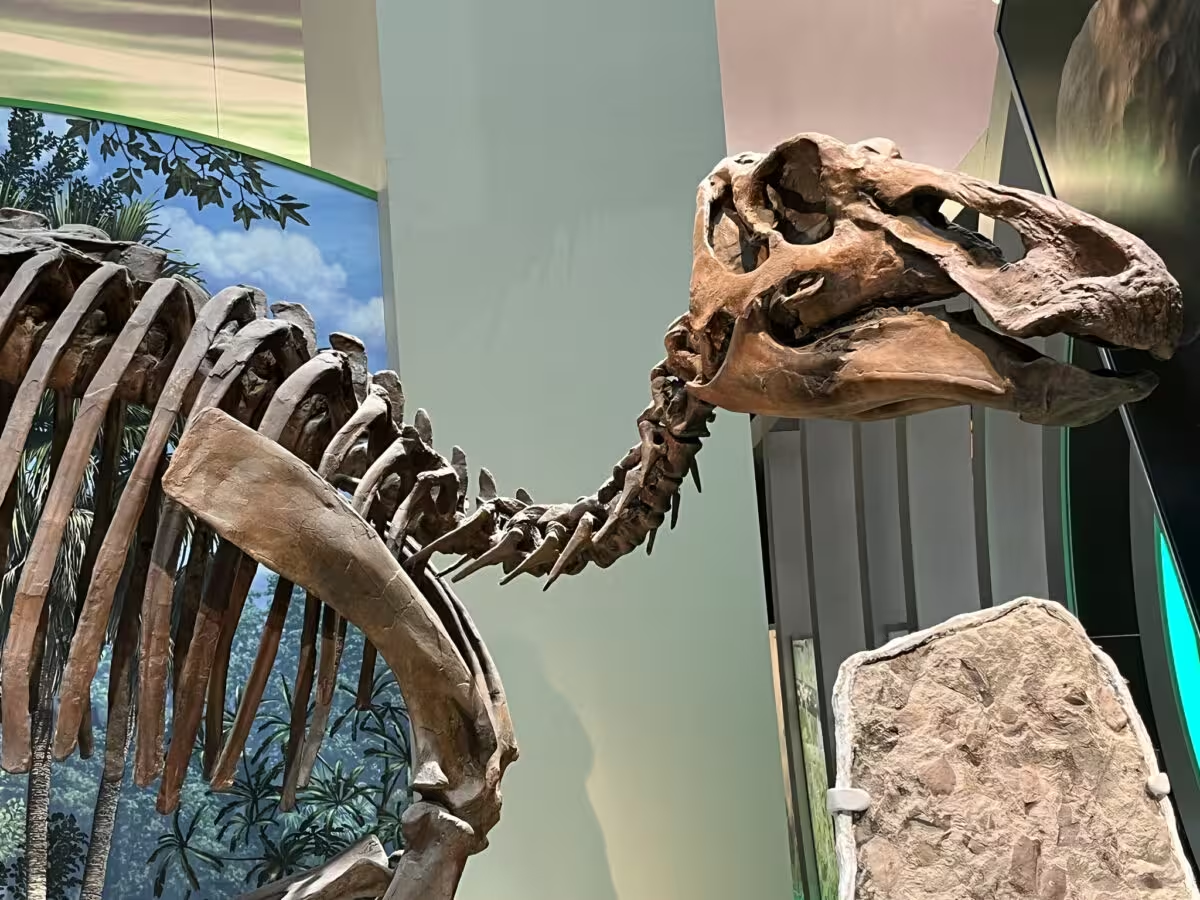
Dr. Beatty emphasized that only a handful of comparable “dinosaur mummy” specimens exist globally, making Medusa noteworthy irrespective of the eventual outcome of the preparation. Whether soft tissue is present or not, the articulated skeleton of a large late‑Cretaceous herbivore offers substantial research value, and the preparation process is expected to unfold methodically over an extended period.
Ongoing Preparation and Academic Integration
The specimen now resides in the university’s Science Laboratory Center, serving simultaneously as a research object and a hands‑on teaching tool for Winona State’s Geoscience Department. Faculty, students, and alumni collaborated to transport and position the fossil on campus, marking the start of a long‑term research and conservation initiative. Once fully prepared, the dinosaur will be displayed permanently for scholars, students, and the public.
Dr. Beatty highlighted the dual significance of the find: it promises fresh insights into Edmontosaurus biology while providing undergraduate and graduate students direct experience working alongside professional paleontologists.
“This is an extraordinary moment for Winona State and for science,” the press release quoted him. “Only a few dinosaur mummies have ever been discovered worldwide. If this specimen retains skin and soft tissues, it could reveal unprecedented details about dinosaur biology, evolution, and appearance—information that bones alone cannot convey.”
Beyond its scientific importance, the university views the fossil as a lasting community resource. “This discovery is not just about science—it’s about education and opportunity,” Beatty added. “Our students will gain hands‑on experience in fossil preparation and research, and the community will have a chance to engage with a piece of Earth’s history.” The preparation timeline has not been disclosed, but projects of this magnitude typically extend over years rather than months.
This article has been fact checked for accuracy, with information verified against reputable sources. Learn more about us and our editorial process.
Last reviewed on .
Article history
- Latest version
Reference(s)
- “Our Crew — Hell Creek Fossils.” Hell Creek Fossils <https://www.hcfossils.com/our-crew>.
- Communications, Winona. “Rare Dinosaur Fossil Installed at Winona State, Opening Door to Historic Research.”, December 5, 2025 Winona State News <https://news.winona.edu/23141/rare-dinosaur-fossil-installed-at-winona-state-opening-door-to-historic-research/>.
Cite this page:
- Posted by Hassan Raza