Psyche Spacecraft’s Mars Flyby Captures Rare Images and Tests Ahead of 2029 Asteroid Mission
NASA’s Psyche probe leverages a Mars flyby to calibrate instruments and gather unique planetary data en route to its asteroid mission.
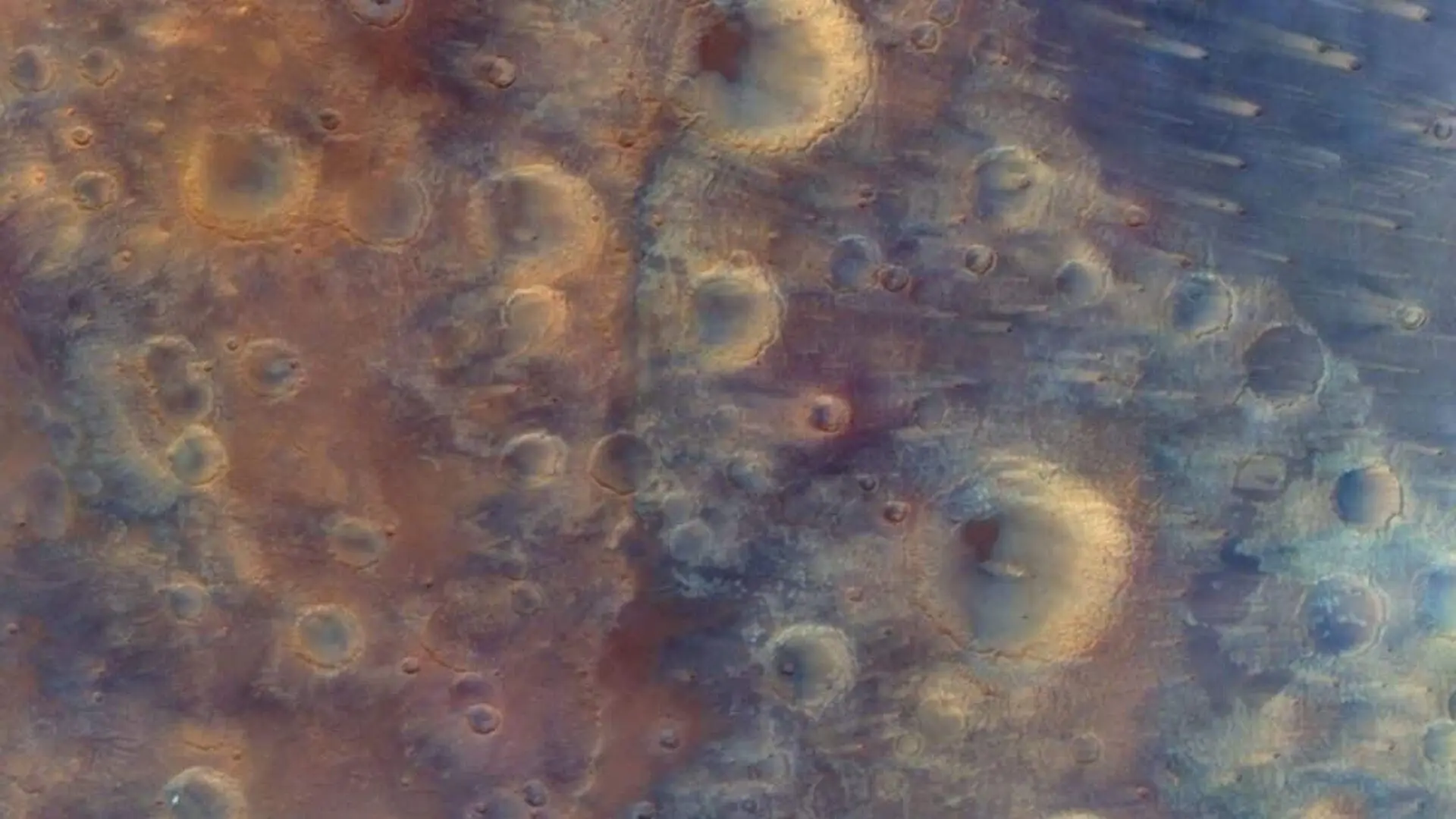
NASA’s Psyche spacecraft performed a close‑up flyby of Mars in July 2026, gathering fresh measurements and rare imagery during a gravity‑assist maneuver that will steer the probe toward the metal‑rich asteroid Psyche. The mission team used the encounter to evaluate instrument performance in a planetary setting while adding new data on the Red Planet.
Mars Swing‑By as a Stepping Stone to a 2029 Asteroid Rendezvous
The Psyche mission treated the Mars passage as both a navigation checkpoint and a scientific trial before heading for the eponymous asteroid. By harnessing Mars’ gravity, the spacecraft altered its solar‑system trajectory, aligning it for an arrival at asteroid Psyche in the summer of 2029.
Because Mars has been extensively studied, the flyby offered a chance to compare the spacecraft’s fresh observations with decades of existing data. During the brief pass, the onboard imager, magnetometer, and gamma‑ray and neutron spectrometer were all activated, delivering measurements from a viewpoint distinct from orbital missions.
NASA noted that the data will be used to validate system performance and refine future observations at the target asteroid. While the primary goal was instrument checkout rather than breakthrough Mars discoveries, the results confirmed that the spacecraft’s subsystems are functioning as intended.
“The mission’s imager, magnetometer, and gamma-ray and neutron spectrometer teams worked overtime to make full use of this planetary encounter, and all instruments delivered great results,” said Lindy Elkins‑Tanton, principal investigator for Psyche at the University of California, Berkeley. “We didn’t anticipate big discoveries, given how extensively the planet has been studied, but we did complement Mars science with the data we collected through Psyche’s unique perspective.”
Beyond scientific return, the flyby served as a rehearsal for deep‑space operations, exposing each instrument to conditions similar to those expected when the probe approaches its metallic asteroid target.
Instrument Suite Records Fresh Mars Data
A central aim of the maneuver was to verify the performance of the gamma‑ray and neutron spectrometer, which is intended to probe surface composition. During the encounter, the instrument logged neutron‑environment signals that matched pre‑flight expectations.
“Around the time of Mars closest approach, the neutron spectrometer detected a count‑rate enhancement close to what we anticipated. It was very gratifying to see,” said David Lawrence, science lead for Psyche’s spectrometer at the Johns Hopkins Applied Physics Laboratory in Laurel, Maryland. “As expected, we didn’t detect gamma rays from Mars, but we put the instrument through its paces, and it performed excellently.”
The magnetometer captured the solar wind’s interaction with Mars’ magnetic field, traversing the planet’s bow shock and providing a dynamic environment to assess the sensor’s response.
“As the spacecraft passed close to Mars, the magnetometer saw an intense uptick in magnetic field corresponding to the bow shock region, where the solar wind slams into the planet’s magnetic field,” said Ben Weiss, Psyche’s deputy principal investigator and the magnetometry investigation lead at Massachusetts Institute of Technology in Cambridge. “This flyby calibration effort validated the instrument’s performance under dynamic conditions while also revealing the fascinating physics of planetary magnetism.”
These observations will inform preparations for the very different environment around asteroid Psyche, where scientists aim to study a body thought to be composed largely of metal.
Rare Mars Snapshots Offer a Glimpse of Future Searches
The imager produced a series of pictures that highlighted its capability to operate under challenging lighting and to support techniques needed for later asteroid observations. Images of Mars and its moons, Phobos and Deimos, were captured from a distant angle, testing the camera’s ability to detect small bodies near a larger target.
“The imager performed brilliantly, delivering some rarely seen views of the Red Planet,” said Jim Bell, the Psyche imager instrument lead at Arizona State University in Tempe. “Besides the obvious beauty of the photos, we were also able to fully test its calibration and sensitivity to scattered light, including picking out the Martian moons Phobos and Deimos from very far away as a part of a practice for the satellite search that we’ll use at the asteroid Psyche to look for any moonlets there.”
The imaging campaign proved that the spacecraft can acquire valuable data while cruising through deep space, a capability that will be crucial once Psyche reaches its destination and begins detailed investigations of a metallic world.
Because Psyche was not designed to orbit Mars, the flyby offered a rapid, targeted data collection pass rather than a prolonged orbital study, delivering a fresh perspective on the planet.
Gravity‑Assist Success Secures 2029 Timeline
The Mars encounter represented a pivotal navigation milestone, delivering the precise trajectory needed for the next phase of the mission. The gravity assist altered the spacecraft’s velocity and direction, lowering the propellant demand for the subsequent cruise.
“This gravity assist was years in the making, and the navigation team nailed it — Psyche flew by Mars on exactly the trajectory we needed to set us on a path to rendezvous with the asteroid in the summer of 2029,” said Bob Mase, Psyche’s project manager at NASA’s Jet Propulsion Laboratory in Southern California. “The spacecraft is in great shape, and we’re on schedule to resume sustained thrusting with the solar‑electric propulsion system later this fall.”
Following the maneuver, the probe will re‑enter its cruise phase, continuing to rely on its solar‑electric propulsion system while the team monitors health and prepares for the long journey ahead.
When Psyche arrives at its namesake asteroid in 2029, researchers will examine whether the body represents the exposed metallic core of a primordial planetary building block, shedding new light on the processes that formed rocky planets.
The Mars flyby thus serves as a combined navigation, engineering, and scientific rehearsal, strengthening the mission’s readiness for the upcoming exploration of a unique metallic world.
This article has been fact checked for accuracy, with information verified against reputable sources. Learn more about us and our editorial process.
Last reviewed on .
Article history
- Latest version
Reference(s)
- Carney, Stephen. “NASA’s Psyche Mission Delivers Mars Flyby Data, Time-lapse Video - NASA Science.”, July 17, 2026 NASA <https://science.nasa.gov/blogs/psyche/2026/07/17/nasas-psyche-mission-delivers-mars-flyby-data-time-lapse-video/>.
Cite this page:
- Posted by Karan Das