NASA Satellites Spot Ancient Milky Seas, The Ocean’s 400‑Year‑Old Glow Mystery
Sailors have long reported glowing ocean patches; modern satellites now probe the phenomenon, but the cause remains elusive.
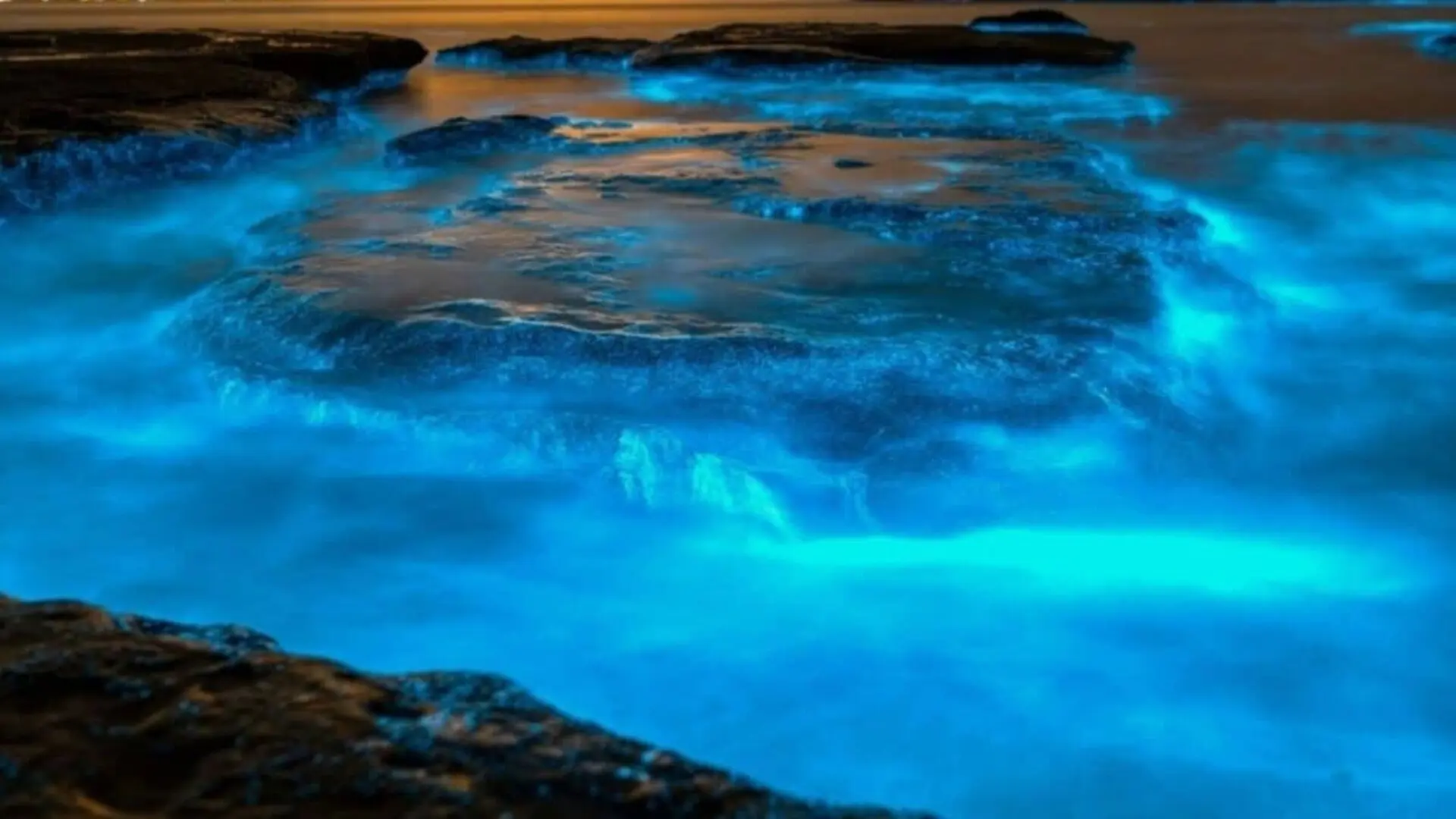
Mariners have long described eerie, expansive sheets of light that turn the night sea into a luminous plain. These rare occurrences, known as milky seas, have finally begun to yield their secrets, although the trigger for their vast spread remains elusive.
While the oceans dominate the planet’s surface, many phenomena stay hidden beneath the waves. Milky seas sit at the intersection of centuries‑old eyewitness accounts and cutting‑edge research that is only now piecing together how such glowing expanses form.
According to Popular Mechanics, scientists are now pairing historic logs with satellite data to pinpoint when, where, and why these luminous events happen.
Why does the ocean glow after dark?
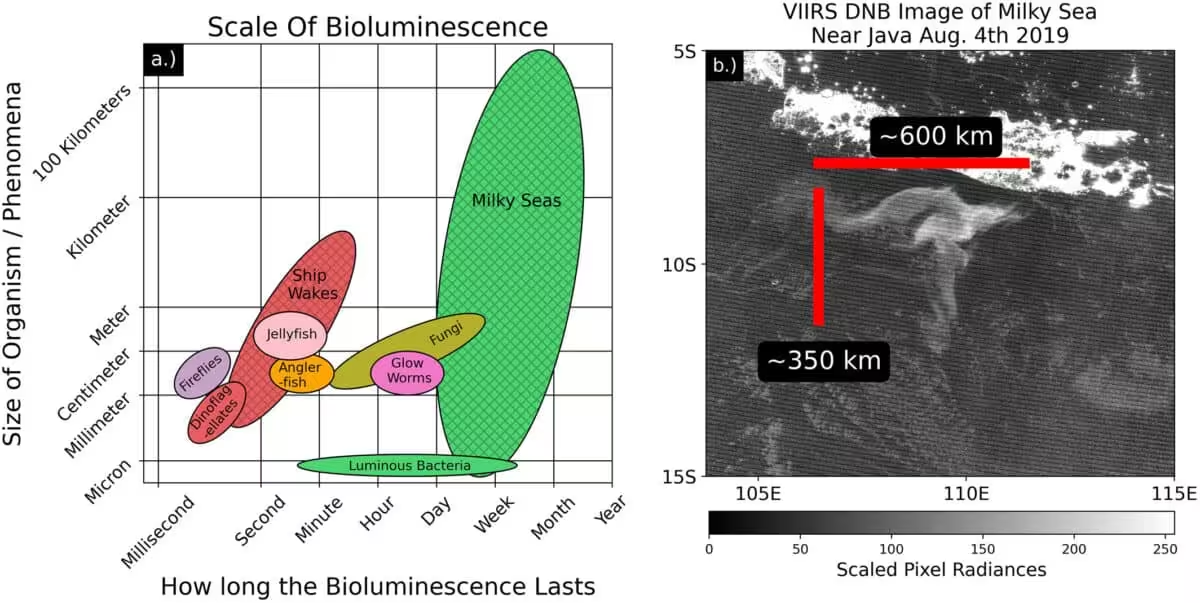
Around 400 documented sightings stretch back roughly four centuries. Unlike the fleeting flashes of bioluminescence that occur near coastlines, milky seas emerge far from land and can blanket areas the size of countries.
The language of the reports has changed little. In 1849, the captain of the Moozuffer described a luminous stretch of the Arabian Sea as “a boundless plain of snow, or a sea of quicksilver.” More than a century later, a U.S. Navy observer likened the sight to “glow‑in‑the‑dark plastic stars you can buy your kids,” Popular Mechanics reported.
The mystery even inspired Jules Verne, who referenced glowing waters in 20,000 Leagues Under the Sea. He speculated that tiny, glowworm‑like organisms produced the light, a notion later disproven but indicative of the long‑standing intrigue.
Bacterial culprits identified
A breakthrough came in 1985 when a research vessel traversed a milky sea and retrieved water samples teeming with the bioluminescent bacterium Vibrio harveyi, cementing it as the primary source of the glow.
What remains puzzling is the mechanism that drives these bacteria to assemble across such immense oceanic swaths. Justin Hudson, a doctoral candidate at Colorado State University and co‑author of a 2025 study, notes:
“Milky seas could be a sign of something like a very good, healthy ecosystem. They could be a sign of an unhealthy ecosystem, and we just don’t know.”
He adds that forecasting the locations of these events could clarify whether they herald ecological health or distress.
Space‑based monitoring transforms detection
Modern researchers no longer rely solely on serendipitous ship encounters. A paper in Earth and Space Science reports that most sightings cluster in the Arabian Sea and around Southeast Asia, hinting at links to the Indian Ocean Dipole and the El Niño Southern Oscillation.
Researchers now exploit the Visible Infrared Imaging Radiometer Suite (VIIRS) aboard NOAA and NASA platforms to capture these luminous patches from orbit, revealing events that vessels might never cross.
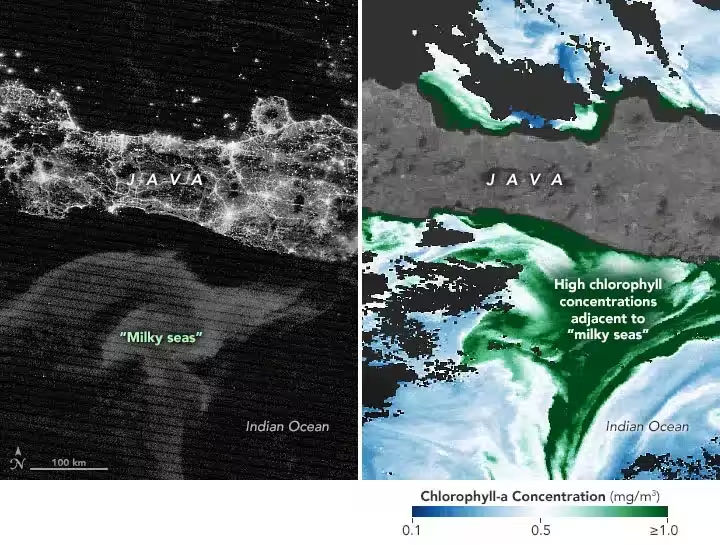
“Where do they fit into nature? What can they tell us about life in the ocean?” explains Steven Miller in a NASA press release. “Bacteria are a very simple form of life and bioluminescence is thought to have been an essential function of some of the first life forms.”
Ongoing observations aim to locate milky seas within the broader oceanic system and to decipher what these luminous bursts reveal about marine ecology and the planet’s smallest life forms.
This article has been fact checked for accuracy, with information verified against reputable sources. Learn more about us and our editorial process.
Last reviewed on .
Article history
- Latest version
Reference(s)
- Orf, Darren. “Something Has Been Making the Ocean Glow for Centuries. Scientists Still Can’t Explain It..”, July 10, 2026 Popular Mechanics <https://www.popularmechanics.com/science/environment/a71789704/milky-seas/>.
- Zhang, Xiao-Hua. “Vibrio harveyi: a serious pathogen of fish and invertebrates in mariculture.”, vol. 2, no. 3, pp. 231 PubMed Central (PMC), doi: 10.1007/s42995-020-00037-z. <https://pmc.ncbi.nlm.nih.gov/articles/PMC7223180/>.
- “Justin Hudson - Graduate School.”, July 23, 2024 Graduate School <https://graduateschool.colostate.edu/success-stories/justin-hudson/>.
- Hudson, J.., et al. “From Sailors to Satellites: A Curated Database of Bioluminescent Milky Seas Spanning 1600‐Present.” Earth and Space Science, vol. 12, no. 4, April 9, 2025 American Geophysical Union (AGU), doi: 10.1029/2024EA004082. <https://agupubs.onlinelibrary.wiley.com/doi/10.1029/2024EA004082>.
- “Visible Infrared Imaging Radiometer Suite.”, October 2, 2024 Earth Science Data Systems, NASA <https://www.earthdata.nasa.gov/data/instruments/viirs>.
- “Dr. Steven D. Miller.”, April 13, 2021 Earth Science Data Systems, NASA <https://www.earthdata.nasa.gov/news/data-user-stories/dr-steven-d-miller>.
- Migrate, NASA. “Hunting Milky Seas by Satellite - NASA Science.”, November 2, 2021 NASA <https://science.nasa.gov/earth/earth-observatory/hunting-milky-seas-by-satellite-149017/>.
Cite this page:
- Posted by Karan Das