Astronomers Taking a Closer Look at the Moon’s Surface Spotted a Massive “X” and “V”, Visible for Only One Night
Giant formations resembling letters spotted on the Moon’s surface
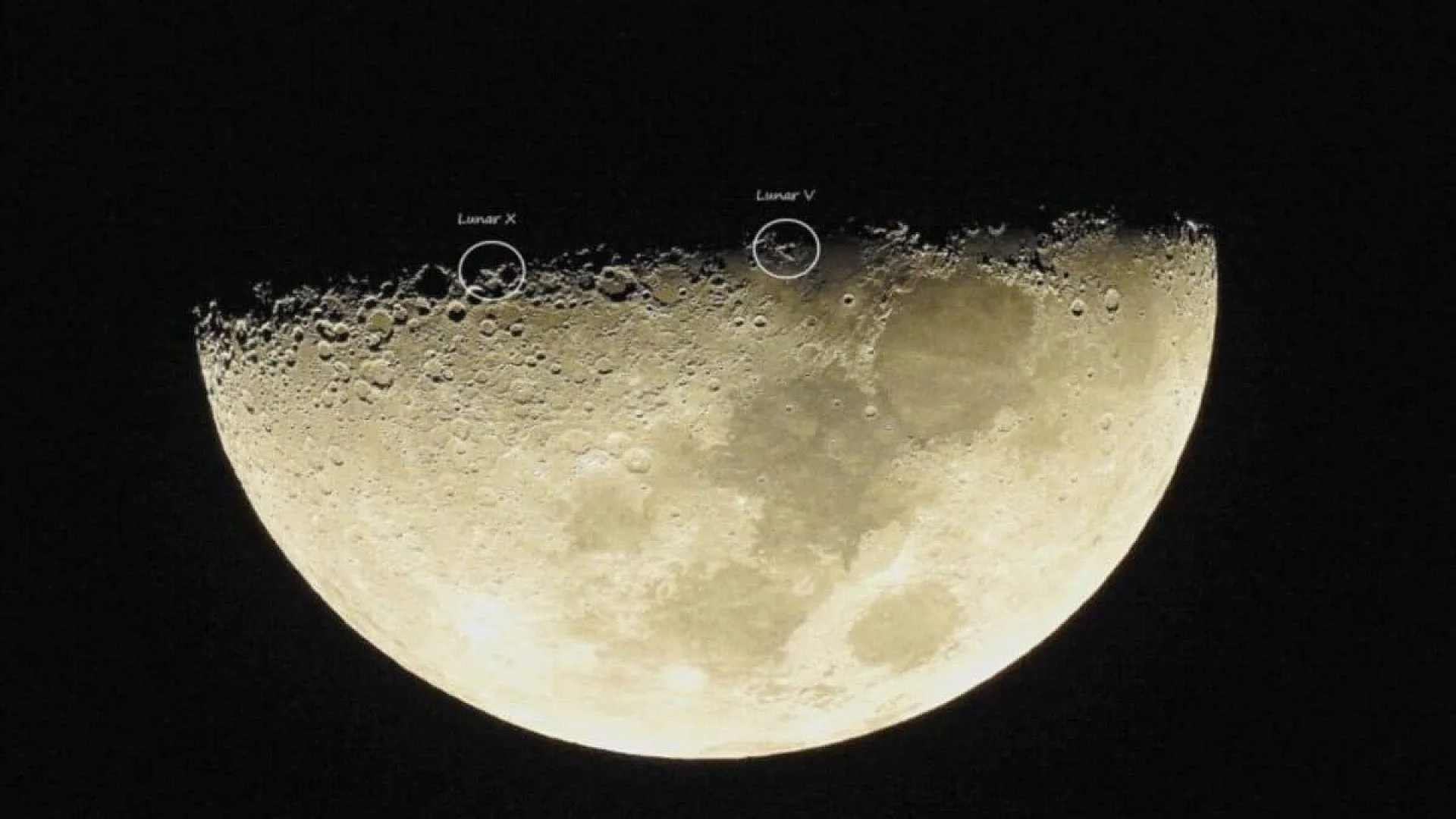
Around the time the Moon reaches its first‑quarter phase, observers will have a brief window to see two striking letter‑shaped silhouettes on the lunar surface. From the night of May 23 through the early hours of May 24, a bright “X” and “V” will seem to hover across the Moon’s face.
The Moon’s appearance constantly changes as the Sun’s angle relative to its terrain shifts. When low‑angle sunlight sweeps over craters, valleys and highlands, shadows stretch and recede, causing familiar features to look different from one evening to the next.
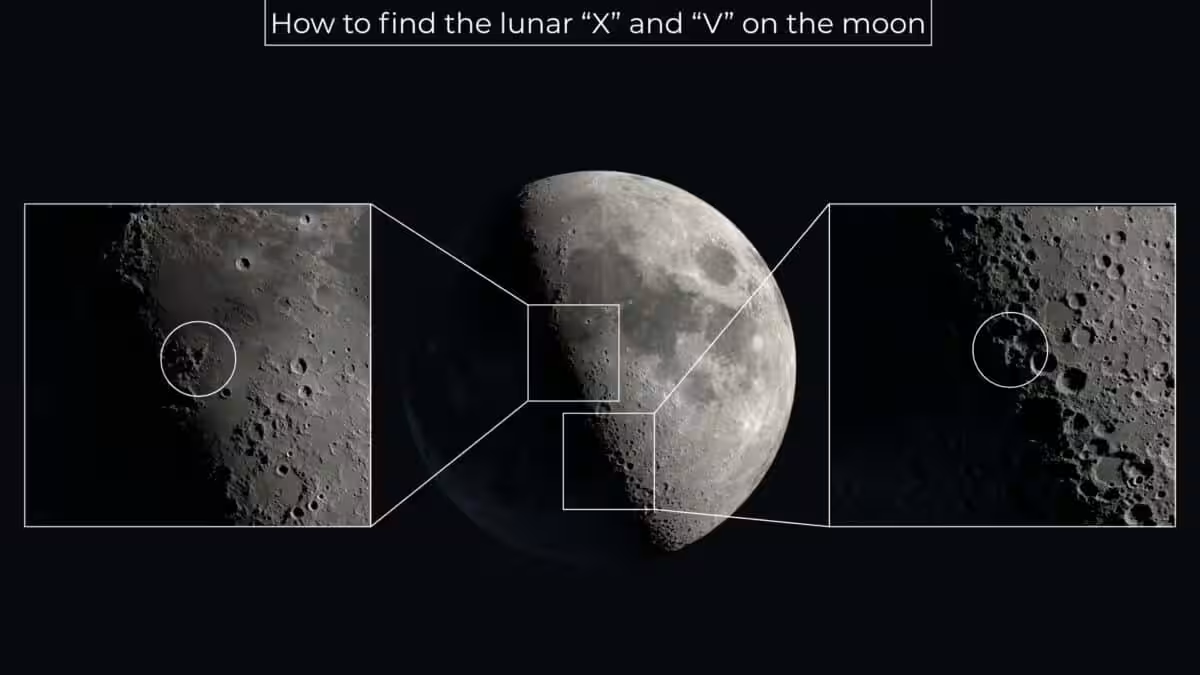
These fleeting patterns belong to a family of visual phenomena known as clair‑obscur effects—French for “light‑dark.” Human vision is prone to imposing familiar shapes on irregular scenery, and the Moon’s heavily cratered landscape provides a perfect canvas.
First‑Quarter Light Enhances Contrast
During the first‑quarter phase roughly half of the Moon’s disk is illuminated, with sunlight bathing the right side while the left side remains in shadow. The most dramatic contrast occurs along the terminator, the moving line that separates day from night. Here, low‑sun angles accentuate the tops of ridges while nearby depressions stay dark.

Space.com notes that the shapes become most prominent after 6 p.m. EDT (2200 GMT) on May 23 and may remain visible until the early morning of May 24. Because the effect relies entirely on the Sun’s shifting illumination, the window closes quickly as the letters blend back into the surrounding terrain.
Finding the Lunar “V” Near Ukert Crater
A modest pair of binoculars or a small telescope can reveal the “V” formation. It lies close to the terminator between Sinus Medii and Mare Vaporum, about ten degrees north of the lunar equator. Sunlight striking the rim of Ukert crater, together with nearby fragmented terrain, produces the unmistakable V shape.
Only the highest portions of the crater’s rim catch the Sun’s rays, while the surrounding ground stays in shadow, creating the striking contrast that defines the illusion.
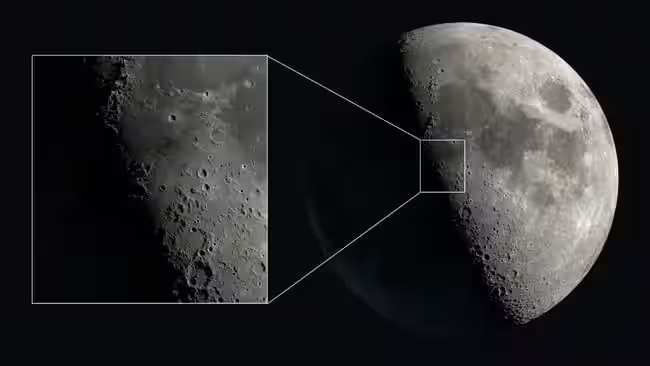
At first glance the “V” can be hard to pick out amid the Moon’s densely cratered landscape, but once the illuminated rim is located the letter shape becomes evident.
How the Lunar “X” Emerges from Illuminated Crater Rims
Further south along the terminator, the “X” appears roughly 25 degrees south of the lunar equator. The figure is formed by the low‑sun illumination of the rims of several ancient impact basins, including Purbach, Blanchinus and La Caille. As the Sun grazes these elevations, only selected sections light up while the surrounding terrain stays dark, producing a bright “X” against a muted background.
These craters have been discussed in earlier coverage of lunar geology, such as the analysis of ancient impact scars, underscoring how the Moon’s ancient scars continue to shape visual phenomena for Earth‑bound observers.
This article has been fact checked for accuracy, with information verified against reputable sources. Learn more about us and our editorial process.
Last reviewed on .
Article history
- Latest version
Reference(s)
- Wood, Anthony. “Massive 'X' and 'V' shapes will appear on the moon tonight — here's how to see them.”, May 23, 2026 Space <https://www.space.com/stargazing/massive-x-and-v-shapes-will-appear-on-the-moon-tonight-heres-how-to-see-them>.
Cite this page:
- Posted by Karan Das