China Sends Astronauts To Tiangong Space Station On Shenzhou 23 Mission
China launches Shenzhou-23 to Tiangong, paving way for first year-long astronaut mission
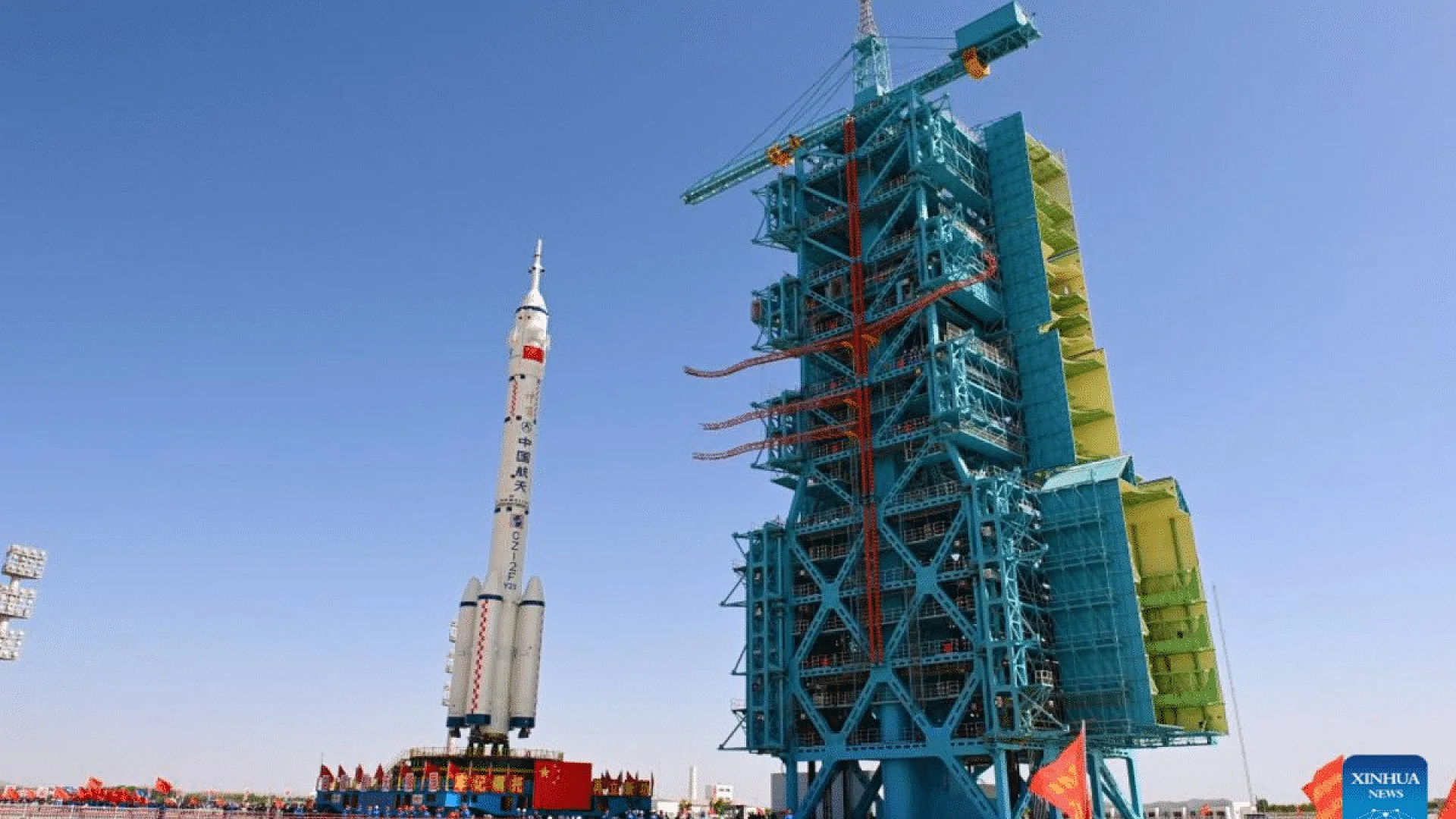
On May 24, China will launch the Shenzhou 23 mission toward its Tiangong space station, a flight that could keep one crew member aloft for an entire year—marking the nation’s first long‑duration human spaceflight.
China readies historic crewed launch
The three‑person crew will ride the Long March 2F launch vehicle, a 62‑metre rocket that has been positioned 1.5 kilometers from the launch pad at the Jiuquan Satellite Launch Center deep in the Gobi Desert. Final checks confirmed that all ground systems are ready for a liftoff scheduled at 11:08 a.m. EDT (23:08 local time). The mission will deliver astronauts to Tiangong for a six‑month stint, while one teammate may remain aboard for a full year.
The roster, unveiled on May 23, names commander Zhu Yangzhu, flight engineer Zhang Zhiyuan, and Lai Ka‑y‑ing, who will become Hong Kong’s first person to travel into orbit. Their arrival follows the May 11 delivery of nearly seven tonnes of cargo by the Tianzhou 10 resupply spacecraft, underscoring the station’s growing logistical capability.
Ambitious year‑long stay on Tiangong
Shenzhou 23 will host a pioneering year‑long human presence, putting China in the same league as Russia and the United States for extended orbital missions. The plan hinges on the upcoming Shenzhou 24 flight, which will bring a Pakistani astronaut for a brief visit before swapping places with one of the Shenzhou 23 occupants. That astronaut will then complete a continuous 12‑month orbit, setting a new national record.
Prolonged exposure to microgravity will test life‑support hardware and human endurance, feeding data into future projects such as lunar expeditions or long‑term stays on larger orbital platforms.
Crew handover and safety measures
The Shenzhou 23 launch also signals the end of the longest Chinese crewed flight to date, carried out by Shenzhou 21. After a suspected debris strike on the Shenzhou 20 vehicle, an unmanned Shenzhou 22 mission served as an emergency lifeboat, ensuring the safety of the station’s occupants, who are slated to return to Earth on May 29.
This careful sequencing highlights China’s emphasis on redundancy and risk mitigation. The transition from Shenzhou 21 to Shenzhou 23 crews is designed to keep scientific work and station upkeep uninterrupted.
Progress of the Shenzhou series
Since the first crewed flight to Tiangong in June 2021 (Shenzhou 12), China has completed 11 manned missions, gradually expanding its operational know‑how. Early flights focused on assembling the three‑module station, a milestone reached by late 2022. Uncrewed missions such as Shenzhou 22 have demonstrated the program’s ability to respond to emergencies and manage logistics.
According to Space.com, these achievements illustrate China’s accelerating ambitions, including plans for international partnerships, longer stays in space, and increasingly sophisticated orbital tasks. Shenzhou 23 represents a shift from building infrastructure to sustaining scientific research in orbit.
Implications for research and cooperation
The Shenzhou 23 mission also paves the way for the first foreign visit to Tiangong, underscoring China’s openness to collaborative space endeavors. A continuous crew presence will enable extended experiments in areas such as materials science, biology, and technology validation for future missions.
These activities align with Beijing’s broader strategy to foster an independent, resilient, and innovative presence in orbit, while demonstrating the feasibility of long‑duration human flight within its own program.
This article has been fact checked for accuracy, with information verified against reputable sources. Learn more about us and our editorial process.
Last reviewed on .
Article history
- Latest version
Reference(s)
- Jones, Andrew. “Watch China launch Shenzhou 23 astronauts to its Tiangong space station on May 24.”, May 23, 2026 Space <https://www.space.com/space-exploration/human-spaceflight/china-shenzhou-23-astronaut-launch-tiangong-space-station>.
Cite this page:
- Posted by Karan Das