SpaceX Dragon Capsule Delivers Tons Of Science And Supplies To Space Station
The SpaceX Dragon spacecraft successfully transported innovative science experiments and essential supplies to the International Space Station, propelling advancements in microgravity research and human health studies.
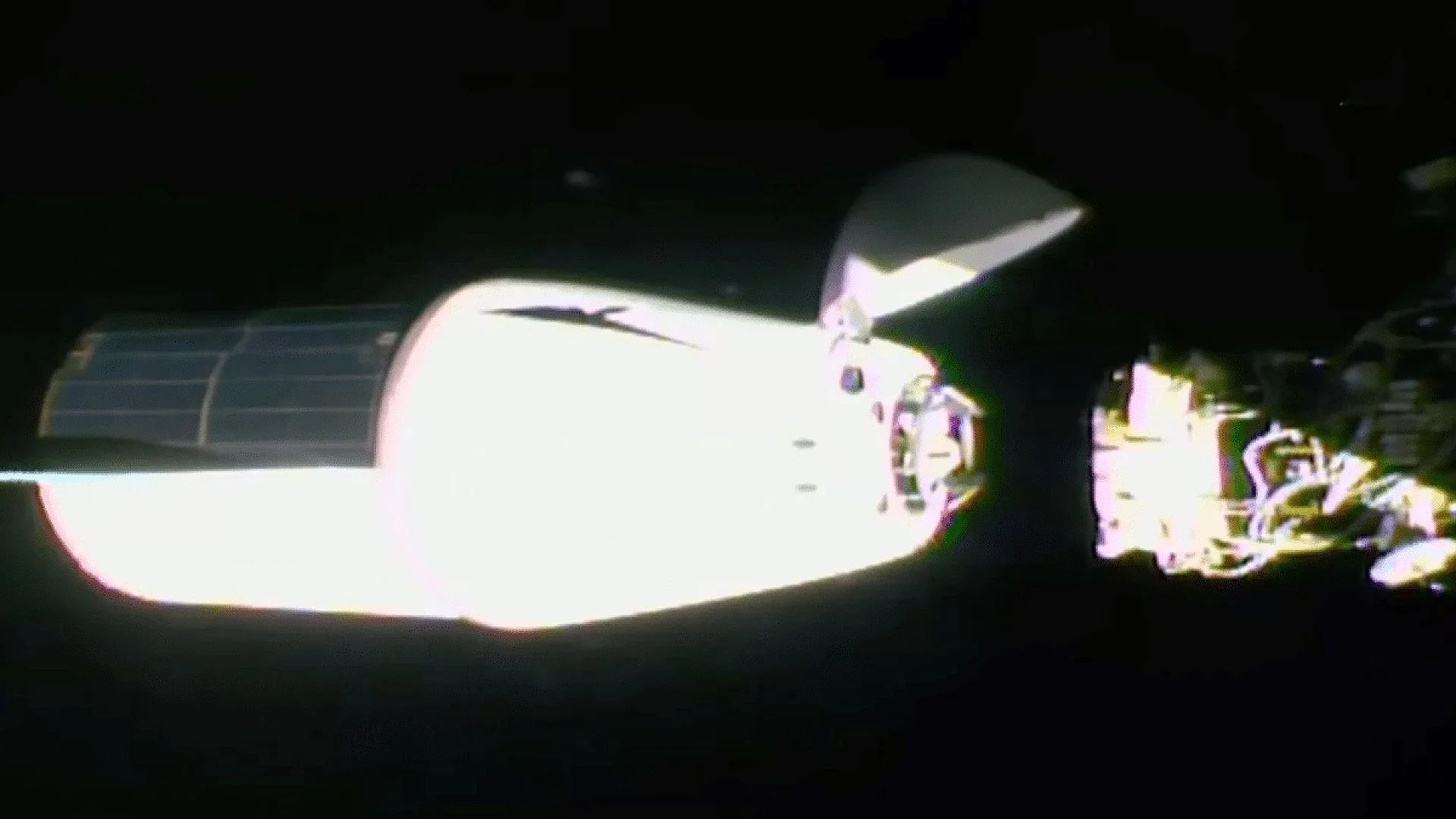
A SpaceX Dragon spacecraft has safely docked at the International Space Station, carrying nearly 6,500 pounds of vital cargo, including groundbreaking scientific experiments that could revolutionize our understanding of life and physics in microgravity, according to Space.com. The arrival marks the company’s 34th mission under NASA’s commercial resupply services contract, solidifying its crucial role in sustaining human research in orbit.
Dragon Capsule Lands With Precision
The SpaceX Dragon CRS-34 mission autonomously docked to the forward-facing port of the Harmony module at 6:37 a.m. EDT on May 17, two days after its launch from Cape Canaveral Space Force Station in Florida. NASA astronaut Jack Hathaway confirmed the successful docking, stating, “Dragon contact and soft capture complete,” while monitoring from the station’s Cupola alongside ESA astronaut Sophie Adenot. This seamless operation showcases the advanced automation capabilities of the Dragon spacecraft, enabling crew members to focus on scientific objectives rather than manual docking procedures.
A Cargo Hold Full Of Discovery
The Dragon spacecraft delivered a diverse assortment of research materials and supplies, which the Expedition 74 crew will unpack over the coming weeks. According to a NASA media advisory, the shipment includes
“a project to determine how well Earth-based simulators mimic microgravity conditions; a bone scaffold made from wood that could produce new treatments for fragile bone conditions like osteoporosis; and equipment to help researchers evaluate how red blood cells and the spleen change in space.”
These investigations could unlock groundbreaking insights into human health, tissue engineering, and cellular responses to prolonged weightlessness, potentially guiding new therapies both in orbit and on Earth.
SpaceX and NASA successfully launched the CRS-34 Cargo Dragon mission to the International Space Station Friday evening at 6:05 p.m. EDT from Space Launch Complex 40 at Cape Canaveral Space Force Station.
Following stage separation, Falcon 9’s first stage booster returned to… pic.twitter.com/0anJTLxijY— Florida Spaceflight (@FLspaceflight) May 18, 2026
Exploring The Forces That Shape Our Planet
Beyond biology, the Dragon delivered instruments to study phenomena impacting the planet itself. One device will investigate charged particles around Earth, which can affect satellites and power grids, offering data that could enhance global infrastructure resilience. Another experiment seeks to provide a deeper understanding of planetary formation, while a precision instrument will measure sunlight reflected by Earth and the moon, helping researchers improve models of climate and illumination patterns. The breadth of these investigations underscores the versatility of Dragon missions, bridging human health, planetary science, and space weather studies.
The Ongoing Role Of SpaceX In Human Exploration
Since its inception, SpaceX’s commercial resupply missions have become a cornerstone of the International Space Station’s operations. Each launch not only delivers essential cargo but also returns experimental results and used hardware to Earth for analysis. The CRS-34 mission continues this pattern, ensuring the continuity of experiments and the safe return of scientific samples. As noted by Space.com, these missions also validate technologies that could be used in future deep space exploration, including lunar and Martian expeditions, solidifying SpaceX’s position as a vital partner in the ongoing quest to extend humanity’s presence beyond Earth.
This article has been fact checked for accuracy, with information verified against reputable sources. Learn more about us and our editorial process.
Last reviewed on .
Article history
- Latest version
Reference(s)
- “NASA Sets Coverage for SpaceX 34th Station Resupply Launch, Arrival - NASA.” NASA <https://www.nasa.gov/news-release/nasa-sets-coverage-for-spacex-34th-station-resupply-launch-arrival/>.
- “https://twitter.com/FLspaceflight/status/2056207316677017762/photo/1.” <https://t.co/0anJTLxijY>.
- Pearlman, Robert. “SpaceX Dragon capsule delivers science and supplies to space station.”, May 17, 2026 Space <https://www.space.com/space-exploration/international-space-station/spacex-dragon-capsule-delivers-science-and-supplies-to-space-station>.
Cite this page:
- Posted by Karan Das