Is Dark Energy a Mirage New Analysis of Supernovae Sparks Cosmic Debate
A groundbreaking study challenges dark energy’s existence, sparking debate over the true drivers of cosmic expansion.
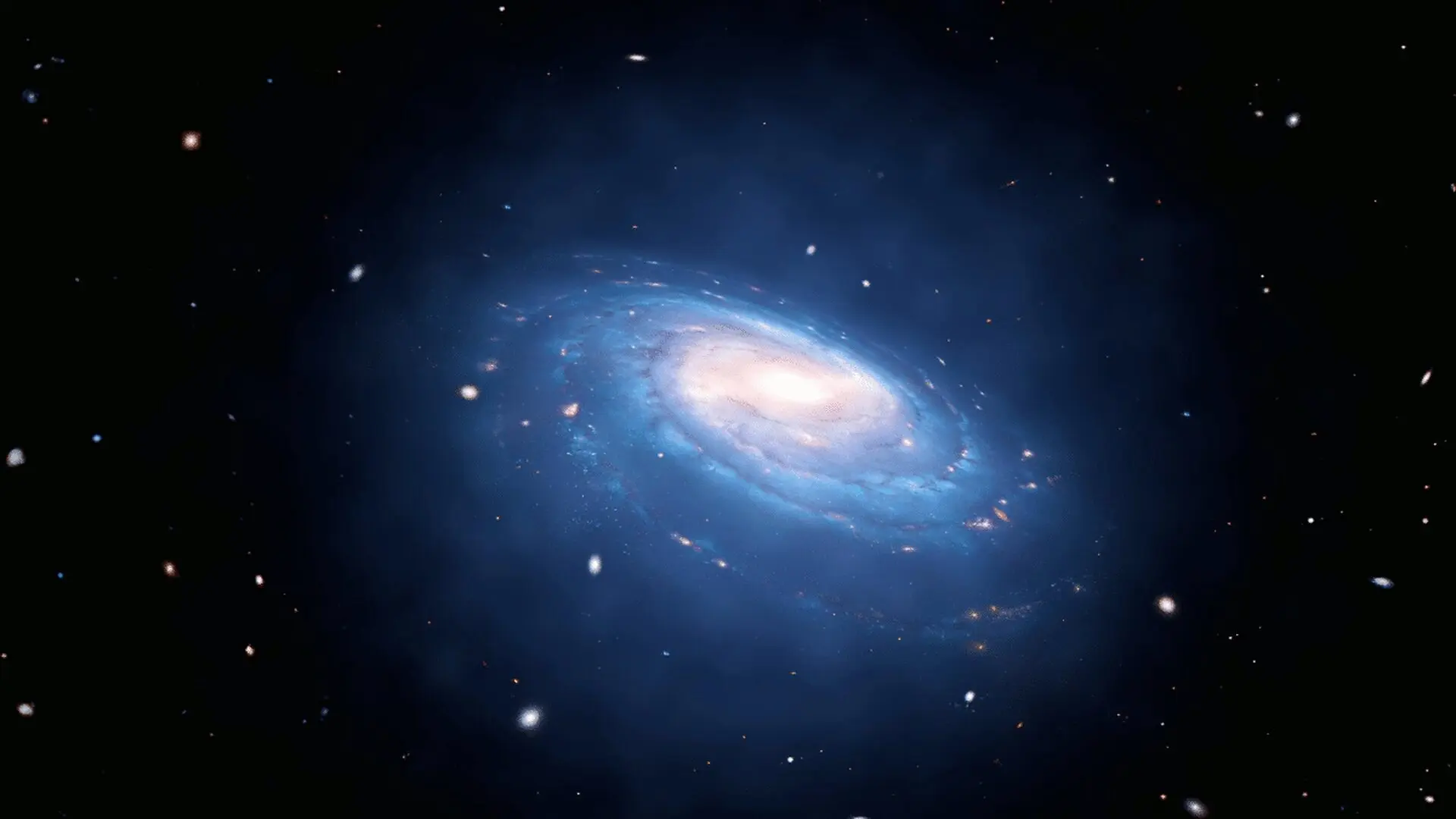
A recent paper in the Monthly Notices of the Royal Astronomical Society challenges the prevailing view that a mysterious force, known as dark energy, is responsible for the universe’s accelerating expansion. By applying updated statistical techniques to historic supernova data, the authors argue that the evidence for acceleration may have been overstated.
Study Questions Dark Energy’s Role in Cosmic Expansion
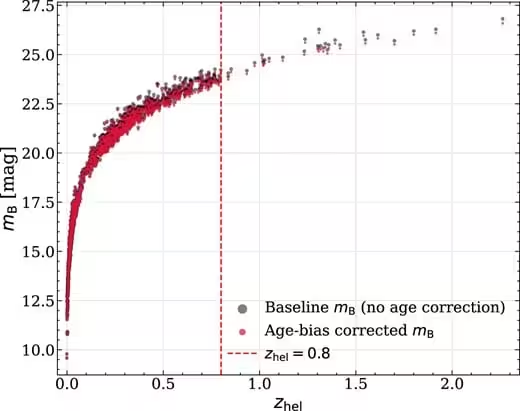
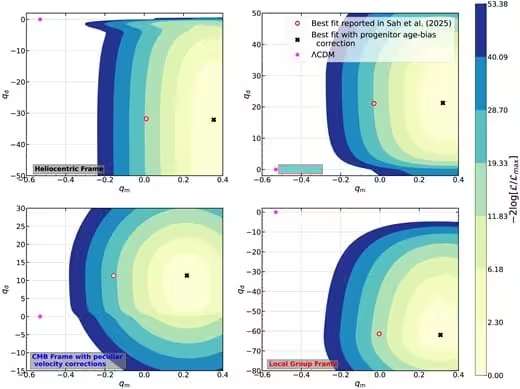
The investigation, led by Sarkar, revisits observations of distant supernovae—especially the older, fainter ones—suggesting that earlier analyses could have amplified their influence on cosmological models. The paper, appearing in the Monthly Notices of the Royal Astronomical Society, argues that correcting for progenitor‑age effects changes the inferred brightness‑redshift relationship.
“This created a big shock,” says Sarkar, lead author of the study. “This is a very interesting and potentially quite impactful observation,” adds Dominik Schwarz at the University of Bielefeld in Germany. He notes that “dark energy came about as a fix for a discrepancy between our model of the universe and observations about it, and we may now be seeing a new discrepancy that comes from older, dimmer stars. That could again indicate the breakdown of the model.”
Re‑evaluating the supernova catalogues with these refined methods, the team finds that part of the apparent acceleration could stem from selection biases and modeling choices rather than a genuine cosmological effect.
Community Response and Ongoing Debate
Critics such as Joshua Frieman of the SLAC National Accelerator Laboratory caution that multiple, independent lines of evidence—ranging from other supernova samples to measurements of large‑scale structure and the cosmic microwave background—continue to support an accelerating universe. He contends that the new analysis “challenges only one piece of the dark energy puzzle and is not sufficient to overthrow the paradigm.”
Meanwhile, Geraint Lewis of the University of Sydney likens the scientific process to a jury deliberation, noting that “sometimes the case is obvious and the jury is unanimous, but other times different people see each piece of evidence differently, and it takes persuasion and more evidence before a verdict is arrived at.”
Potential Impact on Cosmological Models
If the revised analysis withstands scrutiny, cosmologists may need to revisit core assumptions about the universe’s energy budget, the behavior of ancient stellar populations, and the interpretive frameworks applied to astronomical data. Such a shift could inspire new observational campaigns designed to test whether dark energy is truly required.
Future large‑scale projects, including the Vera C. Rubin Observatory and the Euclid space telescope, are poised to deliver unprecedented measurements that could either reaffirm the presence of dark energy or prompt a major revision of the standard cosmological paradigm.
Next Steps for Probing Cosmic Acceleration
Researchers plan to conduct independent re‑analyses and to gather complementary data sets that can either validate or challenge the new findings. As the field moves forward, the episode underscores the value of continually questioning foundational ideas, a practice that often leads to deeper insight into the cosmos.
This article has been fact checked for accuracy, with information verified against reputable sources. Learn more about us and our editorial process.
Last reviewed on .
Article history
- Latest version
Cite this page:
- Posted by Aisha Ahmed