Stunning 570-Megapixel Image Reveals Young Stars Carving Light in a Nearby Stellar Nursery
New Dark Energy Camera image captures Earth’s nearest stellar nursery, with newborn stars lighting swirling clouds and a distant globular cluster.
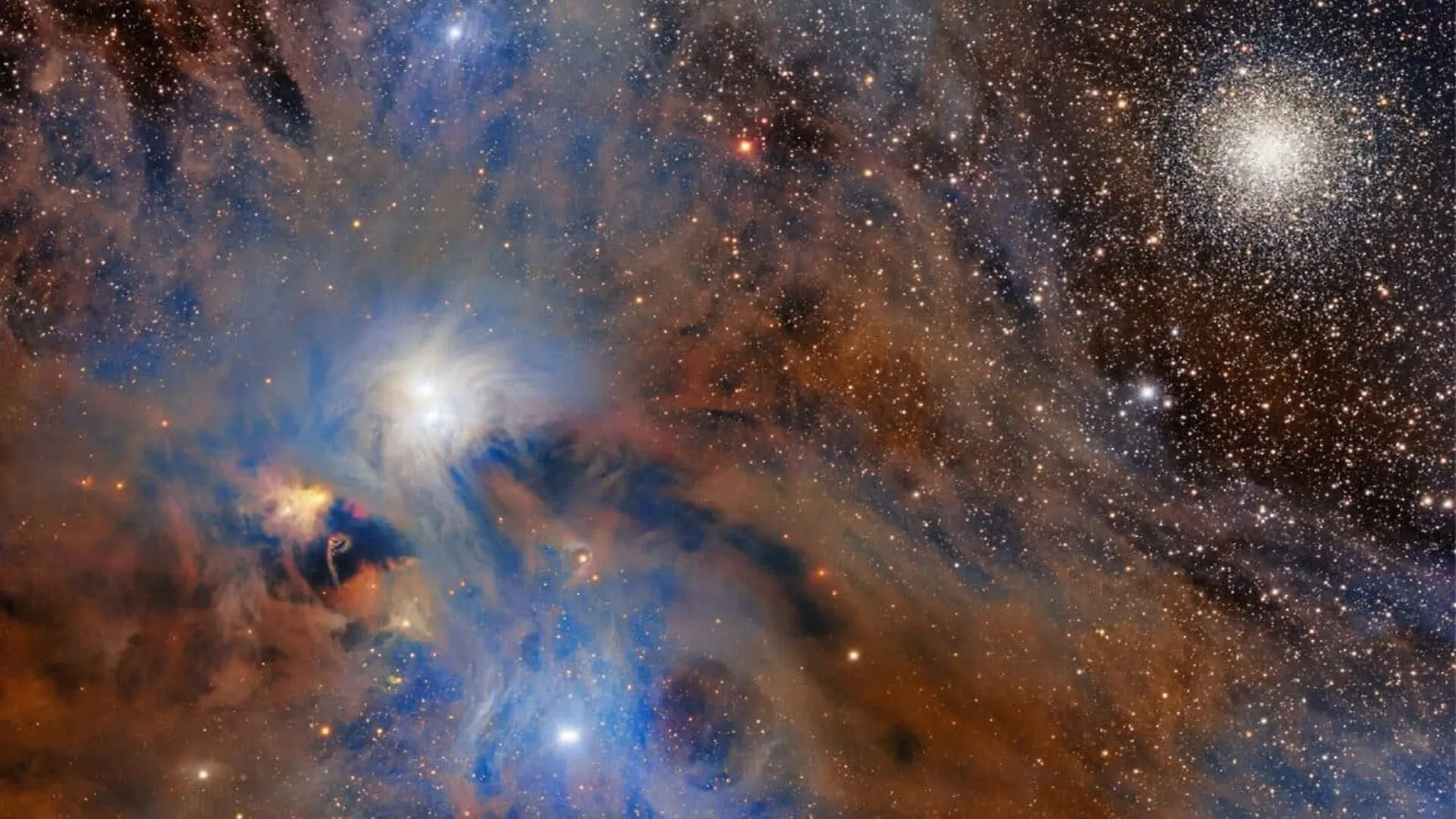
Stellar nurseries are regions where interstellar gas and dust collapse under gravity to ignite new stars. Examining these cradles up close lets astronomers trace the earliest phases of stellar evolution, but most lie thousands of light‑years away, making a nearby example a valuable laboratory.
The Corona Australis Molecular Cloud, positioned in the southern‑crown constellation, sits only about 430 light‑years from Earth. Its proximity makes it one of the closest actively star‑forming clouds to our solar system, offering an unprecedented window into the birth of stars.
Young Stars Illuminate Their Birth Cloud
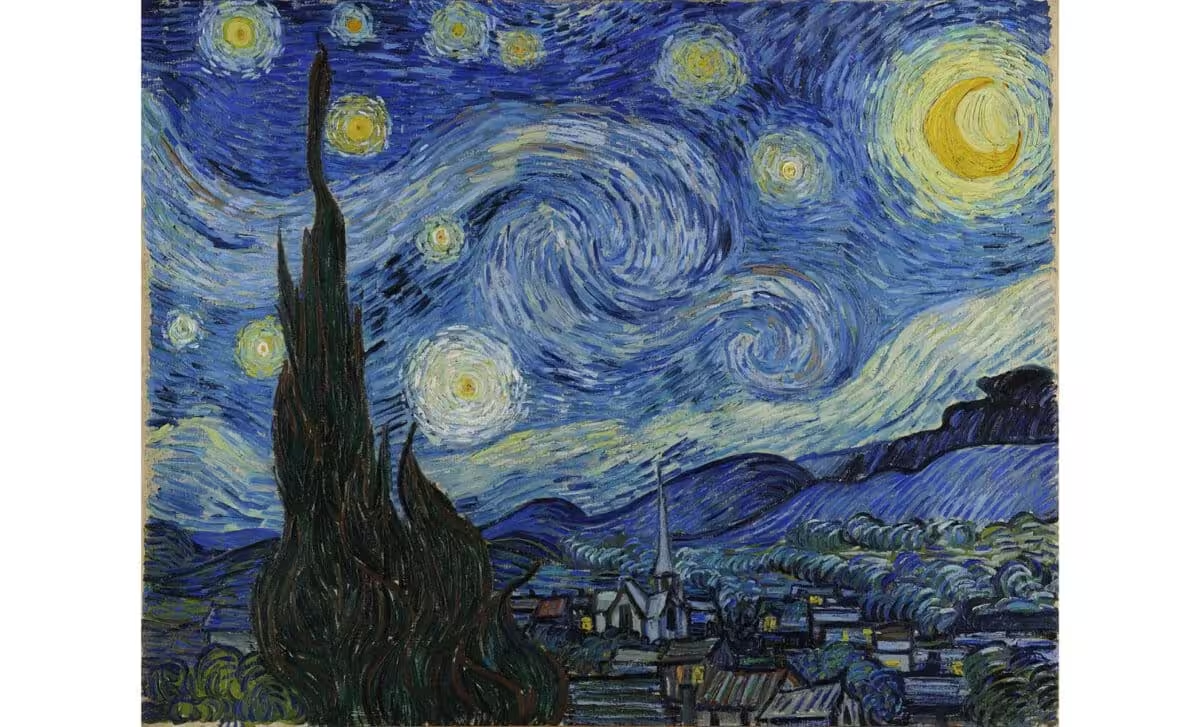
Unlike the swirling effect in Van Gogh’s night sky, here the illumination comes from the newborn stars themselves. As they emerge from the dense cloud, they push aside surrounding material, allowing their radiation to carve bright pathways through the nebula.
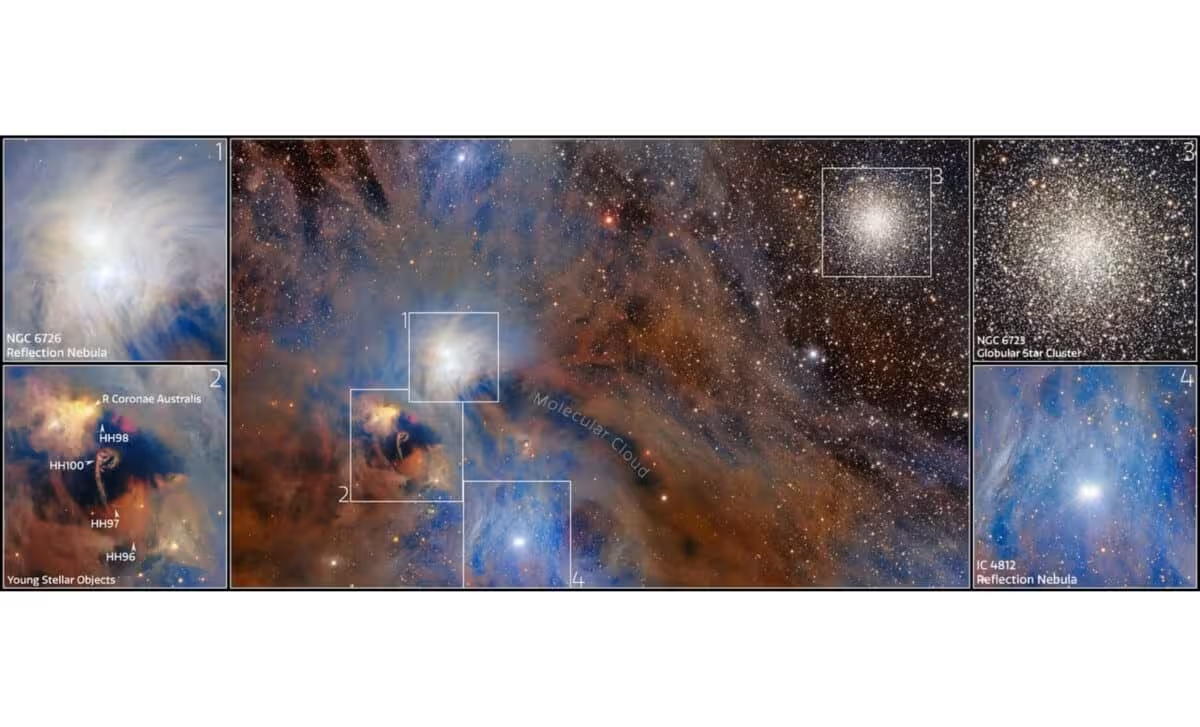
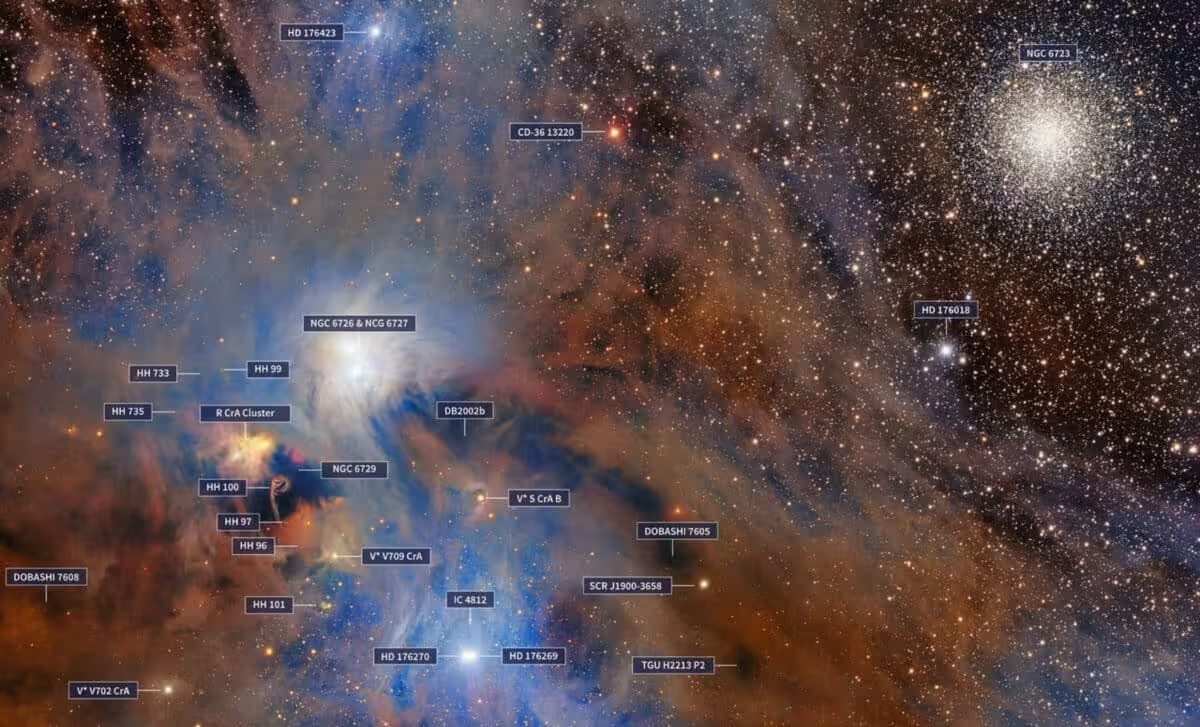
A prominent source of this glow is the binary system R Coronae Australis. The two components orbit each other over a period of roughly 43–47 years. One partner is a red dwarf—small, cool, and exceedingly long‑lived—while the other is a pre‑main‑sequence star that has amassed nearly its final mass but has not yet ignited sustained hydrogen fusion.
Even without full hydrogen fusion, the companion’s brilliance lights up the emission nebula NGC 6729, one of several luminous patches scattered across the cloud. The surrounding area brims with additional youthful stars and nebular formations, underscoring that stellar birth rarely occurs in isolation.
A Distant Globular Cluster Shares the Same Sightline
In the upper right of the frame, the globular cluster NGC 6723 shines brightly, earning the nickname “Chandelier Cluster” for its dense, glittering appearance. Though it seems adjacent to the Corona Australis cloud, the two objects are unrelated.
The apparent proximity is a line‑of‑sight illusion; NGC 6723 lies roughly 29,000 light‑years away, more than sixty‑five times farther than the nearby molecular cloud. Their alignment is purely a perspective effect, not a physical connection. (source)
Chile’s Dark Energy Camera Captures the Scene, Hubble Adds Detail
The picture was recorded by the Dark Energy Camera on the NSF Víctor M. Blanco 4‑meter telescope at Cerro Tololo Inter‑American Observatory in Chile. IFL Science notes that the same region has also been examined by the Hubble Space Telescope, which produced a high‑resolution view of NGC 6723.
Hubble’s observations have reshaped astronomers’ understanding of globular clusters. The long‑standing belief that all stars in a cluster share a common birthdate is giving way to a more nuanced picture, recognizing multiple stellar generations within the same cluster.
Clusters such as NGC 6723 now appear to host some of the galaxy’s oldest stars, with ages exceeding ten billion years—nearly as old as the universe itself.
This article has been fact checked for accuracy, with information verified against reputable sources. Learn more about us and our editorial process.
Last reviewed on .
Article history
- Latest version
Cite this page:
- Posted by Aisha Ahmed