Scientists Are Launching NASA Balloons to Catch Elusive Ghost Particles From Deep Space
Astrophysicist Abby Vieregg joins the Big Brains podcast to discuss how scientists use NASA balloons and ice arrays to hunt for elusive cosmic neutrinos.
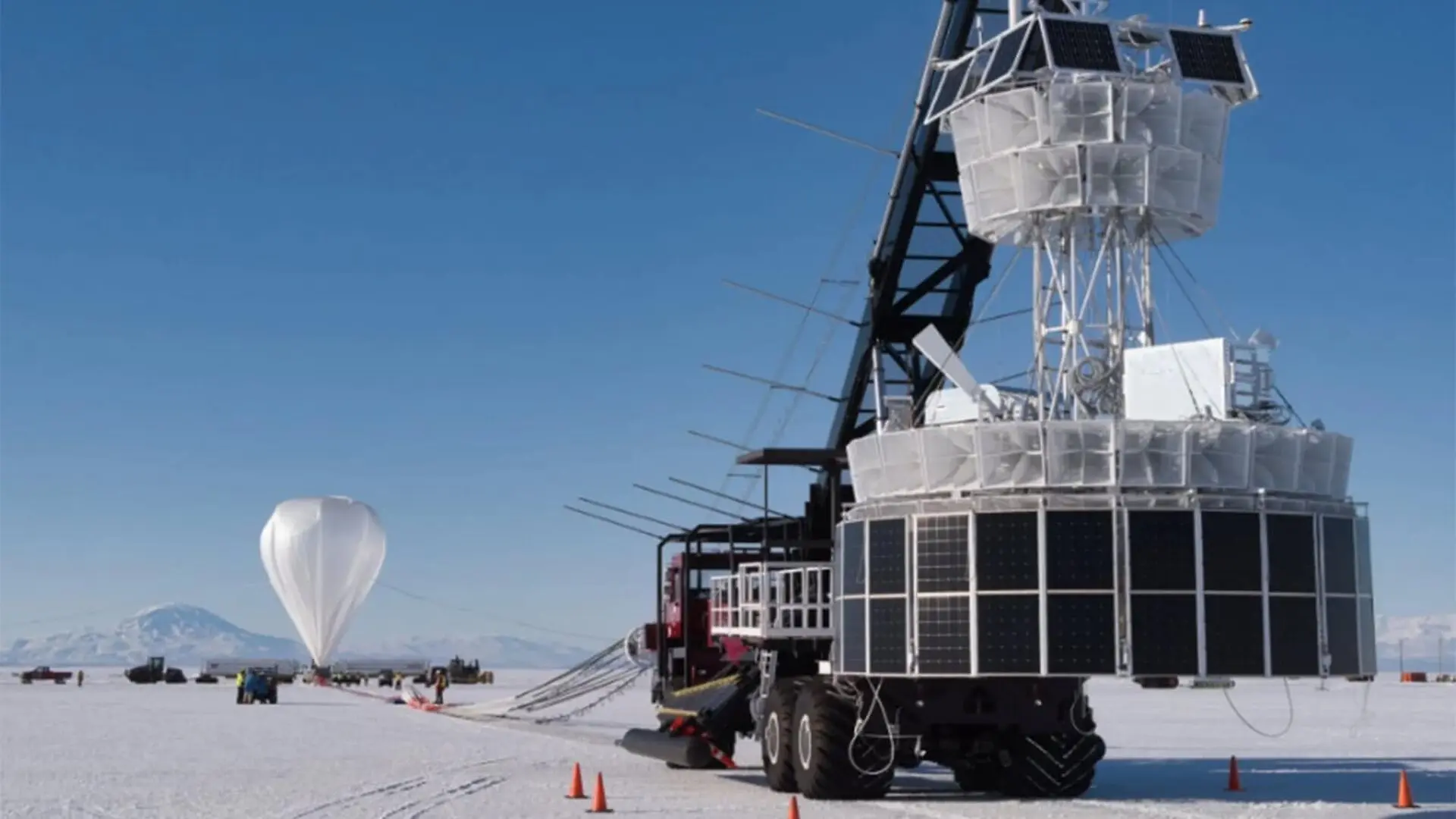
Astrophysicist Abby Vieregg is leading a pioneering effort to capture some of the most enigmatic entities in existence: high-energy neutrinos. Often referred to as ghost particles, these subatomic messengers traverse the cosmos for billions of light-years, passing through planets, stars, and galaxies with virtually no interaction with matter.
Vieregg, a researcher at the University of Chicago, recently detailed the mechanics behind this ambitious search during an appearance on the Big Brains podcast. The hunt for these particles represents a burgeoning frontier in modern science, a field so significant that it was recognized with the 2026 Nobel Prize in Physics.
Innovative Tactics in the Hunt for Ghost Particles
Detecting particles that refuse to interact with the physical world requires extreme engineering. Vieregg’s research group utilizes a dual-pronged approach that spans the most remote environments on Earth. By deploying sophisticated radio detectors in the deep ice of Antarctica and high above the continent via NASA research balloons, the team hopes to intercept the faint signals generated when neutrinos finally strike matter.
The project extends beyond the South Pole, incorporating massive sensor arrays drilled directly into the ice sheets of Greenland. These installations are designed to turn vast swaths of natural ice into enormous particle detectors, providing the necessary scale to record rare high-energy events.
Unlocking Cosmic Mysteries
The goal of this research is to move beyond mere detection and use these particles as probes for the universe’s most violent phenomena. Because neutrinos are not deflected by magnetic fields, they travel in straight lines from their points of origin, potentially providing a clear map to the engines of black holes and the cataclysmic deaths of distant stars.
By capturing these signals, scientists aim to refine our understanding of the fundamental physical laws that dictate the behavior of matter and energy on an intergalactic scale. For those interested in the technical details of these detection methods and the broader implications for astrophysics, the full discussion is available via the University of Chicago’s Big Brains podcast.
This article has been fact checked for accuracy, with information verified against reputable sources. Learn more about us and our editorial process.
Last reviewed on .
Article history
- Latest version
Reference(s)
- mheslinga, “Neutrino hunters: Searching for ghostly particles in Antarctic ice, with Abby Vieregg.”, October 9, 2026 University of Chicago <https://news.uchicago.edu/big-brains-podcast-neutrino-hunters-searching-ghostly-particles-antarctic-ice-abby-vieregg>.
Cite this page:
- Posted by Aisha Ahmed