Webb Telescope Detects Shifting Water Clouds and Weather on a Nearby Free Floating World
JWST has detected shifting water clouds on the free-floating world WISE 0855, offering a unique opportunity to test complex planetary weather models.
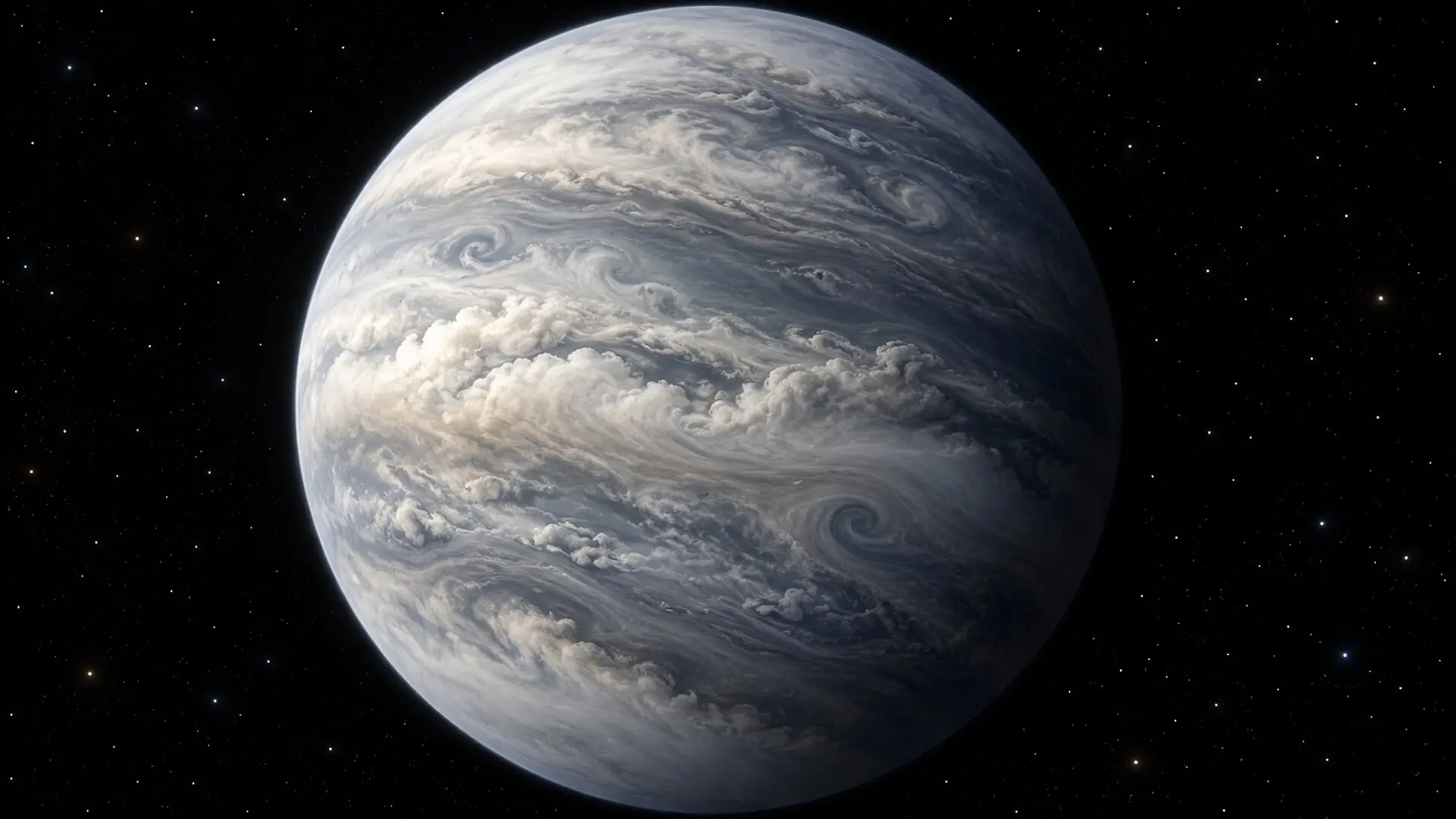
Astronomers have achieved a milestone in atmospheric science by tracking the weather patterns of a nearby, free-floating world. Using the James Webb Space Telescope (JWST), a research team monitored WISE 0855, an exceptionally cold brown dwarf located roughly 7.5 light-years away, to reveal evidence of shifting water clouds and complex chemical dynamics occurring within its atmosphere.
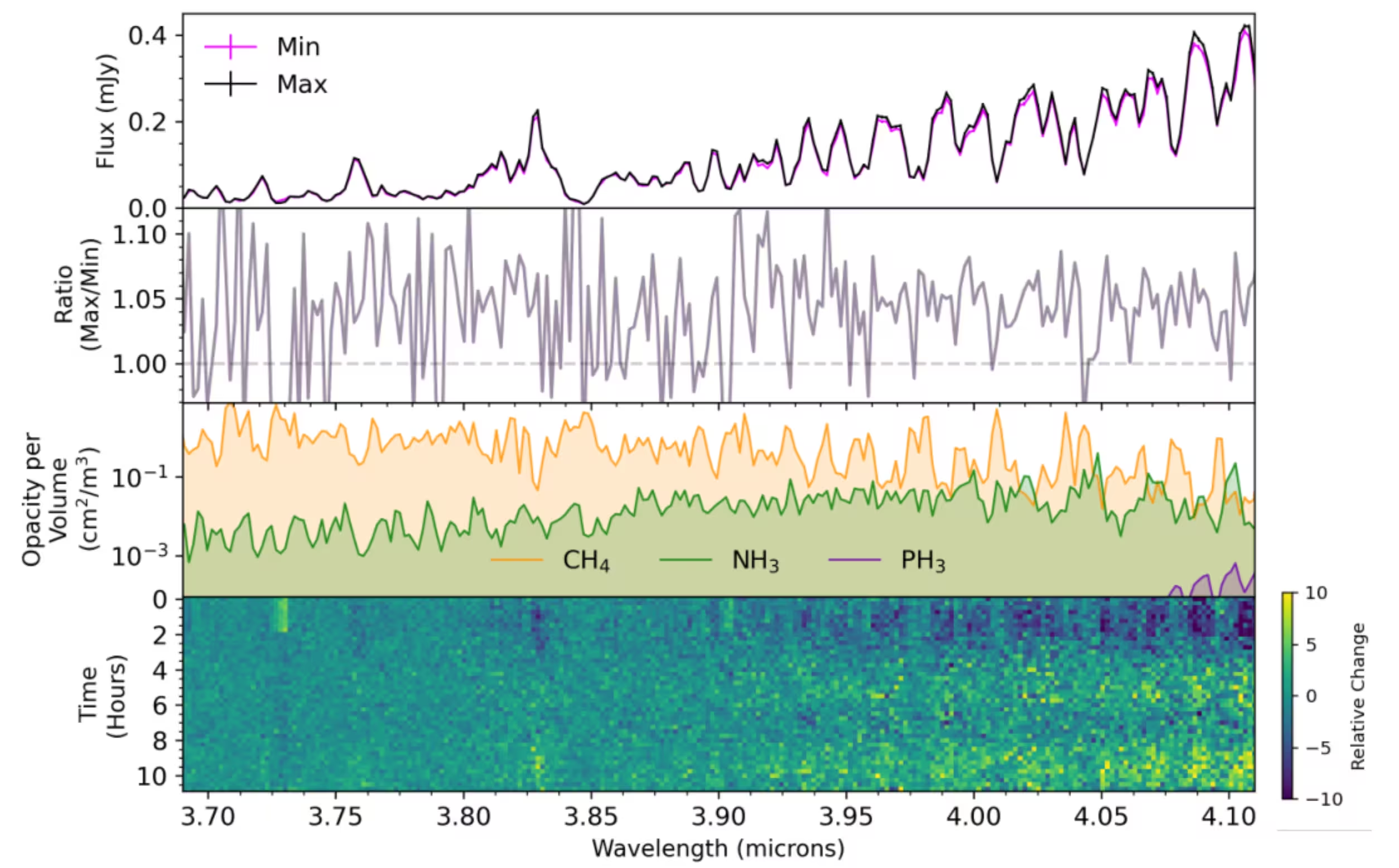
The findings, led by Brittany Miles of the University of Arizona’s Steward Observatory, indicate that the object—which is approximately the mass of Jupiter—experiences fluctuating cloud thickness. By analyzing infrared spectra captured over an 11-hour observation window, the researchers identified distinct signatures of carbon monoxide and phosphine, which appear to vary independently of the cloud-driven brightness changes.
Decoding a Cold World’s Atmosphere
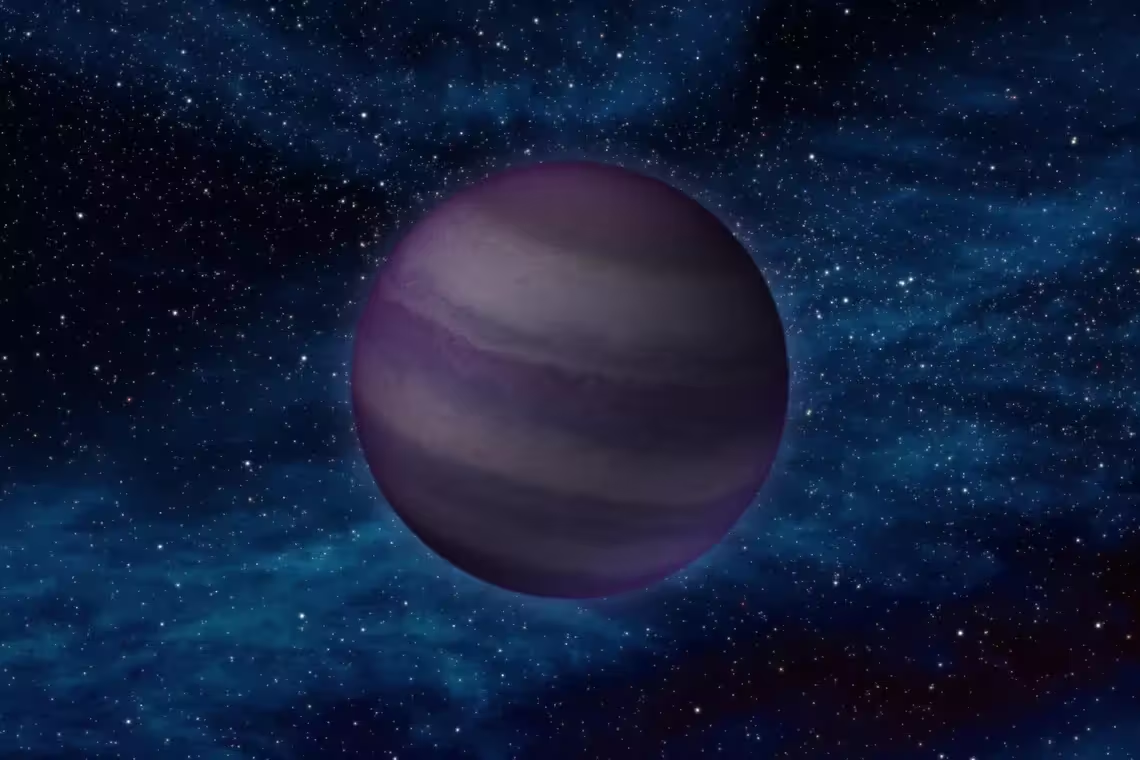
Brown dwarfs occupy a unique space between stars and giant planets. Unlike stars, they lack the mass to sustain nuclear fusion, instead radiating residual heat from their formation. WISE 0855 is the coldest known representative of this class, with an effective temperature of roughly 265 kelvin (minus eight degrees Celsius). Because it does not orbit a host star, it provides an isolated laboratory for studying the atmospheric processes that define gas giant weather.
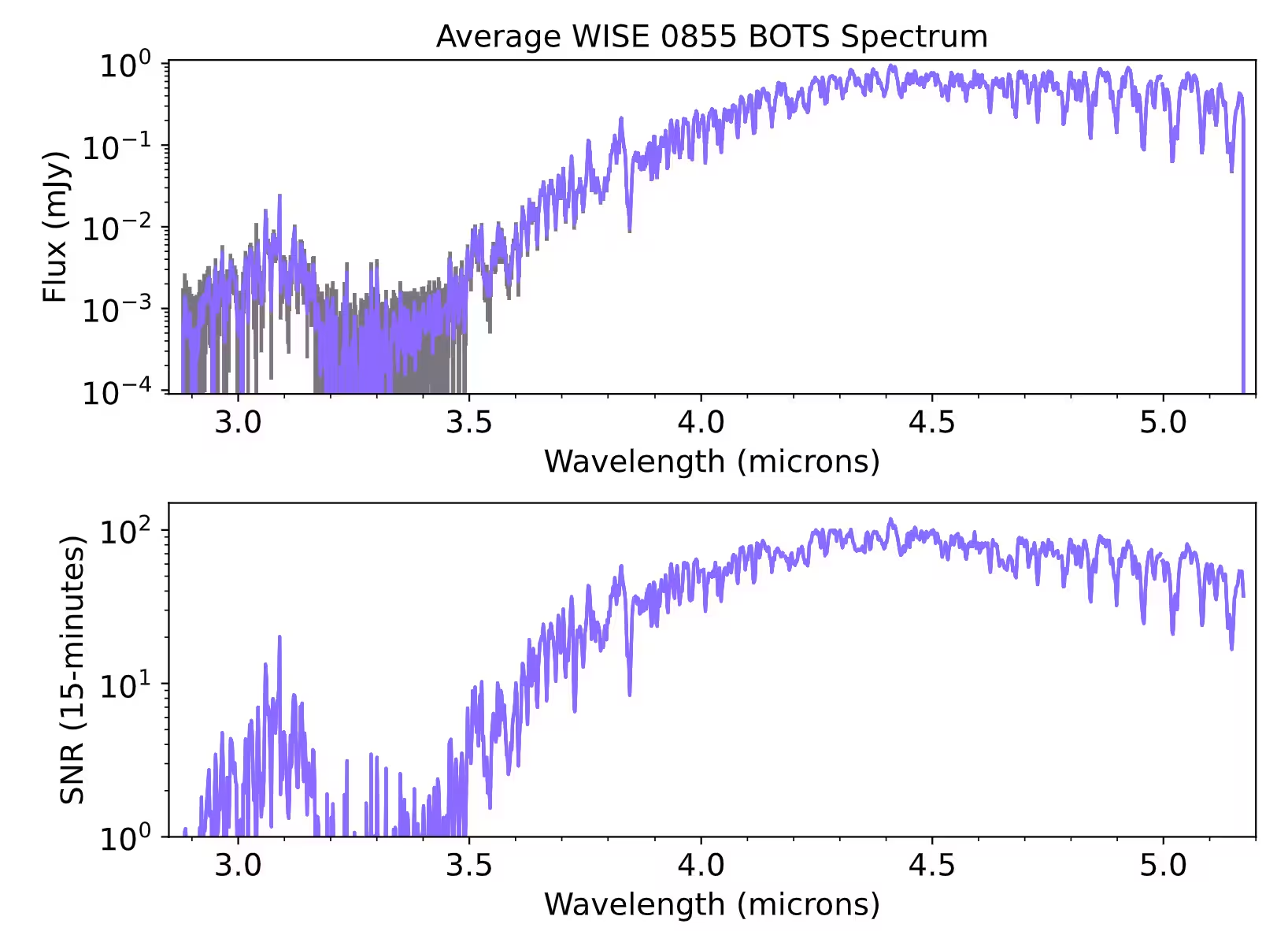
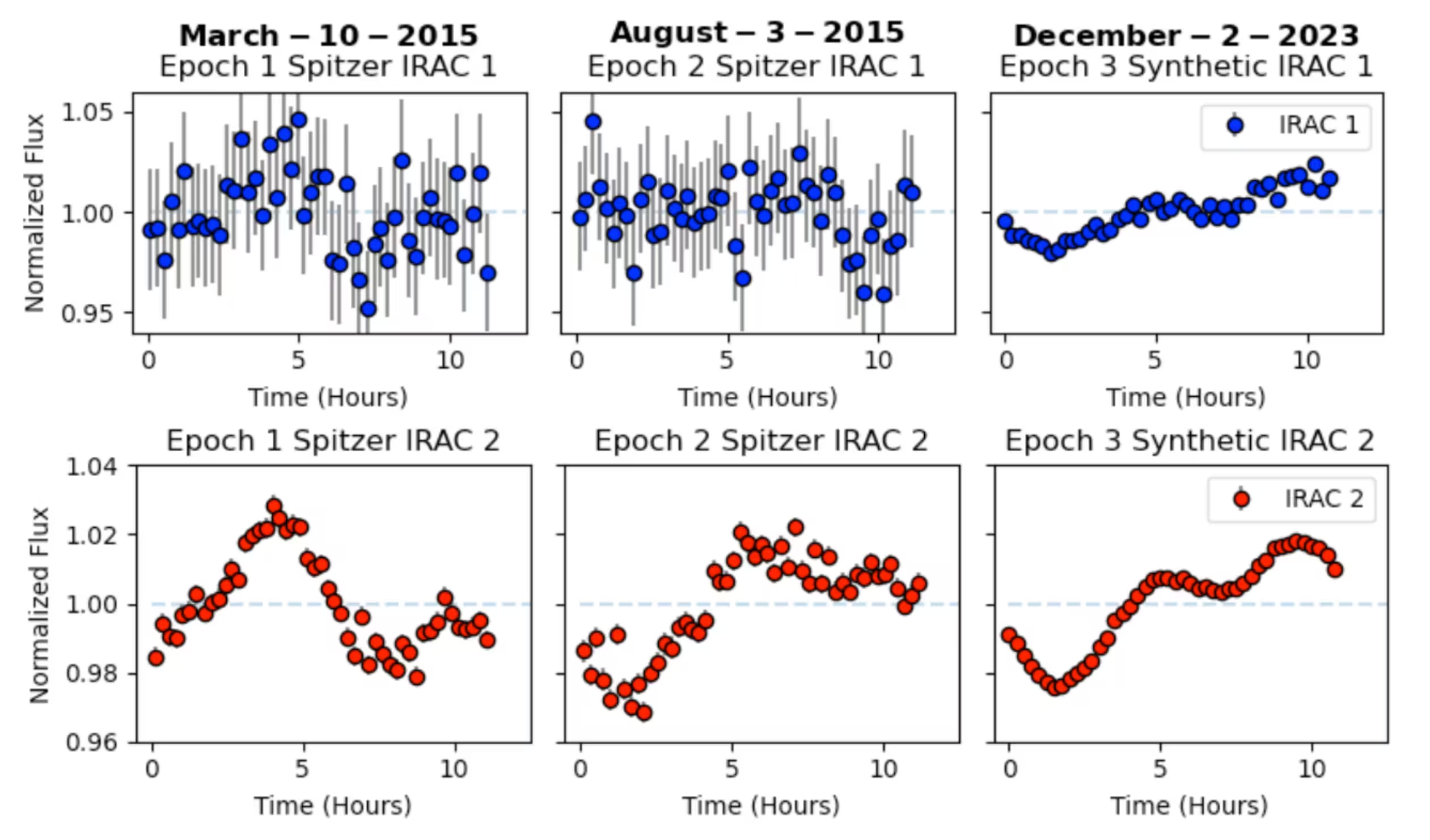
The JWST observations were conducted on December 2, 2023, utilizing the Near-Infrared Spectrograph to gather 44 separate spectra. By segmenting the 11-hour monitoring period into 15-minute intervals, the team could observe how light from different depths of the atmosphere escaped as the object rotated. Co-author Mark Marley of the Lunar and Planetary Laboratory described the atmosphere as a screen, where photons from deeper, warmer layers carry chemical signatures that are filtered by the cloud decks above.
Distinguishing Clouds from Chemical Shifts
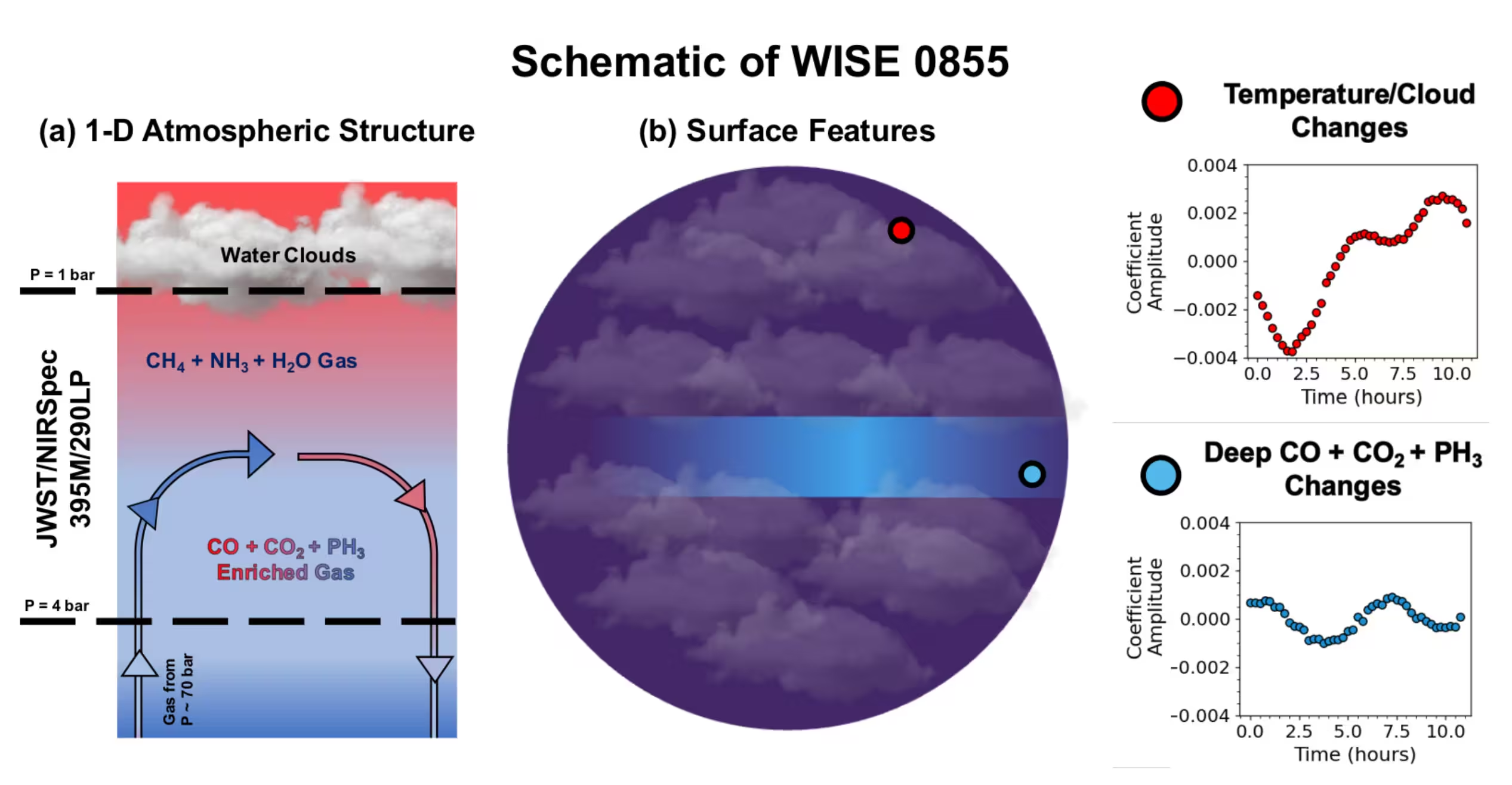
A primary challenge in analyzing an unresolved point of light is separating individual atmospheric phenomena. The team used multiple atmospheric models to interpret the data, finding that a scenario involving patchy water clouds provided the most consistent explanation for the observed brightness variations. These patches likely result in minor temperature fluctuations of around one kelvin as the object rotates, which the telescope’s sensitivity was able to isolate.
Beyond the clouds, the presence of carbon monoxide and phosphine offered a window into the deep-seated chemistry of the world. These molecules serve as indicators of vertical mixing, where internal heat drives material from hotter, high-pressure regions to the cooler, upper atmosphere. This process, known as disequilibrium chemistry, suggests that the atmosphere is in a constant state of dynamic change, similar to the convective activity observed on Jupiter.
Lingering Questions on Rotation and Structure
While the study provides a robust framework for understanding the atmospheric layers of WISE 0855, some mysteries persist. The team identified a potential rotation signal between 5.4 and 5.6 hours, but this remains inconclusive when compared against historical data from the Spitzer Space Telescope. The complexity of determining an exact rotation period is compounded by the fact that the weather features themselves may be evolving or shifting independently of the world’s rotation.
Future research, including follow-up observations with JWST, will be necessary to determine whether these atmospheric patterns are transient or stable features. By continuing to refine these models, astronomers hope to improve their ability to analyze the diverse environments of giant exoplanets, further expanding our understanding of planetary atmospheres across the galaxy.
This article has been fact checked for accuracy, with information verified against reputable sources. Learn more about us and our editorial process.
Last reviewed on .
Article history
- Latest version
Cite this page:
- Posted by Aisha Ahmed