Could Moon Dust Hide Ancient Alien Tech? New Study Proposes Cosmic Debris Trail
Scientists propose that lunar dust could hold microscopic remnants of ancient alien tech that once roamed the solar system.
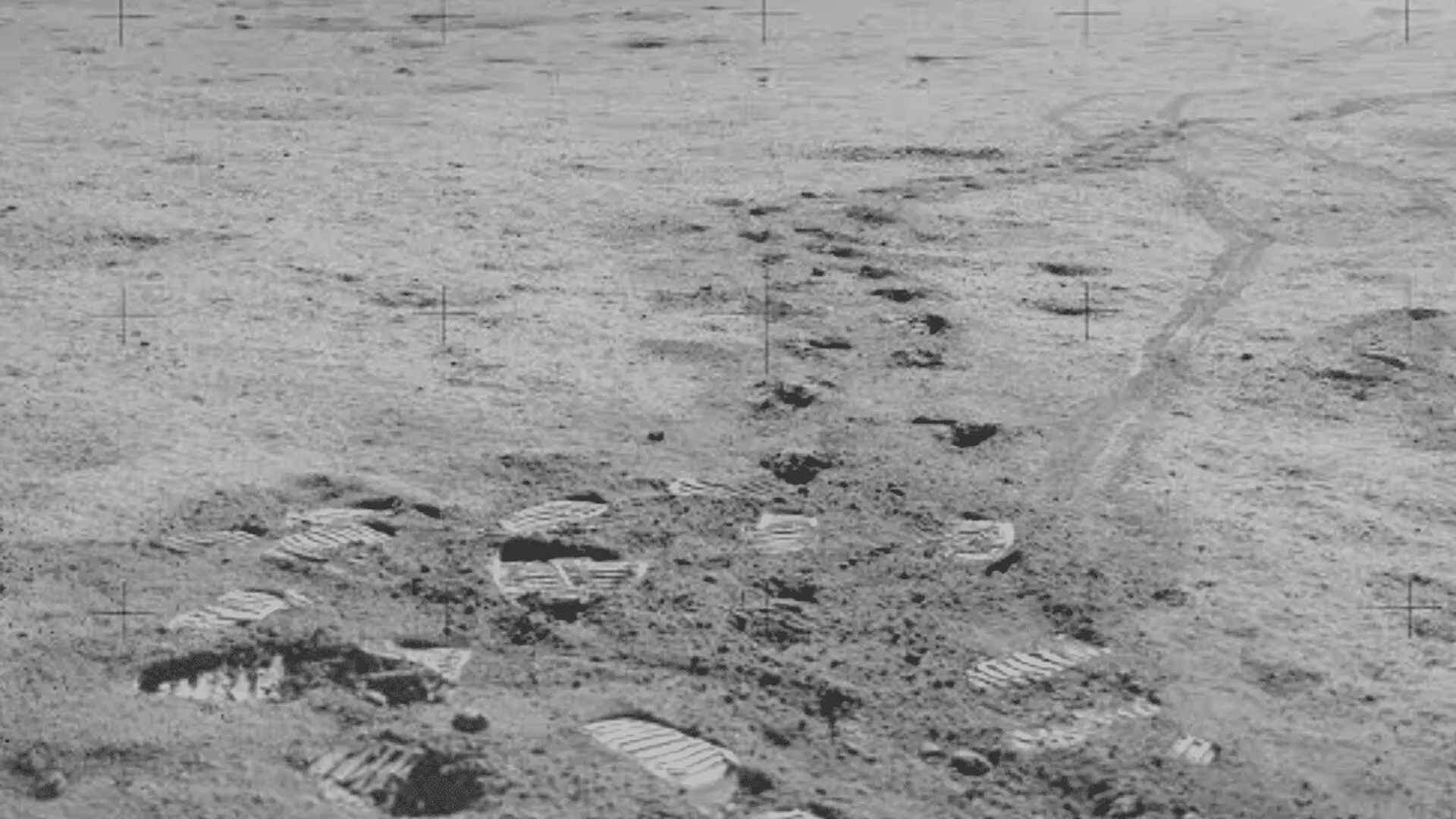
Astrophysicist Brian C. Lacki has put forward a bold hypothesis: the earliest detectable evidence of extraterrestrial technology may already be mixed into the Moon’s surface dust. In a pre‑print posted to arXiv, he argues that long‑lived physical leftovers—rather than brief radio beacons—could survive for billions of years and drift through interstellar space as microscopic particles.
Beyond Radio: Searching for Long‑Term Technological Traces
Recent work in the search for extraterrestrial intelligence is moving away from fleeting electromagnetic signals and toward durable artefacts that can endure across geological epochs. Lacki’s paper on arXiv outlines how advanced societies might leave behind stable debris that does not depend on precise timing between transmission and reception. This shift emphasizes objects or materials that can persist for eons, providing a permanent record of technological activity.
Such remnants could range from large engineered constructs that have broken apart to tiny grains generated by the slow degradation of megastructures. Over vast timescales, even massive installations would erode into fine particles that disperse throughout the galaxy, eventually embedding themselves in planetary surfaces.
Megastructures, Debris Cascades, and the Birth of “Technograins”
The hypothesis hinges on the fate of colossal constructs such as Dyson swarms that might harvest a star’s energy. Even if these installations operate for millennia, they would still require active maintenance. Absent intervention, orbital components could drift, collide, and fragment, sparking a chain reaction reminiscent of the Kessler syndrome, where each collision generates further debris.
Over time, this cascade would grind large engineering projects down to microscopic fragments—dubbed “technograins.” Though no longer recognizable as structures, these particles could retain chemical or physical markers of artificial origin. Radiation pressure and stellar winds would then whisk them across interstellar space, where they could intersect planetary systems, including ours.
The Moon as a Long‑Term Archive of Cosmic Dust
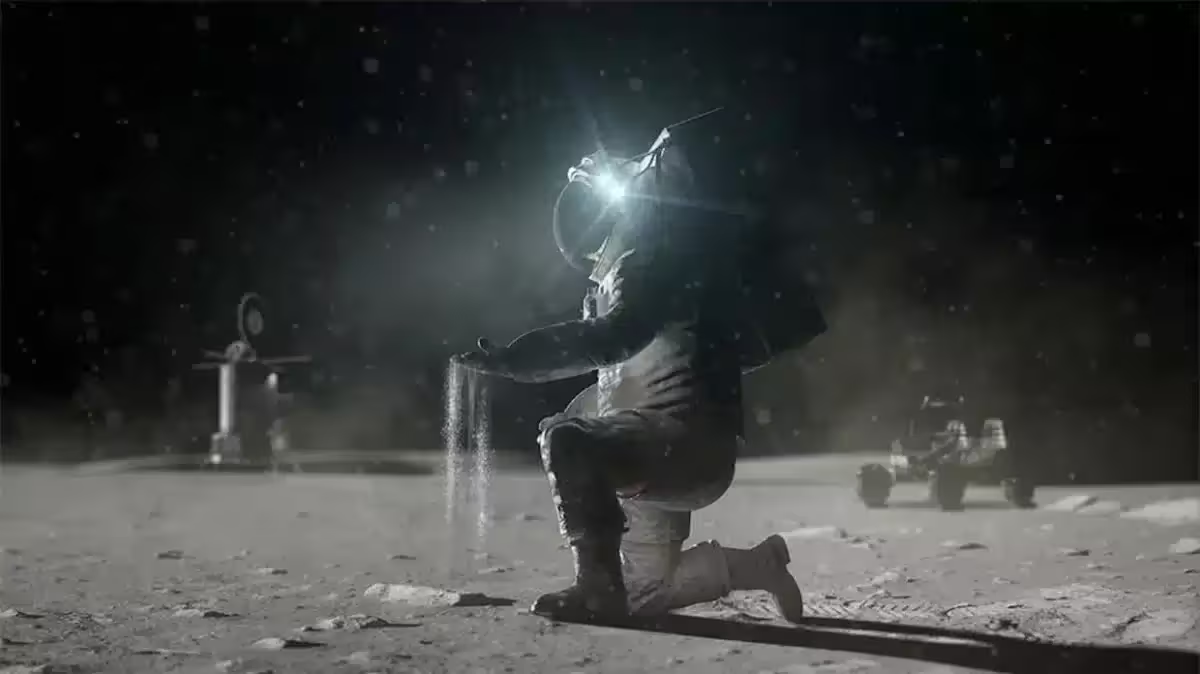
Because the Moon lacks an atmosphere, wind, and active geology, its regolith acts as a stable repository for material that arrives from space. Universe Today notes that this environment can preserve interstellar particles for extremely long periods, allowing them to become embedded in successive layers of lunar soil. Unlike Earth, where tectonics and erosion recycle surface material, the Moon retains a layered record of external deposition.
If technograins are present, they would likely be distributed throughout both surface and subsurface regolith. Targeted analyses of lunar samples could therefore search for anomalies in composition, structure, or isotopic ratios that differ from known natural processes. Though no such signatures have been identified to date, the Moon remains one of the most accessible sites for testing this idea, especially as upcoming missions bring back new material for laboratory study.
Reimagining the Hunt for Extraterrestrial Intelligence
By focusing on enduring physical traces rather than fleeting communications, researchers open a new avenue for detecting alien technology. In this framework, planetary bodies like the Moon serve as natural collectors of interstellar debris, offering a long‑term ledger of past technological activity. Analyzing lunar regolith for unexpected reflective properties, structural forms, or chemical signatures could, in principle, provide direct evidence of extraterrestrial engineering—even if the odds of a positive detection are modest.
While still speculative, the concept links planetary science with the broader quest to answer whether we are alone, suggesting that the Moon’s dusty surface might hold clues to civilizations that vanished long before their signals faded.
This article has been fact checked for accuracy, with information verified against reputable sources. Learn more about us and our editorial process.
Last reviewed on .
Article history
- Latest version
Reference(s)
- Lacki, Brian. “Dust to Dust: Prospects for Passive Technosignatures as Relics of ETI.” arXiv.org <https://arxiv.org/abs/2606.08373>.
- Tomaswick, Andy. “The Best Place to Look for Alien Megastructures Might Be Moon Dust.”, June 15, 2026 Universe Today <https://www.universetoday.com/articles/the-best-place-to-look-for-alien-megastructures-might-be-moon-dust>.
Cite this page:
- Posted by Aisha Ahmed