Ghost Neutrino Traced to Distant Shadow Blaster Starburst Galaxy 11 Billion Light‑Years Away
A mysterious neutrino from deep space sparks a hunt for its source across the universe’s most extreme environments.
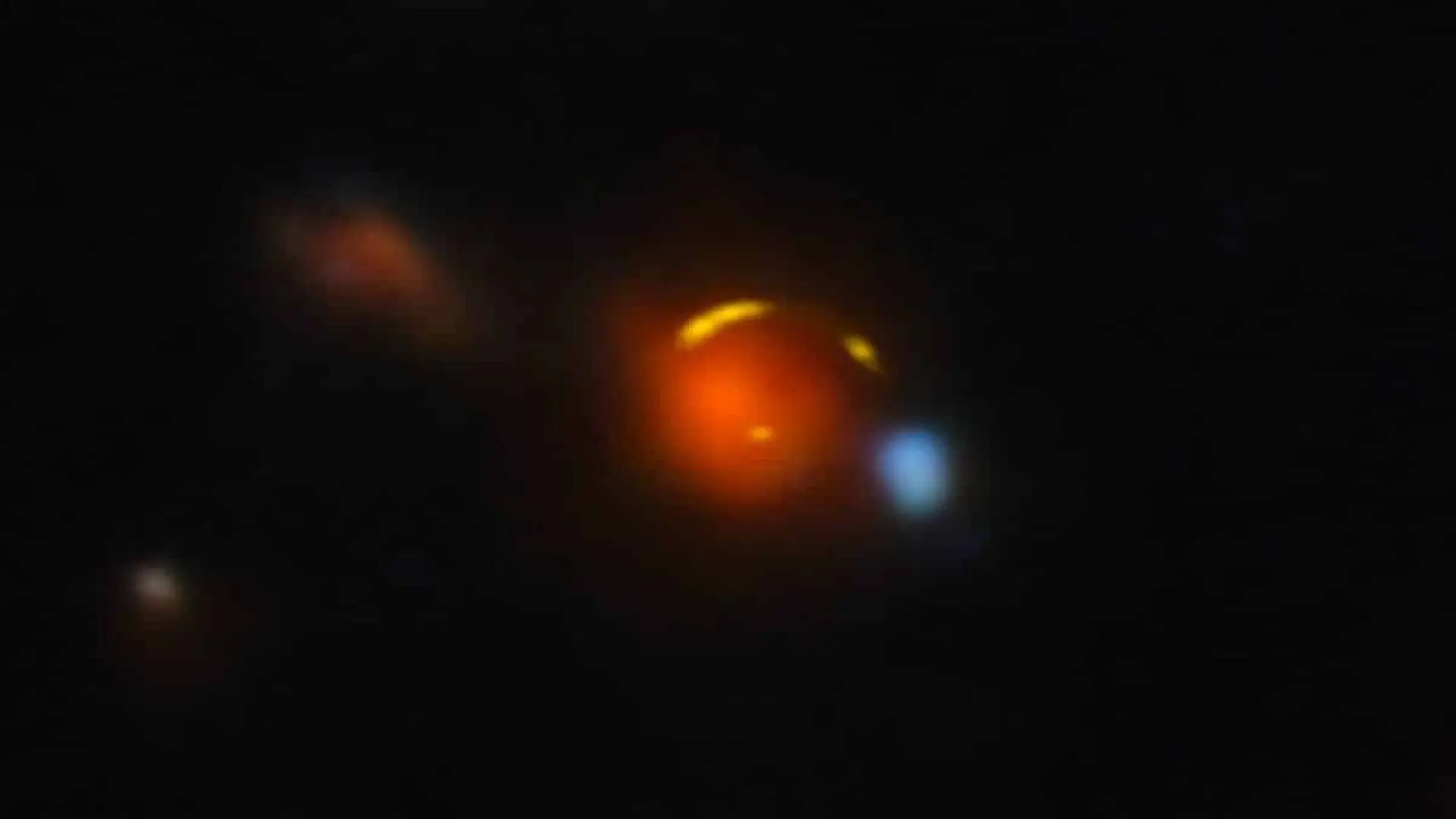
Scientists have linked a high‑energy neutrino that struck Earth to a galaxy over 11 billion light‑years away, a rare case where a single distant system can be tied to such a particle. The neutrino, designated IC 210922A, was recorded by the IceCube Neutrino Observatory in Antarctica and points back to a faint, dust‑filled galaxy dubbed Shadow Blaster.
Neutrinos, often called “ghost particles,” slip through ordinary matter with almost no interaction, making them ubiquitous yet notoriously difficult to locate. Detecting one is only the first hurdle; identifying its astrophysical origin requires tracing a faint signal across the cosmos.
When IceCube logged IC 210922A in 2021, the collaboration immediately began a multi‑wavelength hunt for a counterpart. Their effort, described in Nature Astronomy, considered possibilities such as gamma‑ray bursts, supernova explosions and tidal‑disruption events caused by black holes ripping stars apart. No accompanying gamma‑ray, X‑ray or optical flare was found, leaving the neutrino source unresolved despite intensive monitoring.
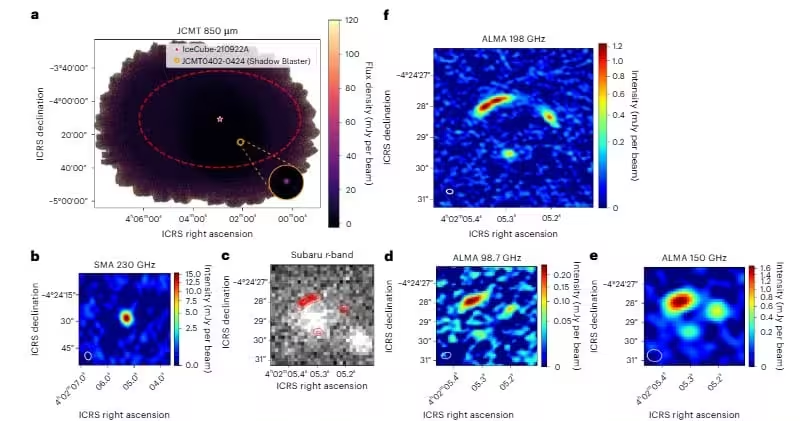
With the sky remaining unusually quiet, researchers turned to longer wavelengths that can reveal heavily obscured galaxies. Data from the James Clerk Maxwell Telescope (JCMT) and the Submillimeter Array (SMA) highlighted a bright infrared object, catalogued as JCMT0402−0424 and later nicknamed Shadow Blaster.
Follow‑up imaging with ALMA in Chile and the Gemini North telescope revealed a dusty, gas‑rich system undergoing vigorous star formation. The galaxy’s light is amplified by gravitational lensing, a natural “cosmic zoom” produced by a massive foreground object that bends and magnifies the distant source.
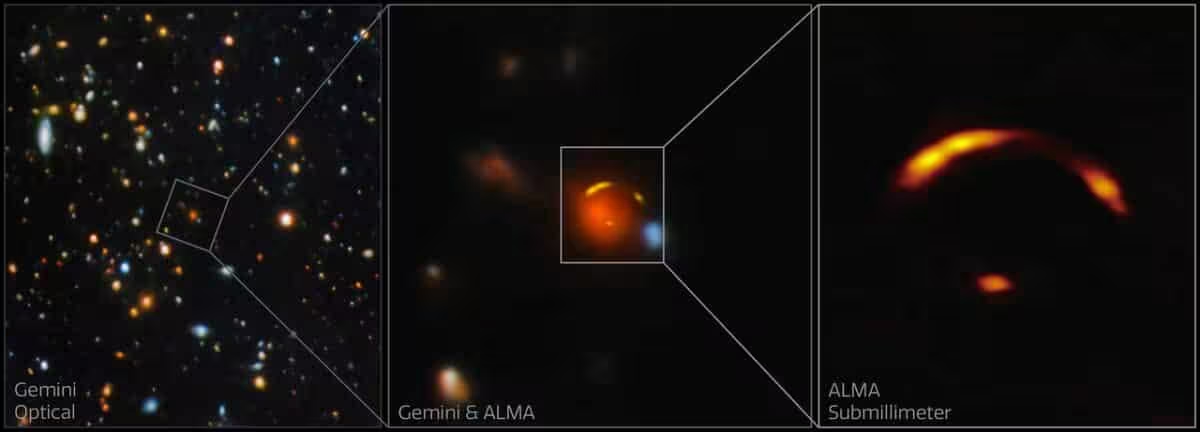
Unlike many active galaxies, Shadow Blaster shows no evidence of a powerful supermassive black hole launching jets. Instead, its energy output appears driven by dense, star‑forming regions, classifying it as a starburst galaxy—an environment where gas clouds collapse at rates far above typical galaxies.
“Shadow Blaster possesses the kind of dense, gas‑rich environment that theoretical models have long suggested could efficiently produce high‑energy neutrinos,” said Yuji Urata of MITOS Science Co. Ltd. in Taiwan. He added that confirming this link would mark the first time a dusty, star‑forming galaxy is directly associated with a high‑energy neutrino event.
Starburst galaxies were far more common roughly 10 billion years ago, a period when the universe was bustling with stellar births. Researchers therefore propose that such galaxies could contribute a significant fraction of the diffuse high‑energy neutrino background measured by IceCube—potentially up to about 20 percent. This scenario suggests that not only black‑hole systems, but also densely packed star‑forming regions across cosmic time, help shape the neutrino sky we observe today.
This article has been fact checked for accuracy, with information verified against reputable sources. Learn more about us and our editorial process.
Last reviewed on .
Article history
- Latest version
Reference(s)
- Urata, Yuji. “Compact dusty starbursts at cosmic noon linked to high-energy neutrinos - Nature Astronomy.”, June 17, 2026, pp. 1-14. Nature, doi: 10.1038/s41550-026-02884-9. <https://go.redirectingat.com/?id=92X1588396&xcust=space_dz_1351296393280829227&xs=1&url=https%3A%2F%2Fwww.nature.com%2Farticles%2Fs41550-026-02884-9&sref=https%3A%2F%2Fwww.space.com>.
- “James Clerk Maxwell Telescope – Operated by East Asian Observatory.”, March 12, 2026 <https://www.eaobservatory.org/jcmt/>.
- “SMA Project.” <https://lweb.cfa.harvard.edu/sma/>.
- “Gemini North.” <https://noirlab.edu/public/programs/gemini-observatory/gemini-north/>.
- “Tracing a Neutrino Ghost to Distant “Shadow Blaster” Galaxy - Gemini North telescope on Maunakea helps uncover strongest evidence yet that distant star-forming galaxies contribute to the production of one of the Universe’s most mysterious ghost particles.” www.noirlab.edu <https://noirlab.edu/public/news/noirlab2615/?lang>.
Cite this page:
- Posted by Aisha Ahmed