Titan’s Rich Hydrocarbon Reservoir Could Turn Saturn’s Moon Into a Space Refueling Hub
NASA scientist says Saturn’s icy moon Titan is rich in resources and ideal for future settlement.
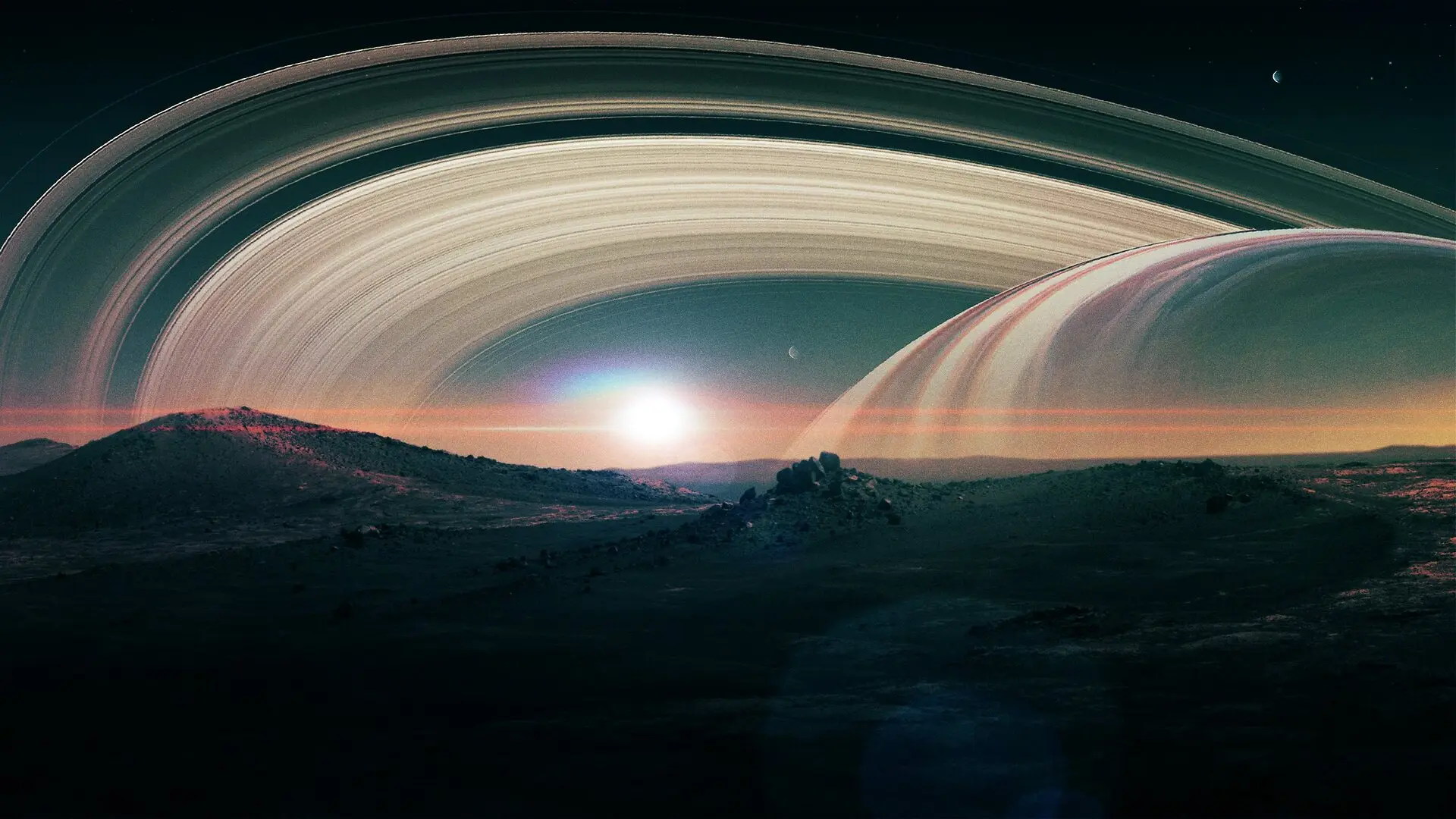
A study now under peer review, led by NASA Goddard astronomer Conor Nixon, evaluates Titan’s abundant raw materials and their possible role in future deep‑space missions.
Titan, Saturn’s biggest moon, is the only moon in the solar system known to host a thick atmosphere, roughly half again as massive as Earth’s.
The idea of in‑situ resource utilization—harvesting local substances rather than hauling them from Earth—has guided lunar and Martian exploration, yet Titan has largely escaped such analysis.
The researchers argue that Titan’s extensive reservoirs of hydrocarbons and other organics could be tapped to produce rocket propellant and polymeric materials, tasks that on the Moon or Mars would demand intricate, multi‑step processes.
“Abundant reduced carbon together with accessible nitrogen and oxygen makes Titan an attractive source for food, fuel, construction supplies and more, potentially enabling long‑duration missions or habitats in the outer solar system,” the authors wrote.
Nixon notes that the moon’s surface contains heavier hydrocarbons such as propane, butane, kerosene‑type liquids and even gasoline‑like compounds, which could be refined into plastics, synthetic rubber, solvents, pharmaceuticals and even food additives.
Operating on Titan would be technically demanding: surface temperatures hover around –290 °F, the atmospheric pressure is 1.5 times Earth’s, and gravity is only about one‑seventh of our own.
Since breathable oxygen is scarce, it would need to be generated on site, likely via electrolysis of water derived from Titan’s icy crust.
Even without establishing a permanent base, the moon could serve as a refueling hub, supplying spacecraft with essentials ranging from printer ink to fertilizer.
The paper concludes that while upcoming robotic missions like Dragonfly do not rely on Titan’s resources, future, more ambitious ventures may be designed to exploit them, despite the speculative nature of such plans today.
Although the Dragonfly rotorcraft won’t launch for several years, NASA scientists are already assessing how Titan might fit into humanity’s broader off‑world ambitions.
Compared with the Moon or Mars—where methane and similar hydrocarbons are scarce—Titan offers a uniquely rich supply of these energy‑dense compounds.
Nixon emphasizes that Titan’s hydrocarbon geysers and lakes effectively make the moon an “oil and natural gas” world on a planetary scale.
He told Universe Today that beyond burning these fuels, the raw materials could be transformed into a wide array of industrial products.
In sum, the authors argue that Titan’s massive stockpile of usable resources merits serious consideration for future exploration strategies.
This article has been fact checked for accuracy, with information verified against reputable sources. Learn more about us and our editorial process.
Last reviewed on .
Article history
- Latest version
Cite this page:
- Posted by Aisha Ahmed