Hidden Majority Of Milky Way Black Holes May Be Lone Wanderers Simulations Show
Simulations reveal most stellar‑mass black holes in the Milky Way are likely isolated and undetectable with current methods.
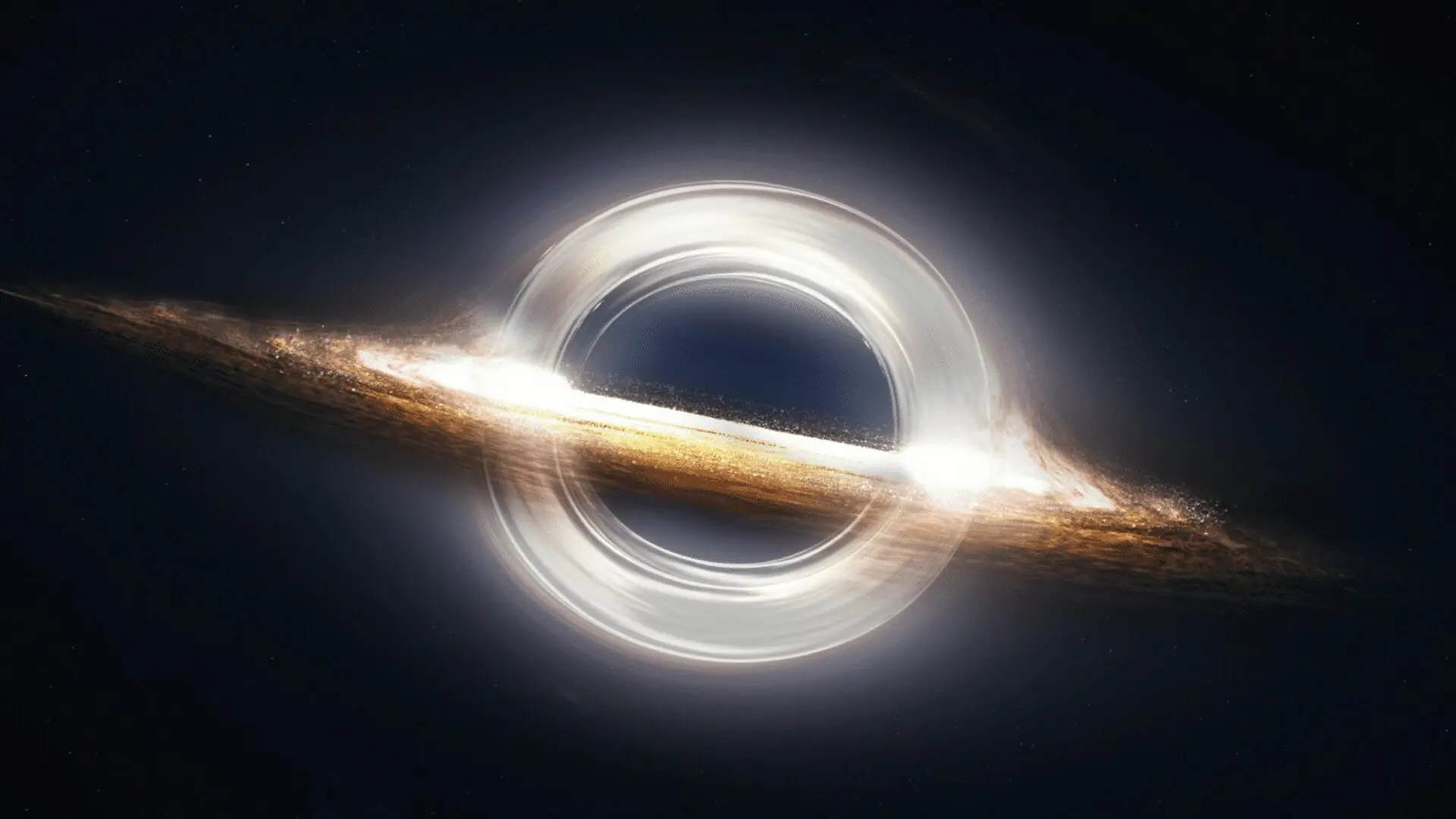
State‑of‑the‑art simulations indicate that more than nine‑tenths of the Milky Way’s stellar‑mass black holes travel alone, forming a largely invisible cohort that has escaped most observational campaigns. The study, posted on the arXiv preprint server, argues that the handful of black holes identified to date represent only a small slice of the galaxy’s true inventory.
Historically, astronomers have detected stellar‑mass black holes by the bright signatures generated when a companion star donates gas to the compact object. The inflowing material heats to extreme temperatures, emitting X‑rays and other radiation that telescopes can capture.
The latest work suggests that this technique preferentially uncovers the most accessible black holes, while a far larger population drifts silently, lacking a stellar partner and therefore producing virtually no observable light.
The research team, led by Wagg at the Flatiron Institute in New York, constructed a galaxy‑scale model that follows the birth, evolution, and demise of stars over billions of years. When massive stars explode, the simulations track the formation of stellar‑mass black holes and the violent “birth kicks” imparted by asymmetric supernovae, which can propel the remnants at high speeds.
Computer models expose a concealed black‑hole reservoir
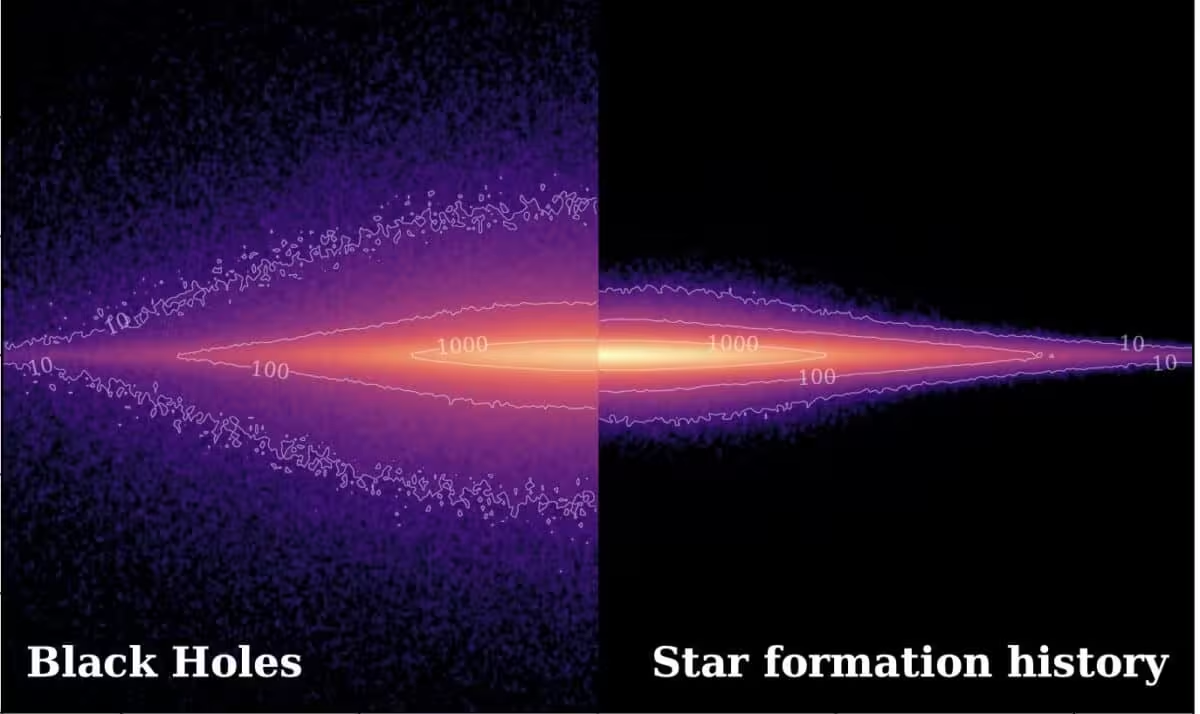
By tracing stellar lifecycles from formation to collapse, the model records every instance in which a massive star leaves behind a black hole. The inclusion of supernova recoil velocities shows how many of these remnants are thrust into isolated orbits, and a minority are even ejected from the Milky Way entirely.
The simulation results estimate that roughly 91 % of the galaxy’s stellar‑mass black holes now reside without a companion star. Deprived of nearby matter to accrete, these objects emit virtually no radiation, rendering them invisible to conventional surveys.
The authors also calculate that about 3 % of the population may have acquired sufficient speed from their birth kicks to escape the Milky Way’s gravitational pull.
The observable black holes are therefore a biased sample, representing the small fraction that happen to reside in binary systems with the right conditions for detection.
Why solitary black holes evade detection
Black holes trap light by definition, so they cannot be seen directly through ordinary electromagnetic observations. Instead, astronomers rely on the gravitational imprint they leave on surrounding matter.
In binary configurations, a black hole’s gravity siphons gas from its stellar partner, heating the flow and generating bright X‑ray outbursts that serve as tell‑tale signs.
An isolated black hole lacks a donor star and typically encounters little ambient material, so it traverses the galaxy without producing the luminous signatures that flag its presence.
This observational blind spot hampers efforts to map black‑hole formation pathways, understand the distribution of natal kick velocities, and gauge how these objects disperse throughout galactic structures.
The new simulation framework offers a roadmap for future searches, pinpointing regions where hidden black holes are statistically more likely to reside.
Upcoming missions may finally reveal the missing population
Forthcoming facilities such as the Roman Space Telescope, continued data releases from Gaia, and next‑generation spectroscopic surveys hold promise for detecting dark remnants via their gravitational influence rather than emitted light.
Gravitational microlensing stands out as a viable method: as a black hole passes in front of a distant star, its gravity bends and briefly brightens the background source, producing a detectable signal.
The positional forecasts generated by Wagg’s team can guide observers toward the most promising sky patches, increasing the odds of capturing such microlensing events.
Confirming the model’s predictions would dramatically refine estimates of the Milky Way’s black‑hole census, both within the disk and in the surrounding halo.
The findings underscore a broader lesson in astronomy: the objects that dominate a system’s mass budget are not always those that dominate its observable light, and hidden constituents can shape galactic evolution while remaining largely unseen.
By marrying sophisticated simulations with targeted observations, researchers are poised to transform these elusive wanderers from theoretical curiosities into measurable components of our galaxy’s population.
This article has been fact checked for accuracy, with information verified against reputable sources. Learn more about us and our editorial process.
Last reviewed on .
Article history
- Latest version
Reference(s)
- Wagg, Tom. “Charting the Galactic Underworld I: Comprehensive simulations of the kinematics, rates, and demographics of Milky Way black holes.” arXiv.org <https://arxiv.org/abs/2607.22814>.
Cite this page:
- Posted by Aisha Ahmed