Scientists Uncover Linked Double Dust Storms on Mars That Could Threaten Future Missions
Study uncovers a complex Martian storm pattern, offering fresh insights into the planet’s extreme weather and reshaping scientific understanding.
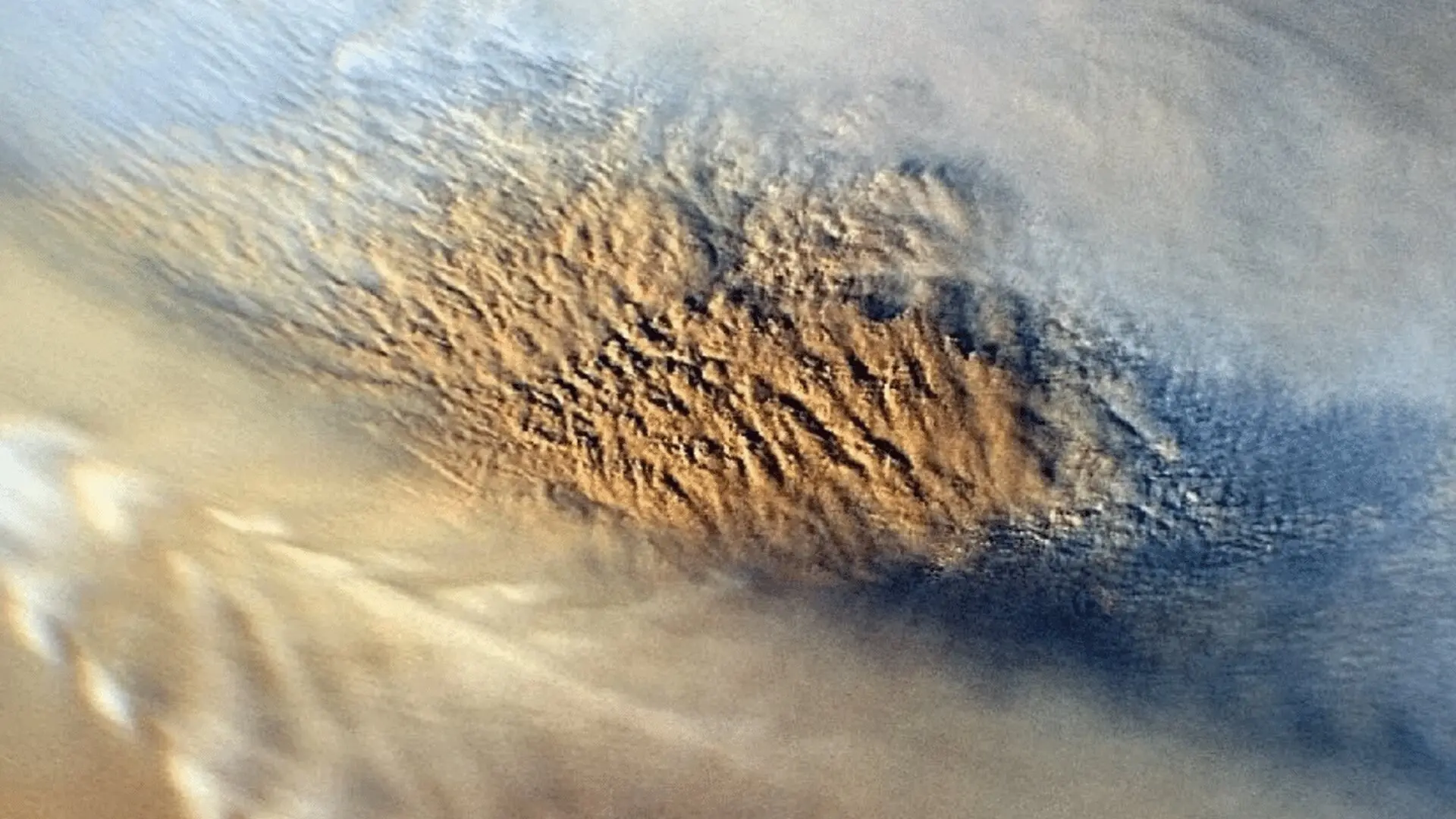
Recent analysis by planetary scientists has uncovered a linked behavior between distinct dust‑storm types on Mars, indicating that seemingly isolated events may actually be part of a larger atmospheric sequence. The work, highlighted by the Royal Astronomical Society, suggests that minor disturbances can be tied to broader climate shifts, a factor that could shape future mission planning.
The discovery adds complexity to the already intricate study of the Martian atmosphere, where dust, temperature swings, and seasonal cycles interact in ways that are difficult to forecast. Better grasp of these dynamics promises to refine weather models and improve preparation for both robotic explorers and potential crewed missions.
Connecting Small and Global Dust Events on the Red Planet
Although the atmosphere of Mars is far thinner than Earth’s, it can still generate expansive dust storms that blanket large portions of the planet. These events dictate how dust is redistributed, alter surface conditions, and directly affect solar‑powered rovers and landers.
Researchers have categorized Martian dust activity into regional occurrences and planet‑wide episodes. The mechanisms that drive a storm from a confined disturbance to a global phenomenon have long been a central puzzle in planetary science.
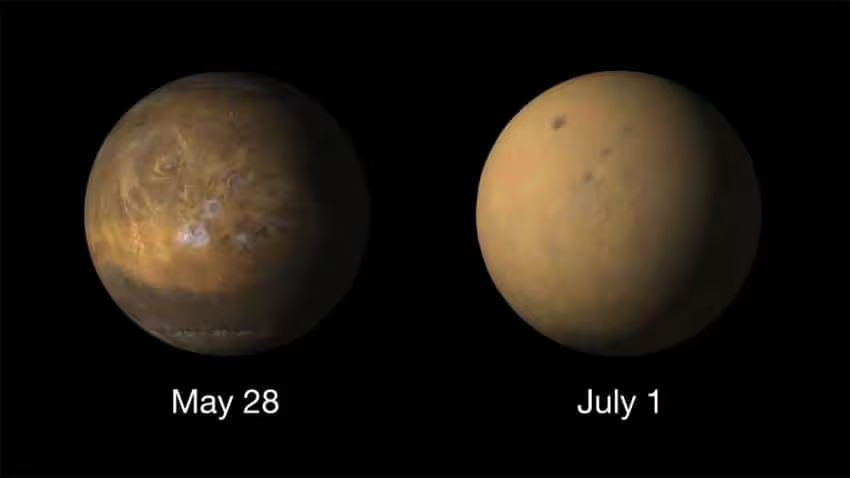
The new study introduces the concept of a “double‑storm” system, proposing that interactions within the atmosphere can cause smaller disturbances to merge into far larger structures. This perspective shifts the view from treating each dust event as isolated to recognizing a cascade of atmospheric processes.
Because of this interconnected behavior, forecasting Martian weather becomes more challenging. A storm that appears limited at first may later integrate into a planetary‑scale event, altering conditions over thousands of kilometres.
New Findings Illuminate Martian Atmospheric Dynamics
The Royal Astronomical Society highlighted the research as a notable advance in decoding the mechanisms behind Martian dust storms, reinforcing its role in disseminating breakthroughs about planetary environments.
The investigation relied on long‑term datasets from orbiters and landers, comparing the evolution of multiple storms to pinpoint recurring patterns and potential linkages between events.
Results reveal that dust storms are driven by a combination of solar heating, surface temperature contrasts, atmospheric circulation, and seasonal shifts, creating a continuously evolving climate system.
The work also underscores the value of sustained observations; repeated measurements enable scientists to separate fleeting disturbances from longer‑term climatic trends on a world where weather does not follow simple cycles.
Implications for Upcoming Missions and Human Presence
Dust storms pose more than a scientific curiosity for future explorers. Large‑scale events can dim sunlight that powers solar‑reliant spacecraft, limit energy availability for rovers, and modify atmospheric density around landing sites.
Accurate weather forecasts will be essential for crews planning long‑term activities on the planet. Anticipating storm development can guide mission designers toward safer landing zones and help schedule surface operations around periods of reduced atmospheric disturbance.
Each incremental improvement in Martian weather modeling equips engineers with better tools to design missions capable of withstanding the Red Planet’s harsh and variable environment.
Remaining Mysteries About Mars’ Weather Systems
The identification of a double‑storm pattern highlights how much remains unknown about Mars despite decades of exploration. While spacecraft have dramatically expanded our understanding, the planet’s atmosphere continues to reveal unexpected behavior.
The link between regional dust events and global storms is an active research frontier. Scientists are probing how atmospheric circulation, dust transport, and seasonal cycles intertwine to generate diverse storm outcomes.
Insights gained from Mars also inform broader planetary‑climate studies, offering comparative data that help refine models of atmospheric evolution across different worlds.
As forthcoming missions return fresh observations, researchers will keep honing Martian weather predictions, confirming that even a well‑studied neighbor like Mars can still surprise scientists with hidden atmospheric patterns.
This article has been fact checked for accuracy, with information verified against reputable sources. Learn more about us and our editorial process.
Last reviewed on .
Article history
- Latest version
Reference(s)
- “NAM 2026: Solar storms 'may alter Martian weather during dust storms'.”, July 21, 2026 The Royal Astronomical Society <https://ras.ac.uk/news-and-press/research-highlights/nam-2026-solar-storms-may-alter-martian-weather-during-dust>.
Cite this page:
- Posted by Aisha Ahmed