Webb Telescope Just Spotted Shifting Water Clouds on a Nearby World for the First Time
Astronomers have confirmed that water clouds on a nearby exoplanet are shifting in thickness, marking a major breakthrough in atmospheric observations.
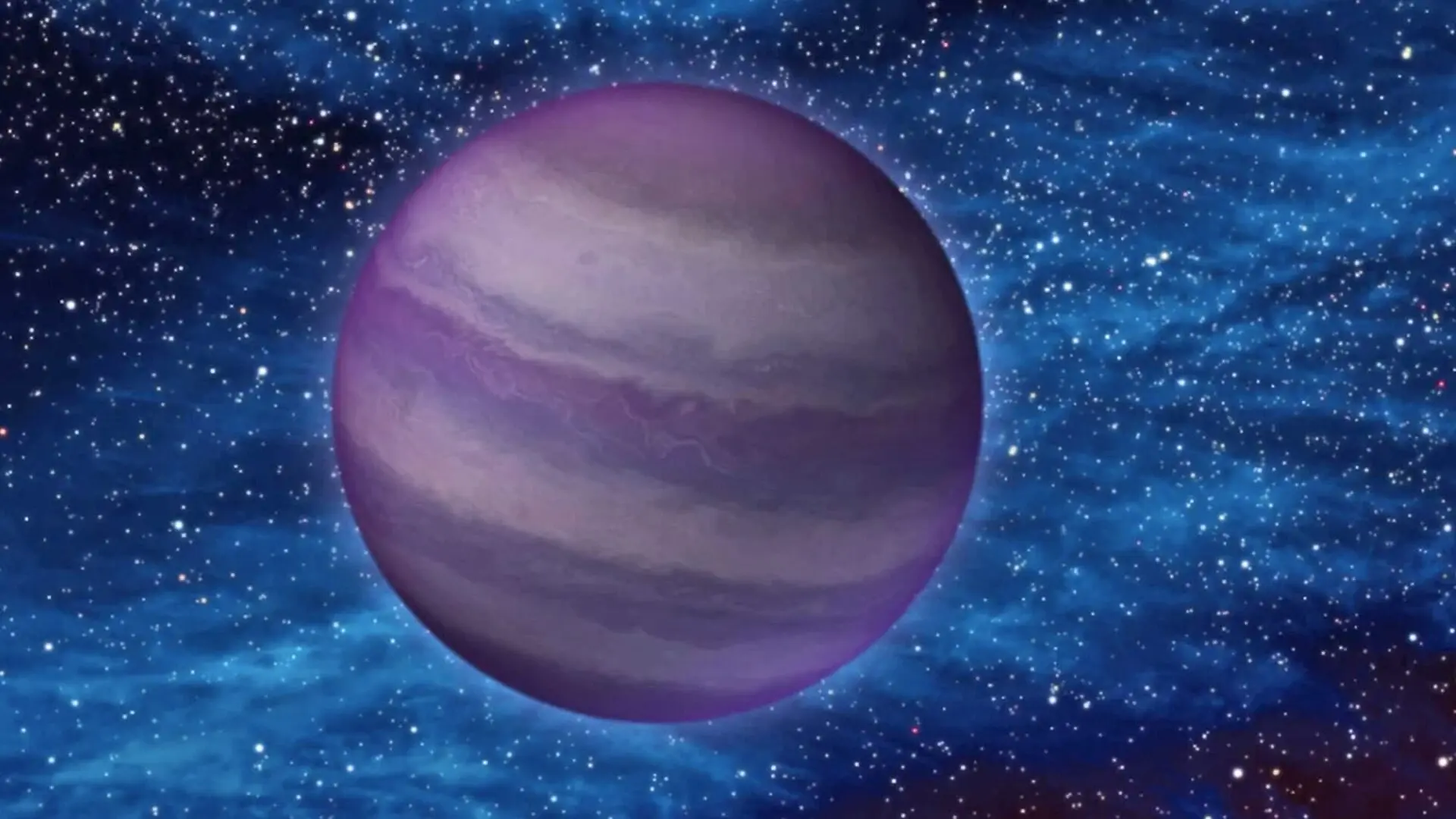
Astronomers using the James Webb Space Telescope (JWST) have unveiled the most detailed atmospheric portrait of a nearby celestial body to date, confirming that water clouds on the brown dwarf WISE 0855 shift in thickness much like weather patterns on Earth. Located just 7.5 light-years away, this frigid, Jupiter-sized object offers a rare glimpse into the complex meteorology governing worlds outside our own solar system.
The findings, detailed in The Astrophysical Journal, represent a significant leap in our ability to analyze distant atmospheres. By dedicating 11 hours of observation time to the target, a research team led by University of Arizona astronomer Brittany Miles captured spectra every 15 minutes, allowing them to isolate atmospheric processes that were previously impossible to distinguish from one another.
Brown dwarfs occupy a unique space in astrophysics, existing as objects too massive to be categorized as planets but lacking the internal pressure to ignite as stars. WISE 0855 is an extreme example of this class, boasting a temperature of approximately 265 Kelvin—cooler than the surface of our own planet. Because it shares a similar mass and physical scale with Jupiter, it serves as an ideal proxy for studying the atmospheric dynamics of free-floating gas giants.
The data reveals that the atmosphere of WISE 0855 is dictated by two simultaneous, distinct phenomena. First, the team observed shifting water clouds that fluctuate in density as the object rotates. Second, they identified evidence of deep-seated chemical gases, specifically carbon monoxide and phosphine, being thrust upward by convection currents. This process, known as disequilibrium chemistry, mirrors the convective mixing observed in Jupiter’s atmosphere, where heat from the interior forces gases to rise toward the cooler upper layers.
Coauthor Mark Marley, who heads the Lunar and Planetary Laboratory at the University of Arizona, likens the challenge of observing such a distant world to viewing a scene through a screen door. The screen acts as a filter, and the team had to account for both the light passing through it and the fluctuations caused by the “screen” itself. Using the JWST’s medium-resolution spectrograph, the researchers successfully untangled these variables, effectively tracking temperature changes and chemical movement in real time.
This discovery provides more than just a snapshot of a single nearby neighbor. According to Miles, the research confirms that the fundamental physics of clouds, convection, and chemistry are universal. By observing these patterns in a brown dwarf, scientists are gaining critical insights that will inform the study of gas giant exoplanets, which are currently a primary target for JWST missions.
The research underscores the narrowing gap between our understanding of brown dwarfs and planets. While these objects are distinct in their formation, the weather patterns and physical behaviors they exhibit are surprisingly consistent across the cosmic scale. As the team plans future observations to map the three-dimensional movement of these atmospheric layers, the study serves as a milestone in our ability to decipher the skies of worlds light-years away.
This article has been fact checked for accuracy, with information verified against reputable sources. Learn more about us and our editorial process.
Last reviewed on .
Article history
- Latest version
Reference(s)
- Miles, Brittany. “Water Cloud and Chemical Modulations in the Coldest Brown Dwarf.” arXiv.org, doi: 10.48550/arXiv.2609.20664. <https://doi.org/10.48550/arXiv.2609.20664>.
Cite this page:
- Posted by Farah Siddiqui