Why A Kilo Of Steel And A Kilo Of Feathers Actually Have Different Weights
Physics explains why Earth’s atmosphere subtly shifts your weight on even the most precise scales, turning a classic riddle into a surprising scientific fact.

The age-old riddle asking whether a kilogram of steel or a kilogram of feathers is heavier has long been a staple of lighthearted debate. While the intuitive response is that they are identical in mass, the physics of how we measure these objects reveals a more complex reality. When measured in an environment containing air, the two do not necessarily exert the same downward force on a scale.
Why Air Buoyancy Shifts the Balance
To understand why a scale might suggest a difference, one must look past gravity to the role of buoyancy. Just as water exerts an upward force on objects submerged within it, the atmosphere exerts a similar buoyant force on everything it surrounds. This effect is dictated by the volume of the object being measured.
Because feathers are significantly less dense than steel, a single kilogram of them occupies a much larger volume. Consequently, the feathers displace more air, resulting in a stronger upward buoyant force. Steel, being much denser, occupies less space, displaces less air, and experiences a weaker buoyant force. On a sensitive scale, this means the air effectively helps hold the feathers up more than it helps the steel, making the steel appear heavier.
In a vacuum, where no air is present to exert this upward force, both materials would register as exactly equal. The discrepancy only arises when weighing occurs within a fluid medium like Earth’s atmosphere.
Measuring the Discrepancy
The mathematical difference is small, but it is entirely measurable. Using the density of keratin—the primary component of feathers—at approximately 1.3 grams per cubic centimeter, compared to steel at 7.86 grams per cubic centimeter, researchers can calculate the distinct buoyant forces at play. At sea level, a kilogram of keratin experiences a significantly greater reduction in apparent weight than a kilogram of steel due to the larger volume of displaced air.
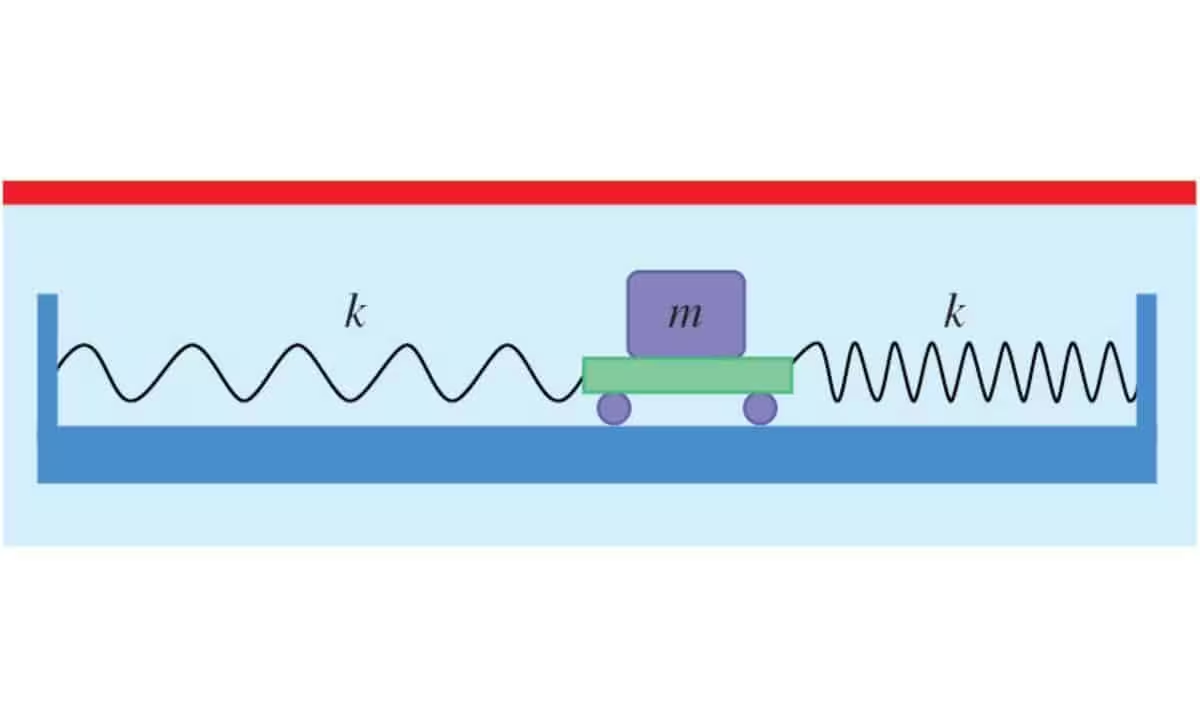
In high-precision metrology, this phenomenon is not a trivial curiosity; it is a critical variable. The National Institute of Standards and Technology (NIST) notes that uncorrected air buoyancy is frequently the primary source of error when comparing mass, mandating that corrections be applied for any measurement requiring high accuracy.
Experimental Evidence in Vacuum Chambers
In a 2014 study, researchers utilized a vacuum chamber to demonstrate this principle empirically. By balancing a bronze sheet against a block of expanded polystyrene, they established equilibrium in air. As they slowly evacuated the air from the chamber, the balance shifted, revealing the mass difference that the buoyant force of the atmosphere had previously masked.
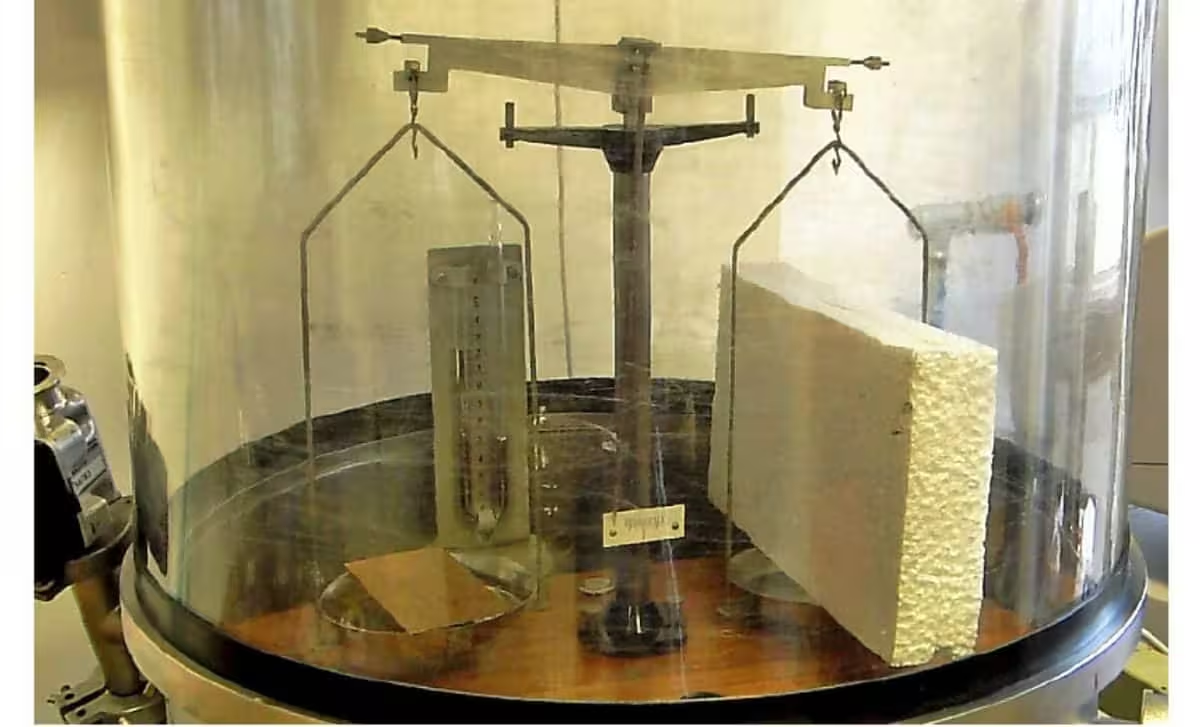
“The two bodies used in this work, initially maintaining the scale in equilibrium, reach a new configuration in which the bronze sheet reveals its smaller mass as soon as the air starts to be pumped out from the vessel.”
Ultimately, the riddle highlights the fundamental difference between mass, which is intrinsic, and apparent weight, which is influenced by the surrounding environment. While we often use the terms interchangeably in daily life, physics shows that the medium in which we weigh our objects matters just as much as the objects themselves.
This article has been fact checked for accuracy, with information verified against reputable sources. Learn more about us and our editorial process.
Last reviewed on .
Article history
- Latest version
Reference(s)
- “Sop 2 Applying Air Buoyancy 20190506.” <https://www.nist.gov/system/files/documents/2019/05/13/sop-2-applying-air-buoyancy-20190506.pdf?>.
- “National Institute of Standards and Technology.”, October 21, 2026 NIST <https://www.nist.gov/>.
- Zendri, G., et al. “The weight of iron and feathers.” Physics Education, vol. 49, no. 5, September 8, 2014, pp. 544-547. IOP Publishing, doi: 10.1088/0031-9120/49/5/544. <https://iopscience.iop.org/article/10.1088/0031-9120/49/5/544>.
Cite this page:
- Posted by Farah Siddiqui