Tiny Crystals Sent Around The Moon Reveal Surprising Truths About Deep Space Radiation
Tiny crystals flown on NASA’s Artemis I mission have revealed surprising new insights into the intensity of radiation exposure around the Moon.
New data harvested from thousands of microscopic sensors aboard NASA’s Artemis I mission has challenged long-standing assumptions regarding the radiation environment beyond Earth’s orbit. By analyzing the transit of energetic particles through anatomical mannequins, researchers have discovered that while the radiation profile near the Moon is distinct from that found in low Earth orbit, the total risk profile is perhaps less extreme than previous models suggested.
Crystal-Based Sensors Track Deep Space Ionization
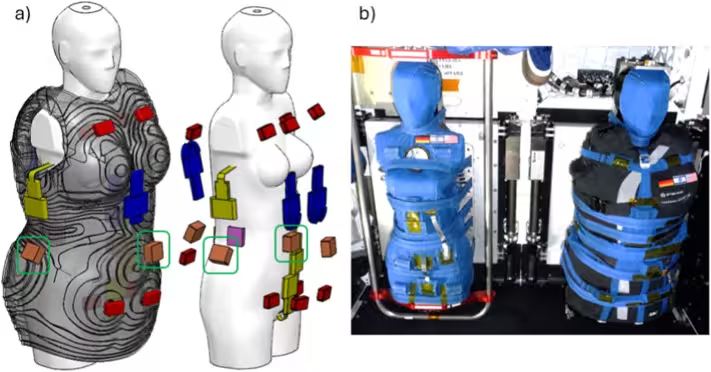
During the 2022 Artemis I flight, the Orion spacecraft carried two instrumented human phantoms designed to mimic the internal structure of the human body. Embedded within these test models were over 10,000 tiny crystals, which served as passive recorders of the ionizing radiation encountered during the mission’s lunar trajectory. Among these were experimental lithium fluoride detectors, crafted by a team at the Institute of Nuclear Physics of the Polish Academy of Sciences (IFJ PAN).
This initiative, formally titled the Matroshka AstroRad Radiation Experiment (MARE), aimed to bridge the knowledge gap regarding how space radiation penetrates human tissue outside the protective influence of Earth’s magnetic field. The findings, published in the journal Radiation Measurements, detail a novel methodology for decoding particle interactions stored within the crystal lattice.

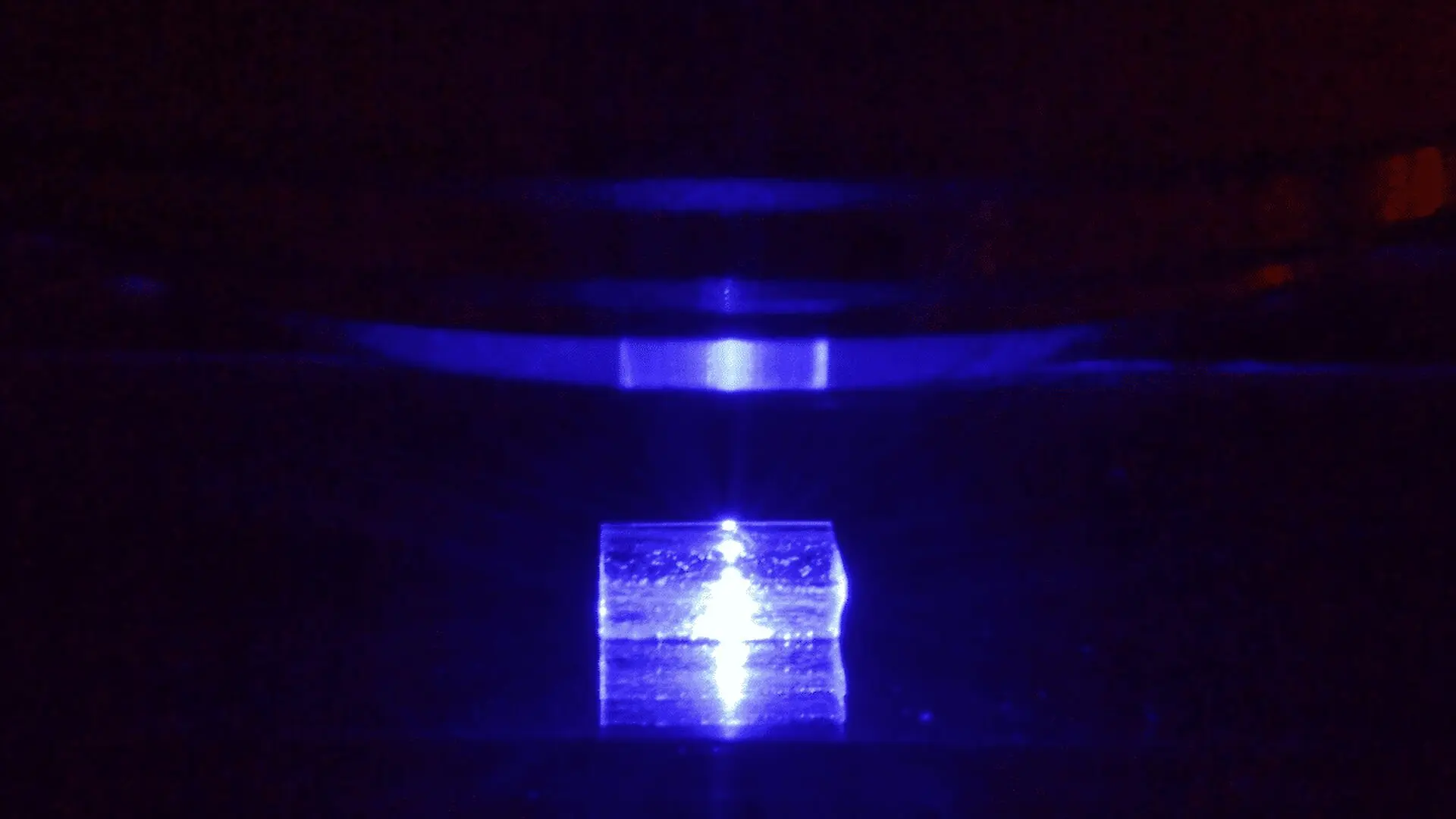
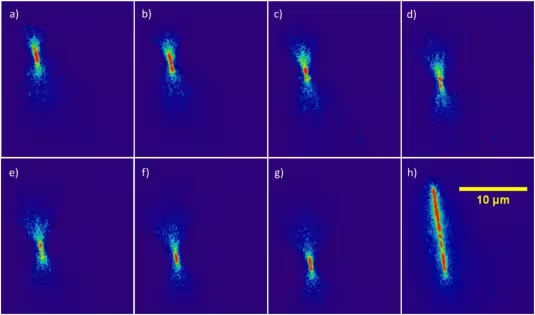
Unlike electronic sensors that provide instantaneous telemetry, these passive crystals act similarly to photographic film. As energetic particles traverse the lithium fluoride, they leave behind structural defects. Once back on Earth, researchers used fluorescence microscopy to illuminate these tracks, which emit red light under blue excitation, allowing for precise mapping of particle paths without the need for chemical etching.
Decoding the Particle Signatures
The primary challenge in interpreting these data lies in the complex nature of cosmic radiation, which encompasses a broad spectrum of particle energies and masses. To account for this, the IFJ PAN team developed sophisticated software to filter background interference and refine the resolution of the recorded tracks. Pawel Bilski, a co-author of the study, noted that the resulting measurements were highly consistent with established detection methods while proving sensitive enough to identify low-energy events that traditional instruments often fail to register.
A key finding from the MARE experiment is the shift in how radiation is distributed through the body when moving away from Earth. In low Earth orbit, low-energy protons trapped within the Van Allen belts dominate the exposure, causing uneven dose distribution as they are stopped by biological tissue. Near the Moon, however, these trapped protons vanish, leaving high-energy galactic cosmic rays as the primary concern. Because these particles are more penetrating, the dose they deposit is notably more uniform across the body.
“In the vicinity of the moon, this substantial contribution disappears. Our measurements from the MARE experiment indicate that, although total radiation doses near the moon are higher than those in Earth orbit due to the considerable levels of galactic radiation, the difference is not as large as one might intuitively expect,” Bilski explained.
Improving Safety for Future Artemis Crews
The success of the lithium fluoride crystal array highlights a path forward for astronaut health monitoring. Beyond their ability to track standard ionizing radiation, specific configurations of these crystals—enriched with lithium-6—can effectively detect neutrons, providing a comprehensive assessment of the radiation environments crews will navigate during long-duration lunar stays.
While these findings provide critical insights, researchers emphasize that they represent only one piece of the puzzle. Factors such as solar particle events and the long-term biological effects of varying radiation types require further study. As NASA prepares to send humans back to the lunar surface, the granular data provided by these microscopic crystal records will be instrumental in developing better shielding and risk mitigation strategies to ensure the safety of future space explorers.
This article has been fact checked for accuracy, with information verified against reputable sources. Learn more about us and our editorial process.
Last reviewed on .
Article history
- Latest version
Reference(s)
- “Redirecting.” <https://linkinghub.elsevier.com/retrieve/pii/S1350448726002039>.
Cite this page:
- Posted by Farah Siddiqui