China Crew Performs First In‑Orbit Medical Rescue Drill on Tiangong Space Station
China’s Shenzhou-23 crew completes first in‑orbit medical rescue drill, paving the way for longer, more complex human spaceflight missions.
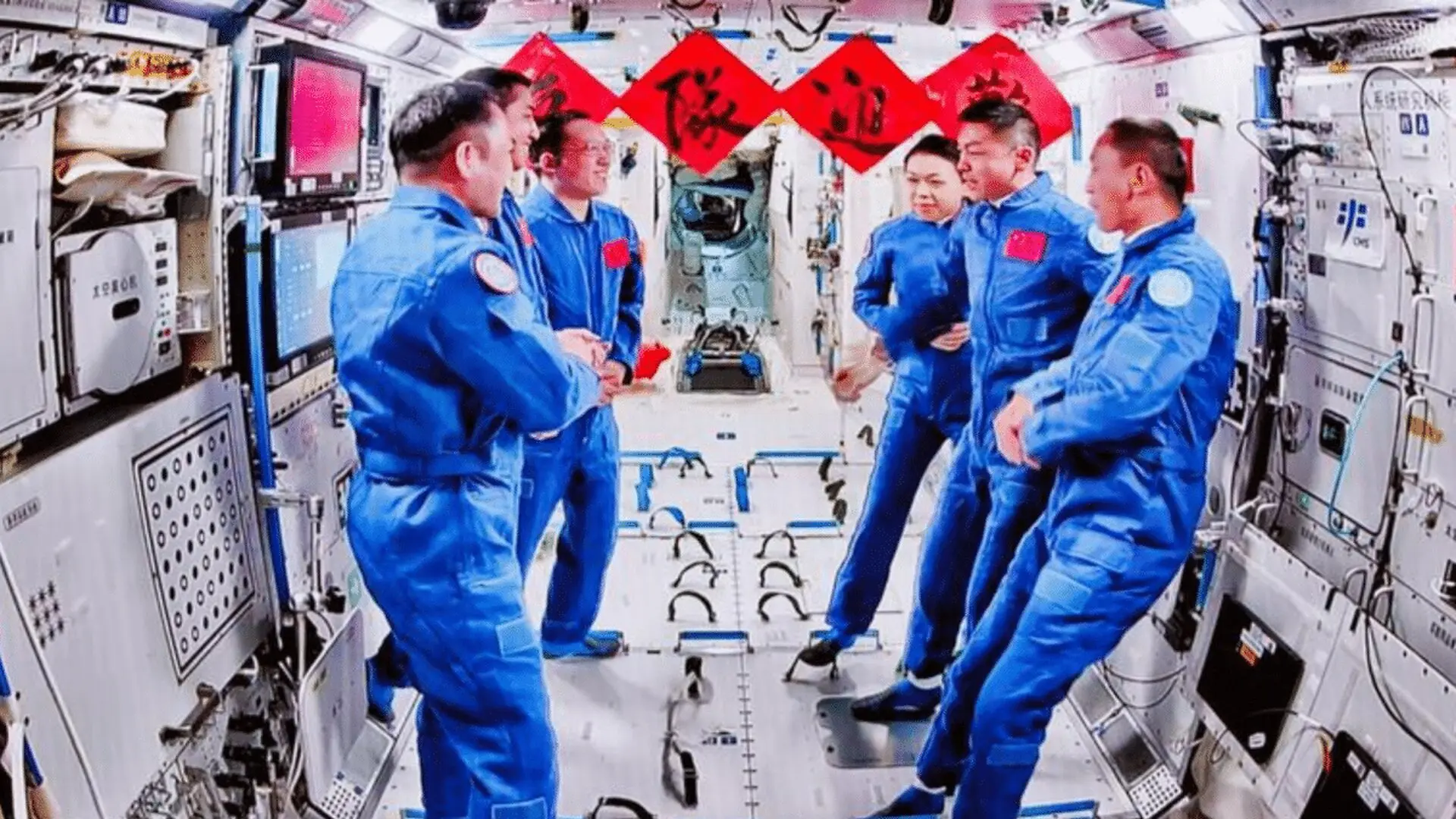
The newest crew on China’s Tiangong space station has finished its inaugural in‑orbit medical rescue drill, a step that underscores the increasing sophistication of the nation’s crewed space program. The exercise is intended to equip astronauts with the skills needed to handle health crises in a weightless setting while supporting China’s long‑term plans for extended missions beyond low Earth orbit.
Space‑Based Medical Crises Require Specialized Training
Treating an illness on Earth already demands careful coordination; in orbit, the absence of gravity adds layers of difficulty. Simple motions must be adapted, and any procedure that relies on stable positioning or controlled force has to be re‑engineered. According to Xinhua, the three members of the Shenzhou-23 flight—Zhu Yangzhu, Zhang Zhiyuan and Li Jiaying—completed a targeted rescue‑training program to master these unique conditions.
Details released by the China Manned Space Agency (CMSA) indicate that the drill emphasized techniques for extracting victims and applying force in microgravity. Knowing how objects, equipment and even the human body behave without weight is crucial when every moment counts during a medical incident. The initiative mirrors a global shift among space agencies as missions lengthen and crews operate farther from immediate Earth‑based support, making autonomous medical care an essential component of future exploration.
Mission Framework Aimed at Sustaining Human Presence in Space
The Shenzhou-23 flight lifted off on May 24, 2026, delivering its crew to the permanently occupied Tiangong platform. While the medical rescue drill drew attention, it represents only a fragment of a broader scientific agenda that includes a year‑long orbital stay designed to collect data on the impacts of extended space habitation.
Prolonged missions expose astronauts to a suite of physiological and psychological stressors, such as muscle atrophy, bone density loss, metabolic shifts, cognitive adaptation and emotional well‑being challenges. By extending the duration of on‑orbit operations, Chinese researchers aim to amass evidence that will inform future missions requiring crews to live and work in space for even longer periods, thereby shaping lunar and deep‑space exploration strategies.
Research Probes Human Health in the Void
Beyond emergency readiness, the crew is conducting a range of investigations into how the human body and mind adjust to spaceflight. One notable study employs a space Raman spectrometer to explore the link between gut microbiota and nutritional metabolism during long‑duration missions.
The gut microbiome is increasingly recognized as a key factor in overall health, influencing immunity, digestion, metabolism and even mental state. By monitoring microbial changes in orbit, scientists hope to determine how microgravity alters these systems and what countermeasures may be required for upcoming exploration ventures.
Additional experiments examine visual motion processing and intuitive physics in a weightless environment. These projects assess how the lack of gravity reshapes the brain’s interpretation of movement, spatial relationships and physical interactions—critical knowledge for astronauts who depend on visual cues and cognitive judgment while managing complex spacecraft systems.
Psychological Resilience and Decision‑Making Under Scrutiny
The Shenzhou-23 astronauts are also participating in tests that evaluate emotion recognition and rapid decision‑making during emergencies. Such studies aim to reveal how extended exposure to the space environment influences cognitive performance and psychological endurance.
Future deep‑space missions will place crews at distances where communication delays limit real‑time guidance from mission control. In those scenarios, astronauts must make swift, autonomous choices. By analyzing emotional responses, stress management and operational judgment in orbit, researchers gain insights that can shape training curricula, spacecraft interior design and support systems to bolster crew well‑being on long voyages.
This article has been fact checked for accuracy, with information verified against reputable sources. Learn more about us and our editorial process.
Last reviewed on .
Article history
- Latest version
Reference(s)
- “Shenzhou-23 crew conducts first in-orbit medical rescue training.” <https://english.news.cn/20260622/fa1f394d2c4f4c26a6c065908fb7be8d/c.html>.
- “CHINA MANNED SPACE.” <https://en.cmse.gov.cn/>.
Cite this page:
- Posted by Farah Siddiqui