Falling Space Debris Could Soon Become a Global Safety Issue, Scientists Warn
As space missions become more frequent and heat-resistant materials grow more advanced, a greater amount of debris now withstands the intense heat of reentry, raising potential dangers for people on the ground.
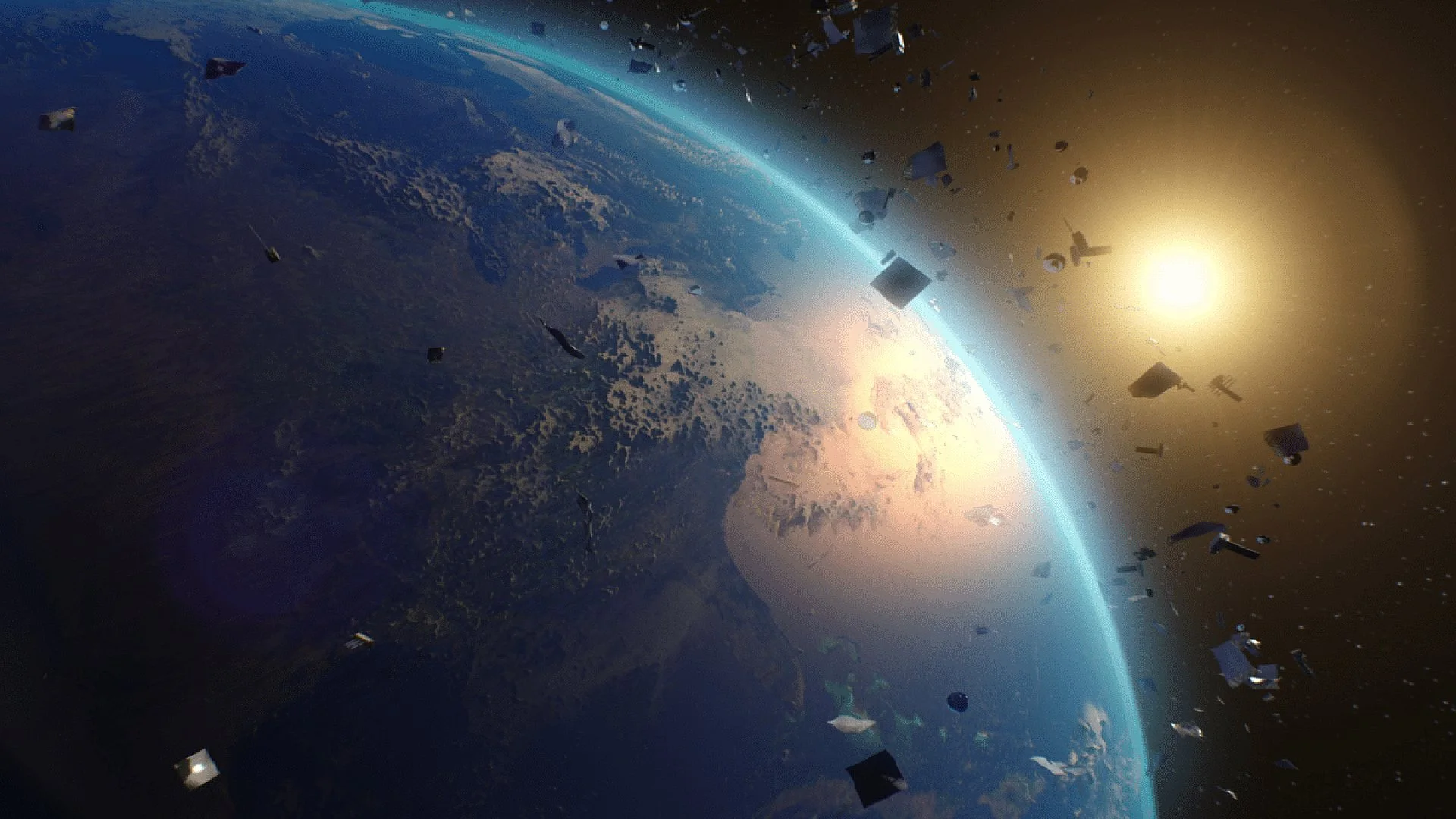
As the Earth’s atmosphere continues to face the growing threat of space debris, a once-harmless phenomenon is now posing risks to people and property worldwide. According to a recent report by The Conversation, researchers warn that advancements in spacecraft materials, designed to withstand extreme conditions, are allowing larger fragments to survive reentry.
The Impact of Modern Spacecraft Materials on Reentry Risks
In the past, satellites and rocket components were expected to disintegrate entirely upon reentry, eliminating hazards to life on Earth. However, with the introduction of carbon fiber-reinforced plastics and advanced metals, many spacecraft are now made with materials that are lightweight yet extraordinarily heat-resistant. While these materials improve fuel efficiency and mission longevity, they also make debris more likely to survive the fiery descent through the atmosphere.
The result is a growing number of large fragments striking the Earth’s surface. Notable incidents include pieces from SpaceX’s Dragon capsule trunks, some larger than a 15-passenger van, that have landed in North Carolina, Australia, and Canada. Carbon fiber components holding pressurized gases, which are critical for maneuvering spacecraft, have also been recovered in recent years in Argentina, Poland, and Australia. Researchers at the University of Wisconsin-Stout are actively studying these materials to find ways to safely modify their heat-resistant properties without compromising mission performance.
Understanding the Physics Behind Reentry and Debris Survival
Satellites like SpaceX’s Starlink orbit between 190 and 1,240 miles above Earth at speeds exceeding 17,000 miles per hour. As decommissioned satellites or jettisoned rocket components drift downward, they encounter the upper atmosphere and begin colliding with air molecules at high velocity. This generates heat exceeding 3,000°F (1,600°C), enough to melt traditional aluminum and steel.
However, carbon fiber-reinforced plastics and advanced alloys can withstand these temperatures far longer, allowing portions of spacecraft to survive and reach the ground. The unpredictability of how these materials break apart complicates efforts to ensure safe reentry zones, often resulting in fragments falling far from their intended locations.
The Consequences of a Surge in Space Launches
While space debris has existed since the early days of the space race, the frequency of reentry events has surged. In 1960, around 100 objects were launched annually; by 2025, that number had skyrocketed to 4,500. Private companies like SpaceX and Rocket Lab dominate this growth, planning satellite constellations numbering in the hundreds of thousands.
SpaceX recovered a Composite-Overwrapped Pressure Vessel from last week’s Falcon 9 re-entry. It was found on private property in southwest Grant County this week. Media and treasure hunters: we are not disclosing specifics. The property owner simply wants to be left alone. pic.twitter.com/dEIQAotItY
— Grant County Sheriff (@GrantCoSheriff) April 2, 2021
International regulations, including U.S. Federal Communications Commission guidelines, require decommissioned satellites to deorbit within 25 years, with proposals to shorten the window to five years. The policies enacted today will determine the volume and risk of reentry debris for decades to come.
Designing for Demise: Engineering Spacecraft to Safely Burn Up
To counter this hazard, engineers are increasingly adopting “design for demise” principles. Components are being relocated to hotter regions of the spacecraft, made from materials that intentionally weaken under reentry heat, or segmented to break apart more efficiently. The aim is to create spacecraft that retain their strength in orbit but safely disintegrate upon atmospheric entry.
This approach challenges conventional thinking: while spacecraft performance has historically focused on making materials lighter, stronger, and heat-resistant, the next frontier involves making them “smart” enough to survive the mission but disappear safely on reentry.
Preparing for a Sky Full of Reentering Debris
With launches accelerating, the frequency of atmospheric reentries will increase, potentially exposing urban and rural areas to falling debris. Researchers, policymakers, and private companies face a shared responsibility to adapt technology, update regulations, and refine debris mitigation strategies.
As The Conversation highlights, understanding and controlling the behavior of these modern materials is no longer an academic exercise, it is essential for public safety. The challenge of balancing spacecraft efficiency with controlled demise will define the future of orbital operations and space sustainability.
This article has been fact checked for accuracy, with information verified against reputable sources. Learn more about us and our editorial process.
Last reviewed on .
Article history
- Latest version
Reference(s)
- “https://twitter.com/GrantCoSheriff/status/1378031863785263106/photo/1.” <https://t.co/dEIQAotItY>.
- Ray, Matthew. “Falling space debris poses an escalating risk as spacecraft get stronger and more heat resistant.”, May 13, 2026 The Conversation, doi: 10.64628/AAI.eatvmge9a. <https://theconversation.com/falling-space-debris-poses-an-escalating-risk-as-spacecraft-get-stronger-and-more-heat-resistant-279077>.
Cite this page:
- Posted by Farah Siddiqui