Japan Is Sending A Spacecraft To Fetch The First Ever Samples From A Moon Of Mars
Japan’s MMX mission is headed to Mars to explore its moons and retrieve the first-ever soil samples from Phobos, targeting a return to Earth by 2031.
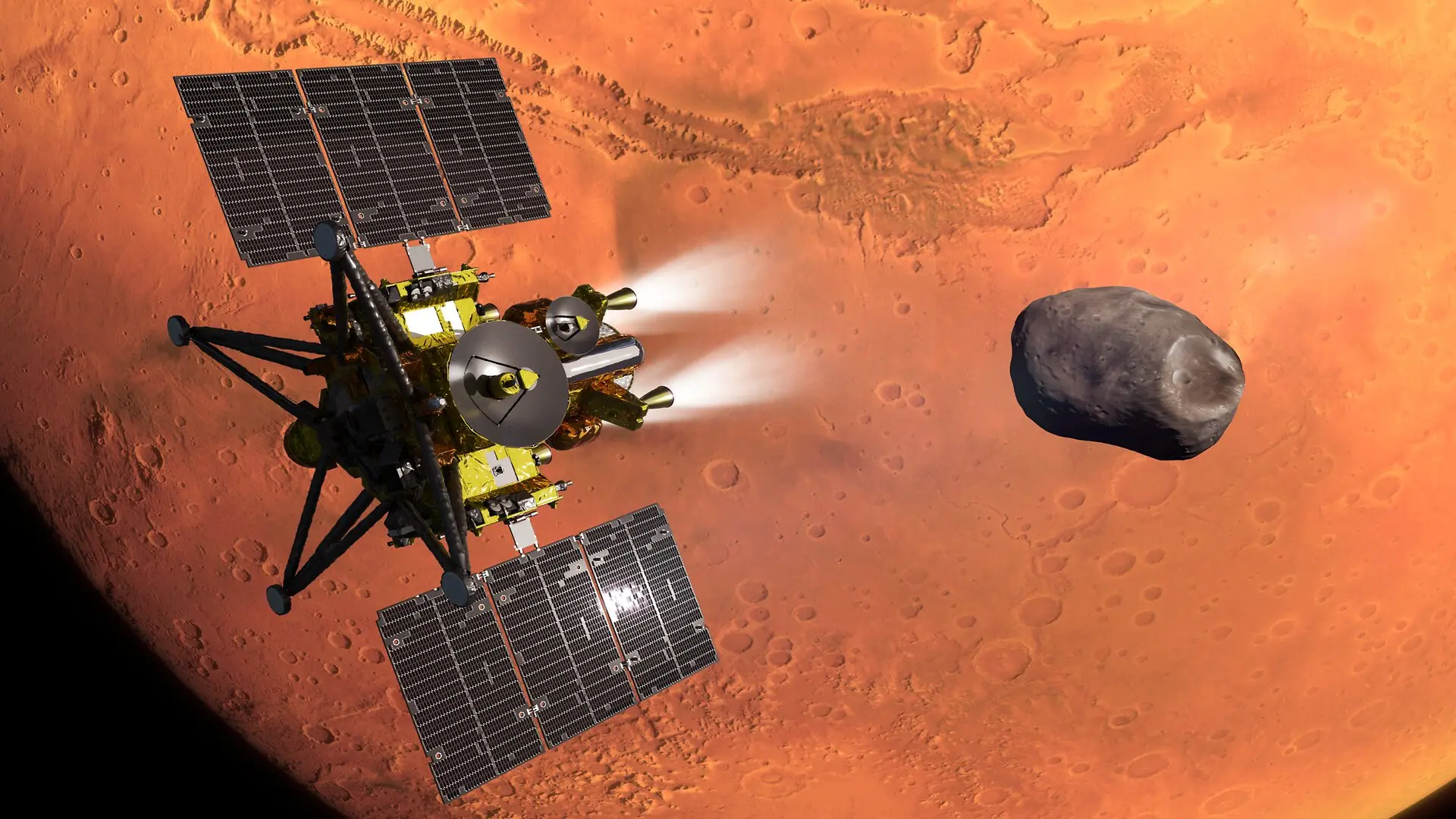
Japan has embarked on an ambitious interplanetary mission, sending the Martian Moons eXploration (MMX) spacecraft toward the Red Planet with a primary objective to secure and return at least 10 grams of regolith from Phobos. If successful, the mission will mark a historic milestone as the first return of material from a moon other than Earth’s, potentially unlocking the long-standing mystery of how Mars acquired its two natural satellites.
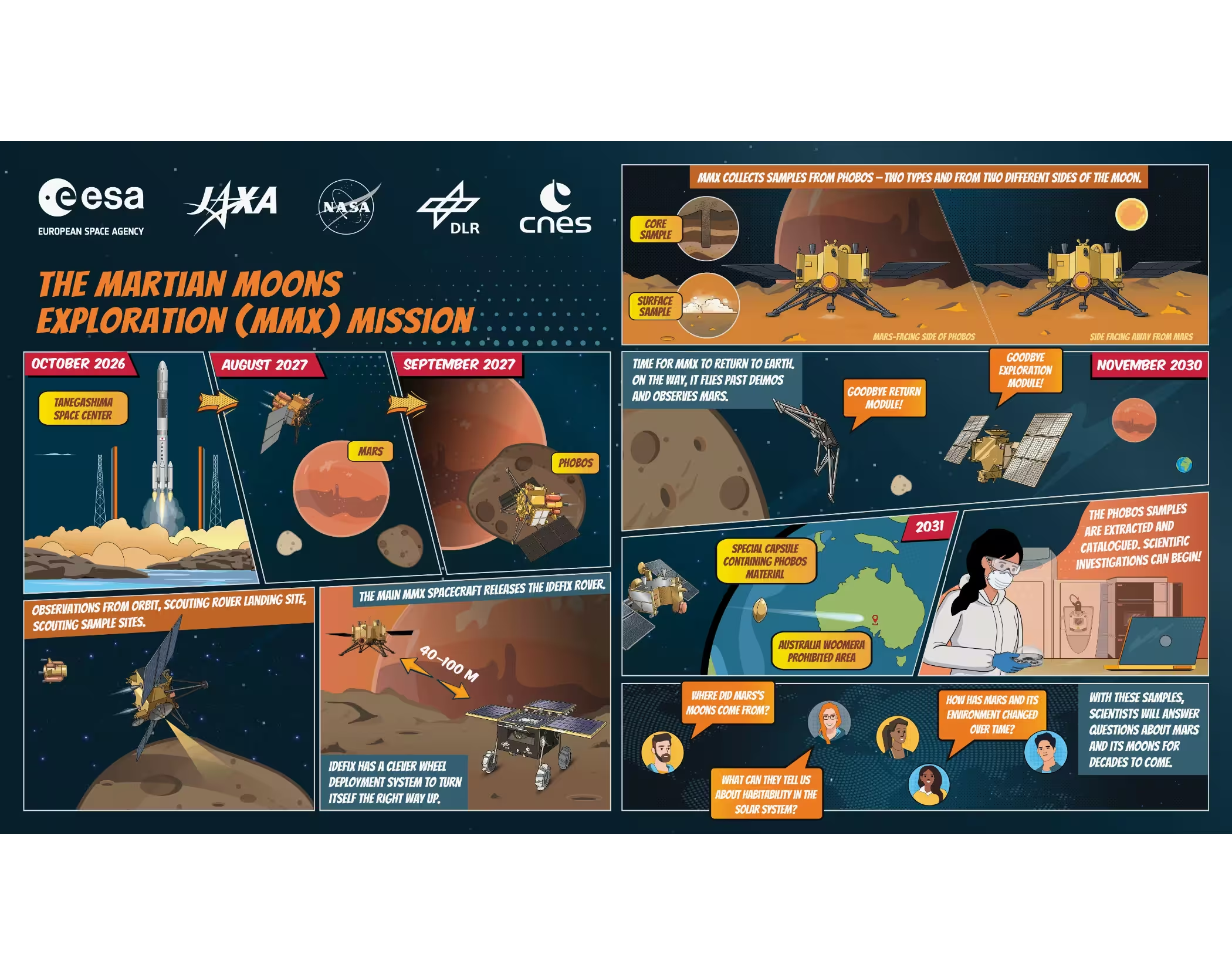
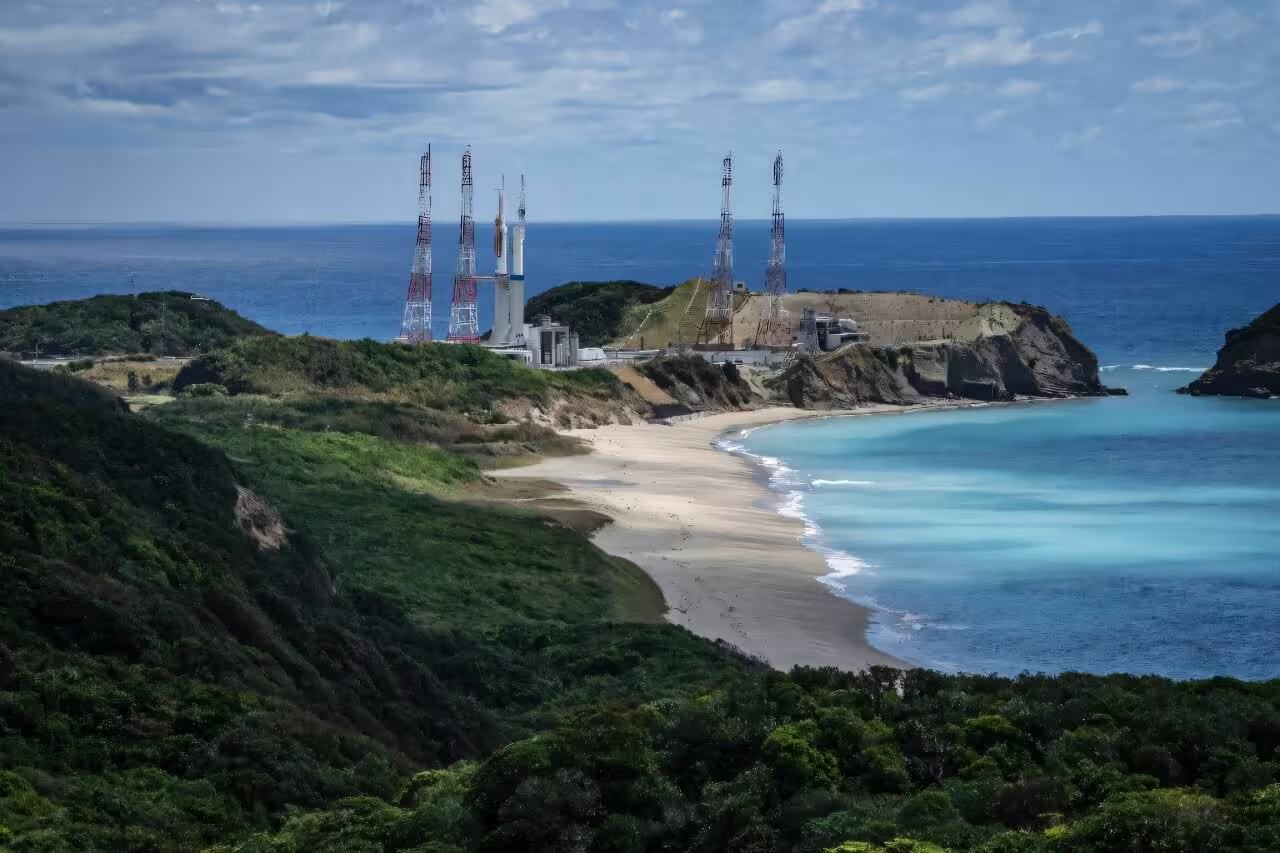
The spacecraft lifted off atop an H3 rocket from the Tanegashima Space Center on October 20. Orchestrated by the Japan Aerospace Exploration Agency (JAXA) with significant international cooperation—including contributions from NASA, the European Space Agency, France’s CNES, and the German Aerospace Center—the mission is slated to arrive in the Martian system in August 2027, with a return to Earth planned for 2031.
Solving the Origin of Martian Moons
For decades, astronomers have debated the genesis of Phobos and Deimos. One leading hypothesis suggests the moons are captured asteroids, which would imply they contain primitive, space-faring material from the outer solar system. A competing theory posits that the moons formed from debris blasted into orbit following a massive impact on Mars, which would make them a geologic reflection of the planet’s own history.
Determining their true nature is vital for understanding the evolution of the inner solar system. As Tom Statler, NASA’s MMX program scientist, noted, the findings could shed light on the early era when terrestrial planets like Earth likely acquired essential water and organic compounds. By analyzing the composition of Phobos, researchers hope to gain a deeper understanding of the ingredients necessary for rocky planets to support habitability.
A Sophisticated Robotic Scout
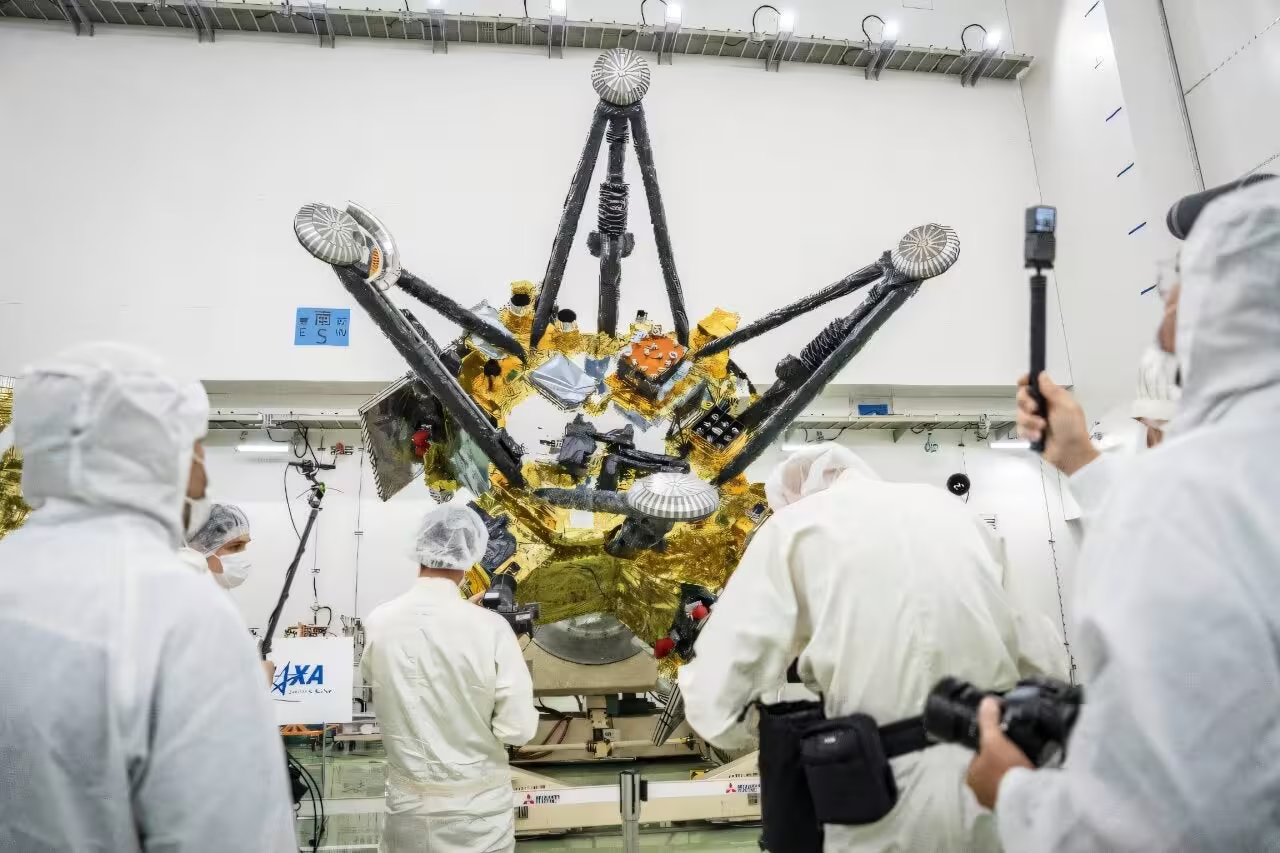
Upon reaching the Martian neighborhood, MMX will spend three years performing flybys and observations. A key component of the mission is Idefix, a 25-kilogram rover developed through a joint venture between CNES and DLR. Designed for the exceptionally weak gravity of Phobos, the rover will perform a three-month surface investigation to determine mechanical properties and soil composition, providing critical data to help the main spacecraft select the optimal landing sites for its sampling operations.
The mission will employ two distinct methods to ensure a successful retrieval. A Japanese-built coring drill will extract material from about two centimeters beneath the surface, while a pneumatic system developed by Honeybee Robotics will use high-pressure nitrogen to stir up and capture loose surface regolith. The instrumentation suite, which includes the Johns Hopkins Applied Physics Laboratory-built MEGANE and a French-designed MIRS spectrometer, will provide context by mapping the elemental and mineralogical makeup of the moon’s surface before the samples are collected.
Preserving Scientific Potential
The return of these samples will open a new chapter in planetary science. Once the return capsule lands in Australia in 2031, it will be transported to Japan for secure opening and cataloging. Approximately 15 percent of the material is designated for NASA’s Astromaterials Lab in Houston, ensuring that the samples are studied with the most advanced analytical tools available today and preserved for future generations as technology continues to evolve.

Beyond the primary scientific goals, MMX serves as a crucial testing ground for deep-space navigation, autonomous landings in low-gravity environments, and long-distance communications. By demonstrating these capabilities, the mission paves the way for future robotic exploration and eventual human missions to the Martian system, where the moons could one day serve as vital scientific outposts.
Research and Technical References
- Martian moons exploration MMX: sample return mission to Phobos elucidating formation processes of habitable planets(Earth, Planets and Space)
- Origin of Phobos and Deimos Awaiting Direct Exploration(Annual Review of Earth and Planetary Sciences)
- Accretion of Phobos and Deimos in an extended debris disc stirred by transient moons(Nature Geoscience)
- Mixing model of Phobos’ bulk elemental composition for the determination of its origin: Multivariate analysis of MMX/MEGANE data(Icarus)
- Off to the moons of Mars – MMX mission and Idefix® rover ready for launch(German Aerospace Center)
This article has been fact checked for accuracy, with information verified against reputable sources. Learn more about us and our editorial process.
Last reviewed on .
Article history
- Latest version
Reference(s)
- “JAXA | Tanegashima Space Center.” JAXA | Japan Aerospace Exploration Agency <https://global.jaxa.jp/about/centers/tnsc/>.
- Massengill, Dacia. “NASA.”, December 7, 2022 NASA <https://www.nasa.gov/>.
- “European Space Agency.” <https://www.esa.int/>.
- “CNES - Centre national d'études spatiales.” <https://cnes.fr/en>.
- “The German Aerospace Center (DLR).” <https://www.dlr.de/en>.
- <https://www.blueorigin.com/exploration-systems>.
- “Welcome to The Johns Hopkins University Applied Physics Laboratory.” Johns Hopkins University Applied Physics Laboratory <https://www.jhuapl.edu/>.
- Kuramoto, Kiyoshi., et al. “Martian moons exploration MMX: sample return mission to Phobos elucidating formation processes of habitable planets.” Earth, Planets and Space, vol. 74, no. 1, January 20, 2022 Springer Science and Business Media LLC, doi: 10.1186/s40623-021-01545-7. <https://doi.org/10.1186/s40623-021-01545-7>.
- Kuramoto, Kiyoshi. “Origin of Phobos and Deimos Awaiting Direct Exploration.” Annual Review of Earth and Planetary Sciences, vol. 52, no. 1, July 23, 2024, pp. 495-519. Annual Reviews, doi: 10.1146/annurev-earth-040522-110615. <https://doi.org/10.1146/annurev-earth-040522-110615>.
- Rosenblatt, Pascal., et al. “Accretion of Phobos and Deimos in an extended debris disc stirred by transient moons.” Nature Geoscience, vol. 9, no. 8, July 4, 2016, pp. 581-583. Springer Science and Business Media LLC, doi: 10.1038/ngeo2742. <https://doi.org/10.1038/ngeo2742>.
- Hirata, Kaori., et al. “Mixing model of Phobos’ bulk elemental composition for the determination of its origin: Multivariate analysis of MMX/MEGANE data.” Icarus, vol. 410, March 1, 2024, pp. 115891 Elsevier BV, doi: 10.1016/j.icarus.2023.115891. <https://doi.org/10.1016/j.icarus.2023.115891>.
- “Off to the moons of Mars – MMX mission and Idefix® rover ready for launch.” <https://www.dlr.de/en/latest/news/2026/off-to-the-moons-of-mars-mmx-mission-and-idefix-rover-ready-for-launch>.
Cite this page:
- Posted by Aisha Ahmed