Astronomers Find a Rare “Earth Twin” With a 365-Day Year Right in Our Neighborhood
Astronomers studying old NASA data have found signs of an Earth-sized planet circling a nearby star on a long, slow orbit, a rare discovery that hints at how common temperate rocky worlds may be.
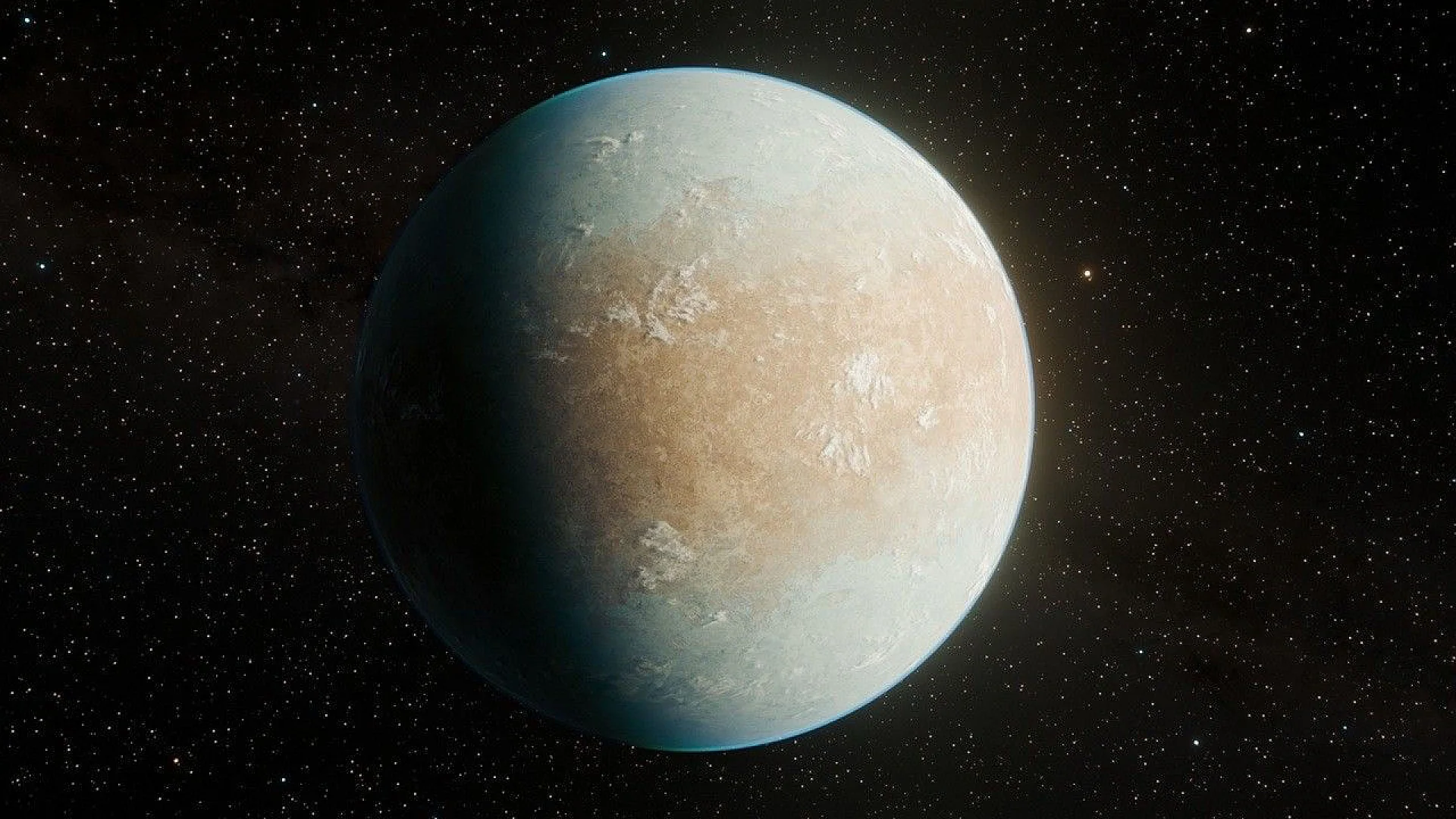
In 2017, NASA’s K2 space telescope was quietly watching thousands of stars when it noticed something unusual around a star known as HD 137010. The star briefly dimmed, just a little, and then returned to normal.
That small dip never happened again.
At first glance, such events are easy to dismiss. Most confirmed exoplanets reveal themselves through repeated transits, passing in front of their stars again and again. A single event, by contrast, offers very little information and comes with many uncertainties.
Still, that lonely signal stayed in the data. Years later, astronomers decided it deserved a closer look.
Why single transits are so difficult
A single transit is like seeing one footprint in the sand without knowing where the traveler came from or where they went next. You can tell something passed by, but not much more.
Without a second transit, astronomers cannot directly measure how long the planet takes to orbit its star. That orbital period is key. It determines how far the planet is from its star and how much heat it receives.
Because of this, many single-transit signals remain unexplored. They sit quietly in mission archives, waiting for new tools and new ideas.
A nearby star with a steady light
HD 137010 is located about 146 light-years from Earth in the constellation Libra. It is a K-type dwarf star, slightly cooler and smaller than the Sun, but otherwise fairly similar in behavior.
At a visible brightness of about magnitude 10, it is considered bright by exoplanet standards. This makes it easier to study using ground-based telescopes.
Data from the Gaia spacecraft show that the star’s distance and motion through the galaxy are well measured. Its movement suggests it belongs to the Milky Way’s thin disk, a population of stars that formed within the past several billion years.
Importantly, the star does not appear especially active. Its light is stable, which reduces the chances that the transit signal was caused by stellar noise rather than a planet.
Turning one transit into a story
To understand the mysterious dip, the research team used a statistical approach rather than looking for a single exact answer. They modeled many possible orbits that could produce the observed transit shape and duration.
The depth of the transit indicates a planet roughly the size of Earth. It blocks only a tiny fraction of the star’s light, which is exactly what a small rocky world would do.
The length of the transit matters just as much. A slow, extended crossing suggests that the planet is moving gently along a wide orbit rather than racing close to the star.
Putting these clues together, the models point toward a planet with an orbital period close to one Earth year, though with wide uncertainty.
A planet that moves slowly and quietly
The planet, known as HD 137010 b, appears to follow a long and calm path around its star. Unlike many known exoplanets that whip around their stars in days, this one likely takes hundreds of days to complete a single orbit.
Such planets are extremely hard to detect with transit methods. The chance alignment required to see even one transit drops sharply as the orbit gets wider.
That makes this detection unusual. It is not that such planets are rare in the galaxy, but rather that our instruments rarely catch them in the act.
How warm might this planet be
One of the most important questions is how much energy the planet receives from its star. That energy controls surface temperature and, by extension, whether liquid water could exist.
The study estimates that HD 137010 b receives roughly 30 percent of the stellar energy that Earth receives from the Sun. This places it near the outer edge of the star’s habitable zone.
The habitable zone is defined as the region where liquid water could exist on a planet’s surface, assuming suitable atmospheric conditions. It is not a guarantee of habitability, but it is a useful guide.
Depending on how the uncertainties are handled, the models suggest a 40 percent chance that the planet lies within conservative habitable limits and a 51 percent chance under more optimistic assumptions.
Atmosphere makes all the difference
At these distances, a planet’s atmosphere becomes critical. A thicker atmosphere rich in carbon dioxide could trap heat and prevent surface water from freezing.
On the other hand, an atmosphere more like Earth’s might not provide enough warming, leading to a frozen, snowball-like world.
Because the planet has not yet been confirmed, and its atmosphere remains completely unknown, both outcomes remain possible.
What matters is that the planet sits in an interesting and scientifically valuable region of parameter space.
Ruling out other explanations
A single transit could, in theory, be caused by something other than a planet. Background stars, hidden stellar companions, or instrumental effects can sometimes mimic planetary signals.
To address this, the researchers examined archival images taken over several decades. HD 137010 moves noticeably across the sky over time, which allows astronomers to check whether background stars once overlapped its position.
No such contaminants were found within the region observed by K2. High-resolution speckle imaging conducted in 2024 also revealed no nearby stars that could explain the signal.
Radial velocity measurements from the HARPS spectrograph showed no short-term variations that would contradict the planet hypothesis. A long-term drift was detected, hinting at a possible distant companion, but it does not explain the transit event.
Taken together, these checks strongly support a planetary interpretation.
A system that looks different from many others
Interestingly, the data show no signs of additional short-period Earth-sized planets in the system. Many known exoplanet systems contain multiple small planets packed close to their stars.
In this case, K2 observations would likely have detected such planets if they existed and transited. Their absence suggests a different system architecture or planets whose orbits are tilted away from our line of sight.
The scientists stress that this does not mean the planet is alone. Other planets on longer orbits could easily remain hidden.
Why confirmation will take time
Confirming HD 137010 b will be challenging. Its long orbital period means the next transit could occur years from now, and the predicted timing window is broad.
Detecting the planet through radial velocity methods is also difficult. An Earth-mass planet at this distance produces only a tiny gravitational tug on its star.
Still, the brightness of HD 137010 makes future follow-up possible. With improved instruments and patience, confirmation may eventually come.
A glimpse of what we are missing
Even as a candidate, HD 137010 b highlights an important gap in exoplanet science. Long-period terrestrial planets likely exist in large numbers, but current surveys struggle to find them.
Single-transit detections, once considered frustrating dead ends, may instead offer valuable clues about this hidden population.
As observation strategies improve and missions extend their coverage, more quiet signals like this one may finally speak up.
For now, HD 137010 b stands as a reminder that worlds similar to Earth may already be recorded in our data, waiting for careful analysis to bring them into view.
The research was published in The Astrophysical Journal Letters on January 27, 2026.
This content has been reviewed by subject-matter experts to ensure scientific accuracy. Learn more about us and our editorial process.
Last reviewed on .
Article history
- Latest version
- Peer reviewed by Dr. Arjun Patel, PhD
Reference(s)
- Venner, Alexander., et al. “A Cool Earth-sized Planet Candidate Transiting a Tenth Magnitude K-dwarf From K2.” The Astrophysical Journal Letters, vol. 997, no. 2, 27 January 2026, doi: 10.3847/2041-8213/adf06f. <https://iopscience.iop.org/article/10.3847/2041-8213/adf06f>.
Cite this page:
- Posted by Aisha Ahmed