Moon Dust Reveals Why Earth’s Oceans Didn’t Come From Asteroids
Tiny chemical clues inside Moon dust show what kinds of asteroids hit the Earth–Moon system for billions of years, and why those impacts added very little water to Earth.
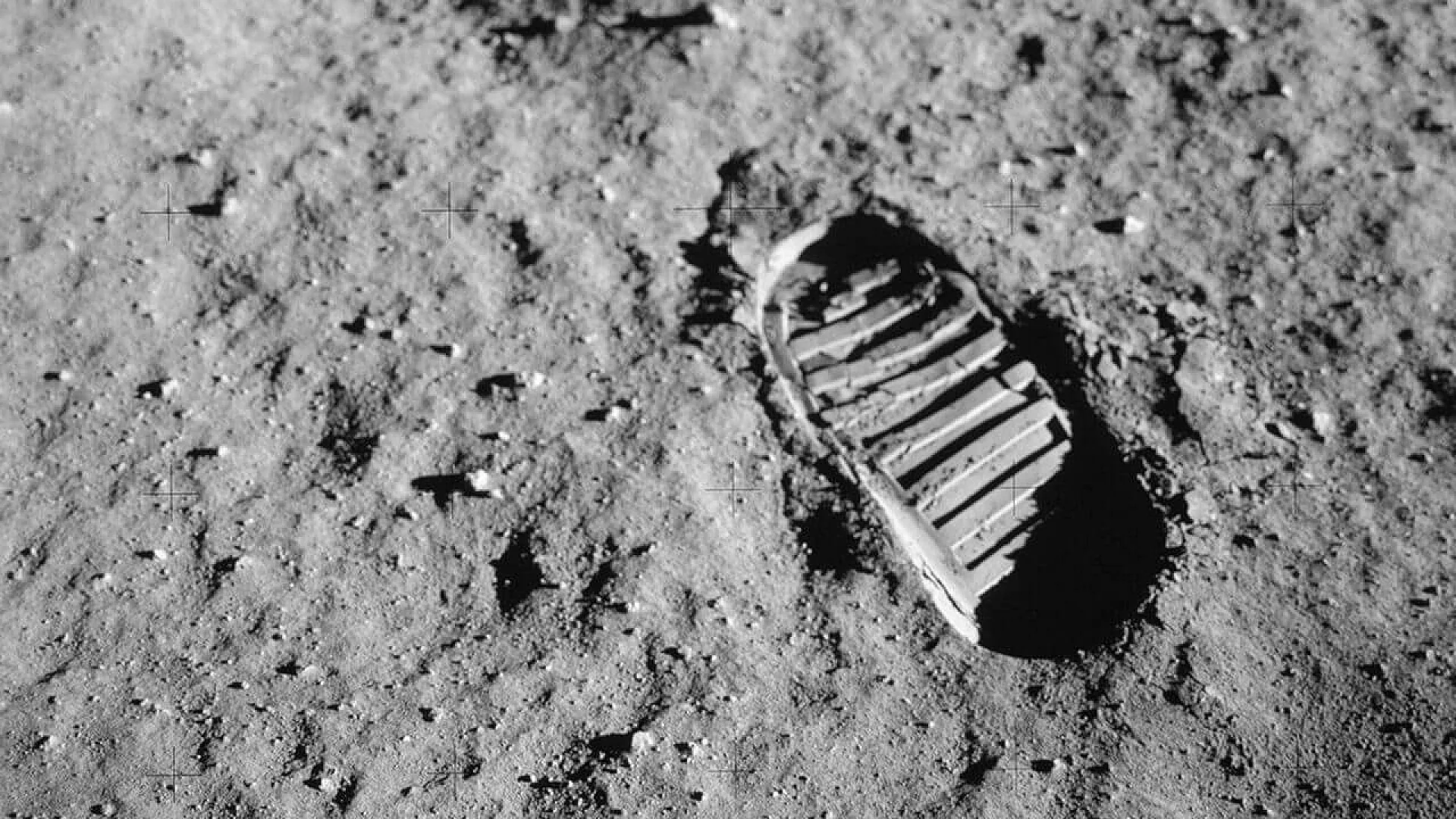
Earth has a short memory. Its surface is always changing as continents move, rocks erode, and oceans reshape the land. Over time, this activity erases almost all physical evidence of the planet’s earliest history.
The Moon is different. It has no flowing water, no plate tectonics, and no thick atmosphere to smooth things over. Once something hits the Moon, the mark often stays there.
Because of this, the Moon works like a time capsule. It quietly preserves signs of events that happened billions of years ago, including asteroid impacts that once shook the entire Earth–Moon system.
What Lunar Regolith Really Is
The Moon’s surface is covered by regolith, a layer of loose dust, crushed rock, glassy fragments, and debris from impacts. This layer formed slowly as meteorites and micrometeorites kept striking the surface again and again.
Each impact mixed old material with new material. Over time, the regolith became a blended record of countless collisions.
Today, this dusty layer holds clues not only about the Moon’s past, but also about Earth’s early environment.
Why Scientists Care About Impacts
One big question in planetary science is where Earth’s water came from. Some ideas suggest that Earth formed dry and later received water from asteroid impacts.
Certain meteorites, called carbonaceous chondrites, contain water locked inside minerals. These space rocks are often suggested as possible water carriers to early Earth.
If these objects delivered Earth’s oceans, the Moon should show signs of the same process. After all, Earth and Moon were hit by many of the same objects.
Problems With Earlier Clues
In the past, scientists tried to track impacts by looking for rare metals such as iridium and platinum. These elements are common in meteorites but scarce in planetary crusts.
On the Moon, elevated levels of these metals do suggest meteoritic material. However, repeated impacts, melting, and mixing can blur this signal.
As a result, it becomes difficult to tell exactly what kind of asteroid caused the contamination, or how much material was added.
A More Reliable Chemical Fingerprint
The new study turned to oxygen isotopes instead. Oxygen has three stable forms, oxygen-16, oxygen-17, and oxygen-18.
Different planets and different asteroid groups have slightly different ratios of these isotopes. Together, they act like a chemical fingerprint.
Importantly, oxygen isotopes are very stable. Even intense heat from impacts does not erase their original pattern.
Studying Apollo Moon Samples
The research team analyzed samples collected during the Apollo 12, 16, and 17 missions. These samples came from different parts of the Moon and from surfaces of different ages.
Some came from ancient highlands more than four billion years old. Others came from younger volcanic plains.
Together, these samples offered a wide view of the Moon’s surface history.
Understanding the Effects of Heat
High-speed impacts do more than deliver material. They also generate extreme heat that can vaporize rock.
When rock vaporizes, lighter oxygen isotopes escape more easily than heavier ones. This process shifts the remaining material toward heavier oxygen values.
To understand this effect, the scientists ran laboratory experiments. They heated Moon-like materials to very high temperatures using a laser, then measured how the oxygen isotopes changed.
These experiments helped separate the effects of impact heating from the addition of foreign material.
A Clear Pattern Emerges
When the lunar samples were analyzed, a clear pattern appeared. The isotope shifts could not be explained by heating alone.
Instead, the data pointed to the addition of material from space. Most of that material matched the oxygen isotope signature of carbonaceous chondrites.
These meteorites are known to contain water and organic compounds. Their chemical fingerprint appeared again and again across different Moon samples.
How Much Asteroid Material Is There
The analysis suggests that at least one percent of the lunar regolith consists of partially altered material from carbon-rich asteroids.
This number may sound small, but when spread across the Moon’s surface, it represents a large amount of extraterrestrial material added over billions of years.
A few rare samples showed signs of different asteroid types, possibly from less common impactors. However, these were the exception rather than the rule.
Estimating Water Delivery to the Moon
Using conservative estimates, the researchers calculated how much water these impactors could have delivered.
If one percent of a five-meter-thick regolith layer came from carbonaceous asteroids, it would contain roughly one hundred trillion kilograms of water.
If impact material reached deeper into the fractured lunar crust, the total amount could be far higher. Much of this water likely migrated to the Moon’s polar regions.
In permanently shadowed craters near the poles, temperatures stay low enough to trap ice for billions of years.
Why Earth Did Not Gain Much Water
Earth was hit by more asteroids than the Moon. Its stronger gravity pulls in more objects, increasing the impact rate by about twenty times.
Even so, the numbers do not add up. Late asteroid impacts could deliver only a small fraction of Earth’s total water.
Earth holds the equivalent of several global oceans. The water delivered by these impacts falls far short of that amount.
This suggests that Earth already had much of its water early on, possibly captured during planet formation rather than added later.
A Well-Mixed Lunar Surface
One striking result is how similar the impact signal looks across the Moon.
Samples from different locations and different ages all show nearly the same mixture of asteroid material. This means the lunar surface has been thoroughly mixed over time.
Large impacts overturn the ground, while smaller ones constantly stir the soil. As a result, the regolith acts like a long-term average record rather than a neat timeline.
What Still Remains Unclear
Some uncertainties remain. Metallic meteorites contain little oxygen, so their contribution cannot be tracked with this method.
In addition, some asteroid types have oxygen signatures similar to the Moon itself, making them hard to detect.
Still, these limitations do not change the main conclusion. Late impacts added only modest amounts of water to Earth.
Small Dust, Big Story
The Moon’s dust may look dull and lifeless, but it holds a deep history of the solar system.
By studying oxygen isotopes, scientists have uncovered a clearer picture of how planets were bombarded and what those impacts delivered.
The results point to an early origin for Earth’s water, not a late delivery from space rocks.
At the same time, they help explain why the Moon, despite its dry surface, still hides ice in its coldest corners.
The research was published in PNAS on January 20, 2026.
This content has been reviewed by subject-matter experts to ensure scientific accuracy. Learn more about us and our editorial process.
Last reviewed on .
Article history
- Latest version
- Peer reviewed by Dr. Arjun Patel, PhD
Reference(s)
- Gargano, Anthony M.., et al. “Constraints on the impactor flux to the Earth–Moon system from oxygen isotopes of the lunar regolith.” Proceedings of the National Academy of Sciences, vol. 123, no. 4, 20 January 2026, doi: 10.1073/pnas.2531796123. <https://www.pnas.org/doi/10.1073/pnas.2531796123>.
Cite this page:
- Posted by Aisha Ahmed