Scientists Identify the “Missing Link” Driving Parkinson’s Brain Damage
Scientists have identified a direct molecular link between a Parkinson’s-related protein and failing mitochondria, and show that a small peptide can interrupt this damage in cells and mice.
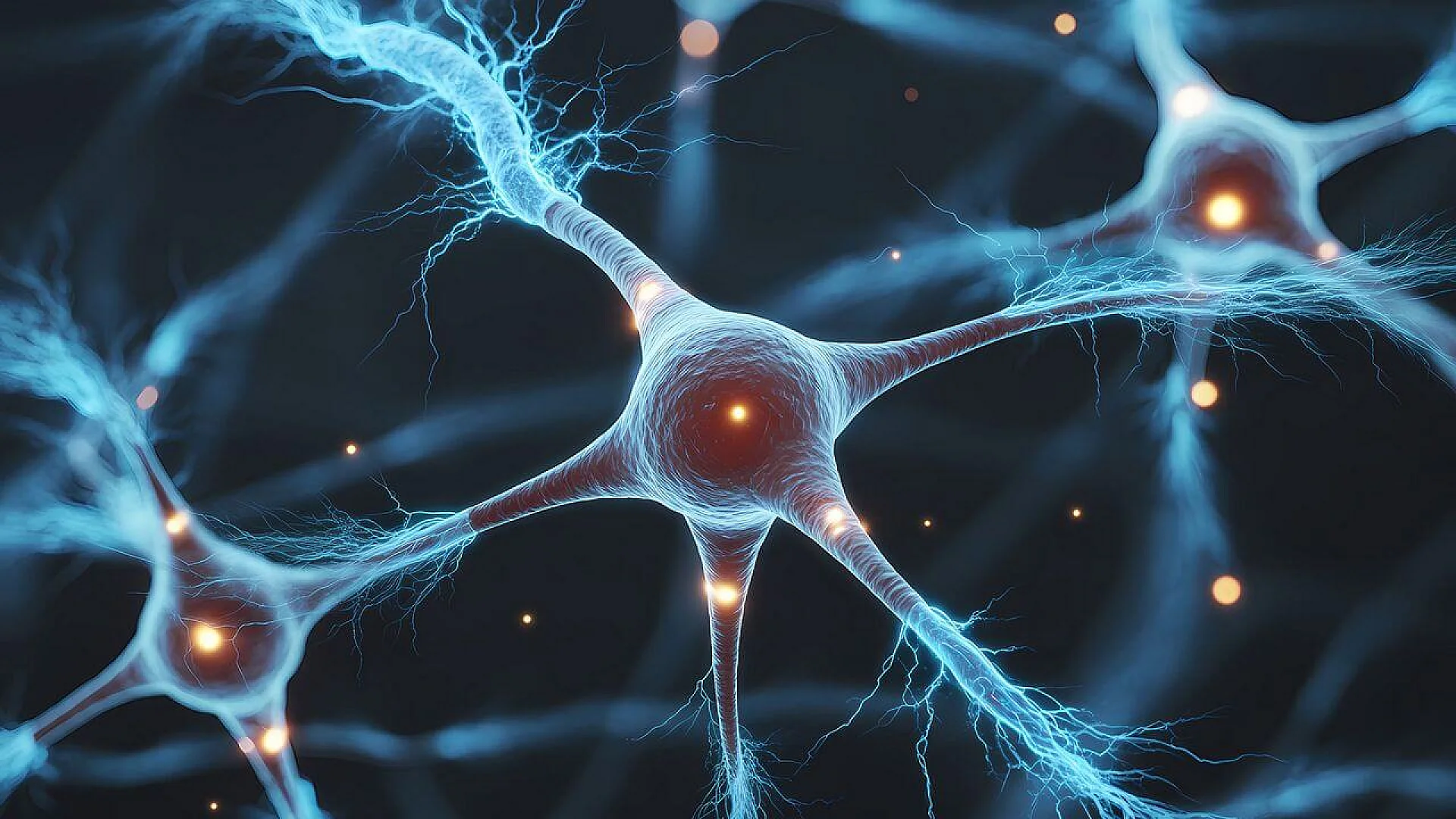
Parkinson’s disease does not begin with shaking hands or slow movement. Those symptoms appear later. Long before that, damage quietly builds up inside specific brain cells that control movement, memory, and coordination.
For years, researchers have focused on two recurring problems inside these cells. One is the buildup of a protein called alpha-synuclein. The other is the failure of mitochondria, the tiny structures that supply energy and help cells survive stress.
Both problems are well known. What has been missing is a clear explanation of how they are connected.
A new study published in Molecular Neurodegeneration now fills in that gap, showing that alpha-synuclein directly interferes with a key mitochondrial protein. This interaction appears to drive brain cell damage in Parkinson’s disease models.
Why alpha-synuclein matters
Alpha-synuclein is a small protein found in large amounts in brain cells. Under healthy conditions, it usually stays in a stable shape made of four connected units. This form is less likely to clump.
In Parkinson’s disease, that stability is lost. Alpha-synuclein breaks into single units that easily stick together. Over time, these clusters grow into larger aggregates that disrupt normal cell function and spread between neurons.
These clumps are a defining feature of Parkinson’s disease. They are also closely linked to neuron death.
The overlooked role of mitochondria
Mitochondria are often described as the power plants of the cell, but they do much more than make energy. They control stress responses, manage damaged proteins, and help decide whether a cell survives or dies.
In Parkinson’s disease, mitochondria become less efficient and more fragile. They produce excessive reactive oxygen species, lose their membrane stability, and struggle to meet the energy demands of neurons.
Until now, scientists were unsure whether mitochondrial damage caused alpha-synuclein aggregation or whether protein clumps damaged mitochondria. The new research suggests both are true, and that a specific molecular interaction connects them.
Introducing ClpP, a mitochondrial protector
Inside mitochondria, a protein called ClpP acts as a quality control enzyme. Its job is to break down damaged or misfolded proteins before they cause harm. This process helps keep mitochondria healthy and functional.
The researchers discovered that ClpP also plays a role in regulating alpha-synuclein. When ClpP is working properly, alpha-synuclein is more likely to remain in its stable, non-clumping form.
When ClpP activity drops, alpha-synuclein becomes unstable and starts forming harmful aggregates. This shift happens even when the total amount of alpha-synuclein in the cell stays the same.
A direct and damaging interaction
Using several laboratory techniques, the team showed that alpha-synuclein physically binds to ClpP. This binding happens through a region of alpha-synuclein known as the NAC domain, the same region that forms the core of toxic protein clumps.
Once alpha-synuclein attaches to ClpP, it interferes with ClpP’s ability to do its job. Mitochondrial protein cleanup slows down, stress builds up, and mitochondria begin to fail.
This creates a harmful feedback loop. Protein aggregation damages mitochondria, and damaged mitochondria make protein aggregation worse.
Breaking the cycle with a small peptide
To interrupt this loop, the researchers designed a short peptide called CS2. The peptide mimics part of the ClpP structure that normally interacts with alpha-synuclein.
CS2 acts like a molecular decoy. It binds to alpha-synuclein and prevents it from attaching to ClpP. Importantly, it does not block alpha-synuclein everywhere. Its effects depend on the presence of ClpP, making the action more targeted.
When CS2 was added to cells, ClpP activity recovered. Mitochondrial stress decreased, and protein quality control improved.
Results in human neuron-like cells
The team first tested CS2 in human nerve cells grown in the lab that produce high levels of alpha-synuclein. These cells usually show signs of stress and increased cell death.
After CS2 treatment, cell survival improved. Levels of toxic alpha-synuclein forms dropped, and mitochondrial function stabilized.
In another experiment, mouse neurons exposed to preformed alpha-synuclein fibrils showed less oxidative stress when treated with CS2. Their mitochondria maintained better membrane potential, an important sign of cellular health.
Evidence from patient-derived neurons
To make the results more relevant to human disease, researchers used neurons derived from induced pluripotent stem cells of a Parkinson’s disease patient with a known alpha-synuclein mutation.
These neurons typically show severe protein buildup, loss of synaptic connections, and weak mitochondrial performance.
CS2 treatment reduced pathological alpha-synuclein accumulation. It also restored key synaptic proteins, suggesting improved communication between neurons.
At the same time, mitochondria produced less damaging oxygen molecules and generated more ATP, the cell’s energy currency.
Testing the approach in mice
Cell studies are important, but Parkinson’s disease affects whole brains over time. To address this, the researchers tested CS2 in a transgenic mouse model that overproduces human alpha-synuclein.
These mice develop memory problems, movement difficulties, brain inflammation, and protein aggregation as they age.
CS2 was delivered under the skin using small pumps starting at four months of age, before severe symptoms appeared. Treatment continued for several months.
Improvements in behavior and brain health
Mice receiving CS2 performed better in memory tests that measure spontaneous exploration patterns. They also showed improved motor coordination compared with untreated mice.
When scientists examined brain tissue, they found fewer alpha-synuclein aggregates and lower levels of inflammatory markers.
Dopaminergic neurons, the cells most affected in Parkinson’s disease, showed higher ClpP levels and healthier mitochondria.
Why this discovery matters
This study provides strong evidence that alpha-synuclein and mitochondrial failure are not separate problems. They are connected by a specific protein interaction that can be targeted.
By disrupting this link, researchers were able to protect brain cells across multiple disease models. This shifts attention from treating symptoms to addressing an underlying disease mechanism.
The peptide used in the study is not a finished drug. However, it demonstrates that targeting protein interactions inside mitochondria may be a viable path toward disease-modifying therapies.
Important limits to keep in mind
The research was done in cells and mice, not in people. Many treatments that work in animal models do not succeed in human trials.
The long-term safety, brain delivery, and metabolism of CS2 still need careful study. More advanced models will be needed to test whether this approach can slow neuron loss in the human brain.
Even so, the findings mark an important step forward.
They reveal a missing link between a Parkinson’s disease protein and damage to brain cells, and they show that this link can be weakened in meaningful ways.
The research was published in Molecular Neurodegeneration on December 22, 2025.
This content has been reviewed by subject-matter experts to ensure scientific accuracy. Learn more about us and our editorial process.
Last reviewed on .
Article history
- Latest version
- Peer reviewed by Dr. Kavita Verma, MD
Reference(s)
- Hu, Di., et al. “Disrupting α-Synuclein–ClpP interaction restores mitochondrial function and attenuates neuropathology in Parkinson’s disease models.” Molecular Neurodegeneration, vol. 20, no. 1, 22 December 2025, doi: 10.1186/s13024-025-00918-w. <https://link.springer.com/article/10.1186/s13024-025-00918-w>.
Cite this page:
- Posted by David Anderson