7,000-Year-Old DNA Reveals a Lost Human Lineage in the Sahara
DNA from two ancient Saharan herders shows that early people in North Africa adopted herding through shared ideas, not mass migration, and belonged to a long-isolated human lineage once living in a greener Sahara.
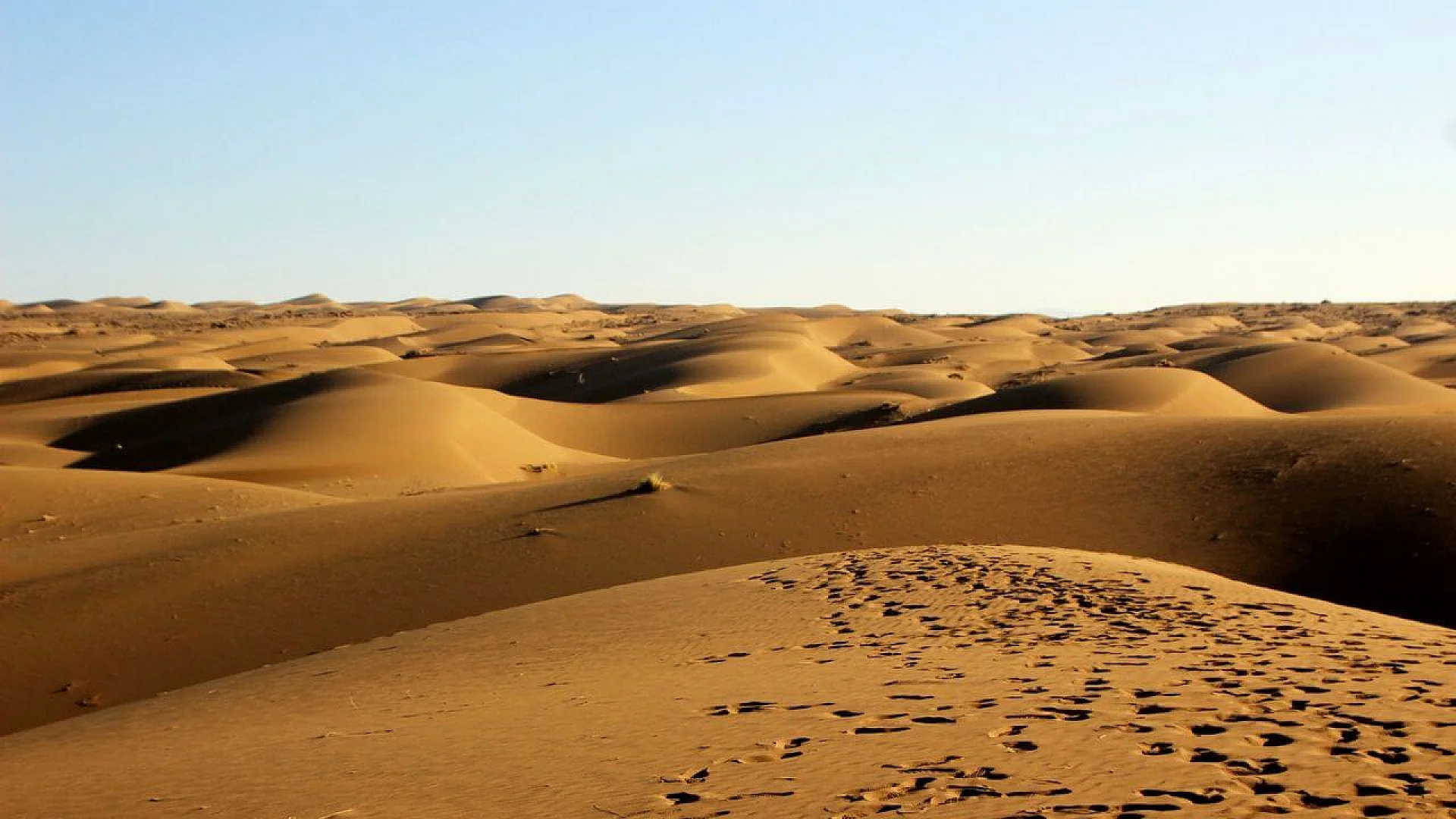
Today, the Sahara is known for heat, sand, and long stretches of empty land. Water is scarce, and permanent human settlement is almost impossible.
But this was not always the case.
Between about 10,000 and 5,000 years ago, the Sahara went through a much wetter phase. Scientists call this time the African Humid Period. Rain fell more often. Lakes and rivers formed. Grasslands spread across wide areas that are now dry and rocky.
Because of this, people lived across the Sahara. They hunted animals, caught fish, gathered plants, and eventually began keeping livestock. Archaeologists have known this for decades from stone tools, pottery, and animal remains. What they did not know was who these people really were, genetically speaking.
A new study published in Nature provides a rare genetic window into this lost world.
A Rare Discovery in Southwestern Libya
The research focuses on two human burials found at Takarkori, a rock shelter in the Tadrart Acacus Mountains of southwestern Libya. The site lies close to today’s Algerian border and has been studied for many years.
Takarkori is special because it preserves a long record of human life. Different layers show how people lived there over thousands of years. Some layers belong to hunter-gatherers. Later ones belong to early herders.
The two individuals studied lived around 7,000 years ago, during a time when people in the region were herding animals such as cattle. This period is known as the Pastoral Neolithic.
Recovering DNA from such remains is extremely difficult. Heat and environmental conditions in the Sahara usually destroy genetic material. For a long time, scientists believed ancient DNA from this region might never be recovered.
In this case, careful excavation and improved laboratory methods made the impossible possible.
Pulling DNA From the Past
The researchers extracted DNA from the bones using advanced techniques designed for ancient material. They used methods that can recover very short DNA fragments, which are common in old and damaged samples.
The DNA was then sequenced and compared with genetic data from many other ancient and modern populations. These included groups from Africa, Europe, and the Near East.
Even though the study looked at only two individuals, the amount of genetic data was large. Millions of genetic markers were analyzed. This allowed scientists to explore ancestry, population connections, and long-term isolation.
What they found was unexpected.
A Lineage No One Had Seen Before
Both individuals mainly belonged to a previously unknown North African genetic lineage.
This ancestry did not closely match known populations from sub-Saharan Africa. It also did not align with ancient groups from the Near East or Europe. Instead, it represented a deep-rooted population that had lived in North Africa for a very long time.
The genetic evidence suggests that this lineage split early from other African populations and then remained mostly isolated. Over thousands of years, it changed very little through mixing with outsiders.
The closest known relatives were ancient foragers from northwestern Africa, especially groups linked to prehistoric sites in what is now Morocco.
The Green Sahara Was Not a Genetic Highway
Many scientists once thought that when the Sahara was green, it allowed people to move freely between North Africa and sub-Saharan Africa. The landscape seemed open, and water was available.
The new genetic data suggest a more complex reality.
The Takarkori individuals show no strong genetic links to sub-Saharan African populations from the same period. This means there was little or no large-scale mixing across the Sahara, even during wetter times.
People may have moved locally and shared ideas, but major population exchanges appear to have been limited. Environmental openness alone did not guarantee genetic connectivity.
Small Signs of Distant Contact
Although the Takarkori population was mostly isolated, it was not completely cut off.
The genomes contain small traces of ancestry related to people from the Levant, a region that includes parts of today’s eastern Mediterranean. These traces were minor and did not reshape the overall genetic profile.
This suggests occasional contact. It could have happened through trade, shared technologies, or small groups moving over long distances. There is no evidence for large migrations into the central Sahara at that time.
No Neanderthal DNA Detected
One of the most interesting findings involves Neanderthal ancestry.
Most people outside Africa today carry small amounts of Neanderthal DNA. This comes from interbreeding between early modern humans and Neanderthals tens of thousands of years ago.
The Takarkori individuals do not show this genetic signal.
Their genomes lack detectable Neanderthal DNA, which places them closer to populations that remained within Africa throughout human history. This supports the idea that their ancestors did not pass through regions where Neanderthal mixing occurred.
How Herding Spread Without Migration
A major goal of the study was to understand how pastoralism spread across the Sahara.
In some parts of the world, new ways of life arrived with new people. Farming in Europe, for example, often spread through large migrations that replaced or absorbed local groups.
That does not seem to be the case here.
The Takarkori genomes show continuity. The people who adopted herding were already living in the region. They changed their practices, not their population.
This points to cultural diffusion. Knowledge about animal herding spread from group to group, without mass movement of people.
Archaeology Supports the Genetic Story
The genetic findings match what archaeologists have observed at Takarkori.
Artifacts show gradual change rather than sudden disruption. Pottery styles evolve over time. Burial practices remain consistent. Settlement patterns suggest adaptation, not replacement.
Earlier studies of isotopes in human teeth also suggest that people moved within the region but did not migrate long distances from outside North Africa.
Together, archaeology and genetics tell the same story.
Life at the End of the Green Sahara
The African Humid Period did not last forever.
Rainfall slowly declined. Lakes dried up. Vegetation disappeared. By about 4,000 to 5,000 years ago, the Sahara had become largely desert again.
People who once lived at places like Takarkori had to move, adapt, or abandon the region. Over time, many ancient populations disappeared or merged into others.
The unique North African lineage identified in this study is only faintly visible in present-day populations. Much of its genetic signature appears to have been lost.
What the Study Cannot Answer Yet
The research is based on two individuals, which is a clear limitation. Well-preserved ancient remains from the Sahara are extremely rare.
Other populations may have lived differently or had different genetic histories. Future discoveries could add new layers to this story.
Still, the depth of the genetic data and the consistency of the results make the conclusions strong within their limits.
Why This Research Matters
This study provides the first genome-wide evidence from people who lived in the central Sahara during its green phase.
It shows that North Africa was home to long-standing, locally rooted populations with their own genetic identities. It also shows that cultural change does not always require population replacement.
As scientists recover more ancient DNA from Africa, long-held assumptions about human history on the continent are likely to change.
For now, the people of Takarkori offer a rare glimpse into a vanished world, one where grasslands replaced dunes, and human societies adapted creatively to a changing environment.
The research was published in Nature on April 02, 2025.
This content has been reviewed by subject-matter experts to ensure scientific accuracy. Learn more about us and our editorial process.
Last reviewed on .
Article history
- Latest version
- Peer reviewed by Sunita Reddy, MS
Reference(s)
- Salem, Nada., et al. “Ancient DNA from the Green Sahara reveals ancestral North African lineage.” Nature, vol. 641, no. 8061, 02 April 2025, doi: 10.1038/s41586-025-08793-7. <https://www.nature.com/articles/s41586-025-08793-7>.
Cite this page:
- Posted by Elizabeth Taylor