5,500-Year-Old DNA Rewrites the History of Syphilis
Scientists have recovered ancient DNA from a 5,500-year-old skeleton in Colombia, revealing the oldest known genetic evidence of a syphilis-related bacterium and offering new insight into how these diseases evolved.
Syphilis has troubled human societies for centuries, yet its true origins have remained uncertain. Historical records describe sudden outbreaks in Europe during the late 1400s, when the disease spread quickly and caused widespread fear.
At the same time, archaeologists have long found skeletons in the Americas showing bone damage that looks very similar to syphilis. These remains are often thousands of years old and clearly predate European contact.
The problem has always been proof. Bones can suggest disease, but they cannot confirm exactly which infection caused the damage.
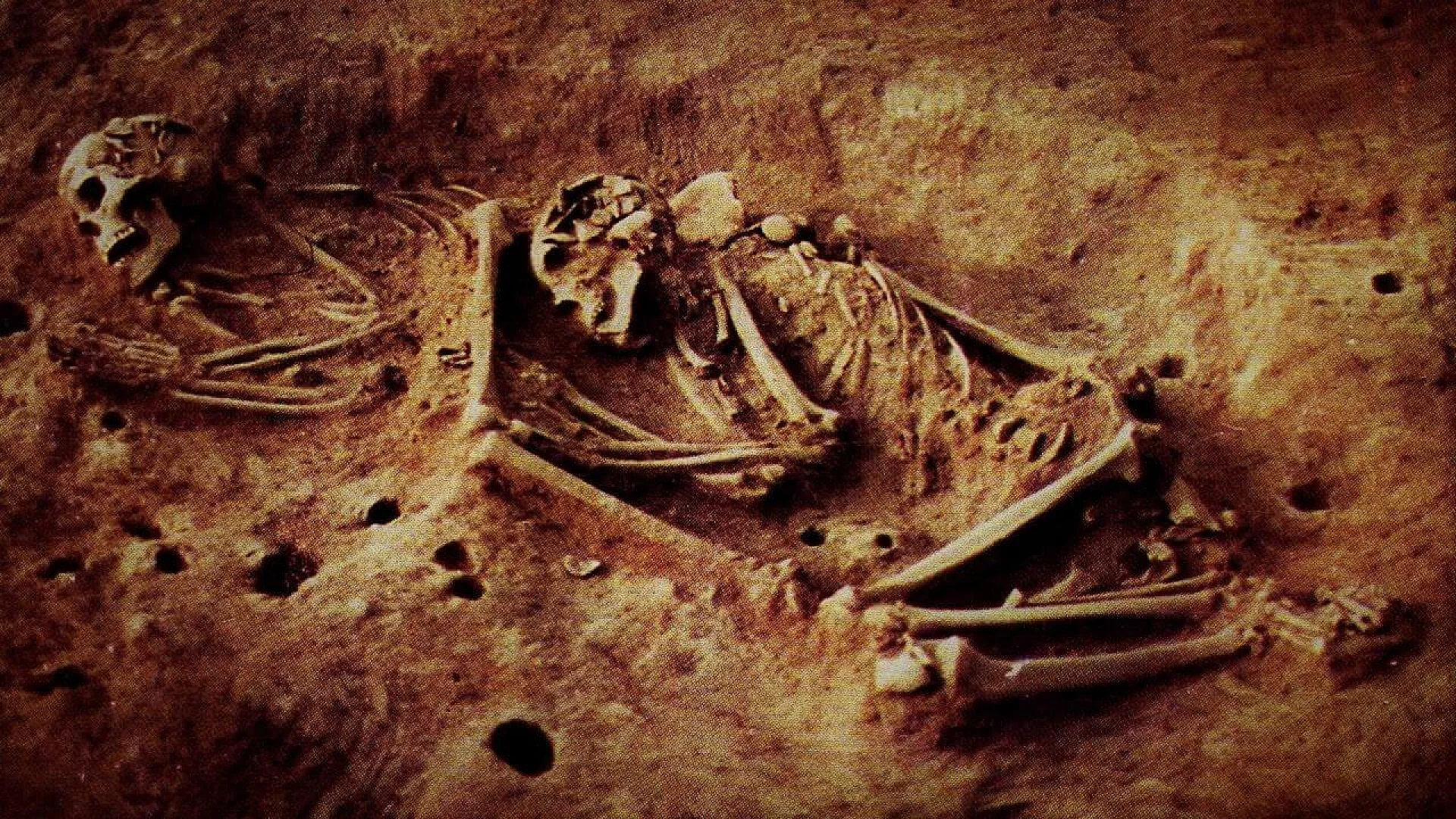
This is where genetics makes a difference. The new research focuses on human remains discovered in the Sabana de Bogotá region of Colombia. This high-altitude plateau has preserved many ancient burials, some dating back several thousand years.
Radiocarbon dating shows that this particular individual lived around 5,500 years ago. At that time, communities in the region relied mainly on hunting, gathering, and early forms of food production.
When researchers examined the skeleton, they noticed changes in the bones that are commonly linked to long-term treponemal infection. These included thickened bone surfaces and areas of abnormal growth.
Still, physical signs alone were not enough.
Treponemal diseases are caused by closely related forms of the same bacterium, Treponema pallidum. Today, different subspecies cause syphilis, yaws, and bejel.
All of them can leave similar marks on the skeleton. This makes it very difficult to tell them apart when looking at ancient remains.
On top of that, T. pallidum is an extremely fragile organism. It does not survive long outside the human body, and its DNA breaks down quickly after death.
Because of this, ancient genetic evidence of these diseases has been almost impossible to find.
To overcome these challenges, the researchers used highly controlled laboratory conditions designed for ancient DNA work. They collected samples from teeth and bones, where traces of genetic material are sometimes better preserved.
Special techniques were used to isolate and enrich fragments of T. pallidum DNA from the samples. Even then, the amount of usable material was very small.
Despite these difficulties, the team succeeded in reconstructing part of the bacterium’s genome. Importantly, the DNA showed damage patterns that only develop over long periods of time, confirming that it was genuinely ancient.
This makes it the oldest known genetic evidence of any treponemal pathogen.
Once the ancient genome was reconstructed, the researchers compared it with known strains of T. pallidum from more recent periods.
The Colombian genome belongs to the same broad family as modern syphilis, yaws, and bejel bacteria. However, it does not match any of them exactly.
Instead, it represents an early branch of the treponemal family tree. This suggests that these bacteria were already diverse thousands of years ago.
In other words, treponemal diseases did not suddenly appear in recent history. They had been evolving quietly among human populations for a very long time.
For many years, scientists have debated whether syphilis originated in the Americas or in the Old World. Some theories suggested it arrived in Europe after contact with the New World.
This study supports the idea that treponemal diseases were firmly established in the Americas long before Europeans arrived. It also shows that their evolutionary history is more complex than a simple point of origin.
However, the researchers are careful with their conclusions. The ancient bacterium is related to syphilis but is not identical to the strain that causes the sexually transmitted disease today.
Modern syphilis likely developed later, through further genetic changes and shifts in human behavior.
One of the most important aspects of the study is how it links skeletal evidence with molecular data. For decades, bone lesions were the main clue pointing to ancient treponemal disease.
Now, genetic data confirms that these physical signs really were caused by Treponema pallidum.
This strengthens earlier archaeological findings and increases confidence in the interpretation of ancient disease patterns. It also shows that even fragile pathogens can leave behind genetic traces, if conditions are right.
The findings are based on a single individual from one location. This means they cannot represent all ancient populations or all forms of treponemal disease.
DNA preservation varies widely, and many ancient skeletons may never yield genetic material, no matter how advanced the techniques become.
More genomes from different regions and time periods will be needed to build a clearer picture.
Even so, this discovery marks an important step forward.
By pushing the genetic record of Treponema pallidum back to 5,500 years ago, the study shows that these infections have accompanied humans for much longer than once thought.
They were already present, evolving, and spreading among early communities in the Americas.
Today, syphilis remains a global health problem. Understanding its deep past may eventually help scientists better understand how such diseases adapt, persist, and re-emerge.
For now, this ancient skeleton from Colombia provides a rare and valuable glimpse into the long and complicated history of human disease.
The research was published in Science on January 22, 2026.
This content has been reviewed by subject-matter experts to ensure scientific accuracy. Learn more about us and our editorial process.
Last reviewed on .
Article history
- Latest version
- Peer reviewed by Sunita Reddy, MS
Reference(s)
- Bozzi, Davide., et al. “A 5500-year-old Treponema pallidum genome from Sabana de Bogotá, Colombia.” Science, vol. 391, no. 6783, 22 January 2026, doi: 10.1126/science.adw3020. <https://www.science.org/doi/full/10.1126/science.adw3020>.
Cite this page:
- Posted by Tamseel Fatima