Could Complex Life Be a Billion Years Older Than We Thought?
Recent research suggests that complex cells were already surprisingly sophisticated long before they gained mitochondria, reshaping how scientists think about the origin of animals, plants, and fungi.
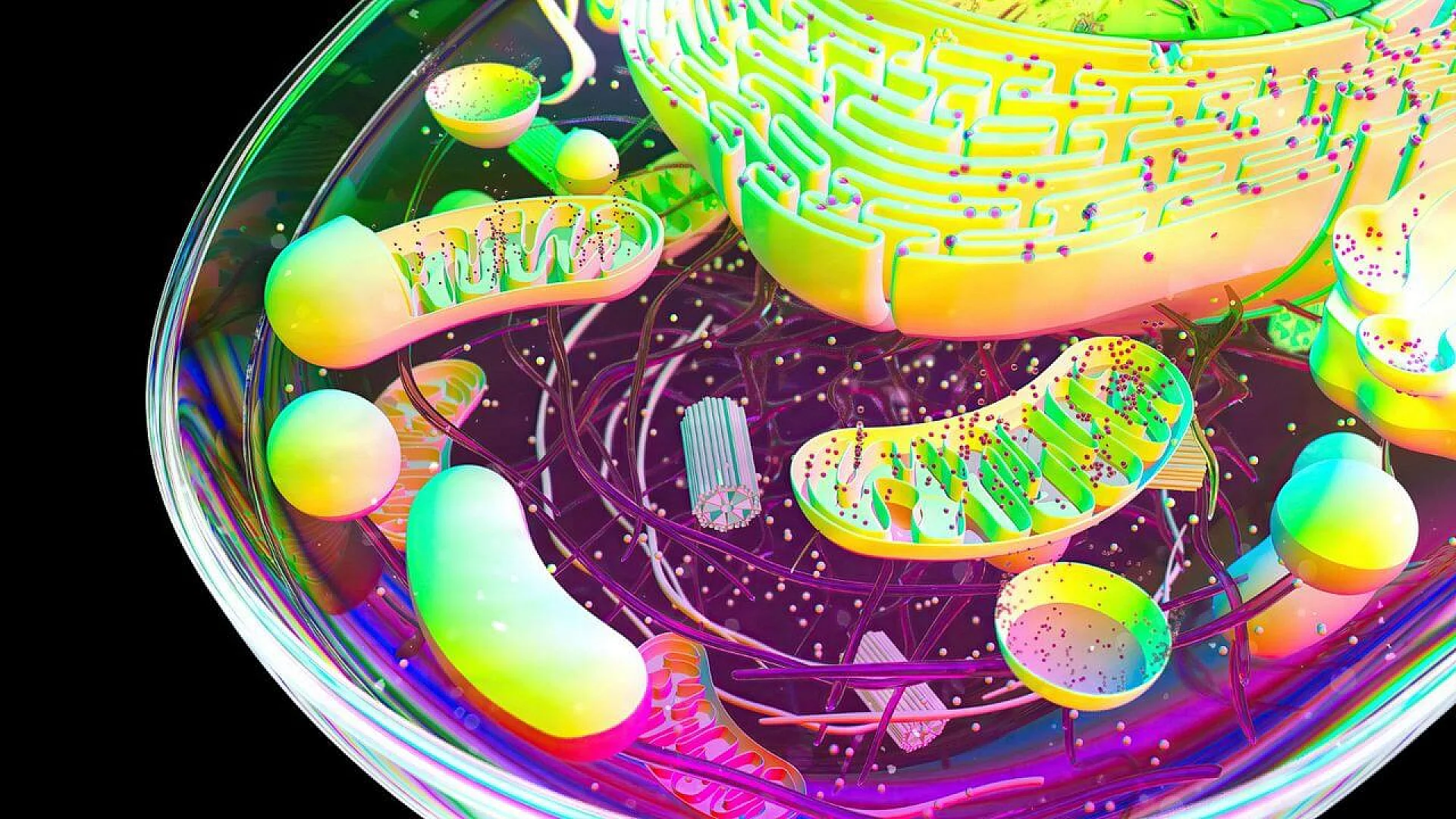
If you imagine the first complex cells on Earth, you might picture something primitive and bare bones. For a long time, biologists believed that complexity exploded only after a lucky partnership with mitochondria, the tiny energy factories inside our cells.
New research paints a very different picture.
It suggests that the ancestor of all complex life was already surprisingly sophisticated before gained mitochondria. In other words, the cell that eventually to animals, plants and was not a basic blob waiting to be upgraded. It was already packed with advanced features.
This quiet revolution in cell biology is reshaping how we think the origin of complex life on Earth.
What Makes a Cell “Complex”?
To understand why this discovery is so important, we need to ask a basic question: what does “complex” in the world of cells?
Complex cells, called eukaryotic cells, have several signature features:
- A nucleus
- Stores and protects DNA
- Acts like a control center for the cell
- An internal skeleton (toskeleton)
- Gives cells shape
- Helps them move and transport materials inside
- An internal membrane system (endomembrane system)
- Forms compartments like the endoplasmic reticulum and Golgi apparatus
- Separates and organizes chemical reactions
- Mitochondria
- Break down nutrients to release usable energy
- Often described as the powerhouses of the cell
For decades, many scientists thought mitochondria were the key that unlocked all this complexity. Extra energy from mitochondria, the argument went, allowed cells to become larger, more organized and more sophisticated.
The new findings challenge that idea.
A New Story of Eukaryogenesis
The origin of complex cells is called eukaryogenesis. has always been one of biology’s biggest puzzles.
Two classic questions have driven this field:
- Were the first host cells simple, more like bacteria?
- Or were they already on the road to complexity before mitochondria arrived?
By studying patterns in genes that control cell structures and functions, researchers have now built a timeline of when different features appeared.
Their conclusion is striking:
Many hallmarks of complexity were in before mitochondria entered the scene.
How Scientists Reconstructed the Cellular Past
Scientists cannot travel back billions of years to watch the first complex cells form. Instead, they read history written in DNA.
1. Genes as historical clues
Researchers focused on genes that are linked to:
- The cytoskeleton
- The internal membrane system
- Other core eukaryotic processes
By examining which genes were present, duplicated or modified, they could reconstruct what the ancestor cell was like.
2. Following gene duplications
When a gene duplicates, evolution gains extra “raw material” to work with. One copy can keep the original role, while the other can evolve a new or fine tuned function.
Patterns of gene duplication revealed that:
- Many genes associated with complex structures had already multiplied
- These duplications happened before mitochondria appeared
3. Building an evolutionary family tree
Using large scale comparisons across many organisms, the researchers built a kind of genetic family tree:
They traced when certain genes appeared
- They estimated when key cell systems became established
The big surprise was how much complexity showed up before the mitochondrial merger.
Big Revelation: Complexity Came First
The new research strongly supports a bold idea: the cell that took the ancestor of mitochondria was not a simple, bacteria like organism. It already looked a lot like a modernukaryotic cell in several important ways.
Advanced cytoskeleton already in place
Evidence suggests that the host cell had:
- A well developed cytoskeleton
- The ability to change shape
- The capacity for internal transport and possibly engulfing other cells
This cytoskeleton would have made processes like swallowing another cell, including the future mitochondrion, much more feasible.
A dynamic endomembrane systemThe ancestor cell also appears to have had:
- Internal membrane networks
- Compartmentalized spaces for different reactions
This organization is a key part of what makes eukaryotic cells so efficient and versatile.
Gene duplications before mitochondria
Many genes that define eukaryotic cell behavior:
- Were already duplicated
- Helped build and refine complex cell machinery
- Originated before the mitochondrial partnership
This suggests that mitochondria did not start complexity from scratch. Instead, they joined a host that was already on an advanced evolutionary path.
What This Means for the Role of Mitochondria
This research does not say mitochondria are unimportant. On the contrary, they remain vital to almost all complex life today. But their role in the story has shifted:
- Not the original spark of complexity
- Complexity did not suddenly appear because ofria
- Instead, mitochondria joined a cell that was already sophisticated
- An upgrade, not the first step
- Mitochondria likely boosted energy supply
- This may have expanded what complex cells could do
- But many complex systems were already under construction
- A multi step journey
- Eukaryotic evolution now looks less like a single giant leap
- It resembles a gradual build up of features over time
- The mitochondrial merger is one major milestone in a longer story
Why This Discovery Matters Beyond Cell Biology
This shift in perspective affects much more than the details of cell structure. It changes our broader view of how life evolves on Earth possibly on other worlds.
1. Rethinking how complexity evolves
If complex organization can emerge before a big energy, then:
- The path to sophisticated life may be more flexible than we thought
- Life can explore complexity in stages, not only in one sudden jump
2. New ideas for life beyond Earth
If internal complexity can arise under different conditions and timelines:
- It broad the range of environments where complex life might appear
- It encourages scientists to look for advanced cell like systems, even without clear signs of mitochondria like structures
3. Fresh research directions
This new view opens several promising lines of inquiry:
- Modern analogues
- Searching for living microbes that resemble early complex cells
- Studying archaea and other microscopic organisms that may hold ancestral traits
- Expanded genomic sampling
- Sequencing more genomes from diverse microbes
- Filling in gaps in the evolutionary tree
- Improved gene models
- Refining methods to trace gene origins and duplications
- Clarifying which genes built which parts of the cell
- Integrative experiments
- Combining lab experiments with genomic clues
- Testing how specific traits could have in ancient cells
Limits and Open Questions
As with any study of time, there are important caveats.
- No direct fossils of early complex cells
- Soft cells do not fossilize easily
- We rely heavily on genetic evidence
- Uncertainty in timing
- Relative order of events is more reliable than exact dates
- Pinpointing precise ages for each step remains difficult
- Missing lineages
- Some branches of the tree of life may be extinct or unsampled
- Unknown organisms might have played key roles
Despite these gaps, the overall pattern is: complexity was already rising before mitochondria arrived.
A New Way to Think About Our Cellular Origins
For a long time, the story of complex life went like this: a simple cell swallowed a bacterium, that bacterium became a mitochondrion, and complexity exploded.
The emerging picture is richer and more intriguing.
Long before mitochondria came along, the ancestor of modern eukaryotic cells had:
- A sophisticated internal skeleton
- A network of internal membranes
- A growing collection of duplicated genes shaping complex systems
Mitochondria then joined a cell that was already surprisingly advanced, helping to push complexity even further.
This view highlights how even ancient cells were not crude blobs but evolving, experimenting systems. It reminds us that the roots of our own cellular architecture run deeper than we once imagined.
By uncovering the hidden history of these ancient super cells, scientists are not only rewriting textbooks. They are giving us a sharper lens on what life is, how it changes and where it might arise again in the universe.
The research was published in Nature on December 03, 2025.
This article has been fact checked for accuracy, with information verified against reputable sources. Learn more about us and our editorial process.
Last reviewed on .
Article history
- Latest version
- Last updated by Dayyal Dungrela, MLT, BSc, BS
Reference(s)
- Kay, Christopher J.., et al. “Dated gene duplications elucidate the evolutionary assembly of eukaryotes.” Nature, 03 December 2025, doi: 10.1038/s41586-025-09808-z. <https://www.nature.com/articles/s41586-025-09808-z>.
Cite this page:
- Posted by Tamseel Fatima