Why Earthquake Sensors in California Suddenly Started Tracking a Spacecraft
Scientists discovered that earthquake sensors across California recorded the sonic booms of a spacecraft reentering Earth’s atmosphere, allowing them to track its breakup in surprising detail.
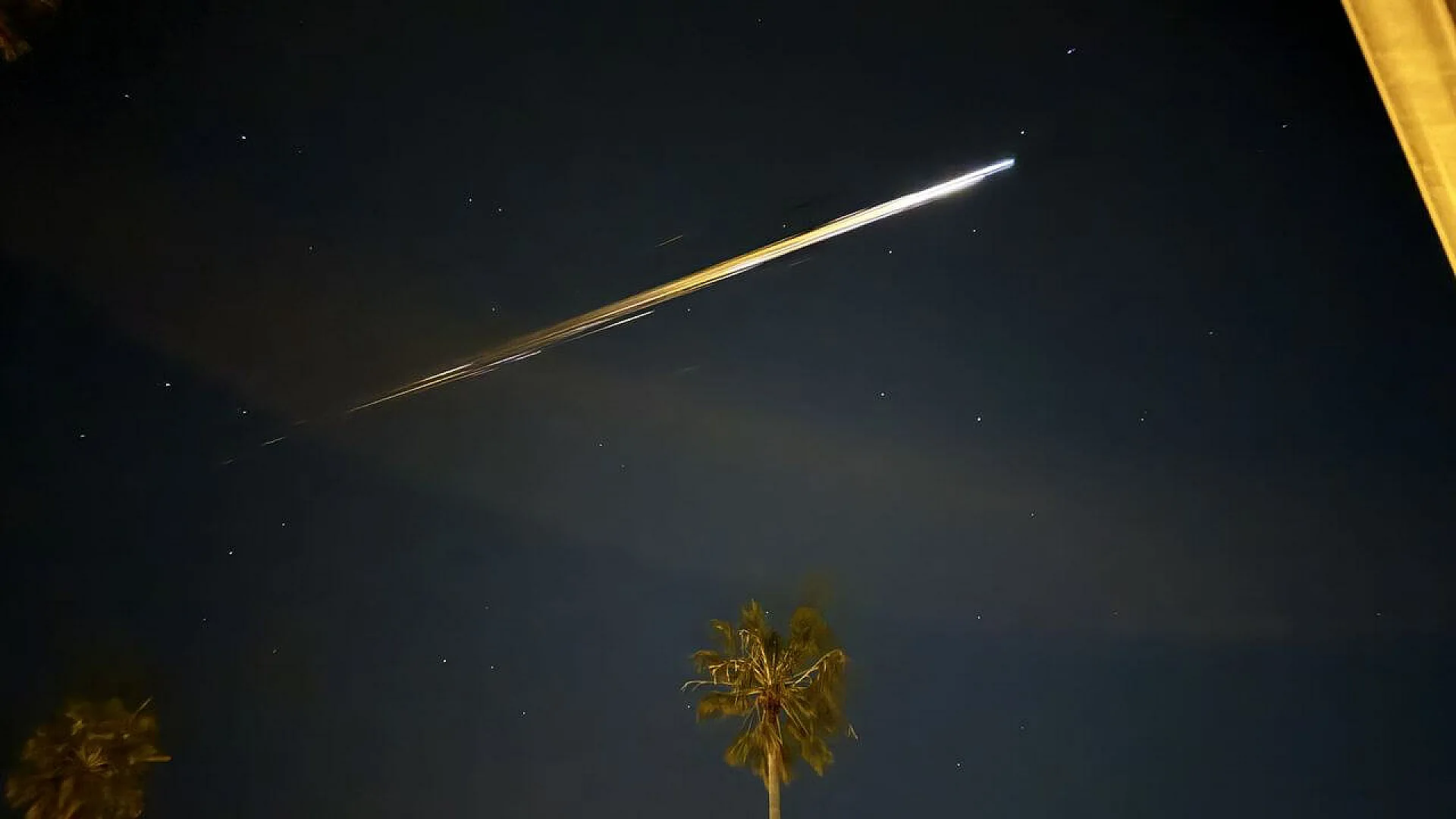
Just before sunrise on 2 April 2024, people across parts of Southern California noticed something unusual in the sky. A bright streak appeared overhead, moving fast and breaking into pieces. Many assumed it was a large meteor burning up in the atmosphere.
It was actually a piece of human-made hardware. The object was the orbital module of China’s Shenzhou-15 spacecraft, returning to Earth after its mission ended.
What happened next surprised scientists. Earthquake sensors across California quietly recorded the event, not visually, but through vibrations traveling through the ground.
Why Space Junk Is Becoming a Real Issue
More objects are falling back to Earth now than ever before. Old satellites, rocket stages, and spacecraft parts regularly reenter the atmosphere as their orbits decay.
Most of these objects burn up completely. Still, some survive long enough to scatter debris across the ground. While injuries are rare, the risk is not zero, especially as space traffic continues to increase.
Another concern lies higher up. Reentering objects release tiny particles and chemicals into the upper atmosphere. Scientists are still learning how these materials affect atmospheric chemistry over time.
The Prediction Problem
Tracking spacecraft works well while they are still in orbit. Radar systems and telescopes can follow them closely. However, once an object starts to hit the thicker parts of the atmosphere, things change quickly.
Heat builds up. The structure weakens. Pieces begin to separate. At this stage, radar signals can fail, and visual tracking becomes unreliable. Predictions of where debris will land can be off by thousands of kilometers.
That uncertainty makes it hard to warn people or recover debris efficiently.
A Different Way to Track Reentry
Instead of watching the sky, the researchers decided to listen to the ground.
When an object moves through the atmosphere faster than sound, it creates a sonic boom. Large objects reentering at extreme speeds generate powerful shockwaves that can travel all the way to the surface.
Seismometers are designed to detect even tiny ground movements. They regularly record earthquakes, distant storms, and industrial explosions. In this case, they picked up shockwaves from a spacecraft falling from space.
The Shenzhou-15 Event
The Shenzhou-15 orbital module was not small. It weighed about 1.5 metric tons and had a radius of roughly 1.1 meters. Its orbit passed over large parts of the world, including heavily populated regions.
Before reentry, official tracking data predicted that it would fall into the northern Atlantic Ocean around 09:06 UTC. That did not happen.
Instead, the spacecraft entered the atmosphere earlier than expected and broke apart over Southern California around 08:40 UTC. The final location was thousands of kilometers away from the forecast.
Earthquake Sensors Pick Up the Signal
Across California and parts of Nevada, 125 seismic stations recorded unusual signals at nearly the same time. The first arrived at 08:46:27 UTC on San Miguel Island, off the California coast.
The signals were short and sharp. Some stations recorded clean pulses. Others picked up more complicated patterns, hinting that the spacecraft was breaking into multiple pieces as it traveled.
This was not noise or coincidence. The timing and structure of the signals matched a fast-moving object crossing the region.
What a Sonic Boom Looks Like Underground
At several stations, scientists observed what is known as an “N wave.” This pattern shows a sudden downward movement followed by a quick upward rebound.
For a large, intact object, this wave usually lasts longer. In this case, the waves were much shorter, about 0.15 seconds.
That detail mattered. It suggested that the spacecraft had already fragmented before reaching those locations.
Signs of Fragmentation
As the object moved eastward, the seismic records changed. Instead of one clean signal, some stations detected clusters of arrivals spread over seconds.
Each arrival likely came from a different fragment, all traveling at slightly different speeds. Smaller pieces probably burned up completely, leaving only their shockwaves behind.
The seismic data captured this breakup step by step, something traditional tracking systems could not do.
Rebuilding the Path From the Ground Up
Using the arrival times of the signals, researchers reconstructed the spacecraft’s flight path. They traced how the shockwave swept across the seismic network.
The reconstructed path passed near Santa Barbara and later over Las Vegas. It was shifted about 28 kilometers south of earlier predictions.
This difference could not be explained by wind alone. It reflected the difficulty of predicting how objects behave once they hit the atmosphere.
Speed, Height, and Angle
The shape of the shockwave pattern also revealed how fast the spacecraft was moving. The estimated speed ranged from Mach 25 to Mach 30, roughly 7.8 kilometers per second.
That speed matches what scientists expect for objects falling from orbit.
Estimating altitude was harder. Still, the data suggested the spacecraft was between 80 and 150 kilometers above the ground during the observed phase. The descent angle was shallow, about 1.2 degrees, which is typical for reentering debris.
Not One Big Breakup, But Many Small Ones
A closer look at the seismic data revealed something important. The spacecraft did not explode in a single dramatic event.
Instead, it broke apart in stages. Researchers identified eight to eleven separate fragmentation events occurring within less than two seconds.
Each breakup released some energy, but no single event dominated. This pattern points to a cascading failure, where one breakup triggers the next.
Why This Matters on the Ground
How a spacecraft breaks apart affects what reaches the surface. A gradual cascade increases the chance that some dense components survive longer.
While seismic data cannot directly show where debris lands, it can narrow down possible fall zones. That information helps recovery teams and reduces uncertainty.
In cases involving hazardous materials, faster and more accurate tracking could make a real difference.
More Than Just Falling Metal
Reentry does not only produce solid debris. It also releases fine particles high in the atmosphere.
By showing where and at what altitude breakup occurs, seismic tracking can support models that study how these materials spread. That adds another tool for monitoring environmental impacts from space activity.
Listening to the Planet in a New Way
Earthquake sensors were never designed to study spacecraft. Yet this research shows they can play a new role as space activity increases.
The Shenzhou-15 reentry offered a rare and clear example. By listening carefully, scientists reconstructed a detailed picture of a spacecraft’s final journey.
It is a reminder that sometimes, the ground beneath our feet knows more than we expect.
The research was published in Science on January 22, 2026.
This content has been reviewed by subject-matter experts to ensure scientific accuracy. Learn more about us and our editorial process.
Last reviewed on .
Article history
- Latest version
- Peer reviewed by Dr. Arjun Patel, PhD
Reference(s)
- Fernando, Benjamin., et al. “Reentry and disintegration dynamics of space debris tracked using seismic data.” Science, vol. 391, no. 6783, 22 January 2026, pp. 412-416., doi: 10.1126/science.adz4676. <https://www.science.org/doi/full/10.1126/science.adz4676>.
Cite this page:
- Posted by Aisha Ahmed