Ancient Lunar Impact May Have Stripped the Moon of Key Volatiles
A massive collision that carved the Moon’s largest basin appears to have driven widespread volatile loss, leaving an isotopic fingerprint that still survives in lunar materials billions of years later.
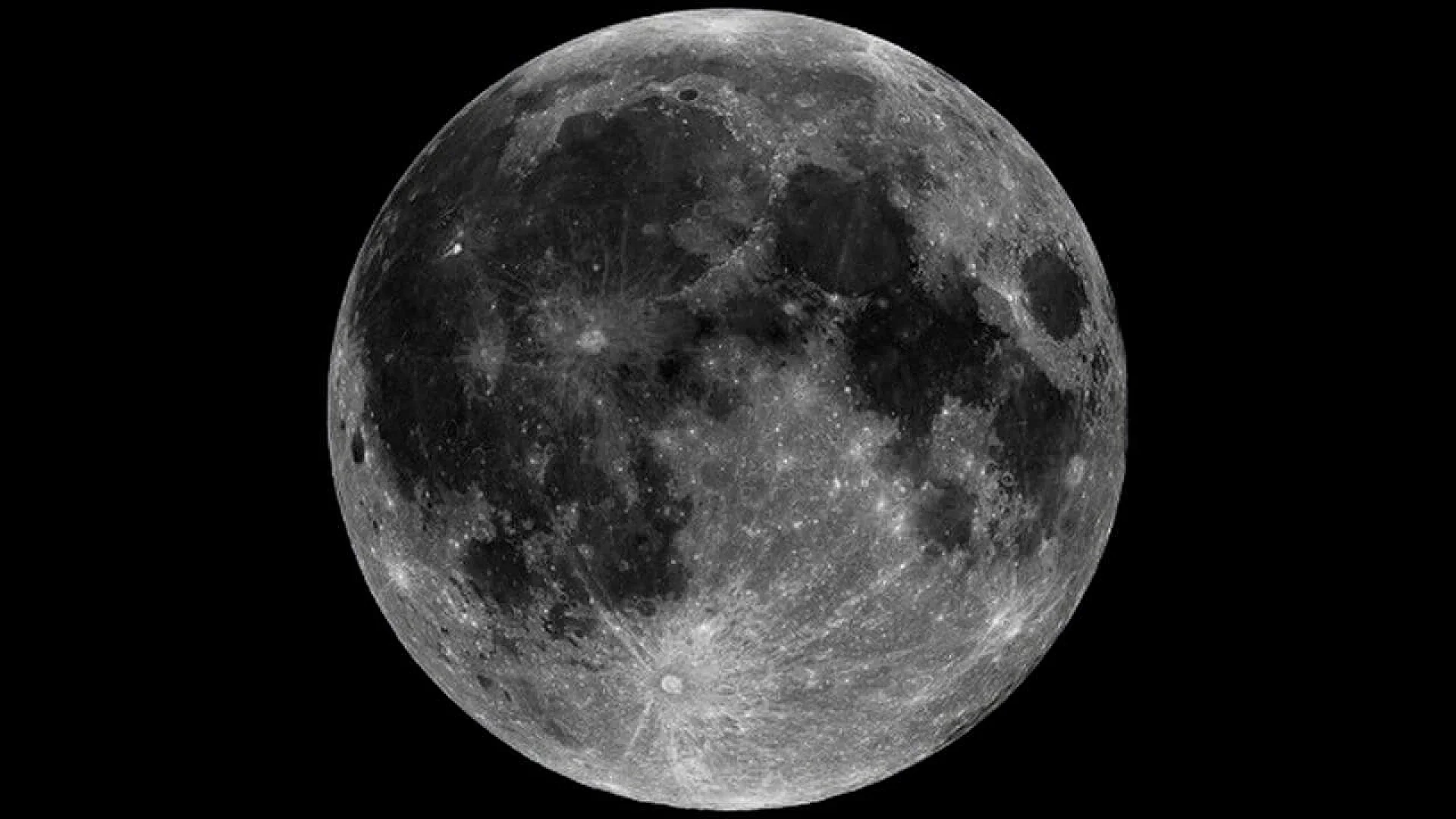
From Earth, the Moon appears calm and unchanging, its familiar face marked by dark plains and pale highlands. Yet one of its most dramatic features lies mostly out of view. The South Pole–Aitken basin, spanning nearly a quarter of the Moon’s circumference, is the largest and oldest recognized impact structure on any rocky body in the Solar System. Formed more than four billion years ago, it is a reminder of a violent early era when planetary bodies were still taking shape.
For decades, planetary scientists have debated how deeply this ancient collision affected the Moon. Did it merely excavate vast quantities of crust, or did it fundamentally alter the Moon’s interior chemistry? A new study now points to the latter, using subtle isotopic clues to argue that the South Pole–Aitken impact drove large-scale loss of volatile elements from the lunar mantle.
Why Volatiles Matter in Planetary Evolution
In planetary science, “volatiles” refer to elements and compounds that readily vaporize at relatively low temperatures, such as hydrogen, sulfur, and certain metal species. These components play a critical role in shaping planetary interiors, magmatism, and long-term evolution. Their presence or absence influences how a body melts, differentiates, and even whether it can sustain an atmosphere.
The Moon is famously depleted in volatiles compared with Earth, a feature often attributed to its violent origin or early thermal history. However, identifying the specific processes responsible for this depletion has remained challenging. Many mechanisms can remove volatiles, including magma degassing, space weathering, and large impacts. Disentangling these effects requires a tracer that records high-temperature loss events in a robust and interpretable way.
This is where isotopes become powerful tools.
Isotopes as Chemical Time Capsules
Isotopes are atoms of the same element that differ slightly in mass. Under certain conditions, physical and chemical processes can separate lighter isotopes from heavier ones, leaving behind a distinctive isotopic signature. High-temperature evaporation, for example, tends to preferentially remove lighter isotopes, enriching the remaining material in heavier ones.
In the new study, researchers focused on iron isotopes preserved in lunar samples. Iron is not traditionally considered a volatile element, but under extreme temperatures, such as those generated during a basin-forming impact, even iron-bearing species can undergo partial evaporation. Importantly, iron isotopic ratios can record this process in a way that survives later geological modification.
By carefully measuring these ratios, scientists can infer whether a sample experienced large-scale volatile loss and under what conditions that loss occurred.
Clues Hidden in Lunar Samples
The research team analyzed iron isotopic compositions from a range of lunar materials, including samples thought to originate from deep within the Moon. These samples are particularly valuable because they provide a window into the lunar mantle rather than surface processes alone.
What emerged was a consistent pattern. Lunar materials associated with the South Pole–Aitken region showed enrichment in heavier iron isotopes compared with what would be expected from purely magmatic processes. In other words, the isotopic signatures could not be fully explained by melting and crystallization within the Moon.
Instead, the data pointed toward a large-scale evaporation event, one intense enough to drive off lighter isotopes and leave a lasting imprint on the Moon’s interior.
The South Pole–Aitken Impact Revisited
The South Pole–Aitken basin is believed to have formed when a massive asteroid or protoplanet slammed into the Moon at high velocity. The energy released would have been immense, generating temperatures capable of melting and even vaporizing large volumes of lunar material.
According to the new isotopic evidence, this impact did not simply excavate a deep crater. It likely caused widespread volatile loss from the surrounding mantle, effectively dehydrating and chemically modifying a significant portion of the Moon. This process would have occurred early in lunar history, at a time when the Moon was still hot and geologically active.
Such an event helps explain why the Moon’s interior appears more depleted in certain volatile-related signatures than models of gradual magmatic evolution alone would predict.
Distinguishing Impact Effects from Magmatic Processes
One of the study’s key strengths lies in its ability to separate impact-driven volatile loss from other mechanisms. Magmatic processes, such as partial melting and magma ocean crystallization, can also fractionate isotopes. However, these processes tend to produce predictable patterns tied to mineral formation and melt evolution.
The iron isotopic variations observed in the lunar samples did not match these expected magmatic trends. Instead, they were consistent with kinetic fractionation caused by rapid evaporation, a hallmark of high-energy impacts.
This distinction is crucial. It suggests that at least some of the Moon’s volatile depletion is not an inherited feature from its formation alone, but a consequence of later catastrophic events that reshaped its interior.
Implications for the Moon’s Thermal and Chemical History
If the South Pole–Aitken impact drove significant volatile loss from the lunar mantle, the consequences would have been far-reaching. Volatiles influence melting temperatures and magma mobility, so their removal could alter the style and duration of lunar volcanism.
This may help explain regional differences in lunar basalt compositions and the timing of volcanic activity observed in remote sensing data and sample analyses. Areas affected by the impact could have followed a different thermal evolution than regions farther away, leading to chemical heterogeneity that persists today.
More broadly, the findings reinforce the idea that the Moon’s evolution was not a smooth, uniform process, but one punctuated by rare and extreme events with lasting consequences.
Lessons for Other Worlds
The implications extend beyond the Moon. Large impacts were common throughout the early Solar System and played a role in shaping Mercury, Mars, and even Earth. If basin-forming impacts can drive volatile loss at a planetary scale, they may have influenced the habitability and geological trajectories of many rocky bodies.
For Earth, such processes could have affected early atmosphere formation and mantle chemistry, although our planet’s larger size and active geology may have obscured much of the isotopic evidence. On smaller bodies like the Moon, these ancient signatures are better preserved, offering a clearer record of early Solar System violence.
Remaining Questions and Future Exploration
While the isotopic evidence strongly supports impact-driven volatile loss, important questions remain. How extensive was the affected region within the Moon? Did similar processes occur during other large impacts, or was the South Pole–Aitken event uniquely influential?
Future sample return missions to the lunar far side, particularly from within the South Pole–Aitken basin, could provide more direct tests of these ideas. Improved isotopic analyses and high-resolution modeling of impact processes will also help refine estimates of how much material was lost and how deeply the effects penetrated.
As lunar exploration enters a new era, studies like this highlight the scientific value of the Moon not just as a destination, but as a historical archive of planetary evolution.
The research was published in Proceedings of the National Academy of Sciences on January 12, 2026.
This article has been fact checked for accuracy, with information verified against reputable sources. Learn more about us and our editorial process.
Last reviewed on .
Article history
- Latest version
- Last updated by Dayyal Dungrela, MLT, BSc, BS
- Peer reviewed by Dr. Arjun Patel, PhD
Reference(s)
- Tian, Heng-Ci., et al. “Isotopic evidence for volatile loss driven by South Pole-Aitken basin–forming impact.” Proceedings of the National Academy of Sciences, vol. 123, no. 3, 12 January 2026, doi: 10.1073/pnas.2515408123. <https://www.pnas.org/doi/10.1073/pnas.2515408123>.
Cite this page:
- Posted by Aisha Ahmed