How Extrachromosomal DNA Helps Tumors Grow Faster and Stronger
A new study uncovers small genomic regions that allow cancer’s circular DNA to attach to chromosomes during cell division, ensuring the survival of powerful oncogene copies.
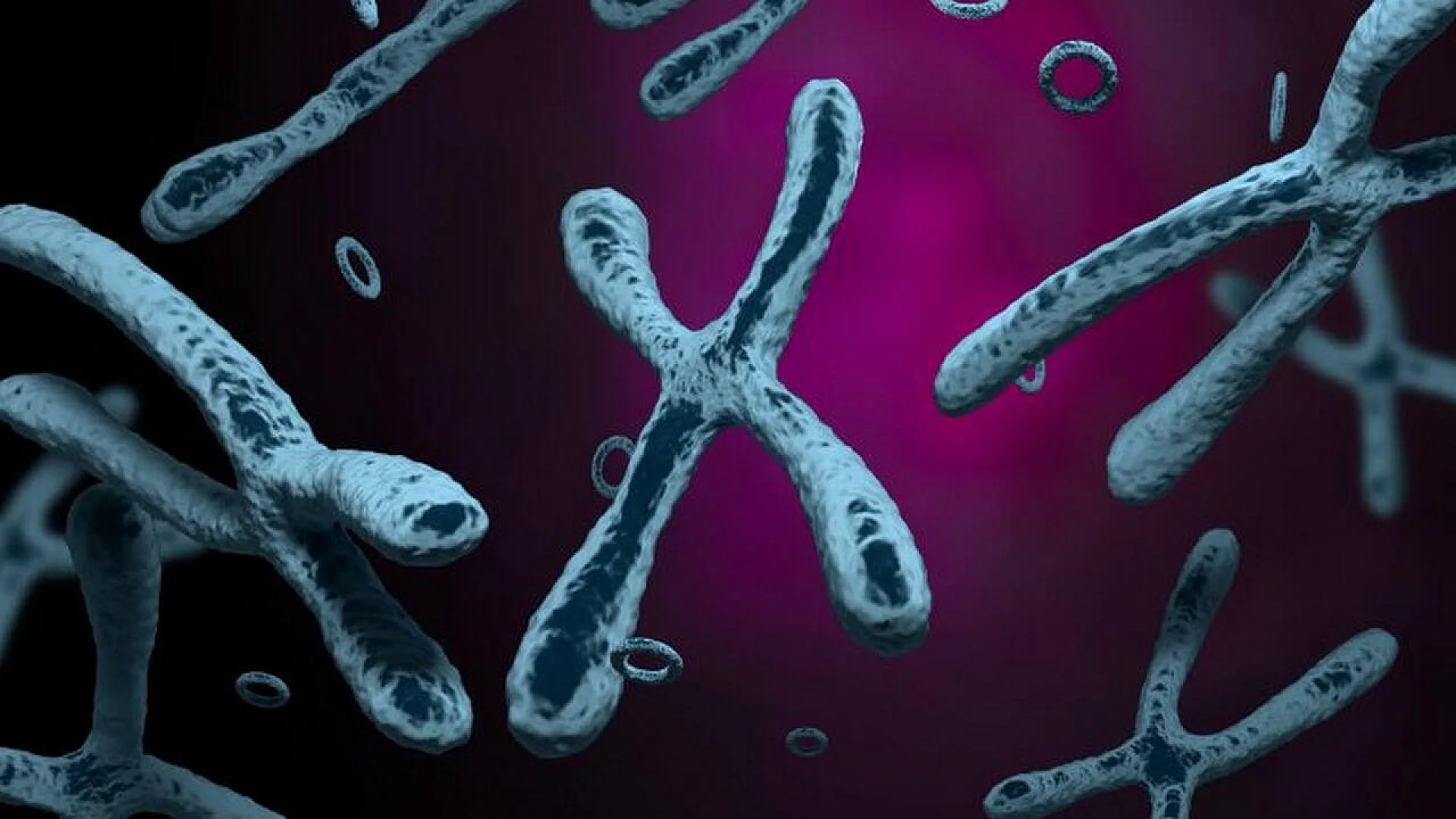
Cancer rewrites the rules of biology in ways that often surprise even scientists. One of the most striking features seen in many aggressive tumors is the presence of circular DNA that floats outside the main chromosomes. This extrachromosomal DNA, known as ecDNA, can carry high-powered oncogenes, and its presence is strongly linked to rapid tumor growth, therapy resistance and poor outcomes.
At first glance, ecDNA should be fragile. It lacks the centromere region that chromosomes use to anchor themselves during cell division. Without this anchor, ecDNA should be lost as cells divide. Yet cancer cells manage to preserve ecDNA across many generations, creating unpredictable bursts of oncogene activity. This paradox has puzzled researchers for decades.
A new study has now uncovered a crucial part of the explanation. Scientists report the discovery of specific human genomic sequences that allow ecDNA to physically attach to chromosomes during mitosis and ride along into daughter cells. These small regions, which the authors call retention elements, appear to be the hidden code that grants ecDNA a type of molecular persistence.
Their findings reshape how we understand tumor evolution and highlight a potential vulnerability that could eventually be exploited to weaken cancer cells.
What Problem Were the Researchers Trying to Solve?
The core mystery was simple yet profound. How does extrachromosomal DNA, which completely lacks the structural features necessary for accurate sorting during cell division, avoid being discarded by the cell?
ecDNA is acentric. It does not have the centromere that chromosomes use as their docking point on the mitotic spindle. Without this attachment, DNA is usually lost or trapped in micronuclei where it becomes damaged and eventually destroyed.
Despite this expectation, ecDNA is not only preserved but also amplified in many tumors. This means cancer cells must have a mechanism that compensates for the missing centromere. Earlier imaging studies showed that ecDNA often sits close to chromosomes during mitosis, hinting that a physical association may allow it to be segregated successfully. However, the specific sequences that enable this association were unknown.
Understanding this mechanism was essential because it could reveal why ecDNA makes cancer so adaptable and why it helps tumors resist treatment.
How the Researchers Investigated the Mystery
To uncover the DNA sequences that help ecDNA survive division, the team developed a screening method called Retain-seq. The approach was simple in concept but powerful in execution.
The researchers cut the human genome into many small fragments, each about one kilobase long, and inserted them into plasmids. These plasmids act as miniature circular DNA molecules similar to ecDNA. A large pooled library of these plasmids was then introduced into human cells.
If a particular DNA fragment helped the plasmid stay inside the nucleus during repeated cell divisions, it would become more abundant over time. By sequencing the surviving plasmids and comparing them to the original library, the scientists could pinpoint which genomic segments increased episomal retention.
The team then used live-cell imaging to watch labeled plasmids during mitosis. They also performed chromosome conformation studies to determine how these sequences physically interact with mitotic chromosomes. Finally, they examined chromatin features and DNA methylation to understand how epigenetic states influence retention ability.
This combination of functional screening, imaging and molecular profiling revealed a consistent pattern behind successful retention.
The Key Discovery: Small Promoter-Like Sequences Keep ecDNA Alive
The study revealed that retention elements are typically located at promoter regions, which are normally used to initiate gene transcription. These elements share several defining properties.
They Are Rich in CpG Sites
Retention elements contain clusters of CpG dinucleotides. CpG sites are well known for their sensitivity to DNA methylation. Hypomethylated CpG-rich promoters are usually associated with active or open chromatin, and this open state appears essential for retention.
They Function Additively
A single retention element reduces the chance of losing an episome during division. Multiple retention elements provide even stronger protection. This explains why ecDNA is often large in size, since capturing several of these elements increases the likelihood of survival.
They Physically Attach to Chromosomes During Mitosis
Chromosome interaction experiments showed that retention elements form specific contacts with mitotic bookmarks. Mitotic bookmarks are regions of DNA that maintain certain protein attachments even when the rest of the genome becomes highly condensed. These contact points seem to act as molecular docking sites.
By binding to these bookmarks, ecDNA avoids drifting away during division. Instead, it stays close to condensed chromosomes until the nucleus reforms, allowing it to reenter the daughter nuclei.
They Are Common in Cancer ecDNA
When researchers examined ecDNA from multiple tumor samples, they found that almost all ecDNA structures contained at least one retention element. Many contained several. This strongly indicates that ecDNA does not survive by chance. Instead, tumors select and amplify ecDNA that includes retention elements, because those are the ecDNA circles that persist through division.
Why the Discovery Matters for Cancer Biology
This research provides a much clearer picture of how ecDNA helps cancer grow.
It Explains Why ecDNA Is Stable
Without retention elements, ecDNA would be lost frequently during cell division. With retention elements, ecDNA behaves like a hitchhiker, using promoter-like sequences as molecular hooks to stay attached to chromosomes and survive.
It Shows How Epigenetics Controls the Process
Retention elements rely on specific epigenetic marks. When the researchers artificially increased methylation on these sequences, retention ability dropped sharply. This means the ecDNA tethering mechanism can be disrupted by altering methylation patterns.
It Reveals a Possible Therapeutic Target
If future therapies could selectively modify the epigenetic state of retention elements, they might cause cancer cells to lose ecDNA over time. Since many tumors depend heavily on ecDNA-carried oncogenes, forcing ecDNA loss could make tumors less aggressive and more sensitive to existing treatments.
A Simple Analogy to Understand the Mechanism
Imagine each cancer cell as a busy airport terminal. Chromosomes are like passengers holding boarding passes, which let them get on the correct plane during cell division. ecDNA lacks any boarding pass, so it should be turned away.
Retention elements act like small adhesive tags that ecDNA sticks to a chromosome passenger. During boarding, the ecDNA tag keeps the circular DNA attached to that passenger. When the chromosomes enter the daughter cells, the ecDNA hitches a ride and enters the new nuclei as well.
This simple mechanism ensures ecDNA keeps circulating inside cancer cell generations.
What the Study Could Not Yet Answer
Like all major discoveries, this one opens the door to many new questions.
- The exact protein complexes that recognize retention elements remain to be identified.
- Redundant pathways seem to support retention, meaning several factors act together rather than one master regulator.
- Not all cancer types were examined, so the universality of the mechanism across all tumors requires further evaluation.
- Therapeutic strategies must be designed carefully because retention elements resemble normal promoters. Any treatment must avoid harming healthy gene regulation.
Even with these limitations, the study provides a comprehensive explanation for a long-standing biological puzzle.
The Larger Picture: How This Changes Our Understanding of Tumor Evolution
The ability of ecDNA to persist across cell divisions is one of the reasons cancer evolves so quickly. ecDNA allows oncogenes to be present in extremely high copy numbers. It introduces uneven genetic diversity within a single tumor, which helps cancer adapt rapidly to drug treatment.
By identifying the retention elements that allow ecDNA to survive, researchers have clarified a fundamental rule of tumor biology. ecDNA is not randomly maintained. It depends on specific promoter-like elements, sensitive epigenetic states and targeted physical interactions with chromosomal bookmarks.
This is a major conceptual shift, and it creates new opportunities to weaken cancer at one of its evolutionary engines.
Conclusion: A Hidden Code That Keeps Oncogenes Alive
The discovery of retention elements shows that ecDNA survival is not accidental. Cancer cells depend on these short DNA sequences to maintain oncogene-filled circles that drive uncontrolled growth. The mechanism combines genetic structure with epigenetic regulation, forming a reliable system that allows ecDNA to pass from one generation of cancer cells to the next.
By revealing this hidden architecture, the study opens a new front in the battle against aggressive tumors. If researchers can find ways to disrupt retention elements or alter their epigenetic state, they may finally have a method to undermine one of cancer’s most dangerous tricks.
This work brings us closer to understanding how tumors evolve with such speed, and it sets the stage for innovative strategies that could, in the future, help slow or even stop ecDNA-driven cancer progression.
The research was published in Nature on November 19, 2025.
This article has been fact checked for accuracy, with information verified against reputable sources. Learn more about us and our editorial process.
Last reviewed on .
Article history
- Latest version
- Last updated by Dayyal Dungrela, MLT, BSc, BS
Reference(s)
- Sankar, Venkat., et al. “Genetic elements promote retention of extrachromosomal DNA in cancer cells.” Nature, 19 November 2025, doi: 10.1038/s41586-025-09764-8. <https://www.nature.com/articles/s41586-025-09764-8>.
Cite this page:
- Posted by Tamseel Fatima