Ocean Tides Reveal Rare 132-Million-Year-Old Dinosaur Footprints
Rare dinosaur footprints preserved in coastal rock along South Africa’s Western Cape reveal that large dinosaurs once crossed muddy tidal flats during the Early Cretaceous.
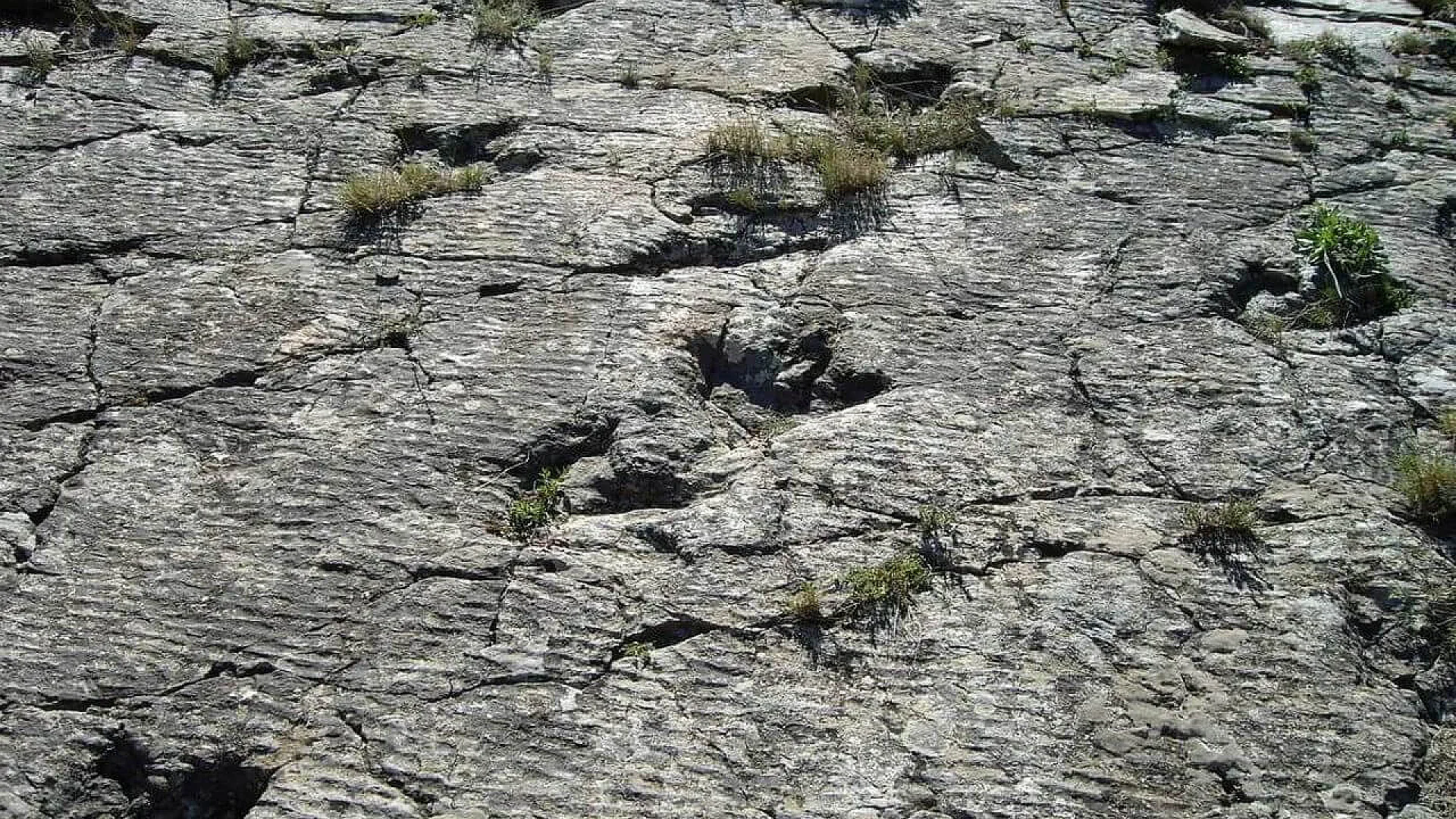
Along South Africa’s southern coast, the shoreline looks ordinary most of the day. Waves roll in, the tide rises, and rock surfaces remain hidden under water.
But when the tide drops, even for a short time, flat slabs of dark rock appear. On those surfaces are marks that do not belong to the ocean.
They belong to dinosaurs.
These footprints are found near the Knysna Estuary in the Western Cape Province. They sit in rocks that are exposed only briefly during low tide, which means they can vanish again within hours.
Because of this, every moment of exposure matters.
A Rare Discovery in a Region With Few Dinosaur Fossils
Southern Africa is famous for dinosaur tracks from much older rocks, especially from the Jurassic period. Those tracksites are found inland and have been studied for decades.
The Cretaceous record, however, is much thinner. Very few dinosaur bones from this later time period have been found in southern Africa. Footprints are even rarer.
That is what makes these tracks important. They come from the Brenton Formation, a small and isolated patch of Cretaceous rock along the coast. The rocks are about 132 million years old.
So far, these are the youngest dinosaur tracks ever reported from southern Africa.
Preserved in Ancient Mud and Silt
The footprints formed when dinosaurs stepped onto soft, muddy ground. At the time, this area was likely a shallow coastal setting, something like a lagoon or tidal flat.
The sediment was fine-grained, mostly mudstone and siltstone. That kind of surface can record impressions clearly, especially when it dries and hardens later.
Some footprints are visible on flat surfaces, while others appear in the sides of low cliffs. In several cases, the original walking surface has eroded away, leaving the compressed rock beneath standing slightly higher.
These raised features are called pedestalled tracks.
Different Ways a Footprint Can Survive
Not all tracks are preserved in the same way. Some are undertracks, meaning the dinosaur’s weight pushed down into lower sediment layers. Others show deformation below the surface, visible only in profile.
These different preservation styles help scientists understand how soft or firm the ground was when the dinosaurs walked across it. They also show just how heavy these animals were.
Who Made the Tracks
The shapes of the footprints point to more than one kind of dinosaur. Narrow, three-toed tracks with pointed ends match what is usually seen in theropods. These were mostly meat-eating dinosaurs that walked on two legs.
Some wider tracks may belong to ornithopods, plant-eaters that could walk on two or four legs. A few very large, round impressions could have been made by sauropods, the long-necked giants.
The researchers are careful here. Footprints rarely preserve enough detail to name a specific dinosaur. Instead, the tracks show general body types and movement patterns.
Signs of Movement, Not Just Standing Still
The spacing and alignment of some tracks suggest movement across the landscape. In a few areas, footprints seem to follow a consistent direction.
This indicates that dinosaurs were walking across the muddy surface, not simply stepping in place.
It is a quiet detail, but an important one. These were living animals moving through a coastal environment, not isolated accidents frozen in stone.
Why Footprints Matter More Than Bones Here
Only one dinosaur bone has ever been reported from the Brenton Formation. In contrast, this site preserves many traces of dinosaur activity.
Footprints can tell a different story than bones. They show behavior, not anatomy.
They reveal where dinosaurs walked, what kind of ground they preferred, and how their weight affected the surface beneath them.
In places where skeletons are rare or missing, tracks become the main evidence dinosaurs were ever there.
A Coastline Shaped by Both Past and Present
Today, the same tides that reveal these footprints are also slowly destroying them.
Waves, sand, salt, and marine life all contribute to erosion. Some tracks are already faint or incomplete.
Because the exposures are temporary, scientists had to return again and again, documenting the site whenever conditions allowed.
The footprints are part of a living coastline, not a protected fossil bed.
How These Tracks Fit Into a Bigger Picture
Similar coastal dinosaur tracks have been found in other parts of the world, including Europe and North America. The South African tracks now join that global record.
They also add to recent discoveries from the Western Cape, including older tracks from nearby formations.
Together, these finds show that dinosaurs occupied a wider range of environments than once assumed, including coastal zones close to the sea.
What the Tracks Cannot Tell Us
There are limits to what footprints can reveal. Erosion has removed fine details from many tracks. Some impressions are incomplete or distorted. Others could have been altered by later sediment movement.
Without bones nearby, scientists cannot confirm exactly which species made the tracks.
Still, the evidence is strong enough to show that multiple types of dinosaurs passed through this area during the Early Cretaceous.
A Brief Glimpse Into a Vanished World
Each low tide offers a short window into deep time. When the water recedes, the tracks appear. When it returns, they vanish again.
Yet those brief moments are enough.
They show that, long after Gondwana began to break apart, dinosaurs were still walking along muddy shores at the edge of an ancient continent.
The footprints may be fragile, but the story they tell is clear.
The research was published in South African Journal of Science on January 29, 2026.
This content has been reviewed by subject-matter experts to ensure scientific accuracy. Learn more about us and our editorial process.
Last reviewed on .
Article history
- Latest version
Reference(s)
- Helm, Charles W.., et al. “Cretaceous dinosaur tracks in the Brenton Formation, Western Cape.” South African Journal of Science, vol. 122, no. 1/2, 29 January 2026, doi: 10.17159/sajs.2026/22809. <https://sajs.co.za/article/view/22809>.
Cite this page:
- Posted by Zara Tariq