Scientists Found a 2-Million-Year-Old Skeleton From an Early Human
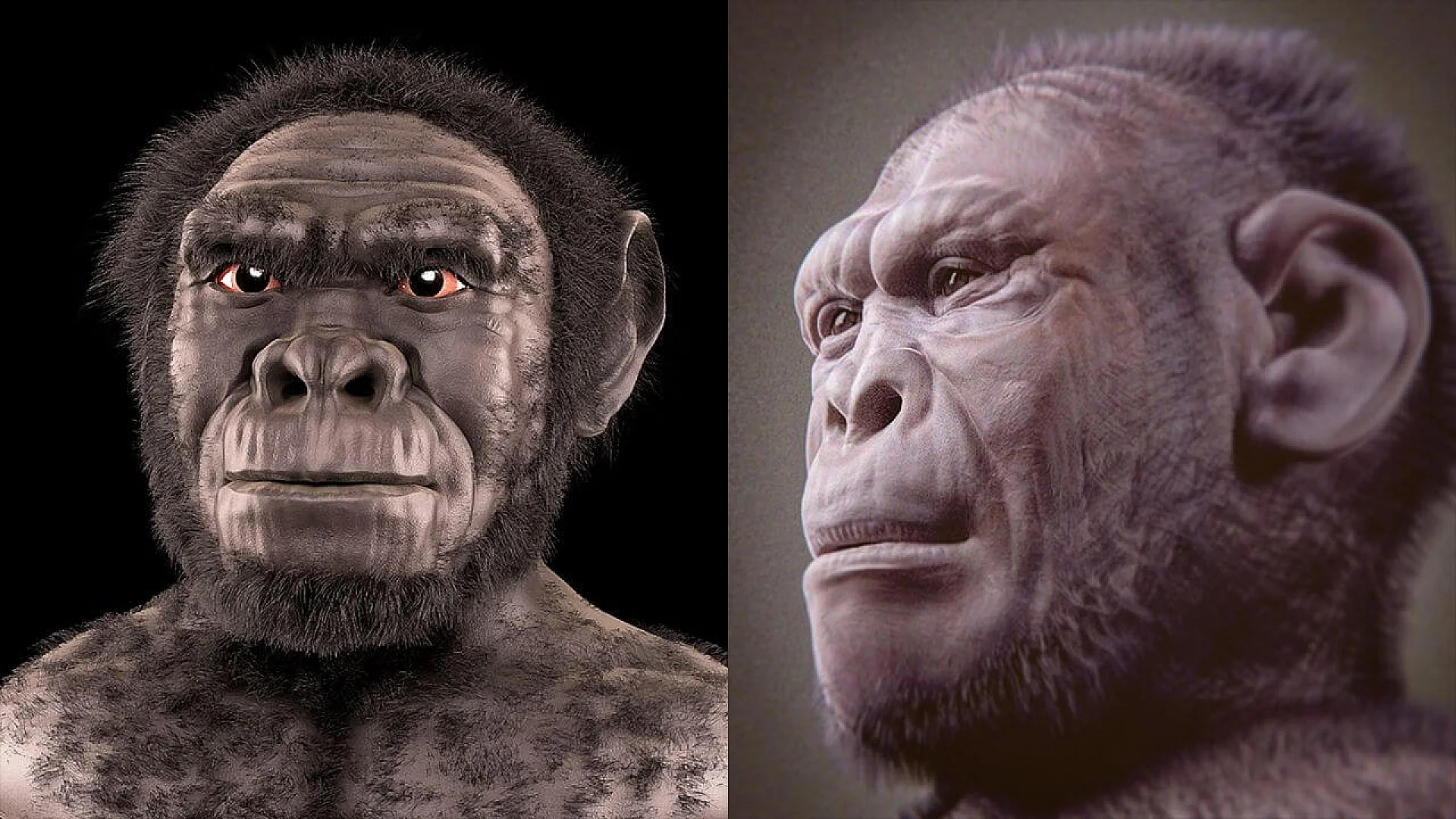
Scientists have uncovered the most complete Homo habilis skeleton ever found in Kenya, helping explain how one of the earliest human species lived, moved, and used tools.
In northern Kenya, near today’s Lake Turkana, the land holds thick layers of ancient soil and sand. These layers were formed millions of years ago when lakes and rivers covered the area.
For many years, scientists have searched this region for early human fossils. Most finds were small pieces such as teeth or broken bones.
Recently, researchers reported something far more important. They identified bones that together form the most complete Homo habilis skeleton ever discovered.
The fossils were found at a site called Koobi Fora, near the village of Ileret. Dating studies show the bones are between 2.02 and 2.06 million years old.
Homo habilis is one of the earliest known members of the human genus. The species lived more than two million years ago and is often linked to the first stone tools.
Until now, scientists knew very little about its full body shape. Only a few partial skeletons had been found, and those were badly incomplete.
Most information came from jaws and teeth. This made it difficult to understand how Homo habilis moved, climbed, or walked.
The new skeleton changes that situation.
The bones were not discovered in a single excavation. Over more than ten years, researchers found individual fragments lying close to each other in the ground.
At first, the bones were studied separately. Later, scientists noticed that their size, colour, and condition matched.
Careful study of the surrounding soil showed the bones had not travelled far. This means the individual likely died near the spot where the skeleton was found.
In the laboratory, researchers slowly matched the bones together, confirming they came from one person.
The skeleton includes many important bones. Scientists recovered most of the teeth, parts of the skull, shoulder blades, ribs, spine, pelvis, arms, and upper leg bones.
Such completeness is rare for fossils this old. Each bone adds useful information about the species.
Together, they allow scientists to estimate height, body shape, and movement more accurately than ever before.
One key finding is the body proportion. The arms were relatively long compared to the legs.
This suggests Homo habilis still spent time climbing trees. Trees may have been used for food, rest, or protection from predators.
At the same time, the leg and hip bones show clear signs of walking on two legs. The structure supports efficient upright walking.
This mix suggests Homo habilis lived both on the ground and in trees.
The teeth provide clues about food and development. Compared to earlier human relatives, the teeth are smaller.
This suggests a diet that was not limited to hard plant foods. The species may have eaten softer foods, including meat.
Stone tools could have helped cut meat or break bones to reach marrow.
The teeth also show that Homo habilis likely grew up faster than modern humans, but slower than earlier species.
Homo habilis is closely linked to simple stone tools known as Oldowan tools. These tools were used for cutting and scraping.
Although no tools were found with the skeleton, tools from the same time period are common in the region.
The hand bones show features that support tool use. The fingers appear capable of precise movements.
This strengthens the idea that Homo habilis played an important role in early tool-making.
Later human species, such as Homo erectus, had longer legs and shorter arms. Their bodies were better suited for long-distance walking.
The new skeleton shows that Homo habilis was different. It had a more mixed body plan, sharing traits with both earlier and later species.
This supports the idea that human evolution happened slowly, with several species existing at the same time.
Most fossil species are known from fragments. This makes interpretation difficult and sometimes misleading.
A more complete skeleton reduces guesswork. It helps confirm which features truly belong to a species.
In this case, the skeleton supports placing Homo habilis firmly within the human genus.
Even with this discovery, many questions remain. Scientists do not know how the individual died or how large the population was.
One skeleton cannot represent an entire species. More discoveries are needed.
Still, this fossil provides a strong foundation for future research.
Two million years ago, eastern Africa was changing. Climate shifts affected food, water, and survival.
The Homo habilis skeleton shows how early humans adapted to these challenges. It reveals a body suited for walking, climbing, and tool use.
These bones offer a clear view of a key stage in human evolution, when our ancestors were beginning to look and behave more like us.
The research was published in The Anatomical Record on January 13, 2026.
This article has been fact checked for accuracy, with information verified against reputable sources. Learn more about us and our editorial process.
Last reviewed on .
Article history
- Latest version
Reference(s)
- Grine, Frederick E.., et al. “New partial skeleton of Homo habilis from the upper Burgi Member, Koobi Fora Formation, Ileret, Kenya.” The Anatomical Record, 13 January 2026, doi: 10.1002/ar.70100. <https://anatomypubs.onlinelibrary.wiley.com/doi/full/10.1002/ar.70100>.
Cite this page:
- Posted by Elizabeth Taylor