Scientists Are Defining How Much Cannabis Raises the Risk of Addiction
A new study suggests cannabis use can be measured in simple THC units, helping identify weekly levels linked to cannabis use disorder in teens and adults.
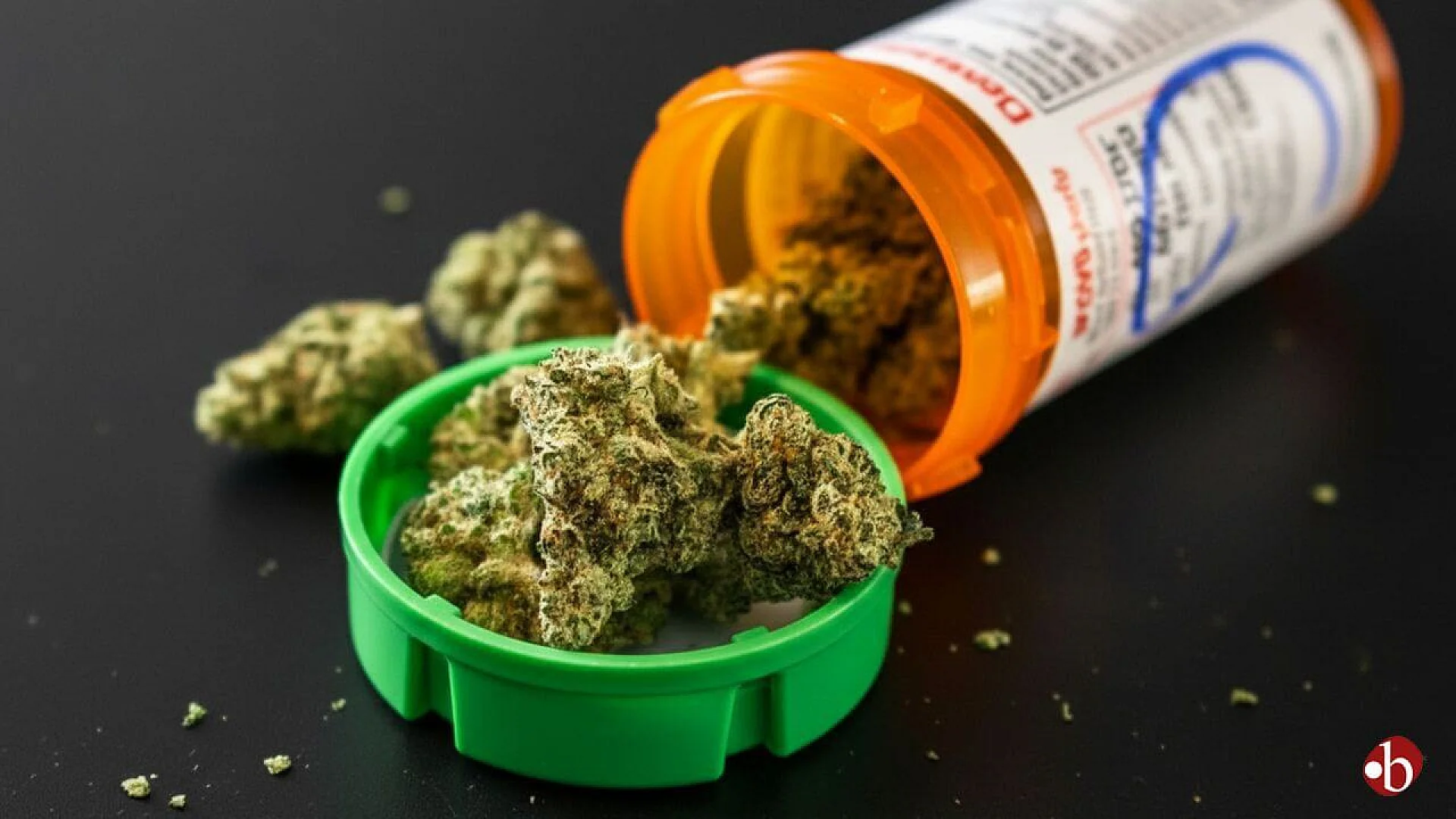
Public health advice often relies on numbers. Alcohol comes with weekly unit limits. Tobacco use is measured in cigarettes per day. Cannabis, despite widespread use, has lacked a comparable standard.
That gap has made it difficult to explain risk in clear terms. Cannabis products differ widely in strength, form, and method of use. A single joint, edible, or concentrate can deliver very different amounts of the drug’s main active compound, delta-9-tetrahydrocannabinol, known as THC.
A new study published in Addiction in 2026 attempts to bring clarity. By translating cannabis use into standard THC units, researchers show that weekly intake can help identify levels linked to cannabis use disorder, or CUD.
Why Cannabis Use Disorder Matters
Cannabis use disorder refers to a pattern of use that leads to significant problems. These include difficulty controlling use, tolerance, spending large amounts of time using cannabis, and failure to meet school, work, or social obligations.
Global estimates suggest that about one in five people who use cannabis will develop some form of CUD during their lifetime. Many never seek treatment, often because they do not view their use as severe or because clear guidance is lacking.
Without practical benchmarks, people who use cannabis have little information to judge whether their habits place them at higher risk.
Moving Beyond Frequency Alone
Most earlier research focused on how often cannabis is used, such as daily versus weekly use. Frequency matters, but it tells only part of the story.
Cannabis potency has increased steadily over the past few decades. Products available today often contain much higher THC levels than those used in earlier studies. At the same time, people consume cannabis in many ways, including smoking, vaping, and eating.
Two people who both use cannabis three times a week may be exposed to very different amounts of THC. The new study addresses this by focusing on quantity, not just frequency.
The Idea of a Standard THC Unit
To make cannabis use comparable, researchers used a standard THC unit defined as 5 milligrams of THC. This approach mirrors alcohol research, where a standard drink represents a fixed amount of pure alcohol.
Using THC units allows different cannabis products and methods of use to be counted on the same scale. A joint, a vape session, or an edible can all be converted into the same unit based on estimated THC content.
This method has already been adopted by major research funders in the United States to improve consistency across studies.
Following Cannabis Use Over Time
The research drew on data from the CannTeen study, a year-long observational study conducted in London between 2017 and 2021.
Participants included 85 adolescents aged 16 to 17 and 65 adults aged 26 to 29. All reported using cannabis at least once during the study period.
Every three months, participants provided detailed accounts of their cannabis use. They reported the type of product, the amount used, how often they used it, and how much they personally consumed. These reports were converted into weekly THC units and averaged over the year.
At the final assessment, participants were evaluated for cannabis use disorder using a structured clinical interview based on DSM-5 criteria.
Measuring Risk With Statistical Precision
To link THC intake with CUD, the researchers used a method called receiver operating characteristic analysis. In simple terms, this technique tests how well a measure distinguishes between people with and without a condition.
The analysis produced thresholds that best separated participants with no CUD from those with any level of the disorder. It also identified thresholds linked to moderate or severe CUD.
The results were analyzed separately for adolescents and adults, reflecting known differences in vulnerability by age.
Clear Thresholds Begin to Emerge
Among adults, the study found that an average intake of about 8.3 THC units per week marked the optimal threshold separating those with no CUD from those with any form of the disorder.
For more severe cases, the threshold rose to about 13.4 THC units per week.
In adolescents, the numbers were lower. About 6 THC units per week distinguished those with no CUD from those with any level of disorder. The threshold for moderate or severe CUD was nearly the same, at about 6.5 units per week.
These differences point to greater sensitivity to THC in younger users.
What These Numbers Mean in Practice
A standard THC unit equals 5 milligrams of THC. In the UK context, a typical joint made with strong herbal cannabis can contain more than 10 units.
This means that for adolescents, even moderate weekly use could exceed the levels linked to increased risk. For adults, the range between lower-risk and higher-risk use appears wider.
The study does not suggest these thresholds diagnose addiction. Instead, they indicate levels where the likelihood of CUD rises sharply within the studied population.
Why Adolescents Stand Out
The findings reinforce earlier evidence that adolescents are more vulnerable to cannabis-related harms.
Notably, the thresholds for mild and more severe CUD were nearly identical in teens. This suggests that once use crosses a certain level, the risk of more serious problems rises quickly.
In adults, the relationship was more gradual. Higher weekly THC intake was linked to progressively greater severity, showing a clearer dose-response pattern.
A Step Toward Practical Guidance
Public health guidelines for cannabis often emphasize delaying use, avoiding high-potency products, and reducing frequency. The new findings add a quantitative dimension.
By focusing on THC units, guidance could become more concrete. People could reduce risk by using less cannabis per session, choosing lower-THC products, or using cannabis less often.
This mirrors strategies already used in alcohol harm reduction.
Important Limits to Keep in Mind
The researchers note several limitations. The sample size was modest and drawn from a specific urban population in the UK. Cannabis use patterns and product potency may differ elsewhere.
The study also cannot prove that higher THC intake causes CUD. It is possible that people with more severe symptoms seek stronger products, increasing their THC exposure.
Because of these factors, the thresholds should be viewed as screening tools rather than diagnostic cutoffs.
What Comes Next
Larger studies in more diverse populations will be needed to refine these estimates. Research in countries with legal cannabis markets may reveal different patterns of use and risk.
Future work could also explore daily limits or identify patterns similar to binge drinking in alcohol research.
Despite the open questions, the study offers a practical framework for understanding cannabis use in measurable terms.
A Measured Step Forward
The safest level of cannabis use remains no use, especially for adolescents. Still, many people choose to use cannabis and want reliable information about risk.
By translating use into standard THC units, this research provides a clearer way to connect behavior with outcomes. It offers a foundation for evidence-based guidance grounded in observation rather than assumption.
The research was published in Addiction on January 12, 2026.
This article has been fact checked for accuracy, with information verified against reputable sources. Learn more about us and our editorial process.
Last reviewed on .
Article history
- Latest version
- Last updated by Dayyal Dungrela, MLT, BSc, BS
Reference(s)
- Thorne, Rachel Lees., et al. “Estimating thresholds for risk of cannabis use disorder using standard delta-9-tetrahydrocannabinol (THC) units.” Addiction, 12 January 2026, doi: 10.1111/add.70263. <https://onlinelibrary.wiley.com/doi/10.1111/add.70263>.
Cite this page:
- Posted by Zara Tariq