‘Mammoth’ Bones in Alaska Turn Out to Be Something Far More Unexpected
Bones believed to be the youngest mammoths ever found shocked scientists with their age, until advanced chemical tests and ancient DNA revealed a startling truth hidden in plain sight.
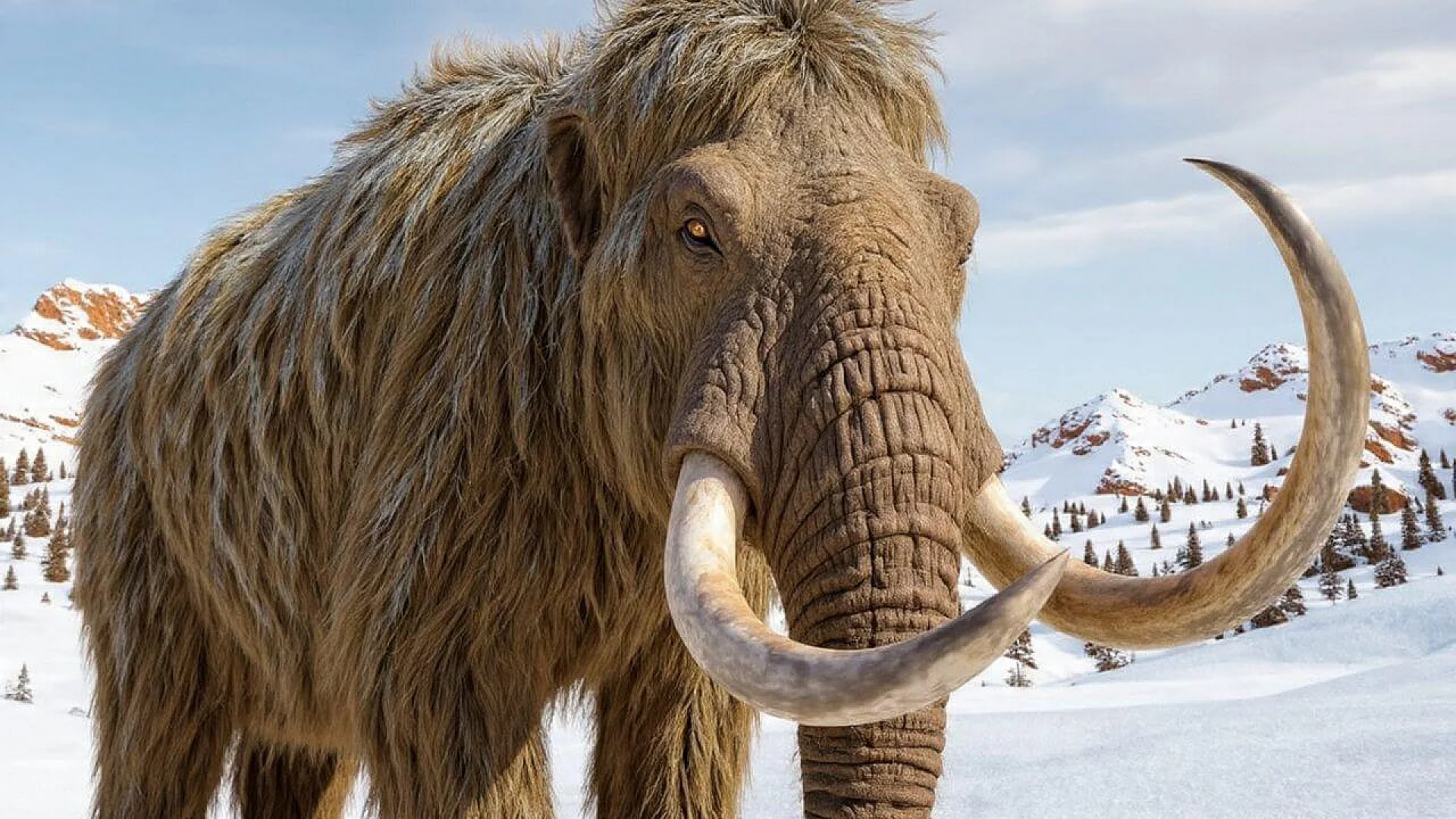
What if woolly mammoths did not disappear when we thought they did?
For scientists and science lovers alike, that question is irresistible. Mammoths are more than prehistoric animals. They are symbols of extinction, climate change, and humanity’s deep past. Any hint that they survived longer than expected sends ripples through science and popular imagination.
That is why excitement surged when two fossil bones from Alaska, long stored in a museum collection, produced astonishingly young radiocarbon dates. If the bones truly belonged to mammoths, they would represent the youngest mammoth fossils ever found on the mainland.
But evidence has a way of challenging assumptions. What followed was a careful, methodical investigation that turned a mammoth mystery into a whale of a surprise.
Why the Timing of Mammoth Extinction Matters
A Debate Still Unresolved
Scientists agree that woolly mammoths once roamed across much of the Northern Hemisphere. They also agree that the last island populations survived until about 4,000 years ago. What remains uncertain is exactly when mammoths vanished from the mainland of North America.
Radiocarbon dating of mammoth bones suggests they disappeared around 13,000 years ago. However, traces of mammoth environmental DNA preserved in frozen soils hint that small populations may have survived thousands of years longer.
This disagreement matters because it affects how scientists understand extinction. Did rapid climate warming wipe mammoths out, or did human hunting push already struggling populations over the edge. Or was it a mix of both.
Finding a young, well dated mammoth fossil would be the missing puzzle piece.
The Citizen Science Project Behind the Find
Adopt a Mammoth and a Bold Goal
To tackle this mystery, researchers launched the Adopt a Mammoth project in 2022. The idea was simple but powerful. Use public support to fund radiocarbon dating of hundreds of mammoth fossils stored in Alaskan museums.
Many of these fossils had never been dated because radiocarbon testing is expensive and often produces results too old to measure. By dating them systematically, scientists hoped to identify the youngest mammoth remains on the mainland.
Among hundreds of samples, two bones stood out.
Bones That Looked Like a Scientific Breakthrough
Shockingly Young Radiocarbon Dates
The two specimens were vertebral bone plates collected near Fairbanks, Alaska, in the early 1950s. Museum records identified them as mammoth.
When scientists dated them, the results were stunning. The bones appeared to be only about 1,900 to 2,700 years old. That is not just young for a mammoth. It is almost modern history.
If confirmed, these bones would mean mammoths survived in Alaska long after pyramids were built in Egypt.
But science does not stop at one test.
Chemical Clues That Raised Doubts
Diet Written in Bone
The next step was stable isotope analysis, a technique that reveals what an animal ate during its lifetime.
Mammoths were land dwelling herbivores. Their bones carry a chemical signature shaped by grasses and tundra plants. These two specimens did not match that pattern at all.
Instead, their isotope values pointed clearly to a marine diet, rich in ocean based nutrients. This was the first strong hint that the bones were not from mammoths.
The discovery forced researchers to ask a bold question. If not mammoths, then what were they.
Ancient DNA Reveals the Truth
A Genetic Identity Check
To resolve the mystery, scientists extracted ancient DNA from the bones. Even degraded fossils can preserve small fragments of genetic material, especially mitochondrial DNA, which is highly informative for identifying species.
The results were definitive.
One bone belonged to a common minke whale. The other came from a North Pacific right whale, one of the rarest whale species alive today.
The youngest mammoths on the mainland never existed. The bones were whales all along.
Fixing the Timeline With Marine Reality
Why Ocean Animals Date Differently
Radiocarbon dating marine animals requires extra care because ocean carbon cycles distort apparent ages. Once scientists corrected for this marine reservoir effect, the bones dated to roughly 1,100 and 1,900 years ago.
These ages fit perfectly with ancient whales and completely rule out mammoths.
But solving one mystery created another.
How Did Whale Bones End Up Deep in Alaska
Hundreds of Kilometers From the Sea
The bones were reportedly found far inland, more than 400 kilometers from the nearest coastline. How could whale remains end up there.
Researchers explored several explanations.
Could Whales Have Swum Inland
Rare cases exist of whales entering rivers and traveling far inland. Small species like minke whales have occasionally been documented doing this.
However, the location where these bones were found is far from major rivers and difficult to reach even for adventurous whales. The chance that two different whale species did this and left identical bones behind is known but extremely unlikely.
Could Humans Have Carried the Bones
Indigenous coastal cultures in Alaska have long used whale bones for tools, furniture, and ceremonial objects. Vertebral plates like these were sometimes used as trays or work surfaces.
It is possible that ancient people transported whale bones inland through trade or travel. However, no confirmed archaeological evidence yet shows whale bones in Alaska’s interior.
Could the Museum Records Be Wrong
The simplest explanation may lie in human error.
The bones were collected during a busy period when museum staff were processing fossils from many locations, including coastal Alaska. A labeling mix up could have placed whale bones from the coast among inland mammoth fossils.
Given the timing and scale of collections, this scenario is considered very plausible.
Why This Study Is Still a Big Deal
Science That Tests Its Own Assumptions
At first glance, the story may sound like a disappointment. No living mammoths after all.
But in reality, this study is a powerful example of how science works at its best. Researchers did not stop at exciting results. They questioned them, tested them, and followed the evidence wherever it led.
Radiocarbon dating, chemical analysis, and ancient DNA all worked together to reveal the truth.
What It Means for the Mammoth Mystery
The study confirms that, so far, no physical mammoth fossils younger than about 13,000 years have been found on the mainland. The debate over late surviving mammoths remains open, but the bar for proof is now higher and clearer.
Meanwhile, the Adopt a Mammoth project continues to add valuable data, refining extinction timelines and improving museum records.
A Takeaway Worth Remembering
These bones were not the youngest mammoths ever discovered. But they told an equally important story.
They showed how easily assumptions can persist, how powerful modern scientific tools have become, and how the past can still surprise us in ways no one expects.
Sometimes, the most fascinating discoveries are not the ones we hope for, but the ones that force us to rethink what we thought we already knew.
The research was published in Journal of Quaternary Science on December 08, 2025.
This article has been fact checked for accuracy, with information verified against reputable sources. Learn more about us and our editorial process.
Last reviewed on .
Article history
- Latest version
- Last updated by Dayyal Dungrela, MLT, BSc, BS
Reference(s)
- Wooller, Matthew J.., et al. “Adopted “mammoths” from Alaska turn out to be a whale’s tale.” Journal of Quaternary Science, 08 December 2025, doi: 10.1002/jqs.70040. <https://onlinelibrary.wiley.com/doi/full/10.1002/jqs.70040>.
Cite this page:
- Posted by Zara Tariq