Cosmic Proton PeVatron Near Altair Accelerates Particles Past One Quadrillion Electron Volts
Milky Way hosts a powerful cosmic accelerator that generates the galaxy’s highest‑energy protons, scientists confirm.
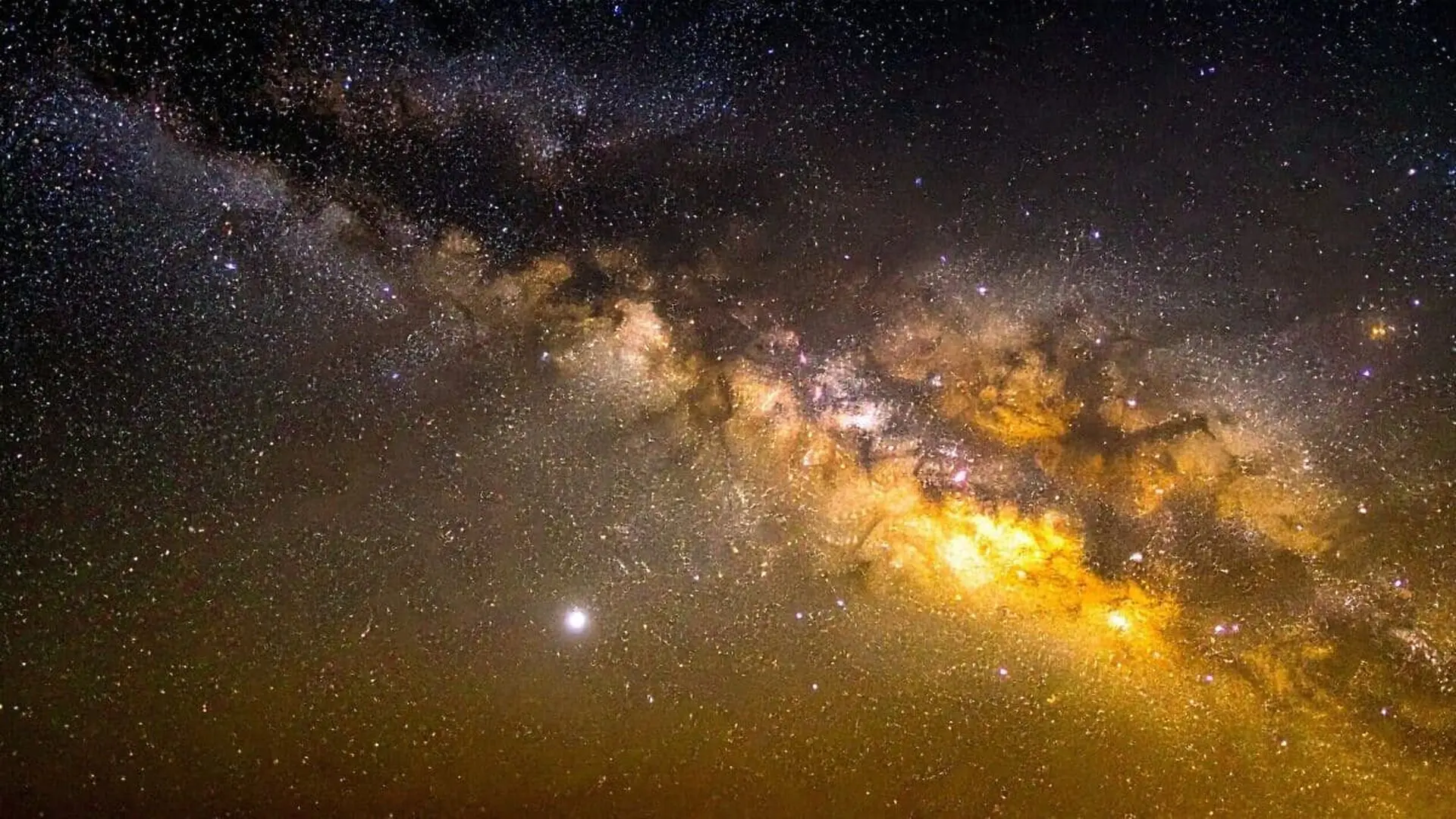
A multinational research collaboration has verified that LHAASO J1912+1014u functions as a rare proton PeVatron—an astrophysical accelerator capable of propelling particles to energies exceeding one quadrillion electron volts—according to a paper in the Astrophysical Journal. This breakthrough sheds fresh light on the mechanisms by which the Milky Way creates and disperses its most energetic particles.
A Galactic Engine Reaching PeV Energies
Cosmic rays rank among the most energetic particles observed in nature, traversing interstellar space and influencing galactic evolution. While the bulk of these rays consist of protons, a smaller fraction are electrons, and some attain energies far beyond the reach of the Large Hadron Collider.
Scientists have now pinpointed a source capable of accelerating protons into the PeV regime—a long‑standing objective in high‑energy astrophysics. The object, designated LHAASO J1912+1014u, lies in the direction of the Aquila constellation, close to the luminous star Altair that forms part of the Summer Triangle.
“The sheer magnitude of these energies makes cosmic rays a pivotal subject for astronomy and astrophysics,” explained Tsunefumi Mizuno, lead author and associate professor at Hiroshima University’s Hiroshima Astrophysical Science Center. He noted that the energy scale is measured in electron volts—the amount gained by an electron when its electric potential is raised by one volt.
“Galactic cosmic rays can reach and surpass 1 quadrillion (10¹⁵) electron volts, or one peta‑electron‑volt (PeV). Detecting a proton accelerator above that threshold—a proton PeVatron—is among the most compelling pursuits in contemporary astrophysics, and we have identified such an object previously labeled LHAASO J1912+1014u.”
Confirming a proton PeVatron opens a new window onto the processes that generate the fastest particles in the Milky Way. Direct study remains challenging because magnetic fields deflect charged cosmic rays, compelling researchers to rely on secondary signatures like high‑energy gamma rays.
Multi‑Observatory Campaign Uncovers the Source’s Identity
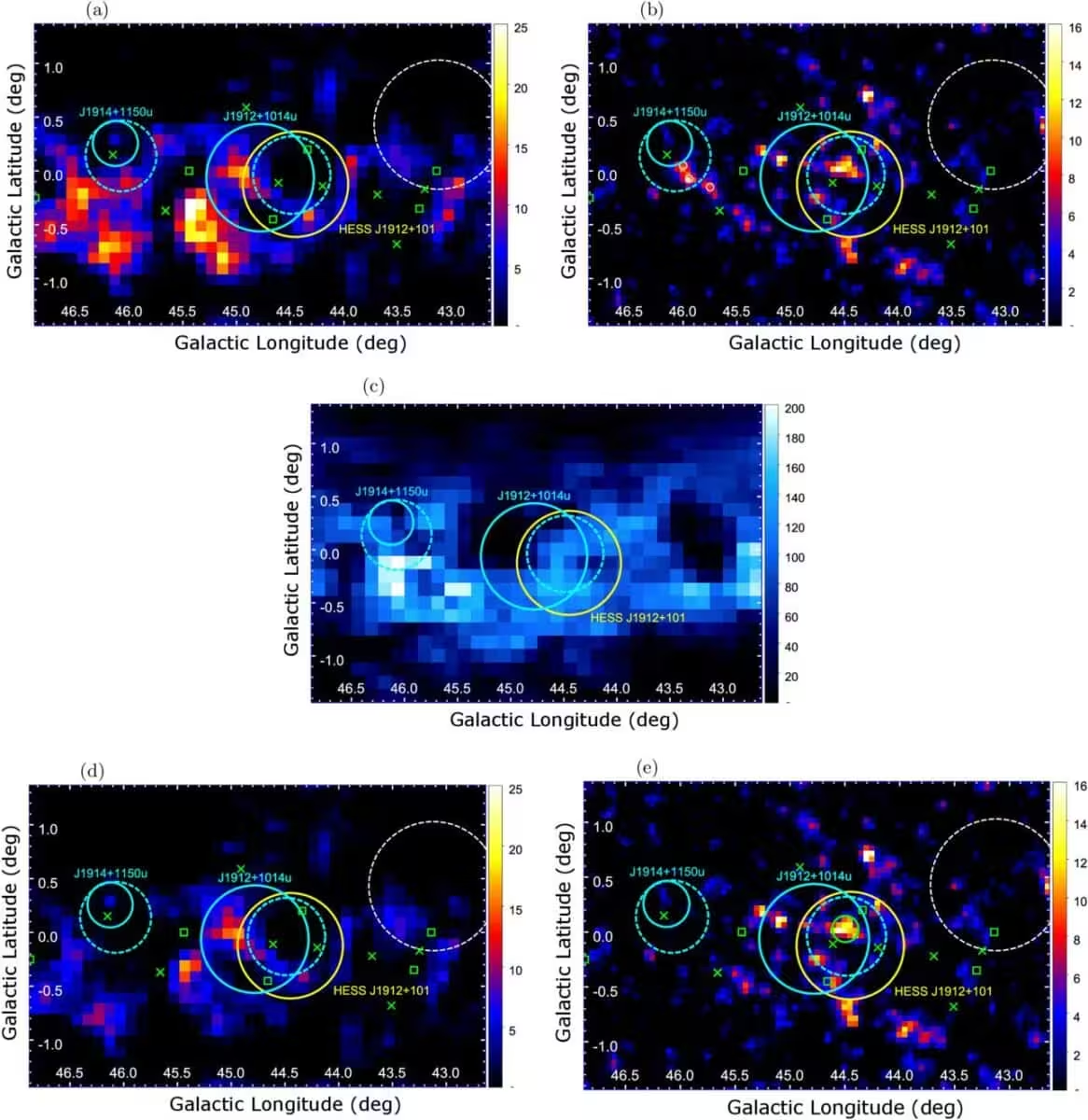
Initial detections of LHAASO J1912+1014u emerged from very‑high‑energy gamma‑ray facilities such as the Tibet AS gamma experiment and China’s Large High Altitude Air Shower Observatory (LHAASO). Both recorded photons exceeding 100 TeV, marking the object as a strong candidate for a cosmic accelerator.
While gamma rays signal the presence of energetic particles, they do not discriminate between proton‑ and electron‑originated cascades. To resolve this ambiguity, the team integrated data across the electromagnetic spectrum.
“Data from Tibet AS gamma and LHAASO alone cannot definitively isolate proton PeVatrons, because PeV‑energy electrons can also generate lower‑energy gamma rays. The limited angular resolution of those instruments left the nature of the accelerator uncertain,” Mizuno clarified.
To overcome these limits, the researchers combined observations from NASA’s Fermi Large Area Telescope (Fermi‑LAT), Japan’s FUGIN radio survey conducted with the Nobeyama 45‑m telescope, and the Chandra X‑ray Observatory.
“By weaving together datasets from several missions, we achieved a comprehensive view of LHAASO J1912+1014u,” Mizuno added.
The resulting multi‑wavelength portrait spanned radio frequencies, X‑ray bands, and gamma‑ray energies, enabling the team to compare emission mechanisms and isolate the dominant particle population.
Signatures Point to a Proton‑Dominated Accelerator
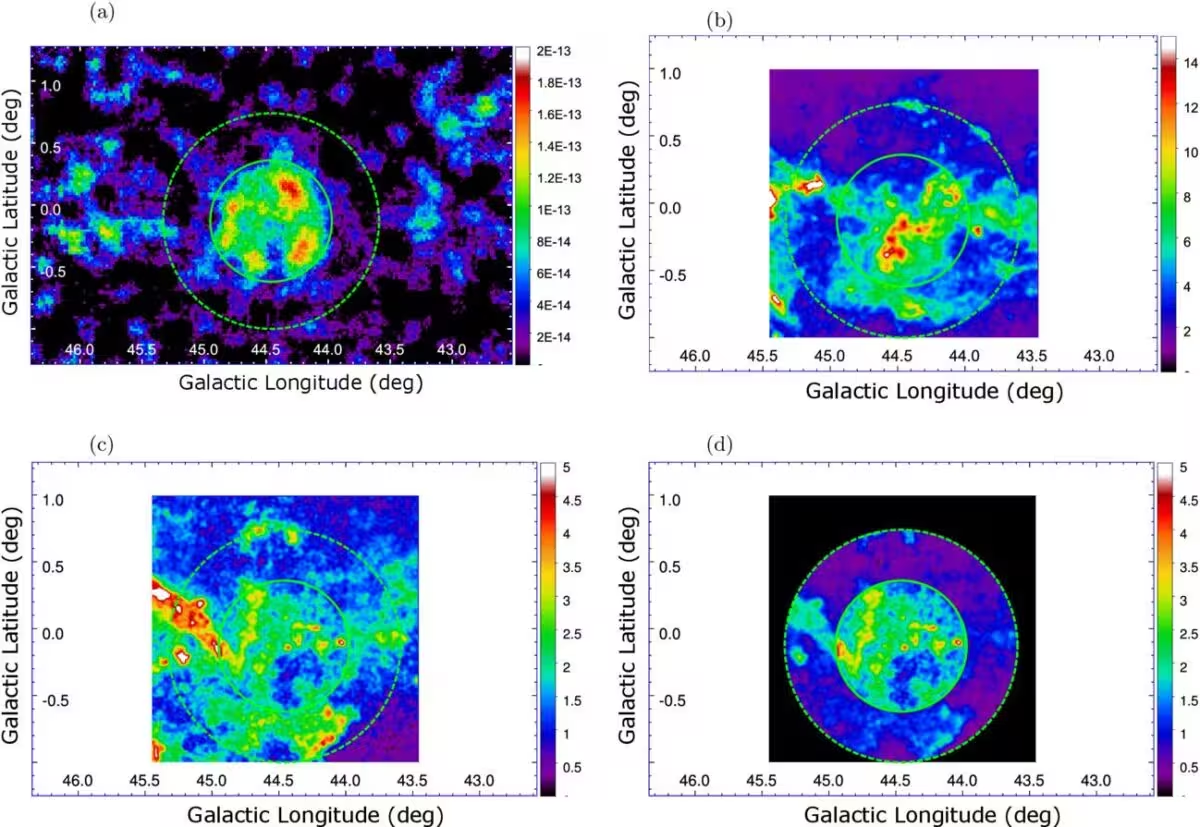
Key findings support a proton‑driven scenario. The gamma‑ray spectrum extends smoothly from energies above 100 TeV down to roughly 400 MeV, a shape difficult to reconcile with a purely leptonic origin.
A further clue arises from the spatial correlation between GeV gamma‑ray intensity and interstellar gas traced by the FUGIN survey. The alignment matches expectations for high‑energy protons colliding with ambient matter, producing neutral pions that decay into gamma rays.
Observations with the Chandra X‑ray Observatory revealed only faint, diffuse X‑ray emission, diminishing the probability that relativistic electrons dominate the gamma‑ray output.
The comprehensive analysis appears in the Astrophysical Journal, where the authors detail modeling of particle acceleration and transport. Their work illustrates how synergistic use of diverse instruments can uncover the hidden physics of the galaxy’s most extreme environments.
The researchers likened their approach to a Japanese proverb: a single arrow is vulnerable, but three bound together are far more resilient. In this case, the combined strengths of Fermi‑LAT gamma‑ray data, FUGIN radio maps, and Chandra X‑ray observations converged to confirm LHAASO J1912+1014u as a genuine proton PeVatron.
This article has been fact checked for accuracy, with information verified against reputable sources. Learn more about us and our editorial process.
Last reviewed on .
Article history
- Latest version
Reference(s)
- Mizuno, Tsunefumi., et al. “Hadronic Scenario for Galactic PeVatron LHAASO J1912+1014u Supported by Fermi-LAT γ -Ray Data and FUGIN CO Data.” The Astrophysical Journal, vol. 1006, no. 1, July 16, 2026, pp. 77 American Astronomical Society, doi: 10.3847/1538-4357/ae680d. <https://iopscience.iop.org/article/10.3847/1538-4357/ae680d>.
Cite this page:
- Posted by Karan Das