Rocky Super‑Earth GJ 3378b Found 25 Light‑Years Away Inside Its Star’s Habitable Zone
Astronomers reclassify a nearby exoplanet, placing it among the most promising potentially habitable worlds, boosting hopes for life beyond Earth.
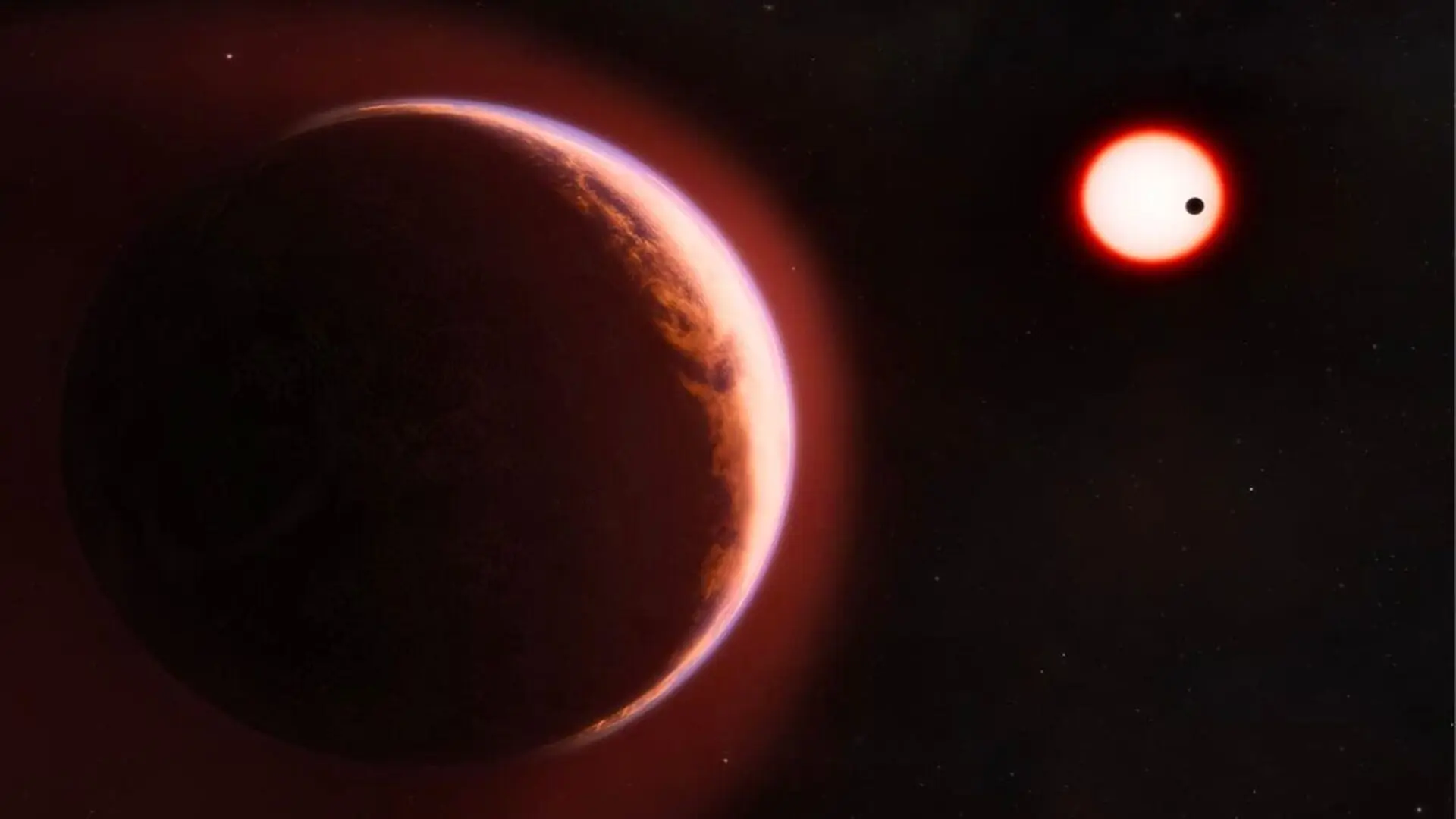
Located about 25 light‑years from Earth in the constellation Camelopardalis, the exoplanet GJ 3378b circles a dim red dwarf star. Researchers from the University of California, Irvine have determined that this planet, roughly twice Earth’s diameter, lies within its star’s habitable zone, where conditions could permit liquid water on the surface. The results appear in The Astrophysical Journal.
First identified in 2024 by French astronomers using the Canada‑France‑Hawaii Telescope on Mauna Kea, GJ 3378b was initially assigned a mass of 5.26 Earth masses, classifying it as a mini‑Neptune‑type world dominated by gases.
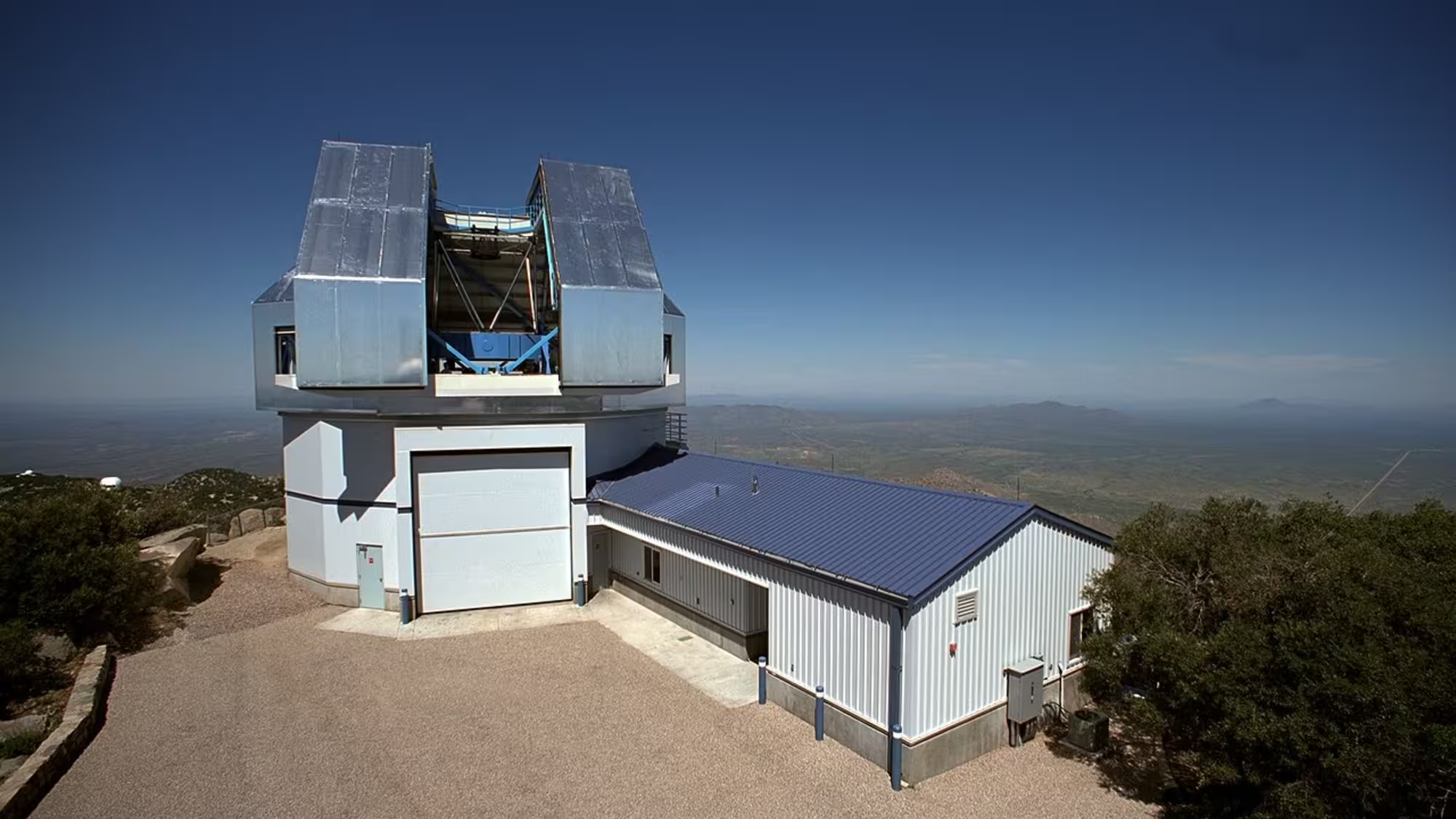
A follow‑up campaign by the UC Irvine team employed the Habitable‑zone Planet Finder on the Hobby‑Eberly Telescope (McDonald Observatory, Texas) and the NEID spectrometer on the WIYN telescope (Kitt Peak National Observatory, Arizona). Their analysis produced a markedly different picture.
Revised Mass and Shorter Orbit Point to a Rocky Super‑Earth
The new data indicate a true mass of about 2.3 Earth masses, shifting the planet from a gaseous mini‑Neptune to a dense, rocky super‑Earth. The orbital period was also refined from 25 days to roughly 21 days, placing the planet deeper within the habitable zone where surface temperatures might allow liquid water if an appropriate atmosphere exists.
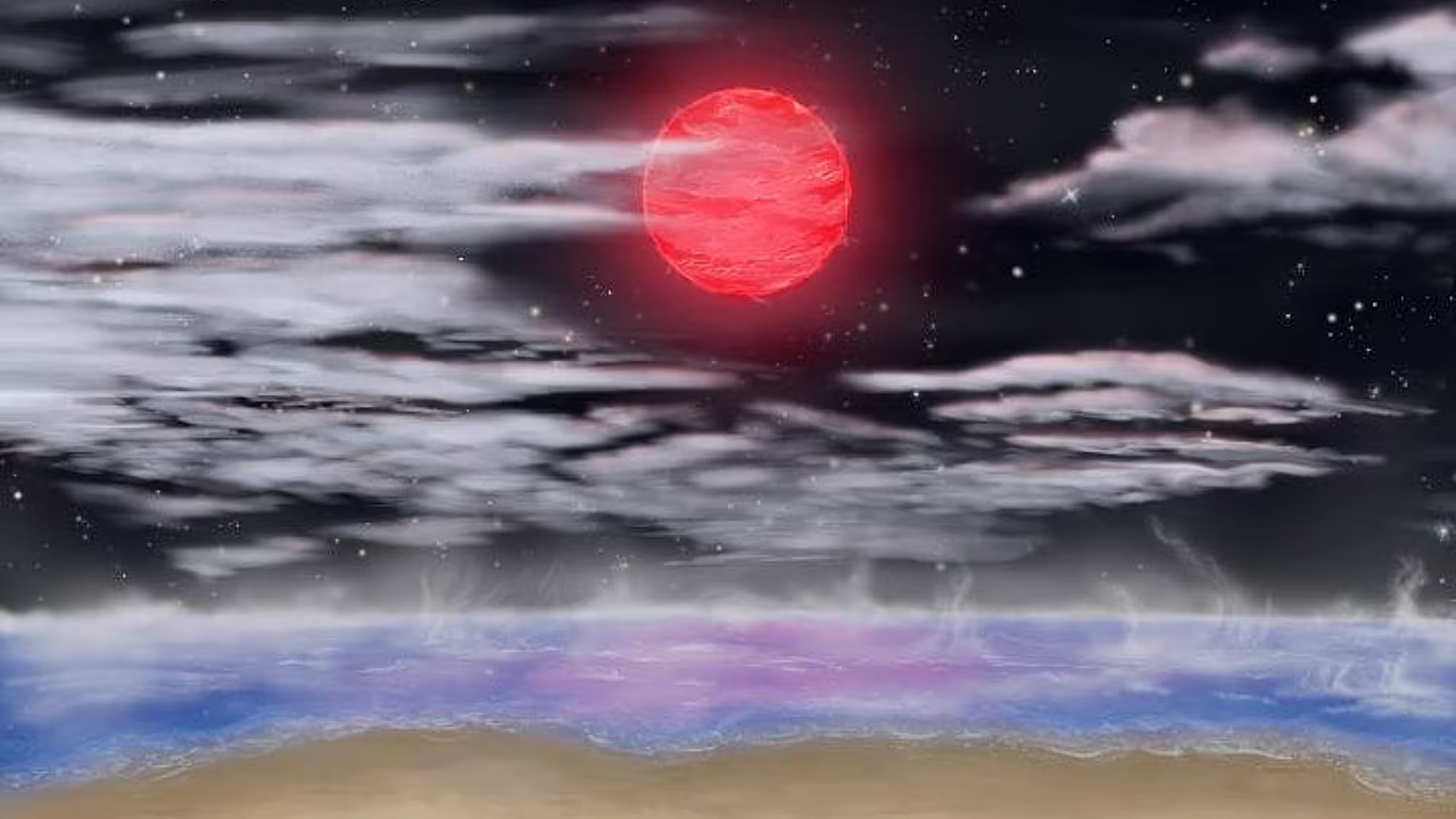
The distinction between a 5.26‑Earth‑mass body and a 2.3‑Earth‑mass one is more than numerical. At the higher mass, the planet would likely retain a thick gaseous envelope similar to Neptune or Uranus, whereas the lower mass suggests a solid composition capable of supporting Earth‑like surface conditions.
“This super‑Earth receives about 90 percent of the stellar radiation that Earth gets from the Sun, putting it squarely in the temperate range,” explained lead author Paul Robertson, associate professor of astronomy at UC Irvine.
Radial‑Velocity Detection Limits Atmospheric Insights
GJ 3378b was discovered via the radial‑velocity (or “wobble”) method, which tracks the tiny back‑and‑forth motion of the host star caused by the planet’s gravitational pull. While this technique yields precise measurements of mass and orbital period, it does not provide direct information about planetary radius, density, or atmospheric composition.
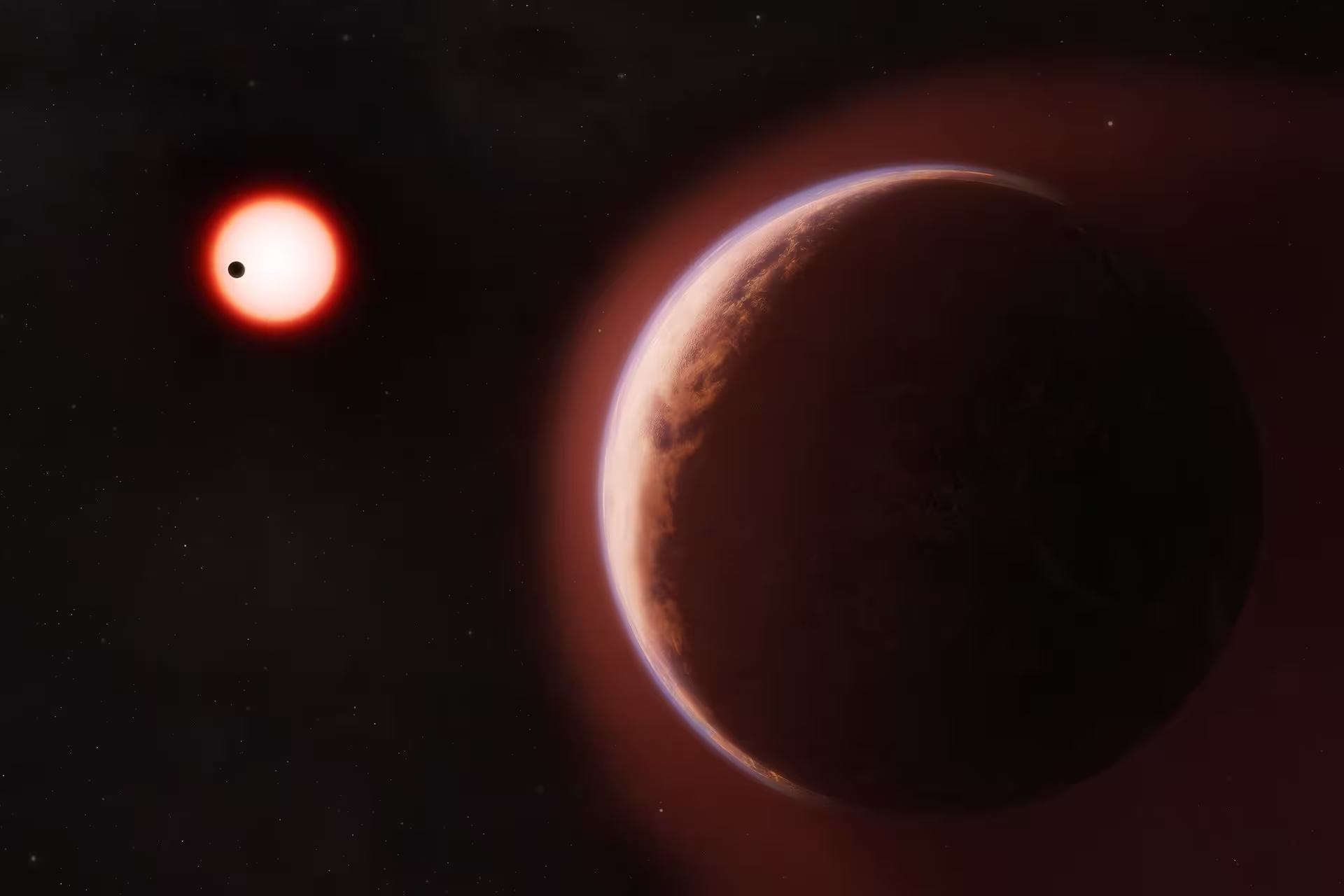
Because GJ 3378b does not transit its star from our viewpoint, astronomers cannot employ transit spectroscopy—the method the James Webb Space Telescope uses to probe atmospheres of transiting worlds like those in the TRAPPIST‑1 system. Consequently, any atmosphere the planet may possess remains beyond the reach of present‑day instruments.
Red‑Dwarf Activity and the “Cosmic Shoreline” Challenge
A key uncertainty lies in the behavior of the host red dwarf. Such stars often emit intense flares and stellar winds capable of stripping planetary atmospheres over billions of years—a process exemplified by Mars, which likely lost a once‑Earth‑like atmosphere to solar radiation.
GJ 3378b appears to sit near the so‑called cosmic shoreline, the threshold where stellar radiation pressure can erode atmospheres. If the planet has managed to retain a modest atmosphere, its receipt of radiation comparable to Earth’s would place it in a favorable regime for surface liquid water.
Graduate researcher Gogod James, who contributed to the size determination, noted that an atmosphere of suitable thickness could sustain surface pressures conducive to liquid water while offering protection against stellar radiation. Whether such an atmosphere persists is an open question.
Future Telescopes May Reveal Atmospheric Secrets
The most promising avenue for atmospheric characterization is NASA’s upcoming Habitable Worlds Observatory, slated for launch in the 2040s. Unlike JWST, this mission will be capable of directly imaging nearby rocky planets, enabling the search for chemical biosignatures in their atmospheres.
“Our ultimate goal is to answer the age‑old question of whether we are alone,” said Michael Endl of the University of Texas at Austin, a co‑author on the study. “We are still in the reconnaissance phase, cataloguing the nearest planetary systems that offer the best chances for detecting life.”
Robertson added perspective on distance: while 25 light‑years sounds vast, it is a modest span within a Milky Way that extends roughly 100,000 light‑years. The discovery of GJ 3378b expands the roster of nearby worlds that future observatories will scrutinize for signs of habitability.
This article has been fact checked for accuracy, with information verified against reputable sources. Learn more about us and our editorial process.
Last reviewed on .
Article history
- Latest version
Reference(s)
- Robertson, Paul., et al. “A Revised Mass and Period for the Habitable Zone super-Earth GJ 3378 b: A Planet Straddling the Cosmic Shoreline.” The Astrophysical Journal, vol. 1005, no. 1, June 30, 2026, pp. 32 American Astronomical Society, doi: 10.3847/1538-4357/ae732b. <https://iopscience.iop.org/article/10.3847/1538-4357/ae732b>.
Cite this page:
- Posted by Karan Das