Ten Astronauts On ISS Probe Microgravity Effects As Crew Swaps And Experiments Ramp Up
NASA’s ISS crew undergoes a major shift as fresh astronauts settle into orbit while veteran members gear up for their Earth return.
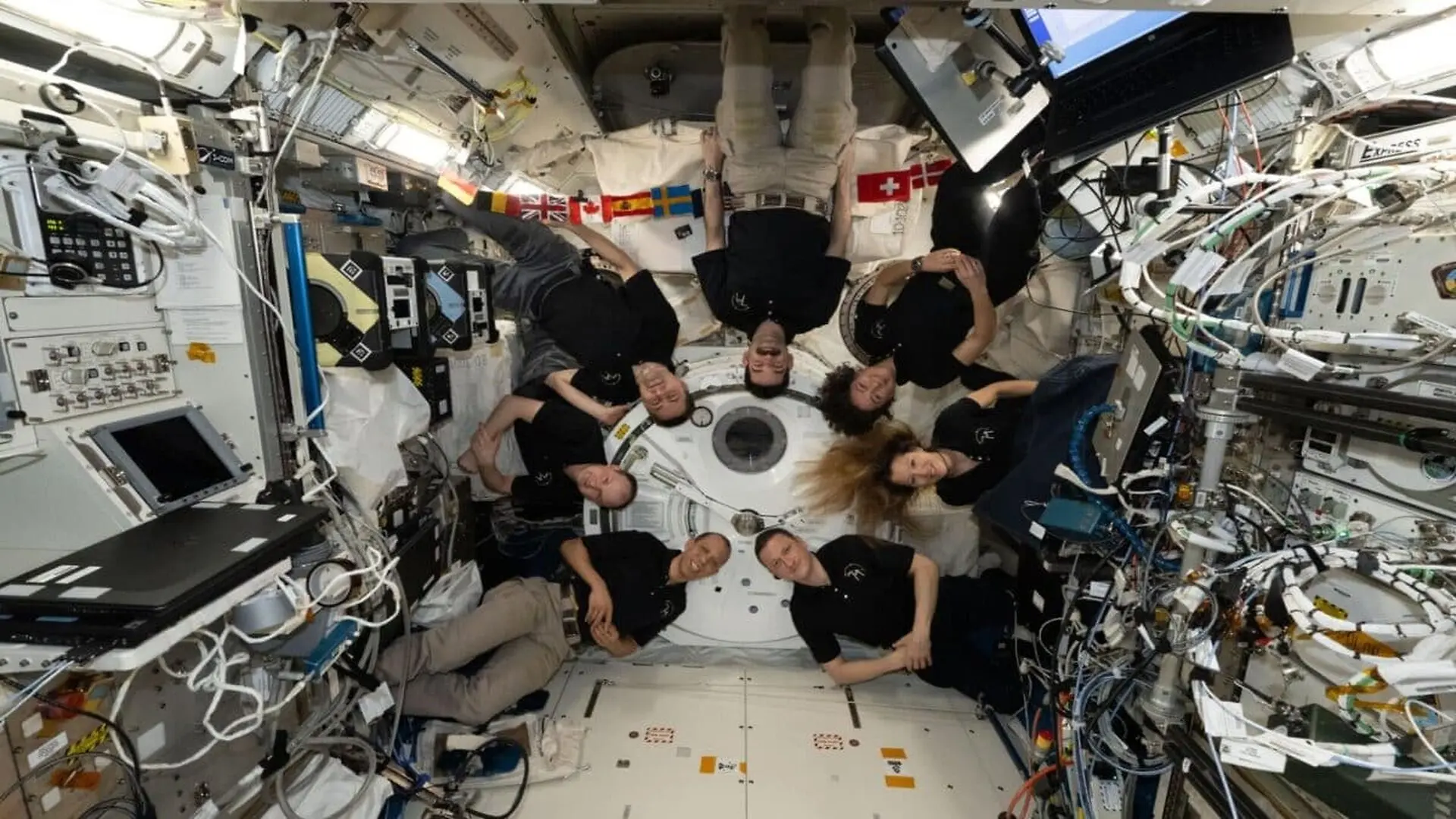
The International Space Station is currently experiencing a bustling phase as ten astronauts and cosmonauts collaborate on scientific studies, training, and crew‑transition tasks, according to NASA. The enlarged Expedition 74 roster is probing human adaptation to weightlessness while gearing up for the next shift in station leadership. Three newcomers are familiarising themselves with orbital life, whereas three seasoned crew members are finalising preparations for their Earth return. This overlap creates a valuable interval for sharing expertise, research findings, and operational insights across generations of spacefarers.
NASA reports surge in scientific work and crew turnover
NASA announced that the ISS team is pursuing a broad spectrum of experiments aimed at human health, spacecraft operation, and biological research. The station now hosts personnel from NASA, Roscosmos and the European Space Agency, fostering a multinational setting for long‑duration flight investigations.
The expanded crew is enabling scientists to gather data on how the human body responds to microgravity. Flight engineer Anil Menon has begun his adaptation programme after arriving, organising personal gear, familiarising himself with laboratory hardware, and acclimating to weightless conditions.
Menon is also taking part in a study that employs compact wearable sensors attached to his skin. These thermo‑mini‑sensors track body‑temperature fluctuations and sleep cycles, supplying researchers with insight into how space environments affect daily biological rhythms.
The initial adjustment period offers a unique window for observing astronauts during the early stages of acclimation. Shifts in movement, rest, balance and physiological regulation are being closely monitored because they have implications for missions beyond low Earth orbit.
Day 1 in orbit and I’m overwhelmed by gratitude, love, and beauty for this Earth we share. Hello from the international space station! pic.twitter.com/N3azT84Wa9— Anil Menon (@astro_anil) July 15, 2026
New arrivals adjust to weightlessness
Two recently arrived Roscosmos flight engineers, Pyotr Dubrov and Anna Kikina, are also participating in adaptation investigations after docking aboard the Soyuz MS‑29 vehicle. Both cosmonauts are on their second stint aboard the orbital laboratory.
The pair employed virtual‑reality headsets and monitoring systems designed to capture brain activity and eye‑movement patterns. The experiment probes how balance and orientation perception shift when gravity is absent.
Microgravity presents a novel context for the nervous system because the brain receives altered cues about motion and position. Researchers are analysing these changes to better predict how crew members will perform routine tasks during prolonged missions.
The cosmonauts also continued the unpacking of supplies delivered by the new spacecraft and progressed through the standard onboarding routine, building confidence in the ISS’s distinctive environment.
Veteran crew readies for Earth return
While the newcomers settle in, three senior crew members are preparing to conclude their mission. NASA flight engineer Chris Williams and Roscosmos cosmonauts Sergey Kud‑Sverchkov and Sergei Mikaev are approaching the end of a stint that began on 27 November 2025.
The trio has begun final return procedures aboard the Soyuz MS‑28 capsule, including inspections of the Sokol spacesuits they will wear for re‑entry and reviews of descent and landing protocols.
They are also sorting equipment and personal items that will depart with them, while transferring knowledge to the incoming team to ensure uninterrupted experiment execution, maintenance duties and station operations.
Crew handovers are a hallmark of the ISS program, with departing astronauts conveying practical experience gathered over months in orbit to their successors, smoothing the transition for future occupants.
The Expedition 74 crew is continuing its microgravity research, helping three new arrivals adjust to life in space, and preparing for the departure of another three crewmates. More… https://t.co/BOOgEWapgapic.twitter.com/e6ELBWiMtj
— International Space Station (@Space_Station) July 16, 2026
Ongoing ISS investigations into health, tech and safety
Beyond crew adaptation, astronauts are advancing scientific projects across several disciplines. Jessica Meir of NASA is evaluating techniques for producing saline solution in microgravity using the station’s onboard water supply.
The work explores how future explorers could manufacture essential medical supplies on long‑duration missions where resupply opportunities are scarce.
Jack Hathaway from NASA and Sophie Adenot from ESA are overseeing station logistics, supporting educational outreach and performing upkeep tasks. They are transferring cargo from the Cygnus XL vehicle, servicing life‑support systems, and creating educational content for students on Earth.
Roscosmos flight engineer Andrey Fedyaev is conducting the Aseptic Biotechnology study, which examines strategies for preserving sterile conditions during space‑based research, addressing microbial challenges in closed habitats.
These investigations highlight the ISS’s role as both a scientific laboratory and a proving ground for technologies that could underpin future deep‑space exploration.
This article has been fact checked for accuracy, with information verified against reputable sources. Learn more about us and our editorial process.
Last reviewed on .
Article history
- Latest version
Reference(s)
- Garcia, Mark. “Expanded Crew Works Science, Microgravity Adaptation, and Next Crew Departure - NASA.”, July 16, 2026 NASA <https://www.nasa.gov/blogs/spacestation/2026/07/16/expanded-crew-works-science-microgravity-adaptation-and-next-crew-departure/>.
- “https://twitter.com/astro_anil/status/2077393521753923830/video/1.” <https://t.co/N3azT84Wa9>.
- “https://go.nasa.gov/4fsVxBU.” <https://t.co/BOOgEWapga>.
- “https://twitter.com/Space_Station/status/2077848699875770526/photo/1.” <https://t.co/e6ELBWiMtj>.
Cite this page:
- Posted by Karan Das