How Viking’s 1976 Mars Landings Still Shape the Search for Life Today
NASA celebrates 50 years since Viking’s historic Mars landing, a milestone that revolutionized how we explore the Red Planet.
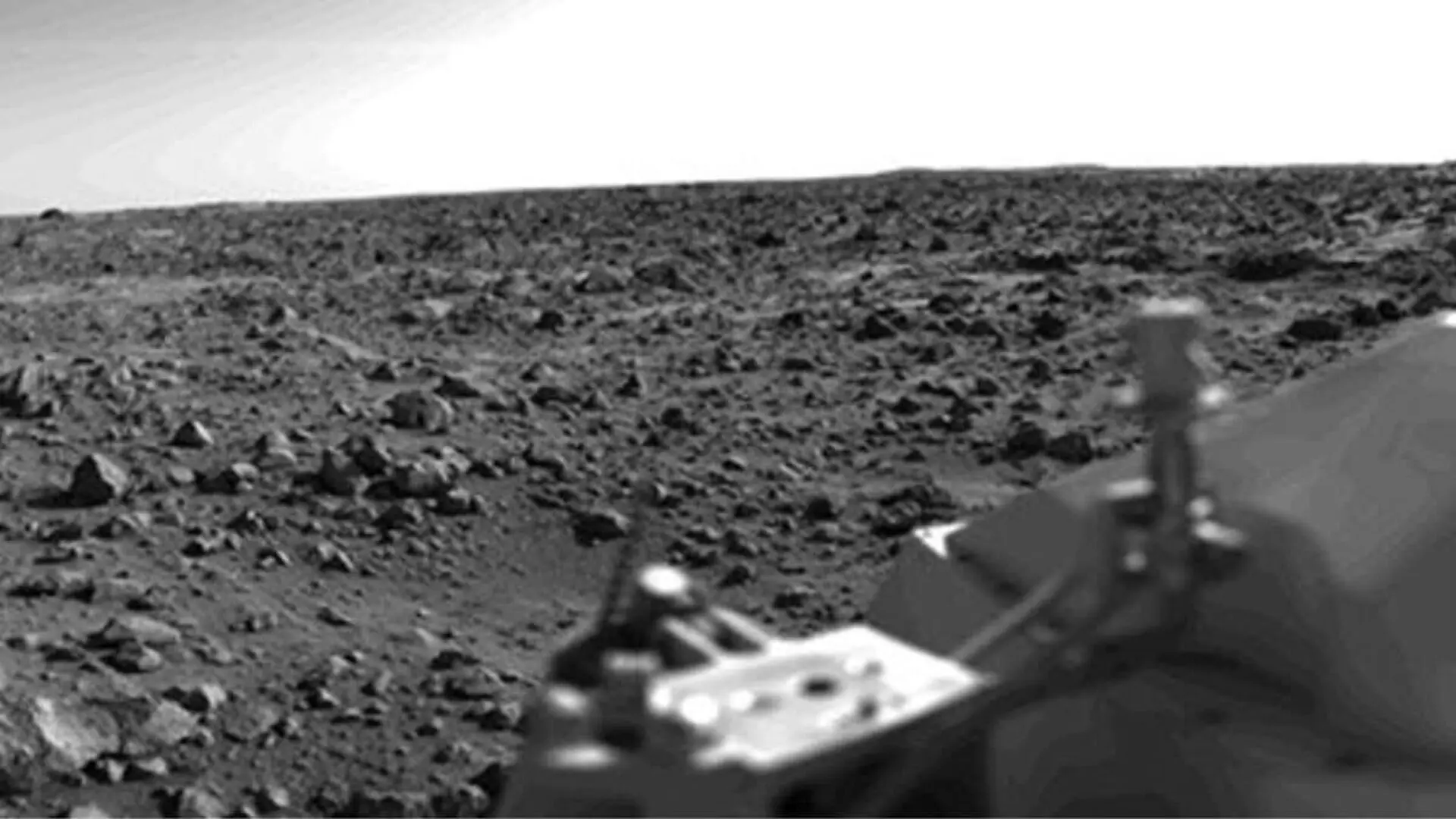
This year marks half a century since NASA’s Viking 1 and Viking 2 spacecraft touched down on the Martian surface, delivering the first long‑duration scientific observations from another planet and reshaping the way researchers study Mars.
Celebrating 50 Years Since Viking’s Arrival on Mars
The Viking program launched in 1975 at a time when knowledge of the Red Planet was sparse. By sending two orbiters and two landers, the mission paired global mapping with on‑the‑ground experiments, setting a new benchmark for planetary exploration.
Viking 1 touched down on 20 July 1976, becoming the first United States probe to achieve a successful soft landing on Mars. Weeks later, Viking 2 descended in a different region, together establishing a baseline for the planet’s climate and geology.
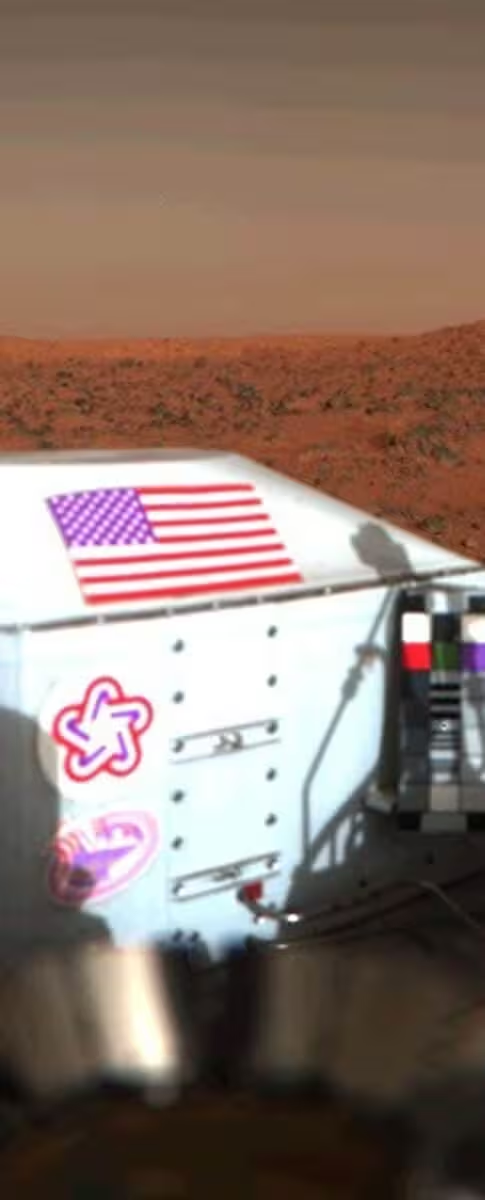
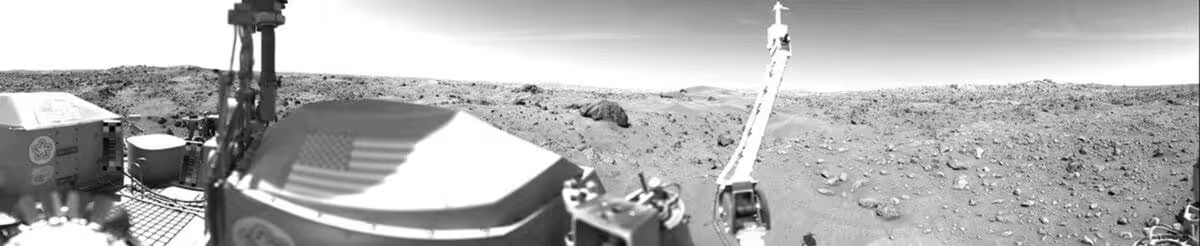
From the surface, the landers sent back high‑resolution photos of a dusty, rocky terrain and recorded temperature swings, atmospheric pressure, and soil chemistry, offering the first real‑time portrait of Martian daily life.
The orbiters complemented these observations by charting valleys, cratered plains, and potential ancient river channels, producing maps that would serve as reference points for every subsequent mission to the planet.
Decades later, scientists still mine the Viking data set, comparing its baseline measurements with those gathered by newer spacecraft to track long‑term changes on Mars.
How the Viking Landers Redefined Planetary Science
NASA notes that the Viking archive remains a vital resource fifty years after the missions began (source). The program proved that a robotic platform could operate autonomously on another world for extended periods while delivering detailed scientific returns to Earth.
A particularly contentious aspect of the mission involved on‑board biology experiments aimed at detecting microbial activity in Martian regolith. Although the results fell short of confirming life, the experiments sparked ongoing debates about how to design future biosignature searches.
Those early attempts laid the groundwork for later habitability studies, influencing the design of instruments on missions such as Curiosity and Perseverance that seek chemical clues of past life.
Beyond the scientific community, the transmission of surface images transformed public perception of Mars, turning a distant point of light into a tangible landscape that could be explored.
The success of Viking inspired a cascade of follow‑up missions, each building on the knowledge of geology, climate history, and potential habitability first revealed by the 1970s landers.
Enduring Impact of Viking Data on Contemporary Mars Exploration
Half a century on, Viking continues to be cited as a cornerstone of Martian science. Subsequent missions—including Mars Pathfinder, Spirit, Opportunity, Curiosity, and Perseverance—have all referenced questions initially raised by the Viking landers.
The mission demonstrated that successful planetary exploration demands meticulous planning, precise engineering, and a commitment to long‑term scientific goals. Insights gained from Viking’s hardware and operational strategies have informed the development of more resilient rovers and landers.
As agencies worldwide chart pathways toward both robotic and crewed journeys to the Red Planet, the Viking legacy provides a template for integrating surface experiments, orbital reconnaissance, and sustained data collection.
Today, researchers still draw on Viking observations when reconstructing ancient Martian environments, underscoring the mission’s lasting relevance to the ongoing quest to understand the planet’s habitability.
From Viking to Today’s Rovers: A Continuing Legacy
The narrative that began with Viking’s 1976 touchdown has evolved into a multi‑decade saga of discovery, each new spacecraft adding chapters to the story first written on the Martian plains.
While modern rovers boast advanced laboratories and autonomous navigation, the fundamental principle that guided Viking—systematic, long‑duration exploration—remains at the heart of all current Mars endeavors.
This article has been fact checked for accuracy, with information verified against reputable sources. Learn more about us and our editorial process.
Last reviewed on .
Article history
- Latest version
Reference(s)
- Carney, Stephen. “Viking: 50 Years on Mars - NASA Science.”, July 10, 2026 NASA <https://science.nasa.gov/mission/viking/viking-50-years-on-mars/>.
Cite this page:
- Posted by Vikram Desai