Foam Seat Cushion Ignites B‑52, Crash On Arctic Ice Ends Cold War Nuclear Patrol
A U.S. B‑52 crashed near Thule Air Base on Jan 21 1968, carrying four thermonuclear bombs and prompting the immediate end of Operation Chrome Dome.
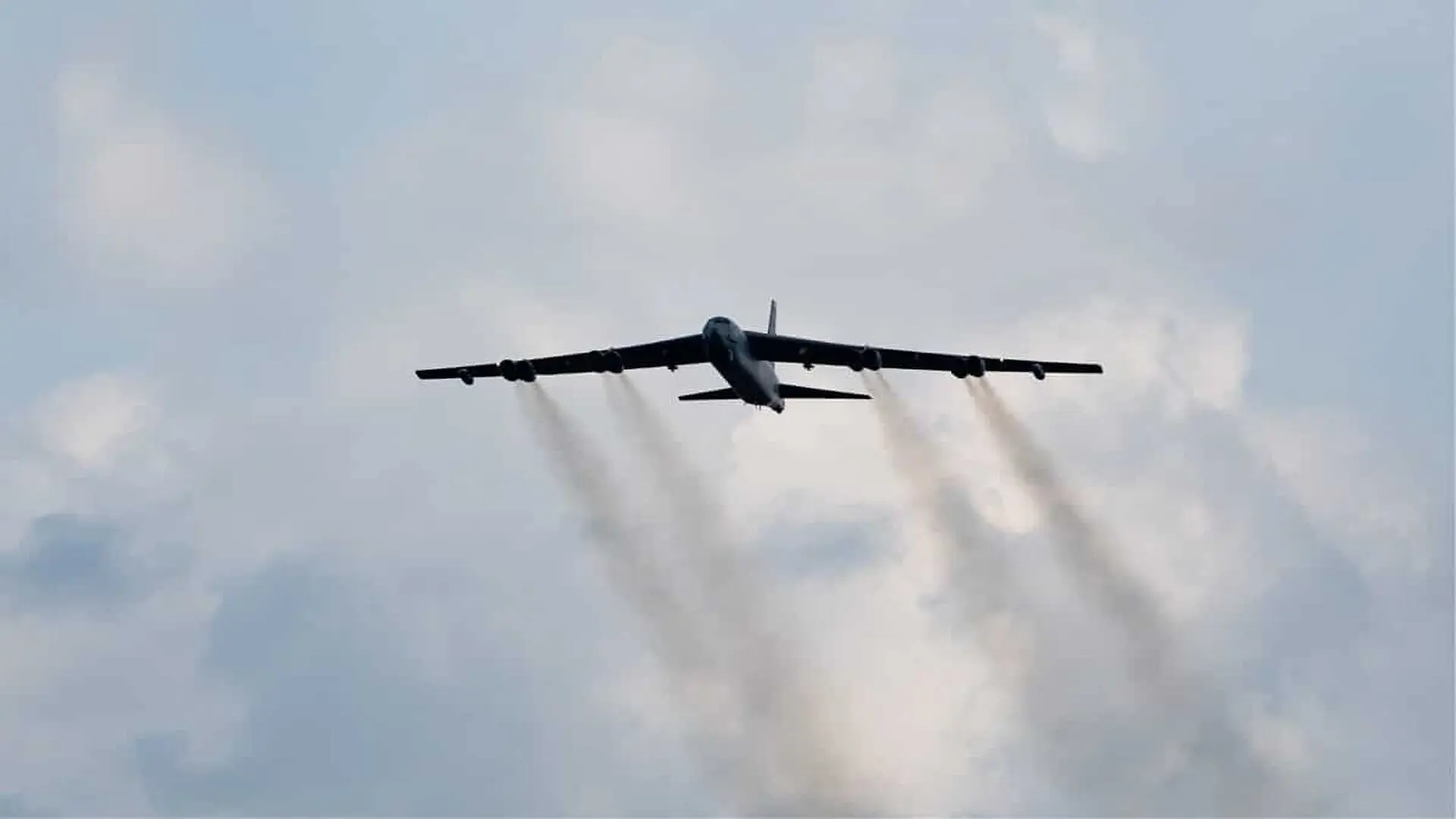
In the tense years following the 1962 Cuban Missile Crisis, the United States kept its strategic forces on constant alert against the Soviet Union. A key element of that deterrent was Operation Chrome Dome, which kept B‑52 bombers loaded with thermonuclear weapons airborne around the clock, ready to strike at a moment’s notice.
These airborne patrols formed the third leg of the U.S. nuclear triad, complementing silo‑based missiles and submarine‑launched weapons. Yet the reliance on aircraft, complex equipment and crews operating under extreme conditions made the system vulnerable, as a string of mishaps soon demonstrated.
Early Crises Exposed the Program’s Fragility
Chrome Dome operated three primary routes: one skirting Alaska and the western Pacific, another threading near the Mediterranean, and a northern corridor over Canada and Greenland. Problems emerged early on. On 24 January 1961, a Boeing B‑52 Stratofortress broke apart mid‑air, releasing two 3.8‑megaton Mark 39 nuclear bombs near Goldsboro, North Carolina. Neither warhead detonated, thanks in part to a low‑voltage safety switch.
Subsequent incidents in California and Maryland echoed the same risks, but the patrols pressed on. In 1966, a mid‑air collision between a B‑52 and a KC‑135 tanker above Palomares, Spain, scattered four thermonuclear bombs. Despite that episode, Chrome Dome continued for another two years.
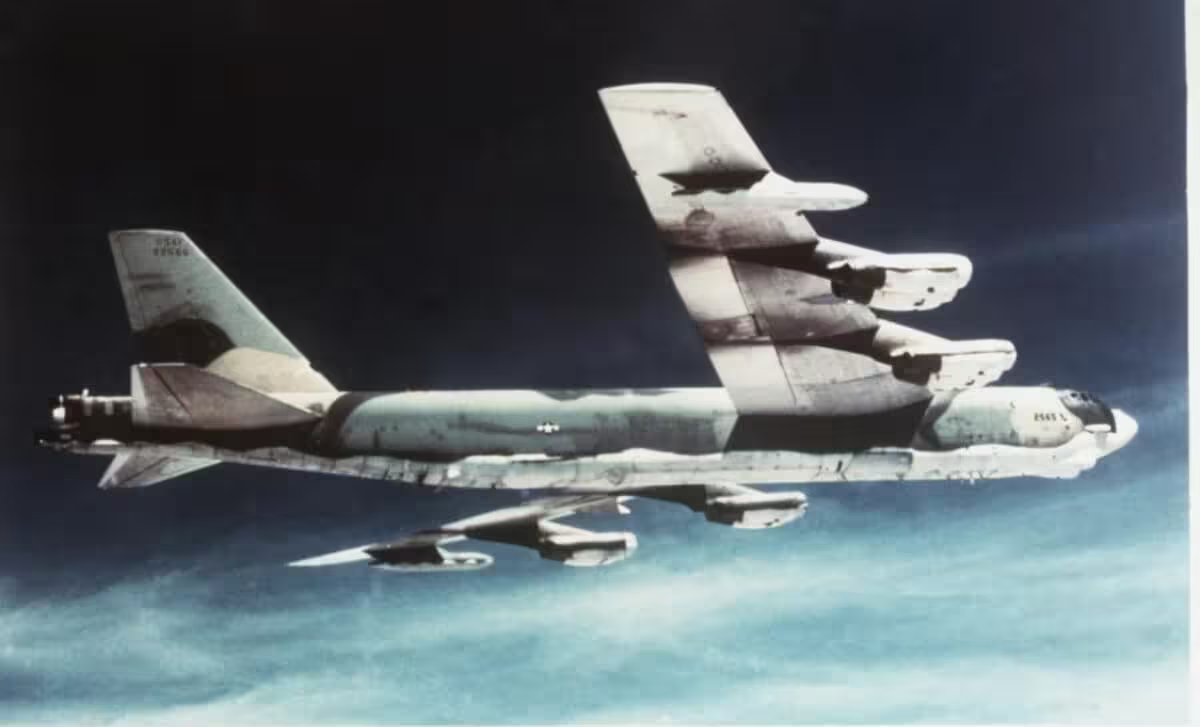
On 21 January 1968, a B‑52 lifted off from Plattsburgh Air Force Base, New York, to begin a “Hard Head” or “Thule Monitor” mission along the northern route. The aircraft carried four B28FI 70‑megaton thermonuclear bombs and was tasked with flying a figure‑eight pattern above Thule Air Base—now Pituffik Space Base—roughly 750 miles north of the Arctic Circle.
The bomber’s primary role was not offensive but observational: crew members were to verify that the base’s Ballistic Missile Early Warning System radar remained functional. Should communications with NORAD falter, the airborne platform could help determine whether a Soviet attack or a technical glitch was to blame.
As Eric Schlosser wrote in his 2013 book Command and Control, “Nobody expected the Thule monitor to destroy Thule.”
A Simple Comfort Measure Sparked a Catastrophic Fire
While circling over Baffin Bay, the B‑52 experienced an internal fire that spread faster than the crew could manage, forcing an abort before reaching Thule Air Base. Political scientist Scott Sagan, who studied “Broken Arrow” nuclear mishaps in his 1993 work Limits of Safety, described the incident as a “normal accident waiting to happen.”
The co‑pilot had placed foam‑rubber cushions beneath the navigator’s seat to ease the strain of long‑duration flights. When the primary heating system failed, the co‑pilot switched on an auxiliary heater that routed hot engine air through a vent positioned near those cushions. The foam ignited, and flames quickly engulfed the area just below the flight deck.
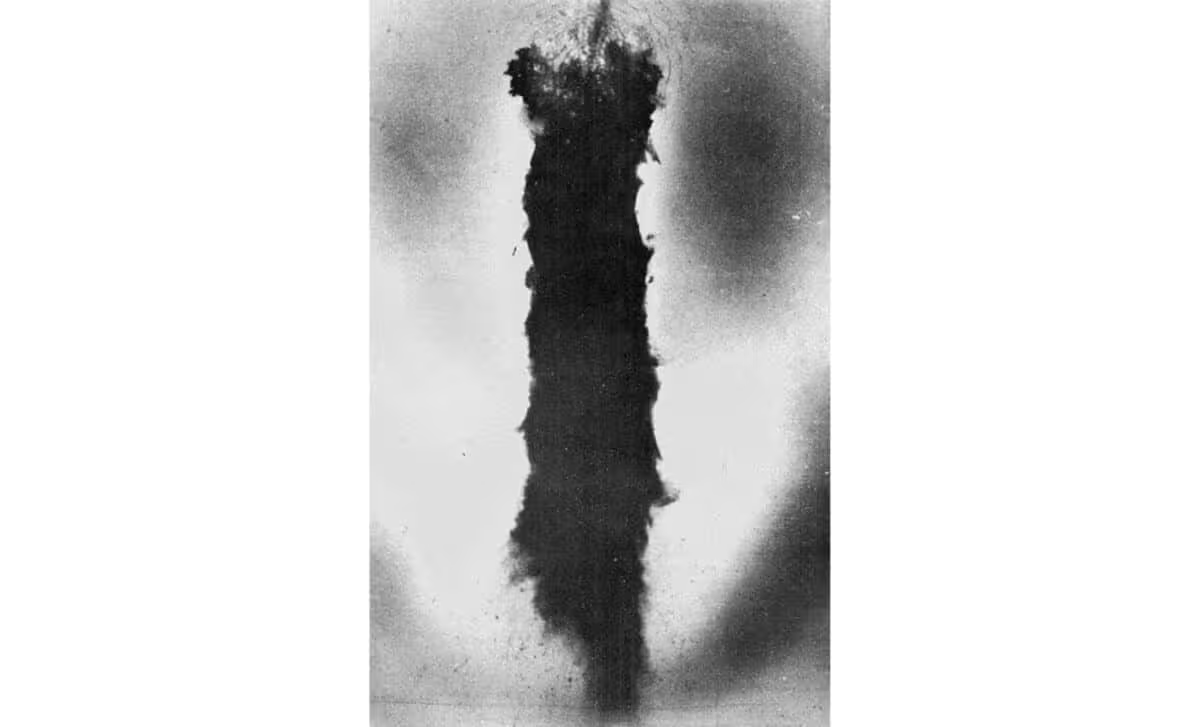
Six crew members ejected safely; co‑pilot Leonard Svitenko perished while attempting to bail out. The unmanned aircraft then crashed onto the sea ice of North Star Bay. Conventional explosives aboard detonated on impact, scattering debris and contaminating the surrounding ice, but none of the thermonuclear warheads exploded.
Aftermath: Cleanup, Political Fallout and the End of an Era
The incident prompted “Operation Crested Ice,” a U.S.‑led effort to retrieve radioactive material from the crash site. Specialized teams worked in the Arctic to remove contaminated fragments from the ice and nearby environment.
Although the crash did not trigger a nuclear detonation, it marked the final accident linked to the continuous airborne patrol program. The Department of Defense terminated Operation Chrome Dome the following day, dismantling one of the Cold War’s most precarious high‑alert strategies.
Political repercussions unfolded swiftly in Denmark, which governs Greenland. According to The New York Times, demonstrators gathered outside the U.S. Embassy in Copenhagen within hours of the accident becoming public. The protests occurred just two days before Denmark’s general election, and the incumbent, Jens Otto Krag—known for his pro‑U.S. stance—ultimately lost the vote.
What began as a modest attempt to improve crew comfort ended in a burned‑out bomber, radioactive contamination on Arctic ice, the loss of a crew member, and the cancellation of a global nuclear patrol operation.
This article has been fact checked for accuracy, with information verified against reputable sources. Learn more about us and our editorial process.
Last reviewed on .
Article history
- Latest version
Cite this page:
- Posted by Elizabeth Taylor