Mystery Neolithic Stone Sphere Unearthed in Azerbaijan Defies All Known Regional Parallels
Archaeologists are baffled by a flawless Neolithic stone sphere uncovered in Azerbaijan, its purpose remains a mysterious enigma unlike any known artifact.
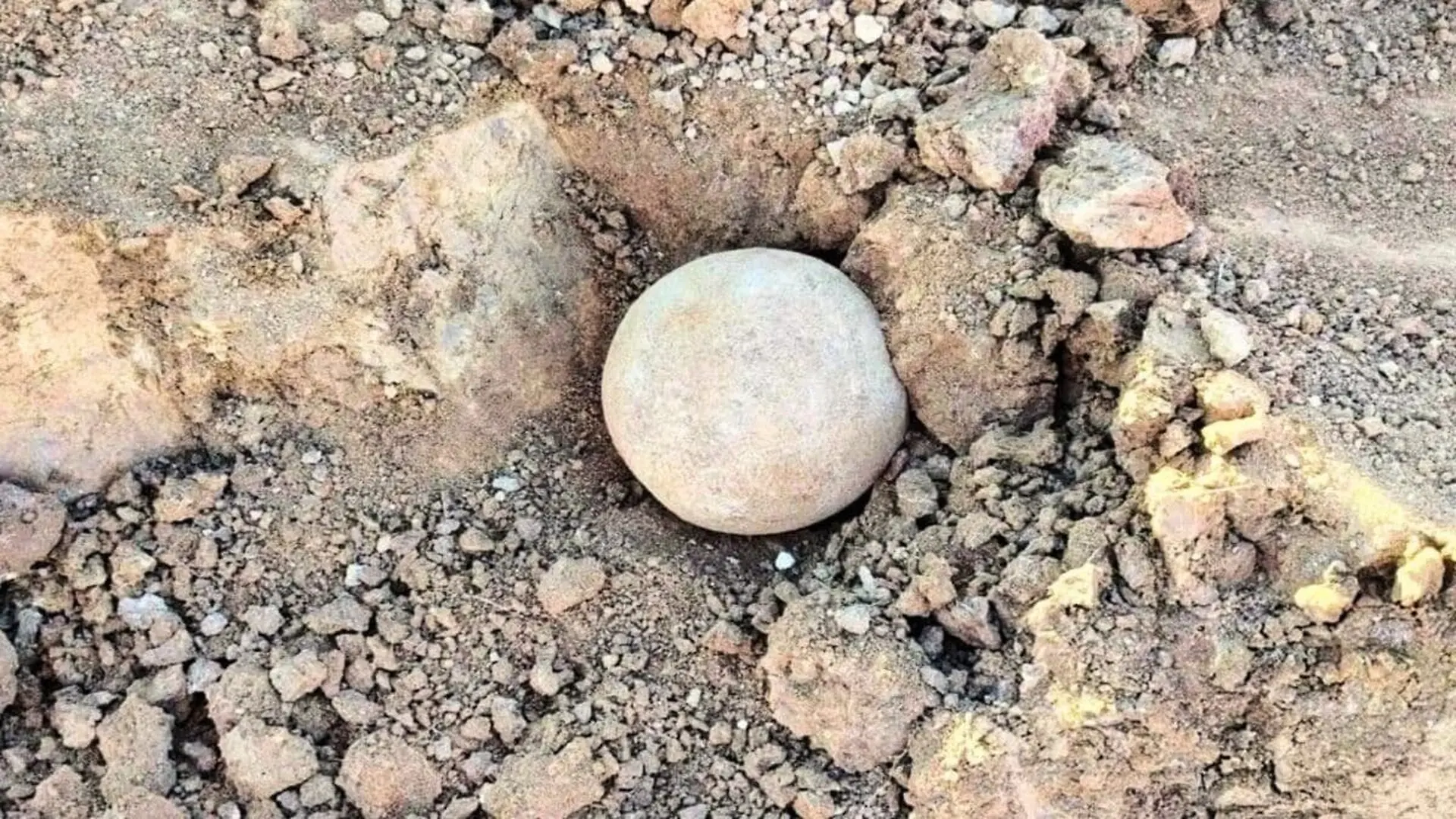
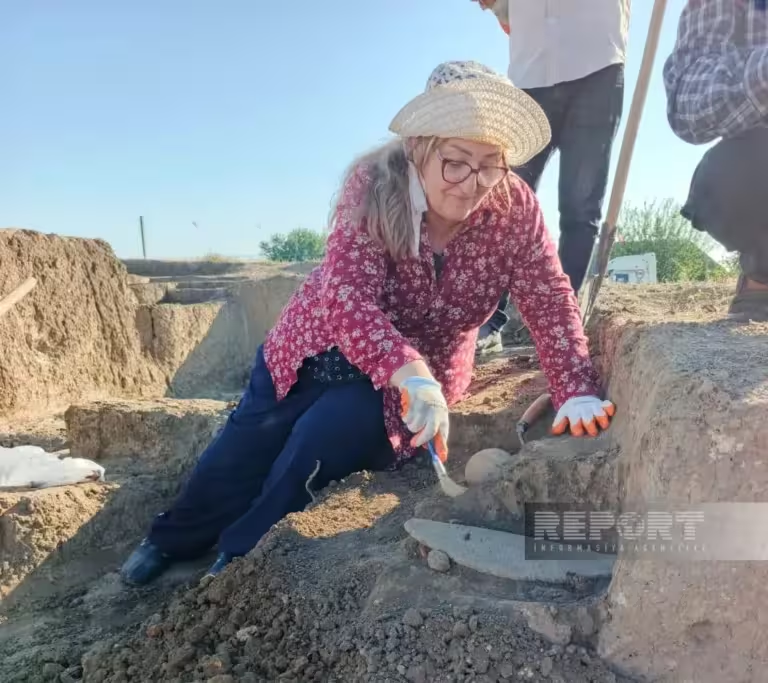
Archaeologists have uncovered a polished stone sphere, roughly the size of a grapefruit and weighing close to two kilograms, at the Neolithic site of Pasha Tepe in Azerbaijan’s Jalilabad district. Researchers say the object has no known counterpart in the South Caucasus archaeological record.
The find emerged from ongoing work directed by Vafa Mahmudova, Senior Research Fellow at the Institute of Archaeology and Anthropology of the Azerbaijan National Academy of Sciences. Mahmudova describes the sphere as one of the most noteworthy polished‑stone pieces identified from the region’s Neolithic period.
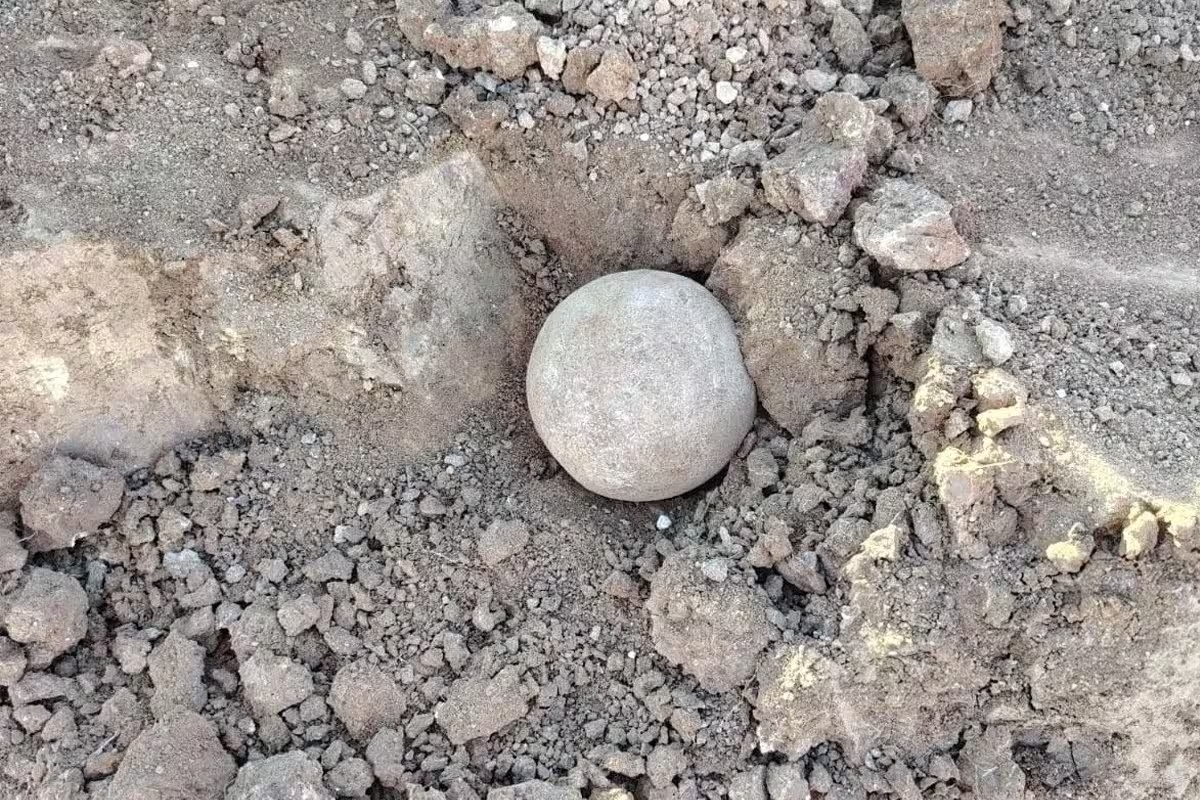
What makes the sphere intriguing is not only its precise workmanship but also the lack of any perforations, impact marks, or surface modifications that would tie it to known tool types or functional categories of the era. The absence of wear patterns complicates classification and has sparked interest among scholars studying the region’s broader archaeology.
A One‑of‑a‑Kind Neolithic Artifact
Measuring about 10 centimetres in diameter and weighing roughly 1.87 kilograms, the sphere’s uniformly smooth surface and near‑perfect shape indicate intentional, skilled production rather than accidental shaping. To date, no comparable morphology has been recorded in South Caucasus literature, suggesting a potentially singular discovery for the area.
“The stone sphere is of particular scientific importance because of both its manufacturing technology and its possible function,” Mahmudova told the Azerbaijani outlet Report. “It offers a new source of information for understanding connections between the Levant, Anatolia and the South Caucasus during the Neolithic period.”
The reference to distant regions underscores a broader curiosity about whether the object could eventually illuminate the cultural and material networks linking early agricultural societies across a wide geographic arc during roughly the same era.
The production techniques remain uncertain. Future laboratory analyses aim to determine how Neolithic artisans achieved such a consistent finish and which stone type was employed. Comparative studies with analogous finds from the Near East and the Caucasus are planned to refine hypotheses about manufacturing methods and possible regional analogues that may have been missed in earlier research.
Possible Roles: Ritual Symbol or Early Weight?
The lack of impact marks, cutting edges, attachment holes, or abrasion patterns prevents a straightforward functional assignment. Researchers are weighing two broad scenarios: the sphere could have served a ritual or ceremonial purpose, or it might have functioned as a standardized weight within an early exchange or measurement system. Neither hypothesis has been confirmed, and Mahmudova’s team emphasizes that additional scientific testing and expert consultation are required before drawing firm conclusions.
When an artifact has no local analogues, archaeologists must expand their comparative framework or await further contextual evidence from the site itself. In this case, both strategies are being pursued as excavation continues.
Regardless of its ultimate purpose, the sphere demonstrates that Neolithic inhabitants of Pasha Tepe possessed the technical capability to create objects of notable precision. The level of surface finishing observed is atypical of everyday utilitarian production, implying that the piece held particular significance—whether practical, symbolic, or both—pending further investigation.
Later Occupation Layers Reveal Medieval Waterworks
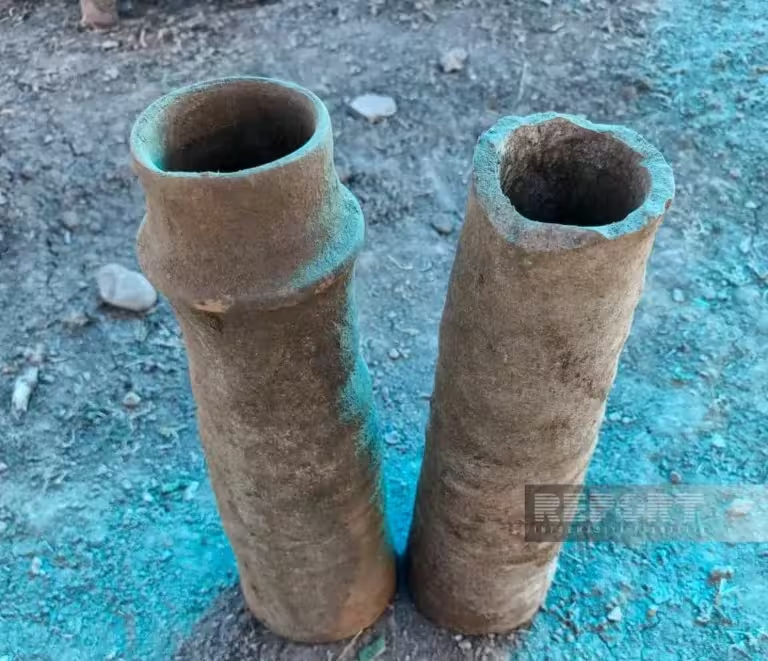
Recent expansion of the Pasha Tepe excavations has reached depths of 45 to 50 centimetres, uncovering sections of ceramic pipeline that archaeologists interpret as components of a medieval water‑management or drainage system. Although unrelated to the Neolithic sphere, these features illustrate the site’s continued or repeated use across distinct historical periods.
The coexistence of medieval infrastructure with Neolithic deposits reflects a common pattern in the region, where elevated terrain often attracted successive settlements over millennia. Ongoing analysis of the ceramic pipes will aim to refine their dating, adding another chapter to the long occupational history of Pasha Tepe.
Understanding these later phases may also clarify how earlier layers were disturbed, preserved, or sealed, offering additional context for interpreting the enigmatic stone sphere.
This article has been fact checked for accuracy, with information verified against reputable sources. Learn more about us and our editorial process.
Last reviewed on .
Article history
- Latest version
Reference(s)
- “Azərbaycan xəbərləri: Bakı və Dünya hadisələri | Report.az.” Report.az <https://report.az/>.
Cite this page:
- Posted by Zara Tariq