Afghan Bactrian Gold: How a 2,000‑Year‑Old Treasure Survived War, Secrecy and Vanished Again
The 22,000‑piece Bactrian Hoard discovered in Afghanistan in 1978 has vanished from public view again after years of war, secrecy and preservation.
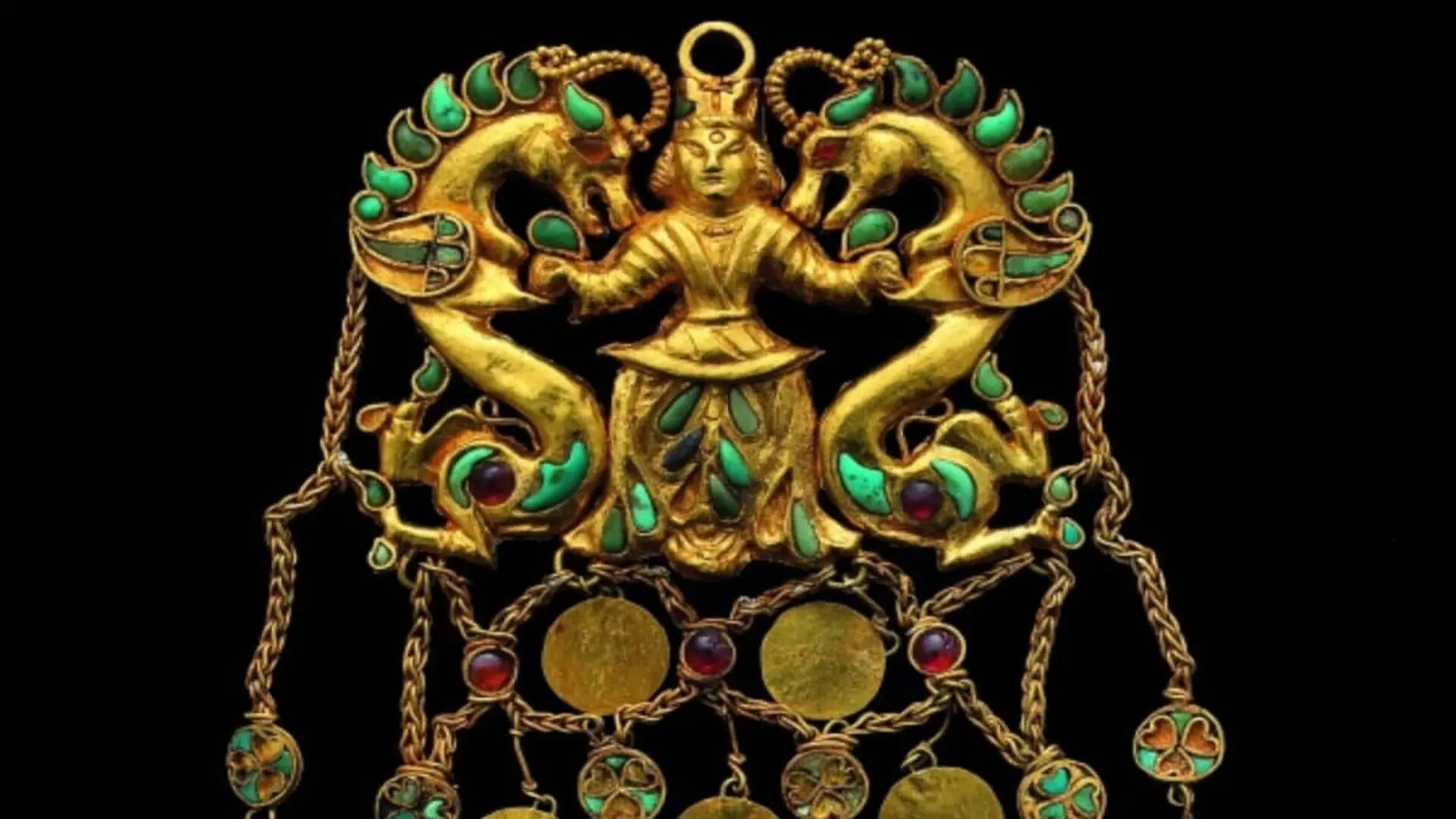
Excavations at Tillya Tepe – literally “Hill of Gold” in northern Afghanistan – turned up a trove that reshaped our understanding of Silk‑Road interactions. Led by Soviet archaeologist Viktor Sarianidi, the team initially sought settlement ruins but instead uncovered an Iron‑Age sanctuary and, beneath it, a cache of gold‑rich graves.
Gold‑Laden Graves Reveal a Cross‑Cultural Marketplace
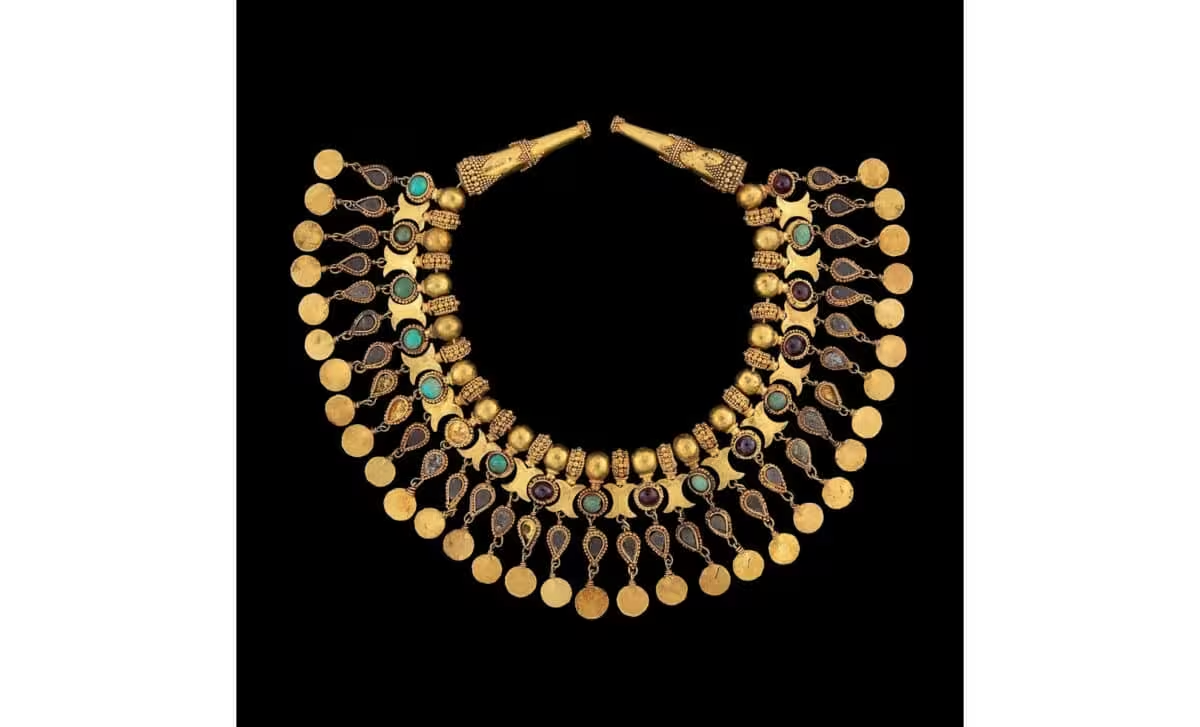
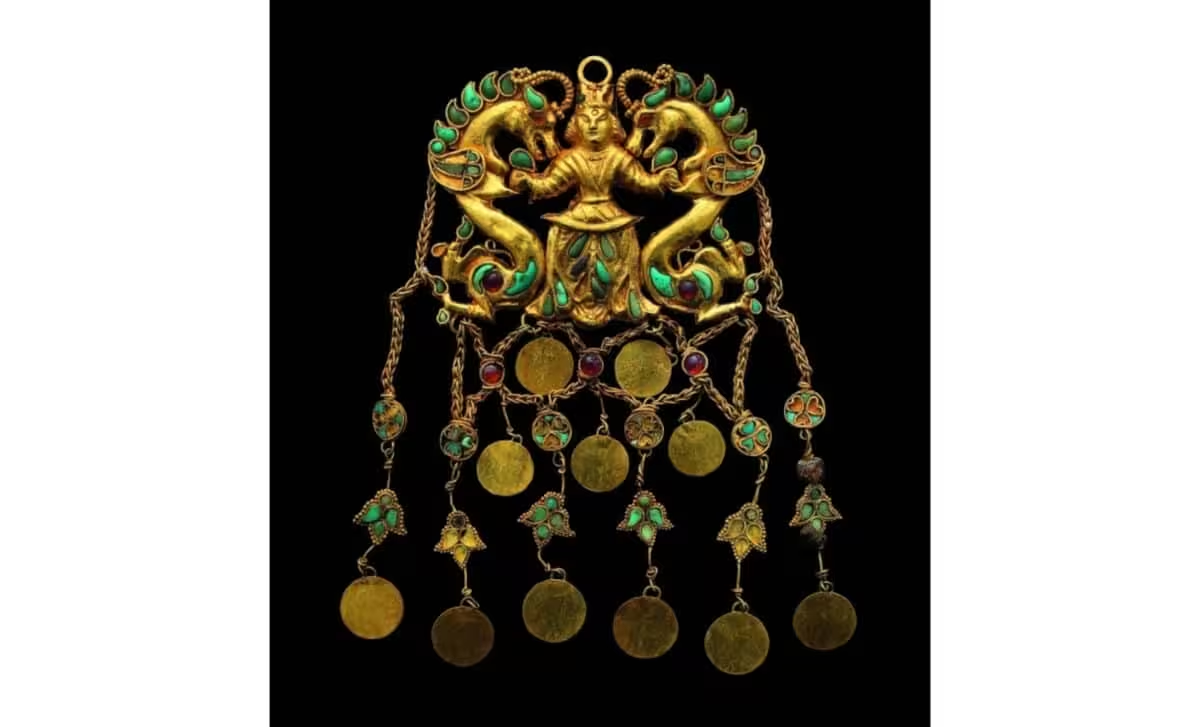
A modest golden disc uncovered during the dig pointed to a burial complex where skeletal remains were adorned with intricate jewelry, weapons and precious‑stone ornaments. The assemblage includes Greco‑Roman medallions depicting Dionysus, Buddhist imagery of the Buddha, and motifs reminiscent of Chinese dragons, indicating a vibrant exchange among Siberian, Indian, Roman and Chinese traders along the ancient Silk Road.
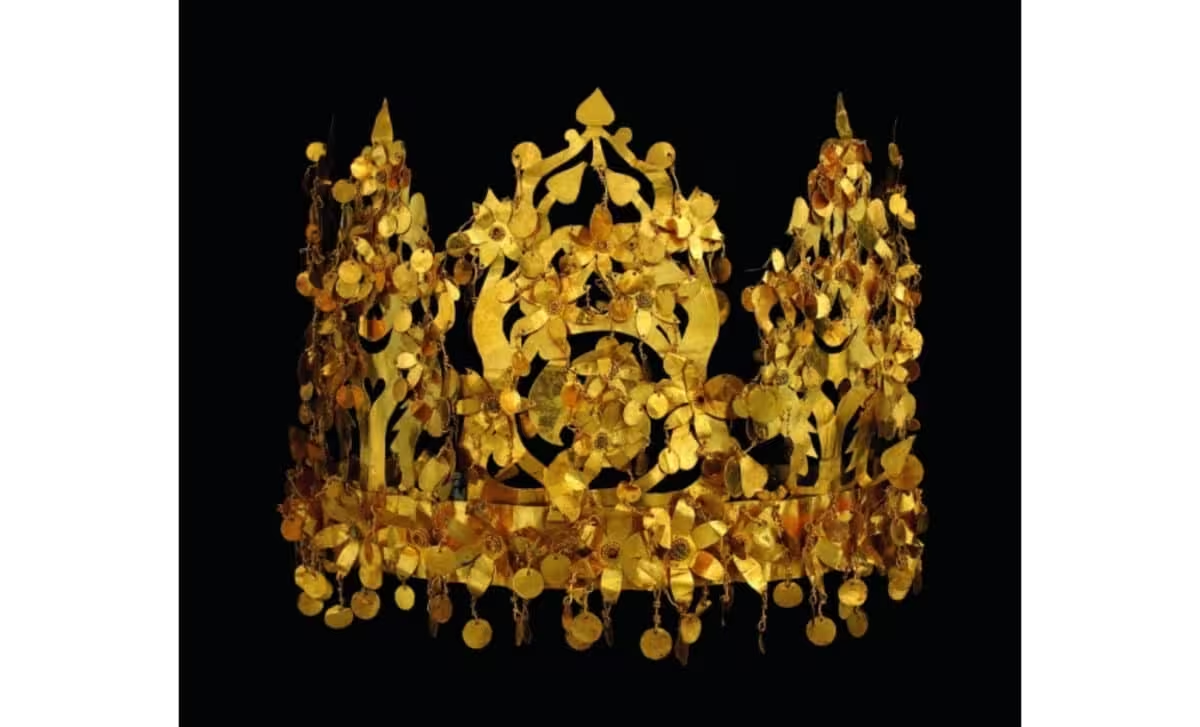
Among the interments, a warrior’s tomb contained ornate daggers with jeweled scabbards, while gold rings bore images of classical deities. A particularly notable piece – a collapsible golden crown designed for disassembly during travel – underscores the nomadic practicality of the owners.
From Museum Shelves to Central Bank Vaults
After the initial excavation, Sarianidi transferred the finds to Kabul’s National Museum. As the Soviet withdrawal neared in 1988, President Mohammad Najibullah ordered the collection sealed inside the Central Bank’s vaults, hoping to protect it from the escalating conflict.
The vault’s location remained a closely guarded secret throughout the civil war, fueling rumors that the gold had been looted or destroyed. It wasn’t until 2004, after the Taliban’s fall, that a team of archaeologists—including Sarianidi—reopened the vault and confirmed the treasure’s survival.
International Showcases and a Return to Afghanistan
Following the vault’s reopening, the National Geographic Society, in partnership with institutions such as the Metropolitan Museum of Art, the Asian Art Museum and the National Gallery of Art, organized a series of exhibitions that displayed portions of the Bactrian Hoard worldwide. In late 2020, the collection made its final public appearance at Afghanistan’s Presidential Palace before being placed back into secure storage.
China was the most recent foreign venue to host the artifacts, underscoring the ongoing scholarly interest in their cross‑cultural significance. Many of the thinner, hammered gold pieces are now conserved under controlled conditions to prevent further deterioration.
Digital Safeguards and Ongoing Threats
The National Museum of Afghanistan has launched a digital archive to catalog each item, aiming to curb illicit trafficking and aid in the recovery of any missing pieces. Museum director Mohammad Fahim Rahimi affirmed in 2023 that, after personally inspecting the vault following the Taliban’s return to power, the collection appeared intact.
Afghanistan’s cultural heritage has endured repeated assaults: during the Taliban’s first regime in 2001, museum staff reported the destruction of roughly 2,500 ancient sculptures, and the iconic Bamiyan Buddhas were razed. In a 2019 interview with the Associated Press, Rahimi warned, “We have achieved a lot in 18 years since the Taliban were defeated. If they are here in power and there is no change in their mentality, it means we are definitely back where we started and whatever we achieved will be gone.”
This article has been fact checked for accuracy, with information verified against reputable sources. Learn more about us and our editorial process.
Last reviewed on .
Article history
- Latest version
Reference(s)
- Kostas, “Viktor Sarianidis – A legend of the world’s archaeology.”, December 23, 2025 ellines.com <https://www.ellines.com/en/a-legend-of-the-worlds-archaeology/>.
Cite this page:
- Posted by Zara Tariq