215 Pterosaur Eggs Unearthed in China Reveal 3‑D Embryos and Walk‑Before‑Fly Hatchlings
Rare fossil cache provides unprecedented insight into pterosaur nesting, growth, and the controversial dawn of life.
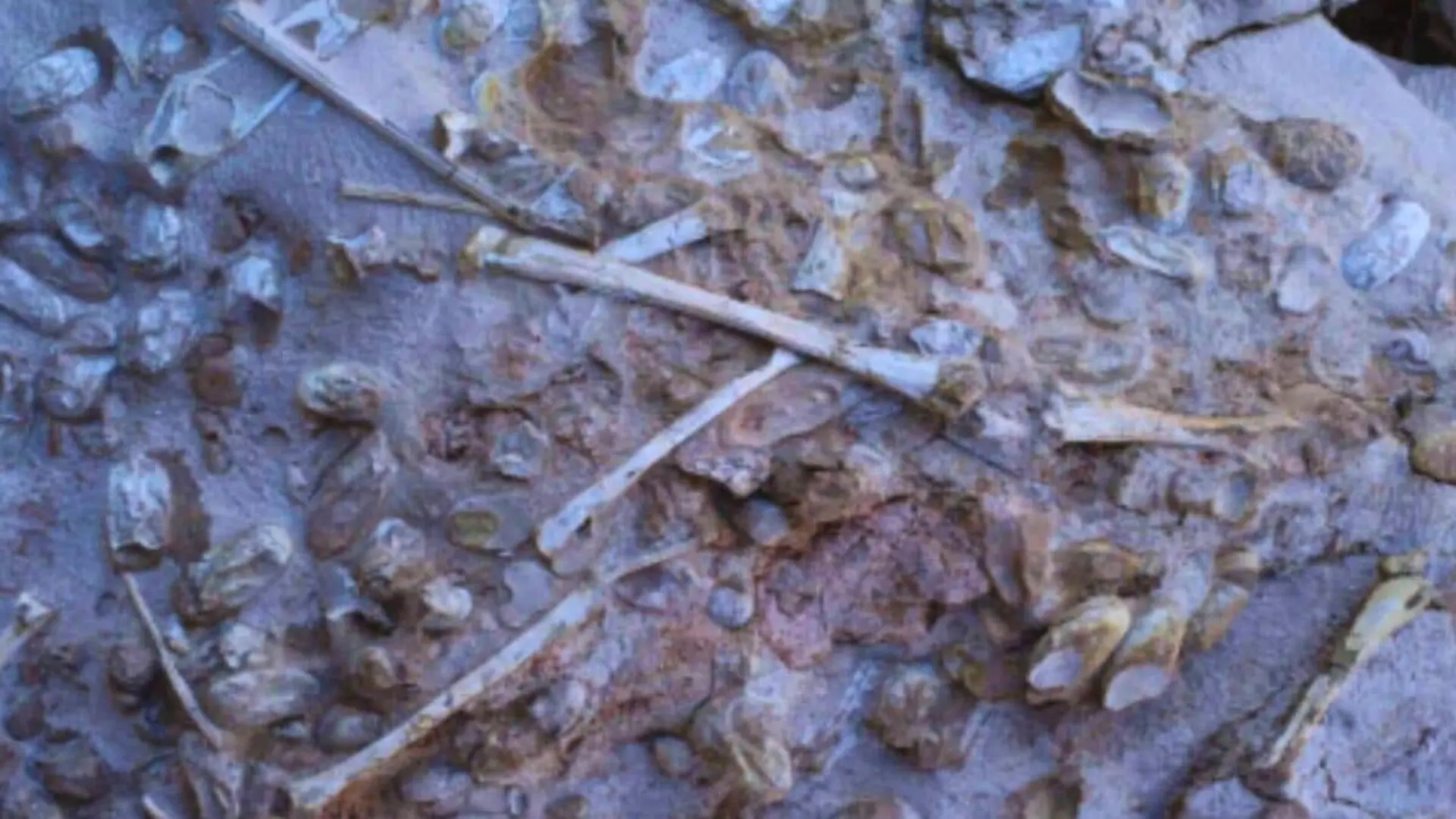
A sandstone slab of roughly 3.28 m² uncovered in Xinjiang, China, contains at least 215 fossil eggs belonging to the pterosaur Hamipterus tianshanensis. Researchers estimate that as many as 300 eggs may be hidden beneath the exposed surface, awaiting future excavation.
Sixteen of the specimens preserve partial embryos, several of which retain three‑dimensional form rather than the flattened condition that has limited earlier finds. Radiometric dating places the clutch in the early Cretaceous, about 120 million years ago. The discovery was led by paleontologist Xiaolin Wang of the Chinese Academy of Sciences and reported in Science.
Pterosaur eggs are among the rarest fossilized reproductive remains. Prior to this find, only seven intact eggs had been documented worldwide—five from the same Xinjiang locality and two from Argentina, with just one Argentine specimen preserving a flattened embryo, as noted by Science News. The sheer number of eggs in a single block now enables population‑scale analyses that were previously impossible.
Fragile Shells Explain the Scarcity of Pterosaur Eggs
Unlike the robust, calcified shells of dinosaurs and birds, pterosaur eggs possessed thin, leathery coverings similar to those of modern reptiles. This delicate construction made them prone to collapse and deformation during fossilization, accounting for the historical paucity of well‑preserved specimens.
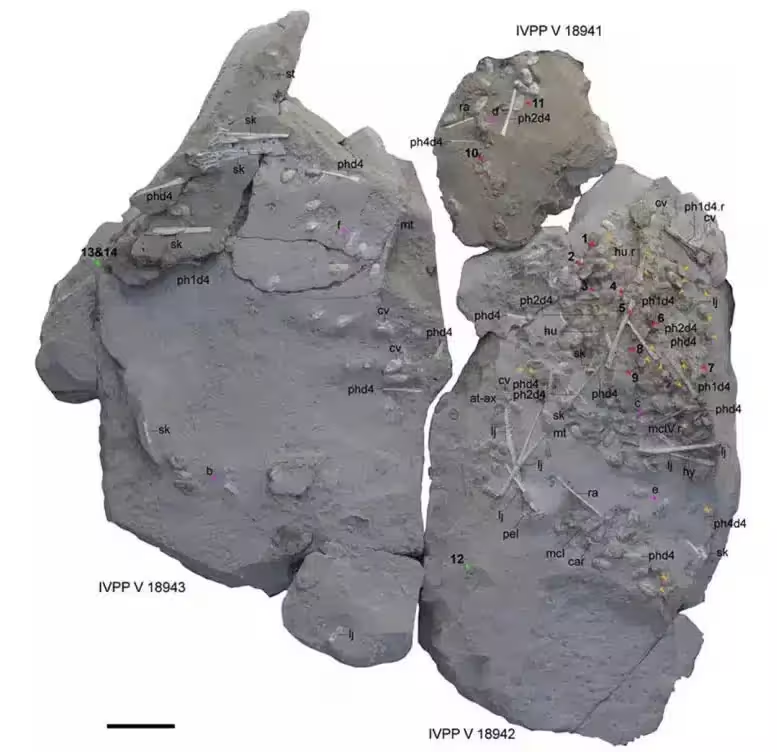
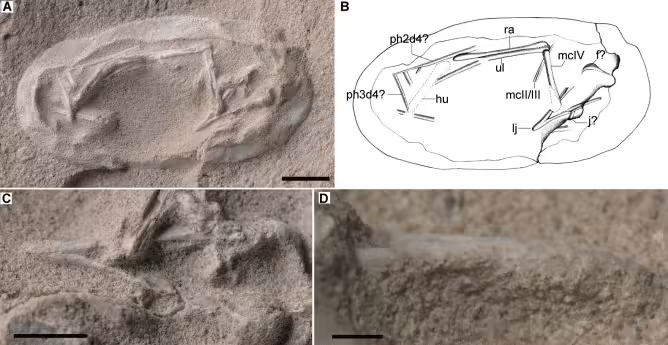
In this context, a single slab preserving hundreds of eggs, some with intact three‑dimensional embryos, represents an extraordinary snapshot of pterosaur reproductive biology. One embryo, in particular, retains a portion of a wing and a complete lower jaw, offering anatomical details that flattened fossils cannot provide.
The large sample also opens the possibility of statistical comparisons of egg size and shape across individuals, revealing the natural variation within the species—a task that was out of reach when only a handful of eggs were available.
Evidence Points to a Flood‑Driven Burial
Co‑author Alexander Kellner of the Museu Nacional/Universidade Federal do Rio de Janeiro suggests the clutch was likely displaced and deformed by a high‑energy flood event rather than representing an undisturbed nest. Rapid sediment influx would have sealed the fragile eggs before they could decay, preserving them for the fossil record.
“Otherwise, they would have decomposed,” Kellner noted, emphasizing that swift burial was essential for the exceptional preservation observed. Ongoing fieldwork continues to reveal additional eggs at the site, underscoring the need for systematic excavation.
CT Scans Reveal Hatchlings Likely Walked Before Flying
Using high‑resolution computed tomography and bone microstructure analysis, the team examined the most complete embryos without damaging the specimens. The scans showed that the deltopectoral crest—the attachment site for major flight muscles—was still underdeveloped, while the femur displayed relatively advanced growth.
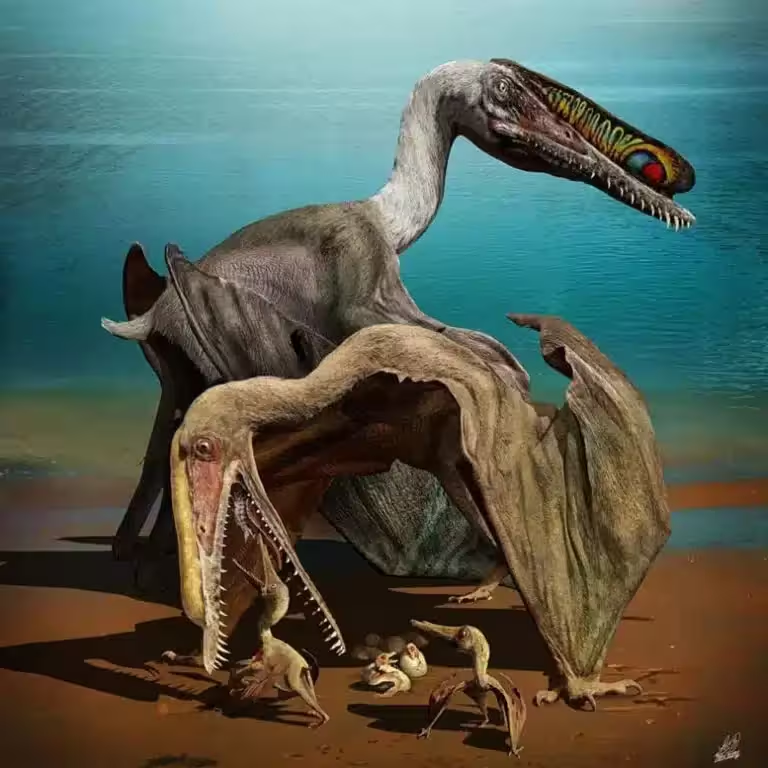
These anatomical differences suggest that newly hatched pterosaurs were capable of locomotion on the ground but lacked the musculature required for powered flight. The authors propose that early juveniles may have depended on parental assistance for feeding, challenging earlier models that assumed immediate independence.
External Review Highlights Caution on Developmental Inferences
D. Charles Deeming of the University of Lincoln, who was not involved in the study, cautioned that determining how close an embryo is to hatching based on limited material can be problematic. In a commentary published in the same issue of Science, Deeming warned of “a real danger of overinterpretation” when drawing broad conclusions about flight capability from only two specimens.
He emphasized that the primary value of the discovery lies in the unprecedented sample size, which allows for robust estimates of egg dimensions and variability across the species. Kellner echoed this sentiment, noting that further analysis of newly uncovered eggs will refine our understanding of Hamipterus reproductive biology.
This article has been fact checked for accuracy, with information verified against reputable sources. Learn more about us and our editorial process.
Last reviewed on .
Article history
- Latest version
Reference(s)
- “汪筱林_Faculty and Staff_Institute of Vertebrate Paleontology and Paleoanthropology, Chinese Academy of Sciences.” <http://english.ivpp.cas.cn/ss/Faculty_Staff/202512/t20251228_1142638.html>.
- Wang, Xiaolin., et al. “Egg accumulation with 3D embryos provides insight into the life history of a pterosaur.” Science, vol. 358, no. 6367, December 1, 2017, pp. 1197-1201. American Association for the Advancement of Science (AAAS), doi: 10.1126/science.aan2329. <https://www.science.org/doi/10.1126/science.aan2329>.
- Gramling, Carolyn. “Jackpot of fossilized pterosaur eggs unearthed in China.”, November 30, 2017 Science News Magazine <https://www.sciencenews.org/article/jackpot-fossilized-pterosaur-eggs-unearthed-china>.
- Deeming, D. Charles. “How pterosaurs bred.” Science, vol. 358, no. 6367, December 1, 2017, pp. 1124-1125. American Association for the Advancement of Science (AAAS), doi: 10.1126/science.aao6493. <https://www.science.org/doi/10.1126/science.aao6493>.
Cite this page:
- Posted by Zara Tariq