10,000-Year Record Reveals Humans Re-Occupied Same High-Altitude Shelters in the Pyrenees
A 7,600‑ft Pyrenean rock shelter shows uninterrupted human activity for 10,000 years, reshaping ideas about mountain settlement in a new radiocarbon study.
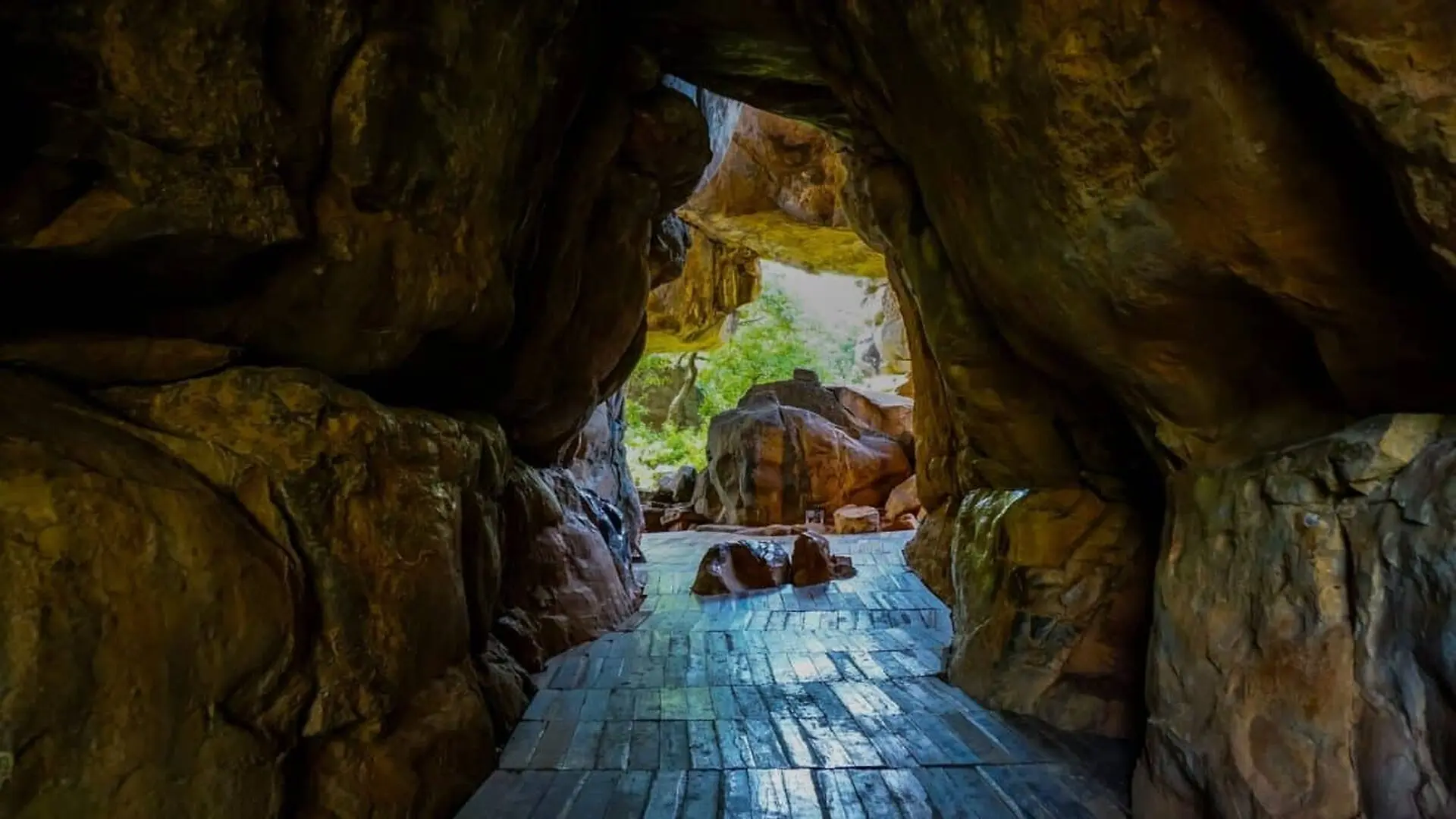
A comprehensive radiocarbon inventory from Aigüestortes i Estany de Sant Maurici National Park overturns long‑standing ideas about the habitability of the high Pyrenean peaks. The evidence shows that people began to settle the lofty slopes of the Catalan Pyrenees almost immediately after the terminal stages of the last glacial period.
For much of the twentieth century archaeologists regarded Europe’s alpine zones as essentially empty, assuming that the harsh climate and rugged terrain precluded any lasting human presence. New findings from northern Spain, however, compel scholars to rethink that narrative.
A Ten‑Millennium Timeline Unearthed Beneath the Mountains
The investigation, directed by Ermengol Gassiot‑Ballbè together with researchers at the Autonomous University of Barcelona, compiles 124 radiocarbon measurements drawn from 45 archaeological locales within the protected area. Samples of charcoal and bone from rock shelters, open‑air enclosures and stone constructions situated above 2,000 metres were analysed to determine the timing of human activity.
The earliest securely dated occupations fall between roughly 8,100 and 7,660 BCE, placing people in the park during the early Holocene while the remaining small glaciers were still receding from the high valleys. The data reveal that hunter‑gatherer groups did not wait for milder conditions before moving into the alpine environment; they were already exploiting the high terrain.
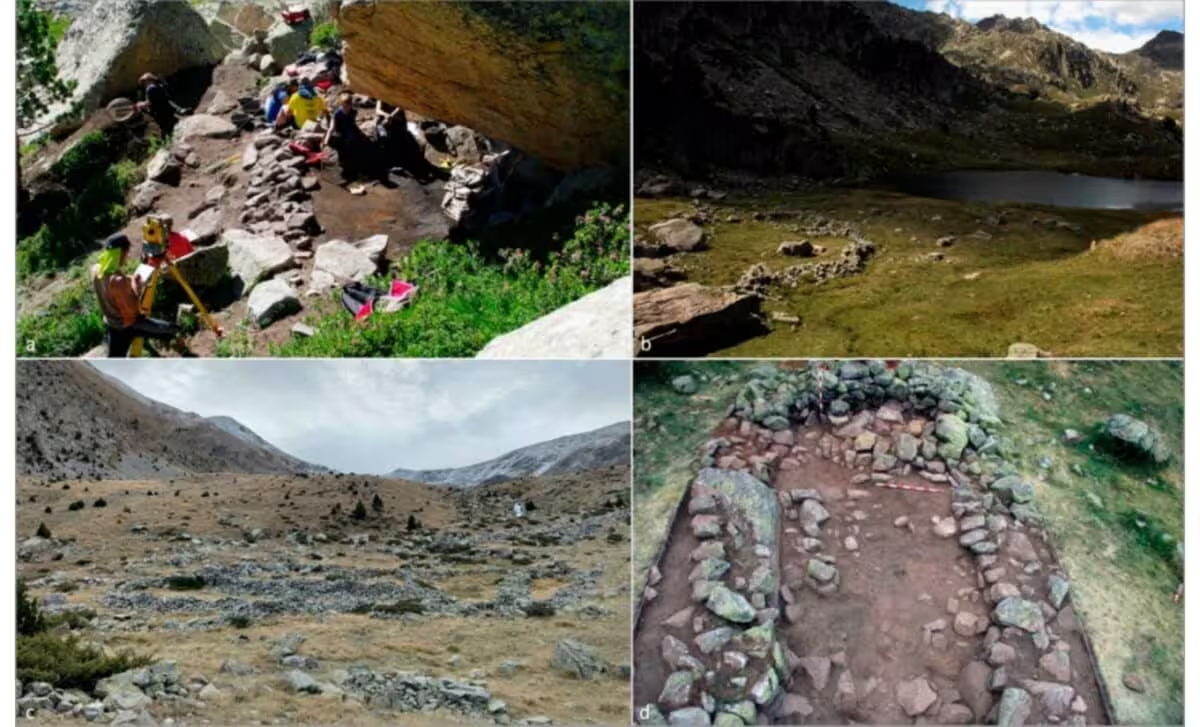
Among the sites, the rock shelter known as Abric de les Obagues de Ratera, perched at about 2,300 metres, provides a near‑continuous occupational record that spans the entire period covered by the database. Its stratigraphy captures the last phases of foraging groups, the arrival of early farming communities, subsequent metal‑working societies, medieval habitation and even activity as recent as the nineteenth and twentieth centuries. Co‑author Guillem Salvador described the sequence as “an exceptional temporal record that very few sites in Catalonia possess, not only in the high mountains.”
Two additional locations—Cova del Sardo and the Portarró shelter—extend the chronology further back, with initial occupations dated to around 7,500 and 7,300 BCE respectively. Excavations at Portarró uncovered dry‑stone walls incorporating timber elements that date to roughly 5,000 years ago, representing the earliest known mountain architecture across the Pyrenees.
Fluctuating Human Footprints Over the Ages
The radiocarbon evidence does not suggest a steady presence; instead, it clusters into episodes of intensified activity. Notable peaks occur during the late Neolithic (approximately 5,300 to 4,500 years ago) and again in the late antiquity to early medieval period.
The authors note that the late Neolithic surge mirrors broader trends observed in other European mountain ranges. This timing coincides with the lifespan of Ötzi, the glacier‑preserved individual who perished in the Alps around 5,300 years ago, indicating that disparate high‑altitude regions were inhabited concurrently. Whether similar climatic pressures, expanding herding economies or demographic growth drove these parallel developments remains unresolved, but the synchrony is striking.
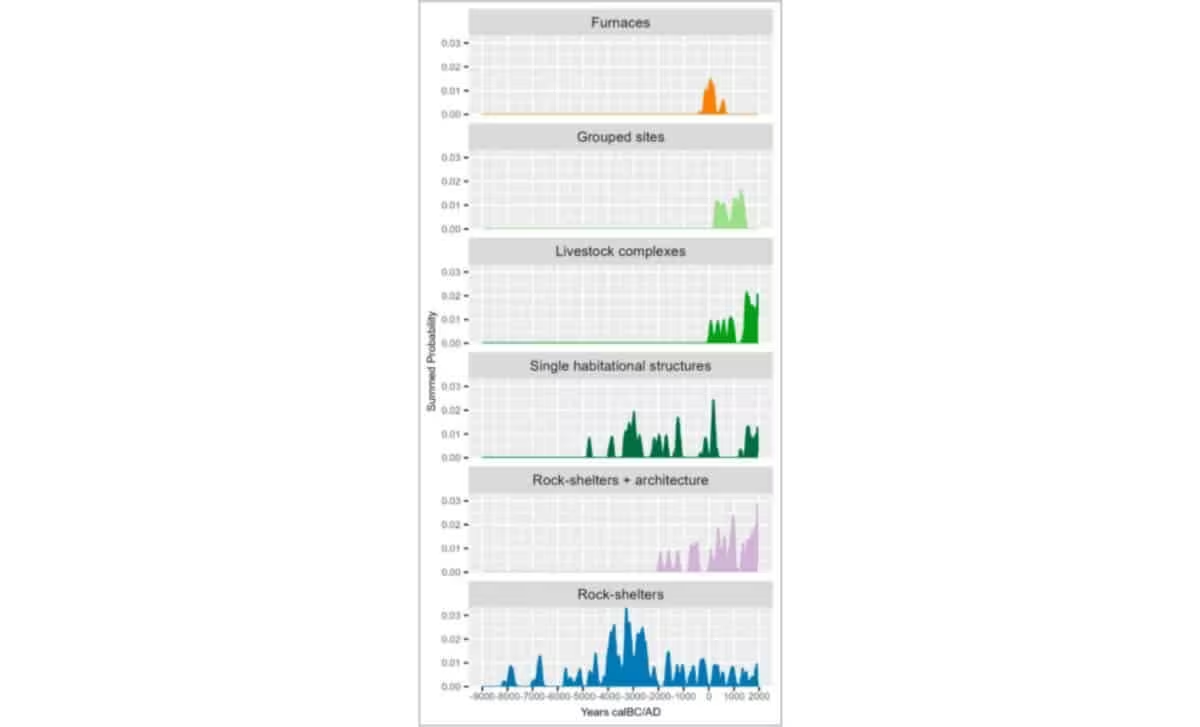
The researchers caution against over‑interpreting the radiocarbon curve as a direct proxy for population size. Sampling strategies, the differential preservation of site types and the intrinsic variability of calibrated dates all introduce uncertainty. Nonetheless, the recurring pattern—people repeatedly returning to the same shelters, igniting fires in familiar spots and erecting successive structures—underscores a persistent connection to these high‑altitude locales despite shifting climates and cultural transformations.
Gassiot‑Ballbè characterises the assemblage as sites that “seem to us inaccessible and inhospitable” yet “very often show long occupation sequences.” By making the complete dataset publicly accessible, the team hopes that other scholars will integrate these human timelines with palaeoenvironmental records such as pollen and sediment cores from neighboring lakes and bogs, enabling the first systematic tests of how climate fluctuations and vegetation changes influenced mountain settlement dynamics.
This article has been fact checked for accuracy, with information verified against reputable sources. Learn more about us and our editorial process.
Last reviewed on .
Article history
- Latest version
Cite this page:
- Posted by Zara Tariq